
In This Article
Rain, sweat, a surprise puddle at mile six, then a Saturday-morning dip at the lido. A waterproof fitness tracker for running has to shrug off all of it and still tell you the truth about your pace. The trouble is that “waterproof” is one of the most abused words in wearable marketing, and the ratings behind it are stranger than they look.

This guide cuts through the noise. I’ve compared seven real, currently sold watches, from a budget Amazfit to a triathlon-grade Garmin and the Apple Watch Ultra 3. The comparison uses published specs and aggregated reviewer verdicts from outlets such as TechRadar, Wareable and Live For The Outdoors. Every number is translated into what it means on a wet Tuesday run. Expect analysis, not a rewritten spec sheet. All prices are ranges at the time of research, so check current price before you buy.
Whether you want a swimproof fitness tracker for the odd pool session, a fitness tracker for triathlon training, or one of the more versatile multi-sport wearables, you’ll find a match below.
What Is a Waterproof Fitness Tracker for Running?
A waterproof fitness tracker for running is a wrist-worn device with built-in GPS and heart rate sensing. It is sealed well enough to survive sweat, downpours and, in most cases, pool swimming. Strictly speaking, no watch is “waterproof”: the ISO standard bars that word on watches, so makers quote water resistance ratings such as 5ATM instead.
Quick Comparison: The 7 Best Picks at a Glance
Here’s the short version. Read the full analysis below before you spend a penny.
| Product | Water Rating | GPS Battery (claimed) | Best For |
|---|---|---|---|
| Amazfit Active 2 | 5ATM | Up to 21 hours | Tight budgets |
| Garmin Forerunner 165 | 5ATM | Up to 19 hours | Beginner runners |
| Coros Pace 4 | 5ATM | Up to 41 hours | Lightweight all-rounder |
| Suunto Race S | 50 m (5ATM class) | Up to 30 hours (multi-band GPS) | Smaller wrists and maps |
| Garmin Forerunner 570 | 5ATM | Around 18 hours | Run-swim-bike beginners |
| Garmin Forerunner 970 | 5ATM | Up to 26 hours | Serious triathletes |
| Apple Watch Ultra 3 | WR100 | Up to 18 hours | iPhone owners wanting 100 m |
Looking at the comparison above, the Coros Pace 4 delivers the most GPS battery for the money, while the Apple Watch Ultra 3 is the only model here with a 100 m rating. Budget buyers should note that the Amazfit Active 2 matches the 5ATM rating of watches costing four times as much. Battery claims vary with settings, so treat them as ceilings rather than promises.
💬 Just one click — help others make better buying decisions too!😊
Top 7 Waterproof Fitness Tracker for Running Picks: Expert Analysis
Every watch below is sold in the UK and has a published swim mode. TechRadar’s swimming watch roundup backs several of them. I’ve ranked them roughly from budget to premium rather than by “best”, because the right pick depends on your training.
1. Amazfit Active 2 — best budget swim-ready GPS
The headline is value: a round AMOLED watch with 5ATM water resistance, built-in GPS and more than 160 sport modes, all for far less than a Garmin. The 1.32-inch display sits on a roughly 30 g case (29.5 g for the standard version), and the 270 mAh battery is rated at up to 10 days or around 21 hours of continuous GPS. In practice, it’s light enough to sleep in. Twenty-one GPS hours covers a marathon several times over.
Here’s my honest take. This suits runners who want a swimproof fitness tracker for the occasional lido lap without committing serious money. On paper it offers lighter coaching and recovery tools than Garmin or Coros, so think of it as a capable logger rather than a coach. Reviewers consistently praise its GPS and battery for the price. Wareable’s side-by-side GPS traces against a Garmin Fenix 8 are a useful reminder to sanity-check route data on twisty trails.
Pros:
- ✅ Outstanding feature count for the money
- ✅ Featherweight at roughly 30 g
- ✅ Up to 21 hours of continuous GPS
Cons:
- ❌ Training insight is lighter than Garmin’s
- ❌ Fewer structured coaching tools overall
Price range: around £80-£130, so check current price. Verdict: the best “try swimming and running tracking” entry ticket here.
2. Garmin Forerunner 165 — best entry-level Garmin for runners
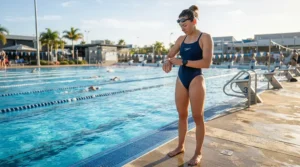
Garmin’s cheapest modern Forerunner packs a 1.2-inch AMOLED screen into a 39 g plastic case. It’s rated 5ATM and claims up to 11 days in smartwatch mode and up to 19 hours of GPS. That means the GPS tank isn’t your bottleneck. The always-on display is, and reviewers note battery life drops substantially when it’s enabled. It tracks pool swims with a stroke counter, so lengths are counted without fuss.
Who is it for? First-time Garmin buyers who want Body Battery, sleep and recovery data without paying for triathlon features they won’t use. OutdoorGearLab notes it saves money by trimming training and recovery metrics versus pricier siblings, which is exactly the trade-off most beginners can live with. Retailer reviews repeatedly praise ease of use, battery and GPS accuracy, though some switching from other smartwatches find the button-led menus take getting used to.
Pros:
- ✅ Reliable Garmin Connect ecosystem
- ✅ Bright AMOLED screen at a modest price
- ✅ Light at 39 g for long runs
Cons:
- ❌ Fewer training and recovery metrics than pricier models
- ❌ Battery sags with always-on display
Price range: around £200-£250. Verdict: the safe, sensible choice for most new runners.
3. Coros Pace 4 — featherweight with serious endurance
The standout is weight: just 32 g with the nylon strap. You’ll forget it’s there, even mid-front-crawl. Specs include a 1.2-inch AMOLED touchscreen, 5ATM, up to 41 hours of GPS and up to 19 days in smartwatch mode. TechRadar’s testers got 10 to 14 days between charges despite the brighter screen. It supports pool swimming, open-water swimming and triathlon modes.
Here’s what to weigh. This is a training tool, not a lifestyle smartwatch. It lacks NFC payments, music streaming apps and offline maps, and the plastic case feels less premium than pricier rivals. The same reviewers noted the heart rate sensor performs best when the watch sits snugly against the wrist, a tip worth remembering for swim sessions. Overall review sentiment is that it’s an easy recommendation for anyone who wants dependable data without a premium bill.
Pros:
- ✅ Class-leading battery for the price
- ✅ Ultra-light, comfortable all day
- ✅ Pool, open-water and triathlon modes
Cons:
- ❌ No offline maps or music apps
- ❌ Plastic case feels less premium
Price range: roughly £200-£270. Verdict: arguably the best value among the serious training options.
4. Suunto Race S — best for smaller wrists plus offline maps
The hook here is maps. The 45 mm Suunto Race S carries 32 GB of storage for offline maps, plus dual-band GPS, which helps keep tracks tidy among buildings and trees. It’s rated to 50 m, with up to 30 hours of multi-band GPS and around 9 days in watch mode. In plain terms, you get navigation features that most watches at this price skip. Just don’t expect the bigger Suunto Race’s 100 m rating or its longer battery.
The analysis is simple. This suits trail runners and open-water swimmers with smaller wrists who want maps on the wrist. Reviewers report accurate GPS with no dropouts, even when sweaty or wet. They also note battery life fell off more than expected compared with the larger model. Availability seemed patchy at some retailers when I researched this, so check stock.
Pros:
- ✅ Dual-band GPS with tidy tracks
- ✅ Offline maps on the wrist
- ✅ Dedicated triathlon and open-water modes
Cons:
- ❌ Shorter battery than the bigger Suunto Race
- ❌ Fewer smartwatch extras than rivals
Price range: around £300-£350 (it launched in the low £300s). Verdict: a smart pick if you value maps and a compact case.
5. Garmin Forerunner 570 — premium display, runner-first multisport
Its standout is the screen: one of the brightest AMOLED displays Garmin has made, in 42 mm and 47 mm sizes. It’s rated 5ATM and supports 30-plus activity profiles including pool swim, open water and triathlon. Newer Garmin Coach plans cover triathlon, and you can build structured multisport workouts. Smartwatch battery is around 10 to 11 days, with roughly 18 hours of GPS claimed. In other words, it’s a proper step up from the Garmin Forerunner 165 for anyone adding swim and bike to their running.
Here’s the catch. Reviewers praise the display and GPS performance but question the value. Wareable flagged the missing routable offline maps and ECG, and another review described the battery as a step back from the Garmin Forerunner 265. Think of it as a very good watch that is hard to justify at full price.
Pros:
- ✅ Beautifully bright AMOLED screen
- ✅ Triathlon plans and multisport workouts
- ✅ Lighter than the flagship Garmin Forerunner 970
Cons:
- ❌ Pricey for what it omits
- ❌ No routable offline maps
Price range: list price in the region of £450-£470, often discounted. Verdict: wait for a deal.

6. Garmin Forerunner 970 — triathlon-first coaching
The standout is coaching. The Garmin Forerunner 970 brings a Triathlon Coach that stitches swim, bike and run into a single plan. A Running Tolerance feature helps stop you piling on mileage too fast. It has a 1.4-inch AMOLED screen, 5ATM, up to 26 hours of GPS and up to 15 days in smartwatch mode. TechRadar picked it as the best swimming watch for triathlons. That’s practical rather than flashy.
My take: if your week includes swim, bike and run, the software matters more than the spec sheet. Reviewers praise the reliable GPS and bright display. The recurring criticisms are the cost and a chunky case that won’t suit every wrist. Unless you need the Garmin Fenix 8’s diving features or tougher build, TechRadar’s testers would save the extra bulk and wear the Forerunner instead.
Pros:
- ✅ Triathlon Coach unites all three disciplines
- ✅ Excellent battery for an AMOLED watch
- ✅ Bright, easy-to-read display
Cons:
- ❌ Expensive investment
- ❌ Chunky case won’t suit everyone
Price range: around £550-£630 (RRP near the top, often cheaper at retailers). Verdict: the one for committed triathletes.
7. Apple Watch Ultra 3 — the only 100 m-rated iPhone option here
What sets it apart is the WR100 rating, plus a 1.9-inch display reaching 3,000 nits. Practically, that’s a screen you can read mid-stroke in murky water. It claims up to 18 hours of GPS, 42 hours in smartwatch mode and up to 72 hours in Low Power Mode. Swim tracking includes SWOLF scores, and pairing it with the Oceanic+ app turns it into a dive computer.
Who benefits? iPhone owners who want one watch for training, payments and messages. TechRadar found heart rate readings within 1 bpm of a Polar H10 chest strap. Battery still trails Garmin’s endurance watches, and it needs an iPhone to work, so Android users should look elsewhere. Reviewers also note that anyone with an older Ultra has little reason to upgrade.
Pros:
- ✅ Brightest screen and 100 m rating
- ✅ Accurate heart rate in testing
- ✅ Excellent swim and dive tracking
Cons:
- ❌ Expensive
- ❌ Battery trails Garmin’s endurance models
Price range: around £700-£800. Verdict: premium, but justified for iPhone users who will use the swim and dive tools.
Here’s how all seven stack up on the numbers that matter.
| Product | Water Rating | GPS Battery | Price Range | Best For |
|---|---|---|---|---|
| Amazfit Active 2 | 5ATM | Up to 21 hrs | £80-£130 | First swimproof tracker |
| Garmin Forerunner 165 | 5ATM | Up to 19 hrs | £200-£250 | Beginner runners |
| Coros Pace 4 | 5ATM | Up to 41 hrs | £200-£270 | Long battery, low weight |
| Suunto Race S | 50 m | Up to 30 hrs | £300-£350 | Maps, smaller wrists |
| Garmin Forerunner 570 | 5ATM | ~18 hrs | £400-£470 | Multisport upgraders |
| Garmin Forerunner 970 | 5ATM | Up to 26 hrs | £550-£630 | Triathlon coaching |
| Apple Watch Ultra 3 | WR100 | Up to 18 hrs | £700-£800 | iPhone users, 100 m |
The sweet spot sits in the middle. The Coros Pace 4 and Garmin Forerunner 165 cover most runners’ needs for around £200-£270. Jumping to the Garmin Forerunner 970 is worth it only if you’ll actually use the Triathlon Coach, since the price roughly doubles. The Apple Watch Ultra 3 commands a premium for display brightness, the 100 m rating and ecosystem fit, not for better running data.
Setup and First-30-Days Guide: Getting Accurate Run and Swim Data
Amazon listings don’t tell you this part. A great watch still produces lousy data if you set it up badly, so here’s a practical first-month routine.
Week one: get the fit right. Wear the watch snug, a finger-width above the wrist bone, since reviewers of the Coros Pace 4 found heart rate data best when the watch sat tight. Update the firmware immediately. TechRadar reported that early Garmin Fenix 8 units had a cold-water problem that a software update later fixed. That’s a neat reminder that updates matter.
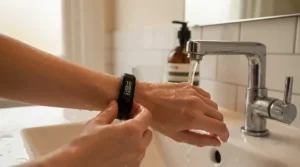
Week two: set up the swim properly. Always confirm pool length before a session, because most UK pools are 25 m but some are 33⅓ m or 20 yards. A wrong setting skews every length, pace and SWOLF figure. Switch on the water-lock or screen-lock feature before you jump in, so droplets don’t press buttons.
Weeks three and four: build good habits.
- 🚿 Rinse with fresh water after chlorine or sea swims.
- 🔋 Charge fully once a week rather than topping up daily.
- 📈 Be patient with predictions: one UK guide notes Garmin’s race predictor becomes genuinely useful only after roughly six weeks of consistent training.
Common first-30-day mistakes: wearing the strap loose for intervals, trusting day-one recovery scores, and leaving always-on display enabled, which noticeably drains battery on watches like the Garmin Forerunner 165.

Real-World Scenarios: Matching a Tracker to Your Training Life
Here are three hypothetical profiles to show how the logic works in practice. They’re illustrations, not testimonials.
The Couch to 5K graduate. Imagine you’ve just finished the NHS Couch to 5K programme and run three times a week. You’d like a swim now and then, on a £150 budget. The Amazfit Active 2 fits the budget, with GPS and swim-ready 5ATM. If you can stretch to £200-£250, the Garmin Forerunner 165 adds a more polished training ecosystem.
The lido regular. Picture someone who swims twice a week, runs twice, and wants maps for weekend trail routes. Budget is around £300. The Suunto Race S brings offline maps and dual-band GPS. The Coros Pace 4 is the cheaper, lighter, longer-lasting alternative if maps matter less.
The first-time triathlete. Imagine an 8-hours-a-week sprint-triathlon trainee. The Garmin Forerunner 570 gives triathlon plans at a lower price, but the Garmin Forerunner 970 brings Triathlon Coach and Running Tolerance, which helps when volume across three sports starts to stack up. If they’re an iPhone user who also swims in cold, murky lakes, the Apple Watch Ultra 3’s bright display earns its price.
Problem → Solution Guide: Five Common Tracking Headaches
Problem 1: Lap counts are wrong in the pool. The fix is usually a wrongly set pool length. Check it before you swim, and keep turns clean so the accelerometer registers each wall push.
Problem 2: Underwater heart rate looks erratic. Optical sensors struggle in water and with loose straps. Wear it snug, and use a chest strap for key run sessions if accuracy matters, since reviewers note even good wrist sensors drift during intervals.
Problem 3: Open-water GPS tracks look wobbly. GPS dips when your arm is submerged. Many swimmers wear the watch under the swim cap to improve signal. Dual-band models such as the Suunto Race S tend to produce tidier tracks.
Problem 4: Rain taps through your screen. Use the water-lock or screen-lock feature, which exists on most of the watches above, and rely on physical buttons where the model has them.
Problem 5: Battery dies before race day. Switch off always-on display and unnecessary notifications. A Coros Pace 4 with 41 hours of GPS gives you huge headroom; a Garmin Forerunner 570 at around 18 hours needs more planning.
How to Choose a Waterproof Fitness Tracker for Running
Choosing well starts with five minutes of honest self-assessment.
- Decide your swim frequency. Occasional pool visits don’t need a 100 m rating; regular open-water swimming deserves a closer look at the Apple Watch Ultra 3.
- Check your phone. iPhone owners have the Apple Watch Ultra 3; everyone else shops among Garmin, Coros, Suunto and Amazfit.
- Set a budget band. Under £130, the Amazfit Active 2; £200-£270, the Garmin Forerunner 165 or Coros Pace 4; above £400, think coaching.
- Prioritise GPS quality. Dual-band GPS is increasingly standard above £200 and helps in cities and woods.
- Think about battery against your longest session. A watch that dies at hour 18 is useless in a long race.
- Weigh coaching software. Garmin’s plans suit structured training; Coros and Suunto are leaner.
- Try the fit. A 29.5 g Amazfit Active 2 feels very different from a chunky Garmin Forerunner 970.
Water Resistance Rating for Trackers: What 5ATM, WR50 and WR100 Really Mean
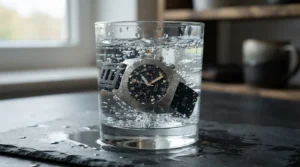
A water resistance rating for trackers describes lab pressure tests, not a depth you should swim to. One atmosphere (1 ATM) is roughly the pressure at 10 m of water, so 5ATM equals 50 m. Pressure builds as you move your arm through water, which is why Live Science points out that ratings don’t reflect real swimming forces.
In practice:
- 5ATM: fine for showers, rain and pool or open-water swimming where the maker says so. This covers the Amazfit Active 2, Garmin Forerunner 165, Coros Pace 4, Garmin Forerunner 570 and Garmin Forerunner 970.
- WR50 (Apple’s equivalent): similar to 5ATM. The Apple Watch SE 3 sits here.
- 10ATM or WR100: a bigger safety margin for daily swimming, such as the Apple Watch Ultra 3 and Garmin Fenix 8.
Here’s the key insight. Spending more doesn’t make a watch count lengths better; the extra money buys durability margin, brighter displays and longer battery. Also, a rating describes a new watch. Seals age, and knocks, heat and soap shorten that life.
Swimproof Fitness Tracker: Pool, Lake and Sea Realities
A swimproof fitness tracker faces three very different worlds. Pools are easy: chlorine is the only enemy, and a quick rinse sorts it. Lakes add cold and murky water, which can trouble sensors. The sea brings salt, waves and temperature extremes.
The RNLI’s open-water advice is worth reading before you go. It highlights cold water shock as a danger in water of 15°C or below, and it advises acclimatising slowly rather than jumping straight in. A watch can’t save you from that, but the display on something like the Apple Watch Ultra 3 can help you monitor time in the water. Never treat any device as a safety aid.
Practical care routine:
- 🧼 Rinse with fresh water after every sea or chlorine swim.
- 🔒 Lock the screen before entering.
- 🔥 Skip hot tubs and saunas; heat can stress seals.
- 🧴 Dry the strap properly to avoid skin irritation.
Remember, 5ATM watches such as the Garmin Forerunner 165 are designed for swimming, but a 100 m rating gives extra margin for frequent open-water use.
Swim Tracking Explained: Metrics That Actually Matter
Good swim tracking boils down to four metrics.
Distance and pace per 100 m. The watch counts lengths via its accelerometer, so setting the correct pool length is essential.
Stroke count and type. The watch recognises freestyle, backstroke, breaststroke and butterfly, and logs how many strokes you take per length.
SWOLF. This combines strokes taken with time per length. TechRadar describes it as a score of how efficiently you move, and lower is generally better. The Apple Watch SE 3 and Apple Watch Ultra 3 both show it.
Open-water GPS. Pools use accelerometers; lakes and seas use satellites. Dual-band GPS on models like the Suunto Race S helps reduce wobble.
What reviewers say is that the basics are strong across all these watches, and the differences lie in analysis. Here’s a way to think about it: if you want to improve your technique, SWOLF and stroke count trends matter more than a single swim’s distance. If you only want to log fitness, almost any option here will do.
Fitness Tracker for Triathlon Training: What to Look For
A fitness tracker for triathlon training must do three jobs: hold up in water, last through long bricks, and switch sports cleanly. Here’s what separates the contenders.
Multisport mode. A true triathlon profile switches from swim to bike to run with transitions logged, rather than forcing you to start three separate activities. The Garmin Forerunner 570, Garmin Forerunner 970, Coros Pace 4 and Suunto Race S all offer triathlon modes.
Coaching. The Garmin Forerunner 970’s Triathlon Coach pulls all three sports into a single plan. The Garmin Forerunner 570 gets triathlon plans and structured multisport workouts, too.
Battery. A half-Ironman can run past five hours. Models with 26 to 41 hours of GPS (the Garmin Forerunner 970, Coros Pace 4) offer huge headroom, while around 18 hours on the Apple Watch Ultra 3 is fine for most events.
Comfort. Light cases such as the 32 g Coros Pace 4 are easier to wear for hours, whereas the Garmin Forerunner 970 is bulkier.
Bottom line: for a first sprint triathlon, the cheaper watches here are more than adequate. Save the premium coaching software for when training volume actually justifies it.
Multi-Sport Wearables vs Single-Sport Running Watches
Multi-sport wearables track swim, bike and run, and often hiking, strength and more. Dedicated run-only trackers are cheaper and simpler. Which one suits you?
If you only run and never swim, a basic GPS running tracker is plenty. But the moment you add a weekly swim or a bike commute, multi-sport wearables become better value than owning multiple devices. Here’s how the options compare.
| Option | Waterproof Swim Use | Best For |
|---|---|---|
| Phone-only tracking | None, phone not swim-safe | Casual runners |
| Basic fitness band | Often 5ATM, limited GPS | Step counters |
| Dedicated running watch (Garmin Forerunner 165) | 5ATM, swim mode | Run-first athletes |
| Multi-sport wearables (Garmin Forerunner 970, Coros Pace 4) | 5ATM plus triathlon modes | Cross-training athletes |
The analysis is straightforward. A phone-only approach fails the moment water appears, and basic bands often lean on your phone for GPS. The Garmin Forerunner 165 hits the sweet spot for run-first athletes who swim occasionally, while multi-sport wearables like the Coros Pace 4 reward those who genuinely mix sports. The key is not paying for modes you’ll never use.
Long-Term Cost and Maintenance
Think in cost per session rather than sticker price. Suppose you train five days a week for three years, about 780 sessions. A £450 watch works out at roughly 58p per session, while a £120 watch comes to about 15p. Meanwhile, the cheaper watch may lack coaching features that keep you motivated, so the “right” answer depends on how much you’ll use the extras.
Ongoing costs to consider:
- 🔧 Replacement straps (watch bands wear faster with chlorine and salt).
- 🔋 Battery degradation: expect reduced life after a few years.
- 📱 Software support: Garmin, Coros and Suunto have long histories of updating older devices, while support lifespans for newer entrants can vary.
Maintenance habits that protect your investment: rinse after each swim, dry thoroughly, avoid extreme heat, and replace the watch if the glass cracks, since a cracked case is no longer swim-ready. A Garmin Forerunner 165 treated well can comfortably last several seasons; a pricey Apple Watch Ultra 3 gets better long-term value if you use its full toolset.
FAQ
❓ Is 5ATM enough for sea swimming with a waterproof fitness tracker for running?
❓ Can I wear a swimproof fitness tracker in a sauna or hot tub?
❓ What is the cheapest fitness tracker for triathlon training?
❓ Do multi-sport wearables track open-water swim distance accurately?
❓ How long does a water resistance rating for trackers last?
Conclusion
The best waterproof fitness tracker for running isn’t the most expensive one. It’s the one whose water resistance, battery and coaching match how you actually train. For most runners who swim occasionally, the Garmin Forerunner 165 or Coros Pace 4 covers everything at a sensible price. If budget is tight, the Amazfit Active 2 gets you swim-ready GPS for little outlay. Maps matter to you? The Suunto Race S earns a look. Moving into triathlon, the Garmin Forerunner 570 and Garmin Forerunner 970 add real coaching, and the Apple Watch Ultra 3 is the premium choice for iPhone owners who want a 100 m rating.
Remember the big idea: a water resistance rating for trackers tells you about lab tests, not a depth limit, and good swim tracking depends as much on setup as hardware. Whichever watch you choose, set pool length correctly, rinse after swimming, and keep the firmware up to date.
Recommended for You
- Heart Rate Monitor For Running: 7 Best Picks For UK Runners (2026)
- Chest Strap vs Wrist Heart Rate Monitor: 7 Ultimate Picks (2026)
- Fitness Tracker For Running: 7 Best UK Picks, Ranked (2026)
Disclaimer: This article contains affiliate links. As an Amazon Associate, I earn from qualifying purchases. If you purchase products through these links, we may earn a small commission at no additional cost to you.
✨ Found this helpful? Share it with your friends! 💬🤗
