

In This Article
Bone conduction headphones for running are open-ear headphones that send sound as tiny vibrations through your cheekbones to the inner ear, instead of through the ear canal. Your ears stay uncovered, so you hear your playlist, podcast or pace alerts and also the footsteps, bike bells and engines around you. The principle is well established, and bone conduction is also used in audiology and hearing-aid design.

Picture a damp Tuesday morning, a narrow pavement and a delivery van reversing out of a drive. Earbuds that seal your ear canal wrap you in your own private world, and that is the whole appeal of them. It is also exactly what you don’t want when the van starts beeping. That trade-off is why bone conduction headphones for running have gone from curiosity to mainstream among UK runners. Better sound, longer battery life and sturdier fits have arrived together.
This guide covers seven real models across budget, mid-range and premium tiers. We look at bone conduction headphones battery life as a runner actually lives it, not just as the box claims it. We cover bone conduction headphones for road running, practical situational awareness, and how open-ear technology differs from the alternatives.
One note on method: everything below comes from published specifications and aggregated reviewer feedback, not from lab testing of my own. Prices are ranges at the time of research, so check current price before buying.
Quick Comparison: The 7 Best Bone Conduction Headphones for Running at a Glance
| Product | Best For | Rated Battery | Water Rating | Price Range |
|---|---|---|---|---|
| Shokz OpenRun Pro 2 | Premium all-rounder | Up to 12 hours | IP55 | around £140-£170 |
| Shokz OpenRun Pro 2 Mini | Smaller or narrower heads | Up to 12 hours | IP55 | around £135-£170 |
| Shokz OpenRun | Best value, wet-weather runners | Up to 8 hours | IP67 | around £95-£130 |
| Shokz OpenMove | Tight budgets, first-timers | Up to 6 hours | IP55 | around £60-£80 |
| Shokz OpenSwim Pro | Triathletes and swim-runners | 9 hours Bluetooth / 6 hours MP3 | IP68 | around £150-£180 |
| Suunto Wing 2 | Dark-morning visibility | Up to 12 hours, plus power bank | Check listing | around £150-£170 |
| Nank Runner Diver2 Pro | Budget swim-capable pick | Up to 10 hours | IP68-IP69 (listings vary) | around £120-£150 |
Looking at the table, the Shokz OpenRun Pro 2 and Shokz OpenRun Pro 2 Mini share the longest rated battery and the best sound in the group. The Shokz OpenRun quietly wins on weather protection, with an IP67 rating the Pro models don’t match. If you only need the basics, the Shokz OpenMove costs roughly half the price of the premium pairs while still delivering genuine open-ear listening.
💬 Just one click — help others make better buying decisions too!😊
Top 7 Bone Conduction Headphones for Running: Expert Analysis
Each pick below gets the same treatment: what stands out, what the specs mean on the road, who it suits, and what reviewers keep saying.
1. Shokz OpenRun Pro 2 — best all-round sound for runners
The headline feature of the Shokz OpenRun Pro 2 is its hybrid driver design, which adds a small air-conduction speaker to the bone conduction transducers.
Shokz’s DualPitch system gives bone conduction the mids and highs, while the air driver handles bass. That directly tackles the usual complaint about this category, thin and buzzy low end. Battery is rated up to 12 hours, a five-minute quick charge adds roughly 2.5 hours, and the weight is about 30g. On a long run that is light enough to forget.
Based on the spec comparison, this is the pair for daily runners who want one set for music, podcasts and calls. The catch is the IP55 rating, a step below the Shokz OpenRun‘s IP67, which reviewers link to the tiny grilles the air driver needs. It copes with sweat and heavy rain, but I wouldn’t treat it as a dunk-it-in-a-puddle product.
Reviewers consistently praise the secure fit and all-day comfort. Common complaints are some sound leakage at higher volumes, bass that still trails in-ear models, and real-world battery dipping below 12 hours when volume sits near maximum.
Pros:
- ✅ Fuller bass than pure bone conduction rivals
- ✅ Long rated battery with fast top-ups
- ✅ Secure, lightweight fit for long runs
Cons:
- ❌ IP55 is weaker than the cheaper OpenRun
- ❌ Air driver leaks sound at higher volumes
Price: around £140-£170 at the time of research. Premium, but daily runners will see the value.

2. Shokz OpenRun Pro 2 Mini — same sound, shorter band for smaller heads
Everything that makes the Shokz OpenRun Pro 2 Mini good is shared with its bigger sibling, but the headband is about 0.83 inches shorter.
That sounds trivial until the standard band slides down at the back of your head on the last mile. You get the same DualPitch audio, up to 12 hours of rated battery, IP55 protection, Bluetooth 5.3 and USB-C charging at around 29-30g. Fit is the real specification here, because bone conduction only works properly when the transducers press firmly against your cheekbones.
Here’s what to weigh: if hats, hoods or a smaller head tend to make headphones wobble, the Mini is the safer bet. It isn’t a “women’s version”; it’s simply sized for narrower heads.
Buyers with narrower heads report a snugger, more stable fit than on the full-size model. A few note that the shorter band sits differently at the back of the head, so a quick fit check in the return window is wise.
Pros:
- ✅ Snugger fit for smaller or narrower heads
- ✅ Same hybrid sound and 12-hour rating
- ✅ Quick charge gives hours of playback
Cons:
- ❌ Same IP55 rating as full-size model
- ❌ Premium price for a niche size
Price: around £135-£170 range. Worth paying only if the standard size genuinely doesn’t fit.
3. Shokz OpenRun — best value with proper wet-weather protection
The Shokz OpenRun, formerly sold as the Aeropex, is the lightest pair here at about 26g and carries an IP67 rating.
IP67 means it can survive immersion in a metre of water for up to 30 minutes, so a soaking November long run is no drama. Battery is rated at 8 hours, and a 10-minute quick charge gives about 1.5 hours, which is plenty for a short run if you forgot to plug in. For context, a three-hour long run uses just over a third of the rated battery.
My honest analysis is that the Shokz OpenRun is the sensible buy for most runners. You give up some bass, the latest Bluetooth version and fine-tuned customisation, but you keep the open-ear fit that matters. Check which charging connector your listing specifies, as USB-C and older magnetic-cable versions have both been sold.
Reviewers describe it as excellent value, with sound broadly comparable to the Pro line but less punchy bass and shorter battery.
Pros:
- ✅ IP67 handles rain, sweat and puddles
- ✅ Lightest pair in this guide
- ✅ Quick charge rescues forgotten batteries
Cons:
- ❌ Less bass than the Pro 2 models
- ❌ Fewer sound customisation options
Price: around £95-£130 range. Strong value, especially when retailers discount it.
4. Shokz OpenMove — cheapest way into open-ear running
The Shokz OpenMove is Shokz’s entry model, and its appeal is simple: genuine bone conduction without the premium price.
It offers a rated 6 hours of battery, IP55 protection, a 135mAh cell and a two-hour USB-C charge. It uses seventh-generation bone conduction and gives you two EQ modes: standard for outdoor use and a vocal booster for podcasts and audiobooks. Six hours comfortably covers any marathon plus a margin, but it also means charging more often than with the 12-hour models.
This is the pair I’d suggest to someone unsure whether bone conduction suits them. If the sensation annoys you, you’ve lost very little. If it clicks, you can upgrade later knowing exactly which features you missed.
Reviewers often say the sound is good for the price, though audio is clearly a notch below newer models, particularly at higher volumes.
Pros:
- ✅ Lowest entry price for genuine bone conduction
- ✅ Vocal booster mode suits podcasts
- ✅ USB-C charging, IP55 protection
Cons:
- ❌ Shortest battery of the seven
- ❌ Older bone conduction generation, less bass
Price: around £60-£80 range. Excellent starter value.
5. Shokz OpenSwim Pro — one pair for pool, road and bike
The Shokz OpenSwim Pro is the multisport option, with IP68 waterproofing, Bluetooth 5.4 and 32GB of built-in MP3 storage for underwater playback.
Bluetooth doesn’t travel well underwater, so MP3 mode is what makes pool sessions possible. Rated battery is 9 hours on Bluetooth and 6 hours in MP3 mode, a 10-minute quick charge gives about three hours, and weight is roughly 27g. Earplugs are included for swimming.
For triathletes, this removes the need to carry two sets. For pure runners it’s overkill, and reviewers note that sound sits a notch below the run-specific Shokz OpenRun Pro 2, with slightly less bass and a bit more vibration at maximum volume.
Aggregated feedback is positive on fit and sound quality, with one triathlon magazine scoring it very highly. Some buyers report battery falling well short of the claimed hours, and transferring MP3 files is described as fiddly.
Pros:
- ✅ IP68 rating survives pool and open water
- ✅ 32GB storage for phone-free swims
- ✅ Light, secure fit for multisport
Cons:
- ❌ Sound trails the Pro 2 slightly
- ❌ MP3 file transfer feels fiddly
Price: around £150-£180 range. Worth it only if you actually swim.

6. Suunto Wing 2 — built-in LED lights for dark mornings
What sets the Suunto Wing 2 apart is a pair of red LED lights on the headphones themselves, a rare feature for UK winter running.
Battery is rated up to 12 hours (Suunto’s own guidance is at least 10 hours at 60% volume with lights and gesture controls off), and an included power bank case extends that considerably. Retailers quote anywhere from doubling the runtime to an extra 24 hours, so check the listing. It also supports head-gesture controls, Suunto app customisation and voice feedback from compatible Suunto watches.
For runners on dark commutes, the lights add a small but real visibility bonus. The compromise is audio: reviewers place it below the Shokz OpenRun Pro 2, noting noticeable sound leakage, and one consumer review suggests it may not suit smaller heads.
Reviewers like the battery system and the clever extras but consistently say the sound is decent rather than outstanding.
Pros:
- ✅ Built-in LEDs boost visibility in poor light
- ✅ Power bank case extends runtime
- ✅ Head-gesture controls with watch integration
Cons:
- ❌ Sound quality sits below Pro 2
- ❌ May feel loose on smaller heads
Price: around £150-£170 range. A fair deal if the lights and power bank matter to you.
7. Nank Runner Diver2 Pro — swim-capable pick from a lesser-known brand
The Nank Runner Diver2 Pro is the outsider here, bringing 32GB of MP3 storage and high waterproofing at a lower RRP than the Shokz swim model.
It offers up to 10 hours of battery, Bluetooth 5.4 and an adjustable ear-hook design with a 35° range, which helps tune the fit. Reviewers cite an IP69 rating, though some retailers quote IP68, so confirm before swimming. Earplugs and an MP3 mode make it a genuine two-environment device.
Based on the specs, it suits budget-conscious multisport athletes who want more than a basic running pair. The trade-off is ecosystem: it’s mostly sold direct, so you’ll find fewer high-street shops to try before you buy.
One UK review praised its clarity and confirmed that the 10-hour claim held up. Another described the build as rubberised plastic rather than premium metal, though still well made.
Pros:
- ✅ Adjustable ear-hook helps fit tuning
- ✅ 32GB MP3 mode for swimming
- ✅ Battery claim holds up in reviews
Cons:
- ❌ Mostly sold direct, fewer try-before-you-buy options
- ❌ Plastic build feels less premium
Price: around £120-£150 range. Good value for swim-run athletes.
How the Seven Compare on Features That Shape Daily Use
| Product | Standout Feature | Charging | Best For |
|---|---|---|---|
| Shokz OpenRun Pro 2 | Hybrid bone and air drivers | USB-C, 5 minutes for about 2.5 hours | Daily all-rounders |
| Shokz OpenRun Pro 2 Mini | Shorter band | USB-C, quick charge | Smaller heads |
| Shokz OpenRun | IP67 and 26g | 10 minutes for about 1.5 hours | Wet-weather value |
| Shokz OpenMove | Vocal booster EQ | USB-C, two hours | Beginners |
| Shokz OpenSwim Pro | IP68 plus MP3 | 10 minutes for about 3 hours | Triathletes |
| Suunto Wing 2 | LED lights | USB-C plus power bank | Dark commutes |
| Nank Runner Diver2 Pro | Adjustable ear-hook | Pogo-style pins, fast charging | Budget multisport |
The charging column tells a story the headline battery hours miss. The Shokz OpenSwim Pro and Shokz OpenRun Pro 2 recover hours from a short top-up, which suits forgetful runners. The Suunto Wing 2‘s power bank turns charging into something you carry, while the Shokz OpenMove rewards a nightly habit.
✨ Don’t Miss These Exclusive Deals!
🔍 Take your running to the next level with these carefully selected products. Click on any highlighted item to check current pricing and availability. These picks will help you enjoy stress-free, safer runs you’ll look forward to every week!
How to Choose Bone Conduction Headphones for Running
Choosing well comes down to seven checks, in this order:
- Confirm the technology. “Open ear” is not the same as bone conduction. Some listings use small air-conduction speakers instead, which feel and sound different.
- Check the fit and size. The transducers must press on your cheekbones, so head size matters. That’s why the Shokz OpenRun Pro 2 Mini exists.
- Match battery to your longest run. Add 30% headroom for volume and cold weather.
- Choose the right water rating. IP55 handles rain and sweat; IP67 or IP68 suits wetter or multisport use.
- Weigh sound against price. Hybrid designs like the Shokz OpenRun Pro 2 sound fuller but cost more.
- Think about extras. Lights, MP3 storage and gesture controls only matter if you’ll use them.
- Check the return window. Fit is personal, and a two-week trial run beats any review.
Bone Conduction Headphones Battery Life: What the Rated Hours Really Mean
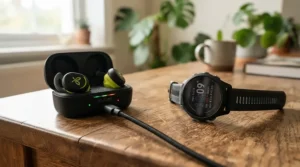
Bone conduction headphones battery life is quoted under ideal conditions, typically moderate volume, no calls and room temperature. Real runs are rarely ideal. Reviewers consistently report that listening near maximum volume drains the Shokz OpenRun Pro 2 noticeably faster than its 12-hour claim, and cold UK mornings can shave more off.
A practical rule: treat the rated figure as 70-80% of what you’ll get when planning. A 12-hour rating becomes roughly nine to ten hours, still excellent. The Shokz OpenMove‘s 6 hours becomes about four and a half, which is fine for a half marathon but tight for a slow marathon.
Quick charging changes the maths more than raw capacity. A five-minute top-up on the Shokz OpenRun Pro 2 or a ten-minute one on the Shokz OpenRun rescues most runs. The Suunto Wing 2‘s power bank covers the rest. If you do ultra-distance, battery capacity, not sound, should be your deciding spec.
Bone Conduction Headphones for Road Running: Safety, Visibility and the Highway Code
Bone conduction headphones for road running earn their reputation here. Because your ear canals stay open, you can still hear approaching engines, cyclists and the shout of a fellow pedestrian.
The Highway Code’s rules for pedestrians reinforce why that matters. Rule 7 tells pedestrians to look all around and listen for traffic before crossing, and Rule 3 encourages bright or reflective clothing in poor light. Neither rule is a ban on headphones, but both assume you can use your ears.
Practical habits for bone conduction headphones for road running:
- Keep the volume low enough to hear a conversation beside you.
- Run facing traffic where there’s no pavement, as Rule 2 advises.
- Add reflective gear in autumn and winter, or consider the Suunto Wing 2 for its built-in lights.
- Check any organised race’s own rules, since some events restrict headphones.
Open ears are an advantage, not a licence to switch off.
Situational Awareness: What You Gain With Open Ears, and What You Don’t
Situational awareness simply means noticing what’s happening around you early enough to react. Open-ear listening protects that in a way sealed earbuds cannot. You hear a cyclist’s freewheel, a dog lead snapping tight or a car slowing behind you.
But it isn’t magic. Loud music still masks ambient sound, and bone conduction vibrations can compete with traffic noise on busy roads. Reviewers also note that noisy city streets reduce what you hear of your own audio, so many people turn the volume up, which erodes the awareness benefit.
Wind is another factor. Gusts across the mics and your ears reduce what you hear whichever headphones you use, so situational awareness always depends on habit as much as hardware. Treat open ears as a safety net that works best alongside simple discipline: moderate volume, eyes up, and one earpiece-free moment before every crossing.
Open-Ear Technology Explained: Bone Conduction vs Air Conduction vs In-Ear
Open-ear technology covers any headphone that leaves the ear canal unblocked, and it splits into two main approaches. Bone conduction vibrates the skull directly. Air conduction uses tiny directional speakers that sit near the ear. Hybrids like the Shokz OpenRun Pro 2 combine both.
| Feature | Bone Conduction | Air-Conduction Open-Ear | Traditional In-Ear |
|---|---|---|---|
| Situational awareness | Excellent | Very good | Limited unless transparency mode is on |
| Bass | Light, hybrids improve it | Moderate | Strongest |
| Sound leakage | Some at high volume | More noticeable | Minimal |
| Comfort on long runs | No ear pressure | No ear pressure | Can cause ear fatigue |
| Best For | Road runners, e.g. Shokz OpenRun | Casual walkers and gym users | Gym and commuting |
The table shows why bone conduction wins for outdoor safety but loses on bass. In-ear buds also sit closer to the eardrum, and Which? reports that this can make them up to 9dB louder at the same device volume. If bass is your priority, choose a hybrid. If awareness is, choose a pure bone conduction pair like the Shokz OpenRun.
Open-Ear Headphones for Outdoor Training: Trails, Cycling and the Gym
Open-ear headphones for outdoor training aren’t just for pavement pounding. On trails, hearing a mountain biker approaching from behind or a branch cracking underfoot is genuinely useful. Open-ear headphones for outdoor training also suit hillwalking, where wind, stream noise and livestock are all things you’d rather hear.
For cycling, an open-ear fit keeps you aware of traffic, though you should always follow the rules for your area. In the gym, open-ear pairs let you hear a spotter or class instructor. The Shokz OpenSwim Pro and Nank Runner Diver2 Pro extend the idea to pools, with MP3 storage because Bluetooth doesn’t work reliably underwater.
If you mix disciplines, prioritise water protection and fit stability over audio finesse. The Shokz OpenRun at IP67 handles most outdoor conditions, while the Shokz OpenMove is a sensible low-cost option for casual gym and walking use. Rinse swim models in fresh water afterwards; Shokz suggests a short soak after open-water sessions to remove salt.

Features That Actually Matter (And Those That Don’t)
Marketing language can make every spec sound essential. Here’s the filtered version.
Features that matter: fit stability, because nothing else works if the headphones bounce; water rating suited to your climate; real-world battery, not headline hours; and a return window long enough to test fit.
Features that mostly don’t: extra EQ modes you’ll set once and forget, gesture controls you may switch off, and exotic colours. Even app customisation, valuable on the Shokz OpenRun Pro 2, matters less than getting the basics right.
It depends: MP3 storage on the Shokz OpenSwim Pro or Nank Runner Diver2 Pro is essential for swimmers and irrelevant for everyone else. The Suunto Wing 2‘s LEDs are a bonus for dark commutes but easy to ignore in summer.
Treat sound quality as a sliding scale. Bone conduction headphones for running will never match studio headphones, and that’s fine. You’re buying safe, comfortable listening, not an audiophile experience.
Setting Up Bone Conduction Headphones for Running: Your First 30 Days
Transformation starts with fit. Rest the band across the back of your head so the transducers sit just in front of your ears on the cheekbone. Wiggle your head and jog on the spot; they should stay put.
- Week one: Start at about half volume and short runs. Many first-timers need time to adjust to the vibration. Layer glasses, hats and hoods in different orders to find what works.
- Week two: Install the manufacturer’s app and update firmware if offered. Try the EQ options.
- Weeks three and four: Settle into a charging habit. Top up after long runs, not before.
Common first-month mistakes: cranking volume to fight wind, which drains battery and increases leakage; not drying them after sweaty runs; and forgetting reflective kit because “I can hear traffic”. Wipe the pads after each run, and let them dry before charging. After swims, give swim models a fresh-water rinse.
Real-World Scenarios: Which Pair Suits Which Runner?
Scenario 1: The city commuter. You run six miles, four mornings a week, on pavements and through rain. Budget is around £100-£130. The Shokz OpenRun fits: IP67, 8 hours of battery and light weight, with quick charging for forgetful moments.
Scenario 2: The small-headed trail runner. You run hilly routes twice a week, usually in a hat, and standard headphones always slip. Budget stretches to around £150. The Shokz OpenRun Pro 2 Mini addresses the fit problem directly while delivering fuller bass for podcasts and music on long climbs.
Scenario 3: The weekend triathlete. You swim, ride and run across the week, often in different conditions. Budget isn’t the main limit. The Shokz OpenSwim Pro covers all three with MP3 storage for the pool, while the Nank Runner Diver2 Pro is a cheaper alternative if you can accept fewer shops to try them in.
Scenario 4: The dark-morning runner. You run at 6am through winter on lit roads. The Suunto Wing 2 gives you a small visibility boost, though you should still wear proper reflective kit.
Problem and Solution: Fixing Common Bone Conduction Headphones for Running Complaints
“The sound is thin.” Choose a hybrid like the Shokz OpenRun Pro 2, or use the app’s EQ and a bass-boost preset on pure bone conduction pairs such as the Shokz OpenRun.
“They vibrate at high volume.” Lower the volume. Vibration rises sharply near maximum, as reviewers of the Shokz OpenSwim Pro have noted, and quieter listening is better for your ears anyway.
“Other people can hear my music.” Leakage is a known trait, worse on some models like the Suunto Wing 2. Keep volume moderate in shared spaces.
“They keep slipping.” Try the Mini size, adjust the band position, or check your hat layering.
“The battery died on my long run.” Charge before every long run, use quick charge, and consider the Suunto Wing 2 with its power bank if you run ultras.
Hearing Safety and Long-Term Cost of Bone Conduction Headphones for Running
Open ears don’t mean invincible ears. Your cochlea still processes the vibrations, so loud listening for long periods can still cause harm. One NHS trust leaflet on noise exposure advises keeping device volume no higher than 60%, and the same logic applies here. Which? also notes that hearing loss affects about one in six UK adults, according to an NHS report.
Cost matters too. Assuming four runs a week for three years, roughly 620 runs, the maths works out as follows, using the middle of each price range:
| Product | Approx. Mid-Range Price | Approx. Cost Per Run | Best For |
|---|---|---|---|
| Shokz OpenMove | about £70 | roughly 11p | Beginners |
| Shokz OpenRun | about £112 | roughly 18p | Value seekers |
| Nank Runner Diver2 Pro | about £135 | roughly 22p | Budget multisport |
| Shokz OpenRun Pro 2 | about £155 | roughly 25p | Daily all-rounders |
| Suunto Wing 2 | about £160 | roughly 26p | Dark-commute runners |
| Shokz OpenSwim Pro | about £165 | roughly 26p | Triathletes |
Per run, even the dearest pair costs under 30p, so the real question isn’t price but whether you’ll wear them. The Shokz OpenRun is the sweet spot between cost and durability, while the Shokz OpenMove is the cheapest route to finding out whether bone conduction suits you. Everything here is a battery-powered gadget, so assume eventual battery wear and budget accordingly.

FAQ
❓ Are bone conduction headphones for running better than earbuds?
❓ Should I buy the standard or Mini size?
❓ Can I swim with bone conduction headphones?
❓ Do bone conduction headphones leak sound?
❓ Is it worth paying more for the Pro 2 over the OpenRun?
Conclusion
Choosing between bone conduction headphones for running comes down to what you’ll genuinely do. The Shokz OpenRun Pro 2 is the best all-round pick for daily runners who want fuller sound and long battery life, and the Shokz OpenRun Pro 2 Mini solves the fit problem for smaller heads. The Shokz OpenRun is the sensible value choice with IP67 protection, and the Shokz OpenMove is the low-risk entry point. Triathletes should look at the Shokz OpenSwim Pro or the Nank Runner Diver2 Pro, while the Suunto Wing 2 earns its place for dark mornings.
Whichever you choose, remember that bone conduction headphones battery life is best planned conservatively, and open-ear technology is a safety net rather than a safety guarantee. Keep volume moderate, keep your eyes up, and wear reflective kit. Do that, and you get the best of both worlds: your soundtrack and your surroundings.
Recommended for You
- Bone Conduction Vs Wireless Earbuds For Running: 7 Best Picks (2026)
- Running Earbuds Under £50: 7 Best Picks That Stay Put (2026)
- Shokz Running Headphones: 7 Best Picks For UK Runners (2026)
Disclaimer: This article contains affiliate links. As an Amazon Associate, I earn from qualifying purchases. If you purchase products through these links, we may earn a small commission at no additional cost to you.
✨ Found this helpful? Share it with your friends! 💬🤗
