
In This Article
Somewhere around mile nine of a long Sunday run, most of us stop thinking about pace and start thinking about biscuits. That craving isn’t weakness — it’s your body screaming for glycogen. A recovery drink for runners is a fast, portable way to answer that scream with something more useful than a packet of custard creams: a measured hit of carbohydrate and protein designed to refill your fuel tank and start repairing muscle fibre before you’ve even had a shower. Get it right and the ache the next morning is manageable. Get it wrong — or skip it altogether — and you’re dragging leaden legs into Tuesday’s session.
This guide walks through seven genuinely available recovery drinks, from elite-team staples to budget-friendly options you can pick up without remortgaging the house. Every product here is cross-checked against real specs and aggregated UK reviewer sentiment, not marketing copy. What is a recovery drink for runners, in plain terms? It’s a post-exercise supplement, usually a carbohydrate-and-protein powder or ready-to-drink shake, formulated to replenish muscle glycogen and supply amino acids for repair within the window after training when your body is most receptive to both. We’ll cover what actually matters on the label, what’s mostly noise, and — crucially — which bottle suits a couch-to-5K beginner versus someone deep into marathon block training. According to the British Nutrition Foundation’s sport and exercise guidance, it’s a good idea to pair carbohydrate with protein both before and after exercise to properly replenish glycogen stores — which is precisely the job these products are built to do.
Quick Comparison Table
| Product | Best For | Protein per Serving | Price Range |
|---|---|---|---|
| SiS REGO Rapid Recovery | Best overall for serious training blocks | 20-22g | £20-£55 depending on size |
| HIGH5 Recovery Drink | Best balanced protein-to-carb ratio | 20g | £25-£40 |
| TORQ Recovery Drink | Best natural, no-artificial-sweetener formula | 11.5g | £20-£55 |
| For Goodness Shakes | Best grab-and-go, no mixing required | 15-17g | £10-£18 |
| Optimum Nutrition Gold Standard Whey | Best pure protein / most versatile | 24g | £20-£55 |
Looking across the field, there’s a clear split between complete recovery formulas — which pair carbohydrate, protein and electrolytes in one scoop — and pure protein powders like Optimum Nutrition Gold Standard Whey, which assume you’ll get your carbs from a banana or a slice of toast. Neither approach is objectively better; it depends on whether you’d rather your drink do all the work or share the job with real food. Budget-conscious runners doing three short sessions a week may find a pure whey option like Optimum Nutrition Gold Standard Whey stretches further, while marathon-block runners juggling back-to-back long runs generally get more consistent results from a dedicated carb-protein formula such as SiS REGO Rapid Recovery.
💬 Just one click — help others make better buying decisions too!😊
Top 7 Recovery Drinks for Runners: Expert Analysis
1. SiS REGO Rapid Recovery — the elite-trusted 1:1 formula
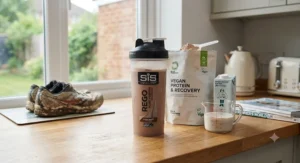
Science in Sport built REGO around a 1:1 ratio of carbohydrate to protein, and that ratio is the whole point. Each serving delivers roughly 20-22g of whey protein alongside a matched dose of fast-digesting carbs, electrolytes and a vitamin-mineral blend, mixed into 500ml of cold water rather than milk (mixing with milk slows the absorption rate SiS engineered it for). Based on the spec comparison with the rest of this list, REGO sits at the more protein-forward end — useful if your training includes strength work alongside running, since that extra protein supports muscle repair beyond simple glycogen top-up. It’s the product backed by professional cycling teams including Ineos Grenadiers, which says less about magic ingredients and more about consistent batch quality, something serious athletes can’t compromise on.
Reviewers consistently report that REGO mixes smoothly without the gritty texture that plagues cheaper recovery powders, and the chocolate flavour is repeatedly singled out as more “real cocoa” than artificial. A recurring complaint in user reviews is the price relative to portion size, particularly for the smaller bags — something to weigh if you’re using it daily rather than after long efforts only.
Pros:
- ✅ Research-backed 1:1 protein-to-carb ratio for serious training
- ✅ Smooth mixing texture reviewers rate highly
- ✅ Trusted by professional endurance and cycling teams
Cons:
- ❌ Among the pricier options per serving
- ❌ Not suitable to mix with milk without slowing absorption
Prices sit in the £20-£30 range for the smaller bags and around £45-£55 for the bulk 1.5kg option — check current price, as sizes and Subscribe & Save discounts shift regularly. For anyone training seriously for a spring marathon, this is worth the premium; casual 5K joggers may find it overkill.
2. HIGH5 Recovery Drink — best balanced 20g protein, 20g carb ratio
HIGH5’s recovery formula mirrors the same 1:1 logic as REGO but leans harder into stomach comfort, which matters more than most runners realise until they’re doubled over after a shake that didn’t agree with them. Each serving provides 20g of whey protein and 20g of fast-release carbohydrate, plus a genuinely useful electrolyte spread — sodium, potassium, magnesium, chloride and calcium — aimed at replacing what you actually sweat out rather than just ticking a label box. What most buyers overlook about this one is the added digestive support: it’s formulated to be gentle on sensitive stomachs, a detail that matters enormously after a hard tempo run when your gut is the last thing you want to test.
Aggregated review sentiment is strongly positive on taste across the Chocolate and Strawberry Milkshake flavours, with reviewers repeatedly describing it as genuinely drinkable rather than “supplement-tasting.” A common complaint is that the tub empties faster than expected once you’re using it after every session, which is really a function of serving size rather than a flaw.
Pros:
- ✅ Even 20g protein to 20g carb split, easy to remember
- ✅ Full electrolyte profile for proper rehydration
- ✅ Gentle formulation praised for sensitive stomachs
Cons:
- ❌ Large 1.6kg tub is bulky to store
- ❌ Fewer flavour options than some rivals
Expect to pay somewhere in the £25-£40 range for the 1.6kg tub, which typically covers around 32 servings — working out as reasonable value per shake once you do the maths, even if the upfront price looks steep.
3. TORQ Recovery Drink — best natural formula, zero artificial sweeteners
TORQ takes a different route entirely: no artificial colours, no chemical sweeteners, just glucose polymers, fructose, whey protein isolate, D-Ribose and L-Glutamine in a 3:1 carbohydrate-to-protein ratio. That heavier carb lean makes sense once you understand who TORQ is built for — endurance athletes prioritising glycogen replenishment over pure muscle-building protein loads, which is exactly the profile of most club runners logging 30+ miles a week. On paper, the inclusion of D-Ribose is the standout: it’s a nutrient TORQ markets as supporting cellular-level energy refreshment, though it’s worth noting the wider research base for D-Ribose’s endurance benefits is thinner than for the carb-protein ratio itself, so treat that particular claim as a nice-to-have rather than the main event.
Reviewers frequently praise the “proper milkshake” texture and the fact it doesn’t taste artificially sweet — a direct payoff of the no-sweetener formulation. Some reviews note the flavour range is narrower than competitors, with Banana/Mango and Cookies & Cream as the standout picks.
Pros:
- ✅ Naturally sweetened with no artificial additives
- ✅ 3:1 carb-to-protein ratio suits high-mileage endurance training
- ✅ Genuine milkshake texture reviewers rate highly
Cons:
- ❌ Lower protein per serving than whey-focused rivals
- ❌ Smaller flavour range than some competitors
Single-serve boxes of 10 sachets typically run around £20-£25, while the bulk 1.5kg tub sits nearer £45-£55. If your weekly mileage is high but you’re not chasing muscle mass, TORQ’s carbohydrate-heavy approach is arguably the smarter fit than a protein-dominant formula.
4. For Goodness Shakes Recovery Drink — best grab-and-go, zero mixing required
Not every runner wants to faff about with a shaker bottle at 7am before work. For Goodness Shakes solves that with a ready-to-drink 435ml bottle delivering 15-17g of milk protein (a whey-casein blend) alongside B12, folic acid, niacin and vitamin D — all fat-free. Here’s what to weigh: because it’s built on real skimmed milk rather than isolated protein powder, the amino acid profile leans on casein as well as whey, which digests more slowly. That’s arguably a feature for overnight recovery after an evening run, not just a quirk.
Reviewers consistently highlight the taste as genuinely pleasant rather than “medicinal,” and several note it doesn’t cause the bloating some protein powders trigger — likely down to the simpler ingredient list. A recurring theme in feedback is frustration with the plastic bottle waste, with several reviewers wishing the brand offered the same formula as a refillable powder more widely.
Pros:
- ✅ Zero mixing — drink straight from the bottle
- ✅ Whey-casein blend suits slower overnight recovery
- ✅ Fortified with B12, vitamin D and folic acid
Cons:
- ❌ Lower protein per serving than powder-based rivals
- ❌ More plastic packaging waste per serving
A pack of 8-10 bottles generally sits in the £10-£18 range, working out close to the “£1 a bottle” mark reviewers often cite when comparing it to supermarket alternatives — genuinely competitive for a ready-made option.
5. Applied Nutrition Endurance Recovery Drink — best budget all-rounder
Applied Nutrition’s Endurance formula ticks the same boxes as the premium brands — carbohydrate, protein, electrolytes, BCAAs, vitamins and minerals — at a price point that won’t make you wince every time you scoop it out. Based on the spec comparison, it doesn’t out-perform SiS or HIGH5 on any single metric, but it doesn’t need to: for a runner doing three or four sessions a week rather than daily double workouts, the marginal performance gap between a £50 tub and a £22 tub is unlikely to be the thing standing between you and a personal best.
Reviewers describe it as a solid, unremarkable-in-a-good-way recovery shake — mixes fine, tastes acceptable, does the job without fuss. What most buyers overlook is that “budget” doesn’t mean “stripped down” here; the BCAA and electrolyte inclusion matches pricier rivals almost gram for gram.
Pros:
- ✅ Full carb-protein-electrolyte-BCAA formula at a lower price
- ✅ 30 servings per 1.5kg tub keeps cost-per-shake low
- ✅ Straightforward mixing with no lumps reported
Cons:
- ❌ Flavour range is more limited than premium rivals
- ❌ Less established review history than legacy sports-nutrition brands
Expect to pay in the £20-£25 range for the 1.5kg bag — one of the lowest cost-per-serving figures on this list, making it the pragmatic pick for anyone recovering from a run rather than a race.
6. Optimum Nutrition Gold Standard Whey — best pure protein, most versatile
This is the odd one out on the list: not a dedicated “recovery drink” in the carb-protein-electrolyte sense, but the world’s best-selling whey protein powder, and one plenty of runners already have in the cupboard for strength sessions. Each serving delivers around 24g of whey protein isolate and concentrate blend with naturally occurring glutamine and BCAAs, but critically, it skips the added carbohydrate — meaning you’ll want to pair it with a banana, toast or a glass of juice to properly replenish glycogen, not just muscle protein. Reviewers consistently note it mixes cleanly with just a spoon, no shaker required, and the flavour range is genuinely extensive.
The honest analytical take here: if you’re already buying whey for gym sessions, there’s a real case for using this instead of a dedicated running-specific recovery drink — provided you’re deliberate about adding carbs separately. A common complaint in reviews is that newer tub designs feel less premium than older packaging, a cosmetic gripe rather than a performance one.
Pros:
- ✅ High 24g protein per serving from a trusted global brand
- ✅ Huge flavour range and easy spoon-mixing
- ✅ Doubles up for strength training, not just running
Cons:
- ❌ No added carbohydrate — you must supply that separately
- ❌ Not formulated with running-specific electrolytes
Smaller tubs sit around £20-£25, with the large 2.26kg size typically in the £45-£55 range depending on flavour and current offers. For runners who lift as well as run, this is arguably the most versatile single tub on the list.
7. HIGH5 Plant-Based Recovery Drink — best vegan option
Dairy-free runners have historically been an afterthought in sports nutrition, so it’s worth flagging HIGH5’s plant-based formula properly rather than tacking it on as a footnote. Built from a blend of pea protein isolate, brown rice protein and pumpkin protein, it delivers 20g of protein and matching fast-release carbohydrate per serving — genuinely on par with the brand’s dairy version, not a watered-down substitute. Reviewers consistently note it’s easy on the stomach, likely helped by the inclusion of digestive enzymes, and the milkshake texture holds up surprisingly well for a non-dairy formula that historically would have been thin and grainy.
What the spec sheet won’t tell you, but reviewers note: several mention it tastes noticeably less “chalky” than older plant-protein products they’ve tried, which has been a persistent complaint with pea-protein blends generally. It also carries the same full electrolyte and vitamin spread as the standard HIGH5 formula, so vegan runners aren’t sacrificing anything on the rehydration side.
Pros:
- ✅ Three-source plant protein blend hits 20g per serving
- ✅ Digestive enzymes included for easier digestion
- ✅ Matches dairy version’s electrolyte and vitamin profile
Cons:
- ❌ Premium pricing compared to dairy-based rivals
- ❌ Smaller flavour selection than the standard range
Pricing generally falls in the £30-£40 range for the full-size tub — a touch higher than the dairy version, which is fairly typical across plant-based sports nutrition.
Post-Run Recovery Nutrition Guide: Setup, Timing and First 30 Days
Getting a recovery drink into your routine isn’t complicated, but there are a handful of habits worth building deliberately rather than winging it. Start simple: keep your chosen powder in your gym bag or by the front door, not in a cupboard three rooms away — the single biggest reason runners skip recovery nutrition is friction, not lack of belief in it. Mix your shake with cold water rather than warm; most whey-based formulas dissolve more evenly cold, and warm water can cause clumping that leaves you chewing your drink.
In the first 30 days of building the habit, the common mistake is treating every run the same. A gentle 20-minute recovery jog doesn’t need the same intervention as a 90-minute long run — save the full recovery shake for sessions over 45-60 minutes or genuinely hard efforts, and lean on a piece of fruit or a small snack after shorter, easier runs. Overdoing supplementation on low-intensity days is a needless expense and, for some people, an unnecessary calorie surplus. A useful optimisation trick many experienced runners land on eventually: batch-prepare single-serve bags of powder into small containers or reusable pouches the night before a planned long run, so there’s zero decision-making required when you’re standing in the kitchen, starving and slightly delirious.
Maintenance matters too — shaker bottles harbour bacteria fast if left unwashed, and clumped powder residue in a tub lid is a common source of the “off” taste some reviewers complain about. Rinse immediately after use, and store tubs somewhere genuinely cool and dry, not on a sunny windowsill, which degrades vitamin content over time.
✨ Don’t Miss These Exclusive Deals!
🔍 Take your post-run nutrition to the next level with these carefully selected recovery drinks. Click on any highlighted product to check current pricing and availability. These picks will help you bounce back stronger for every session ahead!
Real-World Scenarios: Which Recovery Drink Fits Your Training?
If you’re a university student training for your first half marathon on a tight budget, running three times a week around lectures, Applied Nutrition Endurance Recovery Drink or the smaller For Goodness Shakes bottles make more sense than a premium tub you’ll barely dent before the flavour gets boring. Cost-per-session matters more than marginal performance gains at this stage of a running journey.
If you’re deep into an intense marathon block — doubling up sessions, running 50+ miles a week, and treating recovery as seriously as the sessions themselves — SiS REGO Rapid Recovery or HIGH5 Recovery Drink are the more defensible investment. The consistency and stomach-friendliness matter enormously when you’re depending on recovery nutrition daily rather than occasionally, and a shake that upsets your gut mid-taper is the last thing you need.
If you’re a vegan or dairy-intolerant runner who’s been making do with plain oat milk and a banana, HIGH5 Plant-Based Recovery Drink closes a genuine gap rather than being a compromise pick — it’s formulated to match, not merely approximate, the dairy version’s macros.
How to Choose a Recovery Drink for Runners
- Check the protein-to-carb ratio against your training type. Endurance-heavy runners logging high weekly mileage generally benefit from a higher-carb formula (closer to 3:1, like TORQ Recovery Drink), while runners combining strength work with running may prefer a more even 1:1 split (SiS REGO Rapid Recovery, HIGH5 Recovery Drink).
- Match format to your actual routine, not your ideal one. If you know you’ll skip mixing a shaker on busy mornings, a ready-to-drink option like For Goodness Shakes beats a powder you’ll never open.
- Look for real electrolyte content, not just a token mention. Sodium, potassium and magnesium matter more after sweaty summer runs than most labels’ marketing copy suggests.
- Weigh cost-per-serving over sticker price. A £55 tub with 30 servings may cost less per shake than a £20 tub with only 9.
- Consider dietary requirements early, not as an afterthought. Vegan, lactose-free and low-sugar runners have real options now — HIGH5 Plant-Based Recovery Drink being the clearest example on this list.
- Trial a small size before committing to bulk. Flavour and stomach tolerance are genuinely personal; what reviewers love, you might not.
- Factor in whether you already own a plain protein powder. If you do, a product like Optimum Nutrition Gold Standard Whey paired with real-food carbs might outperform buying a second, dedicated recovery tub.
Protein Shake for Runners Post Workout: Is a Recovery Drink the Same Thing?
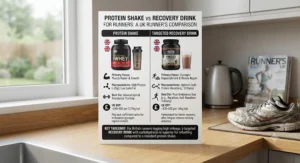
Not quite, and the distinction genuinely matters. A standard protein shake for runners post workout — like plain Optimum Nutrition Gold Standard Whey — delivers amino acids for muscle repair but typically skips the carbohydrate dose your legs actually spent during the run. A dedicated recovery drink, by contrast, is engineered specifically around the carb-protein pairing endurance research points to, usually alongside electrolytes lost through sweat. Reviewers consistently note that pure protein shakes, while excellent for strength-focused muscle repair, leave some runners still feeling depleted after long efforts — because glycogen, not just muscle protein, is what’s been drained. The practical takeaway: after a short, easy run, a plain protein shake is often sufficient; after a long run or race, a full recovery formula does a more complete job.
Protein Timing for Athletes: Does the 30-Minute Window Matter?
The old “30-minute anabolic window” myth still gets repeated at parkrun, but the more current evidence base is considerably more relaxed about exact timing. What matters more than hitting a precise minute count is getting adequate protein — the British Dietetic Association notes that endurance and strength athletes need roughly 1.4-2.0g of protein per kilogram of bodyweight daily, considerably above the general population’s needs. Based on the wider research on protein timing for athletes, spreading intake across the day and having a reasonably prompt post-run serving — within a few hours, not a frantic sprint to the fridge — captures most of the benefit. That said, for runners training twice daily or racing back-to-back events, getting protein and carbohydrate in sooner rather than later does appear to speed the turnaround, which is exactly the gap a recovery drink is built to fill quickly.
Muscle Repair Nutrition: What Actually Speeds Recovery
Muscle repair nutrition isn’t just about hitting a protein number — leucine content matters specifically, because it’s the amino acid that triggers muscle protein synthesis most directly. Whey-based products like SiS REGO Rapid Recovery and Optimum Nutrition Gold Standard Whey score well here thanks to whey’s naturally high leucine density. Reviewers and research both point to adequate total daily protein mattering more than any single “magic” ingredient — standalone BCAA supplementation, for instance, appears to offer little additional benefit once total protein intake is already sufficient, according to independent nutrition analysis. Sleep and hydration also play an underrated role in muscle repair; no recovery drink compensates for chronic under-sleeping, so treat the shake as one part of a wider recovery system, not a silver bullet.
Post-Marathon Recovery Tips: The First 48 Hours
The finish line isn’t actually the finish line for your muscles — the real recovery work happens over the following two days. In the first 30-60 minutes post-marathon, aim for a full carb-protein recovery drink rather than a plain protein shake; your glycogen stores are more depleted than after any training run, and formulas like HIGH5 Recovery Drink or TORQ Recovery Drink‘s higher-carb ratio are specifically suited to this scenario. Beyond the immediate window, keep eating regular carb-and-protein meals through the evening rather than relying on the shake alone to do everything.
Expect genuine muscle soreness to peak around 24-48 hours post-race — this is normal delayed-onset soreness, not injury, though persistent sharp pain warrants medical attention rather than another protein shake. Gentle movement, adequate sleep and continued hydration over the following 48 hours matter more than any single supplement choice, however good the marketing copy sounds.
Common Mistakes When Buying Recovery Drinks
The most frequent mistake is buying based on protein grams alone without checking the carbohydrate content, then wondering why legs still feel heavy two days later — glycogen replenishment needs carbs, not just amino acids. A close second is buying the largest tub available to save money per serving, then discovering three weeks in that the flavour has become genuinely unbearable; smaller trial sizes exist for exactly this reason. Runners also frequently overlook electrolyte content, assuming any “recovery” label automatically covers rehydration — check the sodium and potassium figures specifically, especially if you’re a heavy sweater or training through summer heat. Finally, treating a recovery drink as a substitute for real food rather than a supplement to it is a subtle but common error; the NHS Eatwell Guide is a useful baseline reminder that whole foods should still form the backbone of a runner’s diet, with recovery drinks filling a specific, time-sensitive gap rather than replacing meals altogether.

Long-Term Cost & Maintenance: Is a Recovery Drink Worth It?
Running the numbers properly changes the picture considerably from a single tub’s sticker price. Applied Nutrition Endurance Recovery Drink at roughly £20-£25 for 30 servings works out to well under £1 per shake, genuinely competitive with a supermarket chocolate milk carton. SiS REGO Rapid Recovery‘s larger 1.5kg format similarly improves its cost-per-serving considerably compared with the smaller bags, even though the upfront price looks steeper. Over a full marathon training block — roughly 16 weeks with 3-4 recovery shakes weekly — the total spend across most products on this list lands somewhere between £35 and £90, a modest addition against race entry fees, shoes and physio visits that typically dwarf it. The genuine long-term consideration isn’t cost so much as consistency: a cheaper product you’ll actually use every time beats a premium one gathering dust because the flavour put you off by week three.
Recovery Drinks vs Traditional Alternatives
| Option | Protein | Carbs | Convenience | Best For |
|---|---|---|---|---|
| SiS REGO Rapid Recovery | 20-22g | Matched 1:1 | Requires mixing | Serious training blocks |
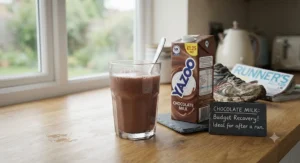
| Plain chocolate milk | ~8g per cup | ~12g per cup | Grab from fridge | Casual, budget recovery |
| For Goodness Shakes | 15-17g | Moderate | Ready to drink | No-fuss convenience |
| Whole-food meal (eggs, toast, fruit) | Variable | Variable | Requires cooking | Home-based, unhurried recovery |
Chocolate milk has a well-earned reputation as a “natural” recovery drink, and it genuinely holds up reasonably well against dedicated formulas for casual runners doing shorter, easier efforts — it’s cheap, widely available and contains a workable carb-protein mix. Where it falls short against purpose-built options like SiS REGO Rapid Recovery or HIGH5 Recovery Drink is electrolyte density and precise macro targeting; a supermarket carton wasn’t engineered around sweat-loss data the way sports nutrition formulas are. Whole-food meals remain the gold standard for overall nutrition but lose on convenience precisely when you need it most — straight off a long run when cooking is the last thing on your mind.
Safety, Regulations and Compliance for UK Runners
UK sports nutrition products sold as food supplements fall under general food safety law rather than medicines regulation, meaning manufacturers are responsible for accurate labelling but products aren’t clinically trialled the way medications are. If you’re a competitive athlete subject to anti-doping testing, it’s worth checking whether a product carries independent batch-testing certification (Informed Sport is the most recognised UK scheme) before relying on it regularly, since supplement contamination remains a genuine risk category even for reputable brands. The wider evidence base on protein and exercise recovery, including the International Society of Sports Nutrition’s position stand on protein intake for athletes, is a useful reference point if you want to dig into the research behind the numbers on pack labels. For most recreational runners this is a lower-stakes concern, but it’s still worth five minutes of label-reading, particularly around allergen declarations — several products on this list contain milk derivatives, and cross-contamination warnings for nuts appear on some plant-based formulas too. If you have any underlying health condition, are pregnant, or are managing a specific dietary restriction, a quick conversation with a GP or registered dietitian before adding a new daily supplement is sensible, sensible advice that costs nothing and avoids genuine risk.
Frequently Asked Questions
❓ What is the best recovery drink for runners?
❓ How soon after a run should I have a recovery drink?
❓ Can I use a normal protein shake instead of a recovery drink?
❓ Are recovery drinks necessary for casual runners?
❓ Is a vegan recovery drink as effective as a whey-based one?
Conclusion
There’s no universally “correct” recovery drink for runners — only the right one for your training load, budget and stomach tolerance. If you’re deep into serious mileage and want a formula backed by elite endurance teams, SiS REGO Rapid Recovery or HIGH5 Recovery Drink justify their price with genuinely balanced macros and strong reviewer trust. If convenience wins the day more often than not, For Goodness Shakes removes every excuse to skip recovery nutrition entirely. Budget-conscious runners shouldn’t feel short-changed either — Applied Nutrition Endurance Recovery Drink delivers a genuinely complete formula without the premium price tag, and anyone already stocking whey for the gym can stretch Optimum Nutrition Gold Standard Whey across both worlds. Whichever you choose, the underlying principle from the research holds steady: pair carbohydrate with protein, don’t skip it after your longer efforts, and let real food do the rest of the heavy lifting the other 23 hours of your day.
Recommended for You
- SOS vs Precision Hydration: 7 Electrolyte Brands Ranked
- 7 Best Electrolyte Tablets for Running in 2026
- 7 Best Energy Bars for Runners in 2026
Disclaimer: This article contains affiliate links. As an Amazon Associate, I earn from qualifying purchases. If you purchase products through these links, we may earn a small commission at no additional cost to you.
✨ Found this helpful? Share it with your friends! 💬🤗
