

In This Article
There’s a very specific kind of misery reserved for runners who step outside in January without covering their neck. The wind finds that gap between your jacket collar and your chin with the precision of a heat-seeking missile, and within half a mile your throat’s gone raw and your morale’s somewhere back in bed. A buff for running in winter solves this in about four seconds flat — pull it up, and suddenly the run stops being a punishment.

So what is a buff for running in winter? It’s a stretchy fabric tube, usually 25-50cm long, worn around the neck, face, or head to trap warmth and block wind chill during cold-weather runs, with fabric weights ranging from lightweight synthetic to insulated fleece and merino wool depending on how brutal your local winter actually gets.
This guide covers seven genuinely good options — from featherlight synthetic tubes to full fleece neck warmers — based on real product specifications and aggregated UK customer review sentiment, not marketing copy. Every runner training through a British winter, whether you’re doing 5K loops of the local park or marathon-block long runs on exposed coastal paths, will find something here that fits their budget and their conditions. As Age UK explains in its winter running advice, covering your extremities matters because a large share of body heat escapes through the head, neck, hands and feet — which is precisely the gap a good buff is built to close.
We’ll compare specs, break down real-world performance, and flag the mistakes that see people binning a perfectly good buff after three wears because they bought the wrong weight for their climate.
Quick Comparison Table
| Product | Fabric Type | Weight | Best For | Price Range |
|---|---|---|---|---|
| Buff Original EcoStretch | Recycled polyester microfibre | ~28g | Everyday versatility & mild cold | Under £20 |
| Buff ThermoNet | Polyester with brushed inner | ~35g | Damp, blustery UK mornings | £15-£25 range |
| Buff Polar Neckwarmer | PrimaLoft fleece | ~31g | Sub-zero, still-air cold snaps | £15-£25 range |
| Sealskinz Beetley Waterproof Gaitor | 3-layer waterproof laminate | Lightweight | Sleet, rain, and sideways wind | £25-£35 range |
| Smartwool Merino 250 Neck Gaiter | 100% merino wool | ~60g | Odour resistance, multi-day training blocks | £30-£40 range |
| Trespass Perez Neck Warmer | Double-sided fleece | Mid-weight | Budget-conscious beginners | Under £20 |
| Odlo Active Warm Eco | Recycled fleece-knit blend | Mid-weight | Balanced warmth-to-breathability for tempo runs | £15-£25 range |
Looking across the table, there’s a clear split between all-rounders like the Buff Original EcoStretch, technical fleece options like the Buff Polar Neckwarmer, and specialists like the waterproof Sealskinz Beetley or the odour-resistant Smartwool Merino 250. If your winter runs are mostly “cold but dry,” a synthetic tube will do everything you need; if you’re regularly out in sleet or running six days a week, the specialists start earning their higher price tags. Budget shoppers shouldn’t feel short-changed either — the Trespass Perez Neck Warmer covers the fundamentals for under £20.
💬 Just one click — help others make better buying decisions too!😊
Top 7 Buffs for Running in Winter: Expert Analysis
Below is our breakdown of seven real, currently available products spanning budget, mid-range, and premium options, plus a couple of lesser-known alternatives worth a look. Every product name below is bolded so you can scan the list at a glance.
1. Buff Original EcoStretch — the do-everything versatile headwear
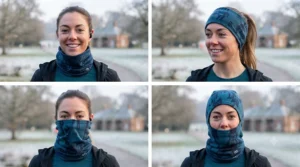
The standout feature here is flexibility: this single tube converts into a neck gaiter, headband, beanie, or balaclava-style face cover depending on how you fold it, which is exactly why it’s become the reference point for multifunctional running buff design. Made from recycled polyester microfibre from post-consumer plastic bottles, it weighs around 28g and carries UPF 50 sun protection, so it isn’t just a winter piece — you’ll still reach for it in spring and autumn. The seamless tube construction means no chafing seams against your jaw on longer runs, which matters more than it sounds once you’re two hours into a long Sunday run.
Based on the spec comparison with heavier fleece options, this is best suited to runners who want one piece of versatile headwear for damp, cold-but-not-arctic mornings rather than genuine sub-zero conditions — it’s a wind and chill layer first, an insulation layer second. Reviewers consistently report that it holds its stretch and shape well over hundreds of wears, with one long-term UK test finding no visible pilling after 200+ wears where a generic equivalent had already started fraying. A common theme in aggregated feedback is praise for how easily it dries after a sweaty tempo run, which matters if you’re running most days and don’t want to be doing laundry every night.
Pros:
- ✅ Genuinely multi-way versatile headwear for neck, head, or face
- ✅ Recycled materials with UPF 50 sun protection built in
- ✅ Dries fast after sweaty efforts, no lingering dampness
Cons:
- ❌ Limited standalone warmth in genuinely freezing conditions
- ❌ Thin fabric offers minimal wind resistance in strong gusts
At around £12-£20 depending on colourway, the Buff Original EcoStretch is difficult to argue with as a starting point — it’s the safe, sensible pick for anyone not yet sure how cold their winter running actually gets.

2. Buff ThermoNet — best for damp, blustery UK mornings
The standout feature is the brushed inner face, which traps a thin layer of warm air against the skin while the technical outer resists the kind of driving drizzle that defines a typical British winter run. Constructed from polyester with a mesh-brushed interior, it sits in the middle of Buff’s weight range — noticeably warmer than the EcoStretch but far more breathable than a full fleece piece, making it a strong middle-ground pick for runners who overheat easily once their pace lifts.
What most buyers overlook about this model is that its breathability is the actual selling point, not just the warmth — a tightly woven fleece traps too much moisture on a hard interval session, whereas the ThermoNet’s brushed construction lets sweat vapour escape while still blocking wind chill. This makes it particularly well suited to tempo runs and progression sessions where your effort level, and therefore your body heat, swings widely over the course of a single outing. Reviewers frequently mention that it manages moisture noticeably better than basic printed buffs bought as multipacks, and that the extra structure holds its shape around the face better when pulled up as a face covering.
Pros:
- ✅ Brushed interior adds real warmth without overheating
- ✅ Handles moisture and drizzle better than basic synthetic tubes
- ✅ Holds shape well when worn up over the nose and mouth
Cons:
- ❌ Warmer options exist for genuinely sub-zero, still-air mornings
- ❌ Slightly bulkier under a running cap than the EcoStretch
Sitting in the £15-£25 range, the Buff ThermoNet represents strong value for anyone whose winter runs are more “cold and wet” than “cold and crisp” — which, in most of the UK, is most winters.
3. Buff Polar Neckwarmer — best for sub-zero, still-air cold snaps
The standout feature is the PrimaLoft fleece construction, a genuinely insulating fabric rather than a wind-blocking shell, which is what separates a true fleece neck warmer for running from the thinner multifunctional tubes above it. At roughly 31g, it’s lighter than you’d expect given the warmth it delivers, and the four-way stretch means it moves with your neck and jaw rather than restricting your stride or your breathing rhythm.
On paper, this means the Polar Neckwarmer trades some of the EcoStretch’s versatility for raw thermal performance — it’s shorter than a standard buff, so it won’t double as a headband or bandana as easily, but it earns that trade-off back the moment temperatures drop below freezing. Based on the spec comparison, PrimaLoft’s structure wicks sweat to the outer face where it can evaporate, which is precisely the mechanism that stops a heavy fleece piece turning clammy and cold on a long run — a common failure point with cheaper thick fleece gaiters. Aggregated reviewer sentiment consistently highlights how well it sits over the nose and mouth without gaping, and several UK buyers specifically praise it for icy, low-single-digit mornings where a lighter buff simply wasn’t cutting it.
Pros:
- ✅ Genuine fleece-level insulation for proper winter cold
- ✅ Four-way stretch fabric moves naturally with running stride
- ✅ Sweat-wicking construction avoids that clammy, damp feeling
Cons:
- ❌ Shorter length limits use as a headband or full balaclava
- ❌ Can feel too warm on milder or fast-paced sessions
Priced in the £15-£25 range, the Buff Polar Neckwarmer is the one to reach for on genuinely bitter mornings — pair it with a decent base layer and it’ll outperform gaiters costing twice as much.
4. Sealskinz Beetley Waterproof Gaitor — the specialist for sleet and driving rain
The standout feature is obvious from the name: a three-layer waterproof laminate construction with a microfleece lining, built for the specific misery of sleet, freezing rain, and sideways wind rather than dry cold. The waterproof membrane sits between an outer polyester shell and an inner fleece layer, so unlike the fabric-only options above, it’s designed to actually shed water rather than absorb it and go heavy and cold against your skin.
What the spec sheet won’t tell you, but reviewers note, is how much of a difference this makes on genuinely wet UK winter mornings — one long-term cyclist and runner review from a Scottish tester described testing it in windchill down to -10°C on multi-hour rides and finding it kept his face and neck warm and dry throughout, with zero drips getting through even under a hose test. This is a specialist rather than an everyday pick: on a dry, cold morning, the waterproof membrane adds a touch of bulk and less breathability than the ThermoNet or EcoStretch. But if you train through actual UK winter weather rather than just UK winter temperatures — the sleet, the horizontal drizzle, the “is that rain or is that just wind” mornings — nothing else on this list matches it.
Pros:
- ✅ Genuinely waterproof three-layer construction, not just water-resistant
- ✅ Microfleece lining adds warmth alongside weather protection
- ✅ Lifetime warranty backing from the manufacturer
Cons:
- ❌ Bulkier and less breathable than lightweight synthetic options
- ❌ Limited size range compared with one-size stretch buffs
Expect to pay in the £25-£35 range depending on retailer, which is a fair premium over a standard neck warmer given the genuine waterproofing — reviewers note it undercuts most waterproof running jackets’ per-item cost while solving a very specific problem those jackets don’t.
5. Smartwool Merino 250 Neck Gaiter — best for odour resistance and daily training
The standout feature is the fabric itself: 100% merino wool in a double-layer interlock knit, which brings natural antimicrobial and odour-resistant properties that synthetic alternatives simply cannot replicate. At around 60g it’s the heaviest option on this list, built with next-to-skin comfort as the priority rather than ultralight packability, which suits runners doing back-to-back sessions without laundering gear between every single run.
Here’s what to weigh with merino: it’s genuinely excellent at thermoregulation, meaning it won’t overheat you the way synthetic fleece can on a fast session, and it retains meaningful warmth even when damp with sweat — a real advantage over cotton or basic polyester on longer efforts. Reviewers consistently report that it stays fresh-smelling across multiple wears where synthetic buffs need washing after every single use, which is a genuine practical win for anyone training six mornings a week through winter. The trade-off is drying time; merino takes considerably longer to dry than synthetic fabric, so it’s not the pick if you need same-day turnaround after a sweaty session.
Pros:
- ✅ Naturally odour-resistant, ideal for repeated training days
- ✅ Excellent thermoregulation even when damp with sweat
- ✅ Soft, non-itch feel directly against the skin
Cons:
- ❌ Slow to dry compared with synthetic alternatives
- ❌ Highest price point on this list
At £30-£40, the Smartwool Merino 250 Neck Gaiter is a premium buy, but for runners training consistently through a full winter block, the reduced washing frequency and thermoregulation genuinely offset the higher upfront cost.

6. Trespass Perez Neck Warmer — best budget pick for beginners
The standout feature is simple, honest value: a shaped double-sided fleece neck warmer with a drawcord adjuster, giving you a customisable fit without the premium price tag of technical fabrics. Trespass, a Glasgow-founded outdoor brand established in 1938, built its reputation on accessible outerwear, and this piece reflects that — no gimmicks, just warm fleece and a snug fit.
Based on the spec comparison, this won’t outperform the technical fabrics used in the Buff or Odlo ranges on breathability during hard efforts, but for a beginner runner who’s testing whether they even enjoy winter training, or for someone who just needs reliable warmth on an easy jog, that’s rarely the deciding factor. The drawcord adjuster is a genuinely useful touch absent from most pull-on tube-style buffs, letting you cinch it tighter around the lower face on the coldest mornings. Aggregated customer sentiment on similar Trespass fleece neckwear is mixed but generally positive on warmth and fit, with the most common praise centring on comfort and softness against the skin, and the most common criticism relating to durability after repeated machine washing at higher temperatures.
Pros:
- ✅ Genuinely low price point for a fleece neck warmer for running
- ✅ Drawcord adjuster allows a customisable, snug fit
- ✅ Soft double-sided fleece feels comfortable from the first wear
Cons:
- ❌ Less breathable than technical synthetic buffs on hard efforts
- ❌ Reviewers note reduced softness after frequent hot washes
Priced under £20 in most colourways, the Trespass Perez Neck Warmer is the sensible entry point if you’re not yet ready to spend £30+ on winter running kit but still want proper face coverage against the cold.
7. Odlo Active Warm Eco — best balanced option for tempo and interval sessions
The standout feature is the balance it strikes: a recycled fleece-knit blend engineered specifically for aerobic activities like trail running and road running, rather than static cold exposure, meaning it’s built to perform while you’re working hard, not just standing still. Odlo markets this specifically for hiking, trail running, and cross-country skiing, and the ergonomic, close-fitting cut reflects that athletic use case rather than a general-purpose lifestyle design.
What most buyers overlook about this model is that “Warm Eco” branding refers to a moisture-management technology, not just insulation thickness — the fabric is engineered to promote sweat evaporation while still trapping warmth, which is exactly the balance a tempo run or interval session demands as your effort, and therefore your heat output, fluctuates minute to minute. This makes it a strong pick for structured training rather than gentle recovery jogs, where you need something that won’t leave you overheating during the hard reps but still protects your neck during the recovery jogs between them. The ergonomic fit means it sits snugly without needing constant readjustment, a small but real advantage over baggier tube-style buffs during faster-paced sessions.
Pros:
- ✅ Purpose-built for aerobic activity, not just standing-cold use
- ✅ Recycled materials with genuine moisture-management technology
- ✅ Ergonomic, snug fit stays put during faster efforts
Cons:
- ❌ Less widely stocked in the UK than Buff or Trespass ranges
- ❌ Narrower size range than one-size-fits-all stretch tubes
At £15-£25, the Odlo Active Warm Eco rewards runners who train with structure — intervals, tempo blocks, progression runs — over those doing purely easy-paced winter miles.
Practical Usage Guide: Getting the Most From Your Winter Running Buff
Buying the right neck gaiter for cold weather running is only half the job — how you use it changes the experience almost as much as which one you buy. Start by layering it correctly: pull it up over the nose and mouth only when wind chill or precipitation genuinely demands it, since constant full-face coverage traps warm, moist breath against the fabric, which then chills rapidly the moment you drop it back down to your neck. On the first few wears, expect a short adjustment period — merino and fleece options in particular can feel restrictive around the throat until you find your preferred fold and position.
Maintenance is straightforward but easy to neglect. Wash synthetic buffs like the Buff Original EcoStretch or Buff ThermoNet in a cool, gentle cycle to preserve their stretch and print quality, and avoid fabric softener, which clogs the moisture-wicking fibres over time. Merino pieces such as the Smartwool Merino 250 Neck Gaiter need a gentler hand still — cold water, gentle cycle, and air drying rather than tumble drying, which can felt and shrink the wool fibres. A common first-30-days mistake is over-washing: unless you’re training daily, most buffs can handle two or three wears between washes without odour issues, especially the merino options.
One optimisation trick that rarely makes it onto Amazon listings: carry your buff loosely around your neck rather than fully deployed for the first kilometre of any run. Your body hasn’t generated its running heat yet, so a buff worn too tightly too early can actually trap cold, damp air against your skin. Deploy it fully once you’ve warmed up and your breathing has settled into rhythm — you’ll get better performance from the same piece of versatile headwear simply by timing its use correctly.
Real-World Scenarios: Which Running Buff Suits You?
The commuter runner — say, a 28-year-old running 4 miles to the office three mornings a week through a British winter, in a mix of dry cold and unpredictable drizzle. Budget sits around £20, and versatility matters because the buff needs to double as everyday winter wear off the run too. The Buff Original EcoStretch or Buff ThermoNet fit this profile well: light enough not to overheat during a brisk commute pace, warm enough for the wait at traffic lights, and quick-drying enough to stuff in a bag afterwards.
The dedicated marathon-block trainer — running five to six sessions a week through a full winter, including long Sunday runs of two hours or more in varied weather. Here, durability and odour management start to matter as much as warmth, since the same piece is getting used daily. The Smartwool Merino 250 Neck Gaiter suits this profile especially well thanks to its odour resistance across multiple wears, while the Buff Polar Neckwarmer covers the coldest sessions when temperatures drop toward freezing.
The exposed-terrain trail or coastal runner — someone training on open moorland, coastal paths, or hill routes with minimal wind shelter, where driving rain and genuine wind chill are the defining challenge rather than still, dry cold. For this profile, the Sealskinz Beetley Waterproof Gaitor is the clear standout, since its waterproof laminate is specifically engineered for exactly this kind of exposure, where a standard fleece piece would eventually soak through and turn cold.

Problem → Solution: Fixing Common Winter Running Neck Gaiter Issues
Problem: glasses fogging up when the buff is pulled over the nose. This happens because warm breath escapes upward through the top of the fabric. Solution: fold the top edge of the buff down slightly to direct breath outward and downward instead, or choose a snugger-fitting option like the Odlo Active Warm Eco, whose ergonomic cut reduces gaps around the nose bridge.
Problem: the buff slipping down mid-run. Usually caused by a loose, stretched-out fabric or an overly smooth synthetic finish. Solution: look for options with a drawcord, like the Trespass Perez Neck Warmer, or size down slightly on stretch tubes, since most are designed to sit snug rather than loose.
Problem: dampness and chill after finishing a run. Sweat accumulated during the session cools rapidly once you stop moving. Solution: swap to a dry buff immediately post-run if you’re stopping to stretch outdoors, or choose a moisture-wicking option such as the Buff ThermoNet that manages sweat more actively during the run itself.
Problem: skin irritation or chafing along the jawline. Often caused by seams sitting directly against the skin or repeated friction on longer runs. Solution: seamless tube designs like the Buff Original EcoStretch avoid this almost entirely, and rotating between two buffs reduces repeated friction on the same skin.
Problem: the buff losing its warmth or shape after a season of use. Typically down to incorrect washing — high heat, fabric softener, or tumble drying degrade the fibres. Solution: follow the specific care instructions per fabric type outlined in the usage guide above, particularly for merino and PrimaLoft pieces.
✨ Don’t Miss These Exclusive Deals!
🔍 Take your winter running kit to the next level with these carefully selected picks. Click through on any highlighted product to check current pricing and availability. A properly chosen buff for running in winter genuinely changes how much you enjoy training through the darker, colder months — and that’s worth getting right.
How to Choose a Buff for Running in Winter
Picking the right neck gaiter for cold weather running comes down to matching fabric and construction to your actual conditions, not just your budget. Here’s the decision process, step by step:
- Identify your typical winter conditions. Dry cold calls for synthetic fabrics like the Buff Original EcoStretch; damp or wet cold points toward waterproof options like the Sealskinz Beetley Waterproof Gaitor.
- Consider your training frequency. Daily runners benefit from odour-resistant merino, like the Smartwool Merino 250 Neck Gaiter, to reduce washing frequency.
- Match warmth to effort level. High-intensity sessions with fluctuating heat output suit breathable technical fabrics such as the Buff ThermoNet or Odlo Active Warm Eco over heavy fleece.
- Check the versatility you actually need. If you want one item that works as a headband, hat, and neck warmer, longer tube-style designs beat shorter fitted gaiters.
- Factor in fit and adjustability. Drawcord designs like the Trespass Perez Neck Warmer suit runners who dislike fixed-fit stretch tubes.
- Set a realistic budget band. Expect anywhere from under £20 for solid budget options up to £30-£40 for premium merino or waterproof specialists.
- Buy for your worst regular conditions, not your best. A buff rated for genuine sub-zero cold will always work fine on a mild 8°C morning; the reverse isn’t true.
Neck Gaiter vs Traditional Scarf for Running
| Factor | Running Buff / Neck Gaiter | Traditional Scarf |
|---|---|---|
| Stays in place during movement | Yes — stretch fit, no loose ends | No — prone to slipping and flapping |
| Moisture management | Built-in wicking on technical fabrics | Minimal, absorbs and holds sweat |
| Versatility | Multi-way wear (neck, head, face) | Neck only |
| Safety around moving limbs | Low snag risk | Loose ends can catch or trail |
| Best For | Active, moving cold-weather workouts | Static, low-movement cold exposure |
The core issue with a traditional scarf during exercise is simple physics: loose fabric that isn’t designed to move with your body will always work loose, and a scarf trailing near your arms during a run is a genuine minor hazard as well as an annoyance. A running buff’s stretch-fit, tube construction solves both problems at once, which is precisely why it’s become standard kit rather than a scarf substitute. For anyone still running in whatever old scarf is in their hallway, switching to purpose-built versatile headwear is one of the cheapest upgrades in a winter running kit bag.
What to Expect: Real-World Performance in UK Winter Conditions
Specs on a page rarely translate directly into how something feels at mile four of a cold, dark run, so here’s the practical translation. A lightweight synthetic buff like the Buff Original EcoStretch will cut wind chill noticeably — you’ll feel the difference the moment you pull it up on an exposed stretch — but it won’t add much active warmth on its own; it’s a wind barrier more than an insulator. Wind chill is a genuine physiological factor, not just a weather-forecast talking point: moving air strips away the thin layer of warmed air that normally sits against exposed skin, which is why a still, cold morning can feel far more manageable than a milder but windier one. This is exactly why a fleece or PrimaLoft piece like the Buff Polar Neckwarmer earns its keep on genuinely blustery days — it’s providing real thermal insulation, not just blocking airflow.
On a wet UK morning, the difference between a standard fabric buff and the waterproof Sealskinz Beetley Waterproof Gaitor becomes obvious within the first ten minutes: standard fabric absorbs moisture and gradually goes cold and heavy against the skin, while the waterproof laminate simply sheds it. Merino, meanwhile, behaves differently again — the Smartwool Merino 250 Neck Gaiter will feel warm even once damp with sweat, a property synthetic fabric largely lacks, which is why marathon-block runners doing long efforts in variable effort levels often prefer it despite the slower drying time.
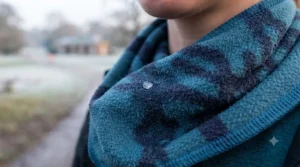
Multifunctional Running Buff for Different Audiences
Beginners just starting winter training should prioritise simplicity and value over technical performance — a Trespass Perez Neck Warmer or Buff Original EcoStretch covers the basics without overwhelming choice or cost, and both are forgiving of inconsistent washing routines.
Experienced daily trainers running structured winter blocks benefit most from a small rotation: something breathable for interval sessions like the Odlo Active Warm Eco, and something warmer for easy long runs like the Buff Polar Neckwarmer, swapping based on session type rather than owning just one piece.
Runners with sensitive skin or wool allergies should lean toward synthetic options — the Buff ThermoNet or Buff Original EcoStretch — since merino, while excellent for odour control, can cause irritation for a small number of wearers despite generally being marketed as non-itch.
Budget-conscious or occasional winter runners, those doing a handful of cold runs a month rather than training daily through winter, get excellent value from a single versatile headwear piece like the EcoStretch rather than investing in multiple specialist pieces they’ll rarely use to their full potential.
Long-Term Cost & Maintenance of Winter Running Neckwear
Thinking in cost-per-wear rather than upfront price changes the calculation considerably. A £15 synthetic buff used twice a week across a five-month winter season works out to roughly 35-40 wears, putting cost-per-wear under 50p — genuinely negligible against the discomfort it prevents. A £35 merino option used at the same frequency costs slightly more per wear initially, but its odour resistance means fewer washes, which extends fabric lifespan and reduces the energy and detergent cost of laundering over a season.
Maintenance costs are minimal across the board — none of these products need replacement parts or servicing — but longevity varies by fabric and care. Synthetic buffs like the Buff Original EcoStretch typically last multiple winter seasons with reasonable care, while cheaper unbranded fleece alternatives on Amazon often show pilling or seam failure within a single season, which is where the modest premium for established brands like Buff, Trespass, and Odlo tends to pay for itself. Waterproof options such as the Sealskinz Beetley Waterproof Gaitor carry a lifetime manufacturer warranty in some ranges, which is worth factoring into the total cost of ownership when comparing against cheaper alternatives that offer no such backing.
Features That Actually Matter (And Those That Don’t)
Actually matters: seamless or flat-seam construction (prevents chafing on longer runs), genuine moisture-wicking fabric technology rather than just “breathable” marketing language, and a snug-but-stretchy fit that stays in place without constant readjustment.
Doesn’t matter much for running specifically: elaborate printed patterns and colourways — nice to have, irrelevant to performance — and multi-way “12 ways to wear it” marketing claims, since in practice most runners settle into one or two configurations and rarely use the more novelty options like a full bandana wrap.
Genuinely matters but gets overlooked: length. A too-short gaiter rides up uncomfortably against the chin during arm movement, while a too-long one bunches awkwardly under a jacket collar — checking the stated length against your own neck-to-chin measurement is a five-second step that prevents a lot of buyer’s remorse.
Marketing claim worth scrutinising: UPF sun protection ratings on winter-marketed buffs. It’s a genuine feature and useful in low winter sun, but it shouldn’t be a deciding factor over actual thermal performance if warmth is your primary concern.
Worth checking, rarely advertised loudly: independent chemical-safety certification. Several products on this list, including entries in the Buff range, carry OEKO-TEX STANDARD 100 certification, which tests every component of a textile against a list of regulated and unregulated substances that could be harmful to health — a genuinely useful, if unglamorous, marker of quality control against unbranded alternatives.
Safety, Regulations & Face Coverage Guidance for Winter Runners
There’s no UK regulation governing running buffs specifically, but general cold-weather safety guidance is worth taking seriously, particularly around face coverage on very cold days. Government guidance on staying safe in cold weather recommends taking sensible, proportionate precautions once conditions turn severe, and that principle extends naturally to outdoor exercise — if a cold-health alert is in effect in your area, that’s a signal to shorten your run or move it indoors rather than push through in full face coverage regardless.
When it comes to actual face coverage during a run, moderation matters. Covering the nose and mouth reduces the sting of freezing air on sensitive airways, which can be genuinely helpful for anyone with mild asthma or airway sensitivity in cold conditions, but constant full coverage traps warm, moist breath against the fabric, which then cools rapidly and can feel colder than no coverage at all once you drop it. The sensible approach is situational: full face coverage on the coldest, windiest stretches of a route, and neck-only coverage once you’re sheltered or working hard enough to generate your own heat. Visibility matters too — dark winter mornings mean reflective or high-visibility elements on your wider kit are worth prioritising alongside your buff, since a neck gaiter, however good, does nothing for the fact that UK winter runs often happen in low light.
Common Mistakes When Buying a Buff for Running in Winter
The single most common mistake is buying based on price alone and ending up with a thin, single-layer tube that offers wind resistance but almost no genuine warmth, then assuming “buffs don’t work” when it fails on a proper cold snap. The fix is matching fabric weight to your actual conditions using the decision framework above, not just grabbing the cheapest multipack on the page.
The second mistake is ignoring fit and length entirely — a buff that’s too short for your neck-to-chin measurement will constantly need readjusting mid-run, which is more annoying over an hour than most people expect. Third, many buyers overlook care instructions and wash merino or PrimaLoft pieces on a hot cycle, degrading expensive fabric within a handful of washes when gentle, cold-water care would have preserved it for seasons. Finally, some runners buy a single “do everything” piece and expect it to perform equally well on a mild 8°C jog and a windswept 0°C sleet-storm — in reality, a small two-piece rotation covering both ends of your winter conditions almost always outperforms one compromise buy.
FAQ
❓ What's the warmest buff for running in winter?
❓ Can you wear a buff over your mouth while running?
❓ Is merino or synthetic better for a winter running buff?
❓ How do you stop a running buff from slipping down?
❓ Do running buffs actually keep you warm, or just block wind?
Conclusion
Winter running doesn’t have to mean gritting your teeth through a raw throat and a stinging neck for the sake of keeping your mileage up. A well-matched buff for running in winter — whether that’s the everyday versatility of the Buff Original EcoStretch, the genuine insulation of the Buff Polar Neckwarmer, or the weatherproofing of the Sealskinz Beetley Waterproof Gaitor — solves a genuinely miserable problem for the cost of a couple of coffees.
The real takeaway from comparing all seven options is that there’s no single “best” pick, only the best match for your specific conditions, training frequency, and budget. Dry, cold commuter mornings call for something different than exposed coastal long runs, and daily training blocks reward different fabric choices than the occasional weekend jog. Use the decision framework above, match it honestly to your own winter running habits, and you’ll land on a piece of versatile headwear that earns its place in your kit drawer for several winters rather than one.
🏃♂️ Ready to Gear Up for Winter Running?
⚡ Check current prices and availability on today’s top picks above, and stop letting the cold dictate your training schedule this winter.
Recommended for You
- Running Hat for Sun Protection: 7 Best UPF Picks for 2026
- Thermal Running Hat For Winter Runs: 7 Genuinely Warm Picks (2026)
- Running Cap Under £15: 7 Best Cheap Picks for UK Runners (2026)
Disclaimer: This article contains affiliate links. As an Amazon Associate, I earn from qualifying purchases. If you purchase products through these links, we may earn a small commission at no additional cost to you.
✨ Found this helpful? Share it with your friends! 💬🤗
