
In This Article
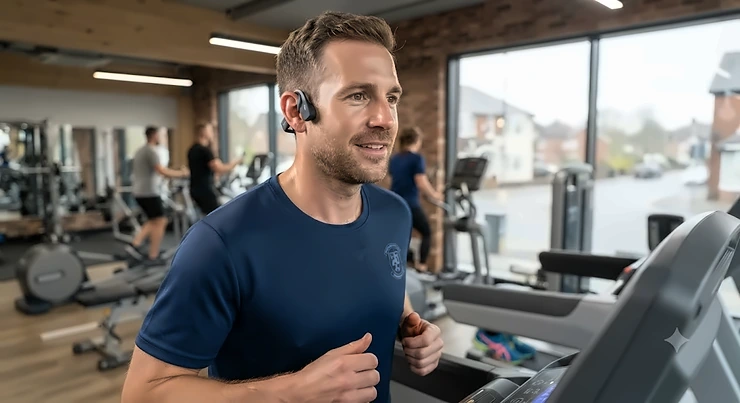
Somewhere around kilometre four on a treadmill, your headphones either disappear or they ruin your run. There’s no in-between. One earbud slips half out, you fumble, you lose your pace, and suddenly you’re more focused on your ears than your legs. That’s the whole reason the debate over bone conduction vs earbuds for treadmill running refuses to die down in gym forums and running clubs across the UK.

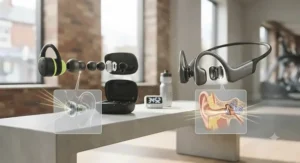
Here’s the short version, because you deserve one before we go deep: bone conduction headphones sit outside your ear canal and send sound through your cheekbones, trading some bass and audio richness for total situational awareness and a fit that essentially can’t fall out. Wireless earbuds, whether sealed in-ear or the newer open-ear “earbud” hybrids, generally deliver fuller, punchier sound and better noise isolation, but ask more of you in terms of fit, ear hygiene and (for sealed designs) blocking out the world around you — including the person shouting “one minute left” over the treadmill display.
This isn’t a trivial question either. Hearing loss affects roughly one in six adults in the UK, much of it linked to noise exposure over time, so how you listen matters just as much as what you listen to.
On a treadmill specifically, the calculus shifts a bit from outdoor running. You don’t need to hear traffic, but you probably still want to hear the gym’s tannoy, a spotter asking to work in on the squat rack next to you, or simply your own breathing pattern so you don’t overcook the pace. That’s a genuinely different use case from dodging cyclists on the towpath, and it changes which pair actually deserves your money.
Over the course of this guide we’ve pulled together real specifications, aggregated review sentiment from UK and international testers, and honest analysis on seven genuine products spanning bone conduction and both open-ear and sealed wireless earbuds. No invented five-star quotes, no fictional lab results — just what the spec sheets and the people who’ve actually run in these things are saying, translated into decisions you can act on before your next session.
Quick Comparison Table
| Headphone | Type | Battery Life | Water Resistance | Weight | Best For |
|---|---|---|---|---|---|
| Shokz OpenRun Pro 2 | Bone conduction | Up to 10 hrs | IP55 | ~29g | Best all-round treadmill sound |
| Shokz OpenRun | Bone conduction | Up to 8 hrs | IP67 | ~26g | Best value bone conduction |
| Shokz OpenMove | Bone conduction | Up to 6 hrs | IP55 | 29g | Cheapest entry point |
| Bose Ultra Open Earbuds | Open-ear earbud | Up to 7.5 hrs | IPX4 | ~6.4g/bud | Richest open-ear sound |
| Jabra Elite 8 Active | Sealed in-ear (ANC) | Up to 8 hrs (ANC on) | IP68 | ~5g/bud | Toughest sealed fit |
| JBL Endurance Peak 3 | Sealed in-ear | Up to 10 hrs | IP68 | ~26g/bud | Best budget sealed pair |
| Anker Soundcore AeroFit Pro | Open-ear earbud | Up to 14 hrs | IPX5 | ~8.6g/bud | Longest open-ear battery |
Looking across the table, a clear pattern emerges: bone conduction models dominate on comfort and awareness but concede battery capacity to the open-ear earbud crowd, while sealed in-ears like the Jabra Elite 8 Active and JBL Endurance Peak 3 win on durability ratings and sheer sound isolation. If treadmill sweat is your main enemy, the IP68-rated sealed pairs have real engineering advantages over the IP55-rated bone conduction options. Budget shoppers should note that the entry point for bone conduction (the Shokz OpenMove) undercuts every open-ear earbud here by a wide margin, while still keeping the open-ear safety benefit intact.
💬 Just one click — help others make better buying decisions too!😊
Top 7 Bone Conduction and Wireless Earbuds for Treadmill Running: Expert Analysis
1. Shokz OpenRun Pro 2 — best all-round bone conduction sound for the gym
The standout here is Shokz’s new DualPitch technology, which pairs a bone conduction driver with a dedicated air conduction speaker purely for bass — something older Shokz models simply couldn’t do. Key specs include up to 10 hours of battery life, IP55 sweat and splash resistance, USB-C charging, and four EQ presets (Standard, Vocal, Bass Boost, Treble Boost) tuned through the Shokz app. In practice, that dual-driver setup is the headline improvement: previous-generation bone conduction headphones were consistently criticised for thin, tinny low end, and the added air conduction unit is Shokz’s direct answer to that gap. Based on the spec comparison with the standard Shokz OpenRun, the Pro 2 justifies its higher price mainly through this bass upgrade and a roughly 20% smaller housing for a less bulky fit under a cap. This is the pair for treadmill regulars who’ve tried cheaper bone conduction and found the sound too thin to motivate a tempo session, but who still want zero in-ear pressure over a long run. Reviewers consistently note strong wind and background noise filtering on calls thanks to the dual beamforming microphones, though a small number flag that the titanium band, while comfortable, can feel snug for larger head shapes. Sound quality reporting is mixed but improving: some long-term Shokz users say the vibration-through-jawbone sensation still takes adjustment, while newer reviewers who started with the Pro 2 rate it as the best-sounding bone conduction pair they’ve tried.
Pros:
- ✅ DualPitch tech genuinely improves bass over older Shokz models
- ✅ IP55 rating shrugs off sweat-heavy treadmill sessions
- ✅ Smaller, lighter housing than the original OpenRun Pro
Cons:
- ❌ Still can’t match sealed earbuds for outright bass depth
- ❌ Premium price compared with the standard OpenRun
Expect to pay in the £180–£200 range at the time of research; check current price before buying, as Shokz pricing shifts around promotions. For runners who’ve decided bone conduction is right for them and want the best version of it, this is the one to budget for.
2. Shokz OpenRun — best value bone conduction for daily mileage
The standout feature is the IP67 waterproof rating — genuinely unusual at this price point, and a full step above the Pro 2’s IP55. Specs include up to 8 hours of battery life, a 10-minute quick charge for 1.5 hours of playback, Bluetooth 5.1, and 8th-generation bone conduction with PremiumPitch 2.0+ tuning. What that waterproofing means in practice is you can rinse the Shokz OpenRun under a tap after a sweaty session without a second thought, and a sudden downpour on an outdoor warm-up won’t end your workout early. Here’s what to weigh: this is essentially the “sweet spot” Shokz model, sitting between the entry-level OpenMove and the bass-boosted Pro 2, and it’s been the brand’s best-selling design for good reason. Aggregated review sentiment across retailer and press reviews is broadly positive, with the recurring theme being that sound quality is “good enough” for spoken word, podcasts and moderate-intensity training, but noticeably thinner than any sealed earbud once you’re chasing genuine bass weight for a hard interval session. A frequently cited quirk in customer reviews is the audible button-press beep, which some find jarring mid-set.
Pros:
- ✅ IP67 waterproof — the best resistance rating of any Shokz here
- ✅ Reliable mid-price pick with years of proven reliability
- ✅ Comfortable enough for daily, all-day wear
Cons:
- ❌ Thinner bass than the Pro 2 or any sealed earbud
- ❌ No onboard app support for EQ customisation on older units
Prices typically sit in the £90–£130 range depending on retailer promotions; always check current price rather than relying on a fixed figure. If you want proven Shokz reliability without paying for the Pro 2’s bass boost, this is the pragmatic choice.
3. Shokz OpenMove — the cheapest genuine way into bone conduction
The standout advantage is price: this is by far the most affordable route into open-ear bone conduction listening, without dropping the core technology that makes the format work. Key specs are a 6-hour battery life, 10-day standby, IP55 sweat resistance, USB-C charging, and 7th-generation bone conduction with PremiumPitch 2.0. What that battery figure means in practice is roughly one to two treadmill sessions before a recharge is needed — plenty for most gym-goers, though clearly behind the Pro 2 and standard OpenRun. This is the honest analytical case for the OpenMove: it’s aimed squarely at people who are curious about bone conduction but unwilling to commit £100-plus before knowing whether the sensation suits them. Reviewers who’ve compared it directly against pricier Shokz models consistently describe a “surprisingly big step down” in audio richness and describe the difference as more noticeable in daily use than the spec sheet alone suggests, with one detailed independent review noting distinctly “AM radio”-like clarity relative to the Pro line. On the plus side, several long-term owners highlight the lighter 29g weight and comfortable ear-hook fit as genuinely all-day wearable, and multiple reviewers reported completing full marathons in them without discomfort.
Pros:
- ✅ Lowest price point for genuine Shokz bone conduction tech
- ✅ Lightweight, comfortable ear-hook design for long sessions
- ✅ USB-C charging, no proprietary cable to lose
Cons:
- ❌ Weakest sound quality of the three Shokz models here
- ❌ Shortest battery life in the bone conduction lineup
Expect a price in the £50–£80 range, often discounted further during sales; check current price on release. If your main goal is simply testing whether bone conduction works for your ears at all, this is the lowest-risk way to find out.
4. Bose Ultra Open Earbuds — richest sound quality from an open-ear design
The standout feature is Bose’s proprietary OpenAudio technology, which the brand claims delivers private, immersive sound from a speaker that never actually seals against your ear canal. Specs include up to 7.5 hours of battery life (extending to roughly 24 hours total with the case), IPX4 water resistance, a 6.4g-per-bud weight, and an adjustable clip-style fit that hooks around the ear’s helix. What most buyers overlook about this model is that it isn’t bone conduction at all — it’s an air conduction earbud that simply doesn’t plug the canal, which is why testers consistently rate its sound quality above every bone conduction pair in this list. Independent lab testing found the audio character solid but not class-leading among true wireless earbuds generally, while multiple hands-on reviewers who’ve run in them describe the fit as remarkably secure once positioned correctly, surviving everything from marathon training blocks to rock climbing sessions without shifting. Aggregated sentiment is consistent on one point: these are the most expensive headphones on this list, and the value proposition depends heavily on whether open-ear awareness genuinely matters to you, because you’re paying a premium over sealed earbuds with comparable sound.
Pros:
- ✅ Best-in-class sound quality among open-ear designs
- ✅ Secure clip fit that stayed put through testers’ runs
- ✅ Auto-volume feature adjusts to ambient gym noise
Cons:
- ❌ Highest price point of any product in this guide
- ❌ IPX4 rating is lower than the sealed in-ear alternatives here
At launch these carried a UK price around £299.95, though prices have since softened; check current price, as they’re now regularly found well below that original figure. For runners who want open-ear awareness but refuse to compromise on audio richness, this is the one to try on before buying elsewhere.
5. Jabra Elite 8 Active — the toughest sealed earbuds for a sweaty treadmill session
The standout feature is genuinely elite durability: an IP68 rating on the earbuds themselves plus military-grade shock and temperature testing, a rarity even among premium sealed sports earbuds. Specs include up to 8 hours of battery on the buds with ANC engaged (14 hours with ANC off), a further 24–56 hours from the case depending on ANC use, 6mm drivers, and Jabra’s ShakeGrip silicone coating for grip when wet. What that IP68 figure means in practice is these buds can be rinsed under a tap, dropped in a puddle, or soaked through with sweat and simply keep working — reviewers who tested them across gym sessions, pool-adjacent workouts and outdoor runs reported zero durability issues. On paper this means Jabra is targeting “serious athletes or weekend warriors,” and the honest analytical take is that the ShakeGrip coating and lack of ear-wings genuinely deliver a more secure fit than most sealed competitors, according to multiple independent testers who specifically praised how they stayed locked in during high-sweat sessions. Reviewers consistently note the active noise cancellation is strong for the price bracket, though not quite at Apple or Bose flagship level, and several flagged that the button-based (rather than touch) controls require pressing the bud further into the ear, which some find uncomfortable after repeated presses.
Pros:
- ✅ IP68 rating — among the toughest of any sports earbud
- ✅ ShakeGrip coating keeps them locked in when sweaty
- ✅ Strong ANC plus a useful HearThrough awareness mode
Cons:
- ❌ Button controls can feel uncomfortable with repeated presses
- ❌ No hi-res codec support, unlike some pricier rivals
UK pricing launched around £199.99 and has typically settled into the £150–£190 range with promotions; check current price before ordering. If durability and a bombproof fit matter more to you than open-ear awareness, this is the strongest all-round sealed pick here.

6. JBL Endurance Peak 3 — best budget sealed earbuds that genuinely won’t fall out
The standout feature is JBL’s bendable TwistLock ear hook, which multiple independent testers describe as one of the most secure fits available at this price, short of full over-ear headphones. Specs include up to 10 hours on the buds and roughly 40 hours from the case (50 hours total), IP68 water and dust resistance, 10mm dynamic drivers, and a basic Ambient Aware transparency mode via companion app. What that TwistLock hook means in practice is these buds are close to impossible to dislodge mid-run, which is exactly why reviewers who tested them for treadmill and trail use consistently rated the fit as a genuine strength despite the earbuds’ relatively bulky, 26g-per-bud size. Here’s what to weigh: the trade-off for that secure fit is comfort over long sessions, with several reviewers noting the hooks press into the ear and can start to feel uncomfortable during lower-impact, longer workouts, though this is far less of an issue on a treadmill run than during, say, a two-hour hike. Aggregated sentiment on sound quality lands consistently in “good for the price” territory: reviewers describe a bass-forward, slightly boomy signature that’s fun for motivation but not the most refined, and one detailed lab-style review specifically noted the midrange sounding a touch congested compared with pricier alternatives — a finding echoed by Which?’s independent headphone lab testing, which rates fit and durability highly.
Pros:
- ✅ IP68 rating matches far pricier sealed earbuds
- ✅ TwistLock hook delivers an extremely secure fit
- ✅ Around 50 hours combined battery life is class-leading
Cons:
- ❌ Bulky earpieces can feel heavy during longer sessions
- ❌ No multipoint Bluetooth — one device connection at a time
Prices typically sit around £80–£100, often dipping lower during sales; check current price on Amazon before buying. This is the pair to choose if you want IP68 toughness and a secure fit without paying premium prices.
7. Anker Soundcore AeroFit Pro — the long-life open-ear alternative to bone conduction
The standout feature is battery life: independent testing recorded over 17 hours of continuous playback against Anker’s own 14-hour claim, comfortably ahead of every other product in this guide. Specs include 16.2mm titanium-coated drivers, IPX5 water resistance, a detachable magnetic neckband for extra security, and LDAC hi-res codec support on the Pro model. What most buyers overlook about this model is that, unlike bone conduction, it uses air conduction — the driver sits just outside the ear canal rather than touching bone — which several reviewers say delivers noticeably richer, louder sound than any Shokz model in this guide, at the cost of losing that unmistakable “vibration through the jaw” sensation some runners specifically want to avoid. Reviewers consistently praised the surprisingly secure fit once positioned correctly, with one long-term tester reporting zero movement across gym stair-runs and full sessions, while flagging that the initial “dangling off the ear” sensation takes a session or two to trust. The recurring criticism across aggregated sentiment is control layout: several reviewers found the single-press-for-volume, double-press-for-play/pause scheme unintuitive compared with more standard control schemes on rival earbuds.
Pros:
- ✅ Longest tested battery life of any product in this guide
- ✅ LDAC support gives noticeably richer detail than base open-ear rivals
- ✅ Detachable neckband adds security for high-movement sessions
Cons:
- ❌ Control scheme takes time to learn and isn’t intuitive
- ❌ Bulkier charging case than most sealed earbud alternatives
Expect a price around £140–£160 in the UK; check current price, as Anker runs frequent promotions on the Soundcore range. If pure battery endurance and richer open-ear sound matter more than brand recognition, this is a genuinely strong Shokz alternative.
✨ Don’t Miss These Exclusive Deals!
🔍 Take your treadmill sessions to the next level with these carefully selected products. Click on any highlighted item above to check current pricing and availability. These picks will help you build a soundtrack your workouts actually deserve!
Benefits vs Traditional Wired Headphones
| Factor | Bone Conduction | Wireless Earbuds | Traditional Wired |
|---|---|---|---|
| Freedom of movement | Excellent | Excellent | Poor — cable snags |
| Situational awareness | Excellent | Varies (open vs sealed) | Poor |
| Bass/audio richness | Fair | Good–Excellent | Good |
| Sweat resistance | Good (IP55–IP67) | Good–Excellent (IPX4–IP68) | Poor unless sport-rated |
| Comfort for glasses wearers | Excellent | Good | Good |
The table makes the core trade-off obvious: bone conduction models like the Shokz OpenRun win decisively on awareness and freedom from cable snags, but concede ground on outright sound quality to sealed earbuds such as the Jabra Elite 8 Active. Traditional wired headphones are included mainly as a baseline — they’re still technically viable for treadmill use since there’s no risk of losing Bluetooth pairing mid-session, but the cable becomes a genuine hazard once you’re moving at pace on a moving belt. For most treadmill runners in 2026, the real decision isn’t wireless versus wired anymore; it’s which flavour of wireless — bone conduction, open-ear earbud, or sealed earbud — actually fits how you train.
Practical Usage Guide: Getting the Most From Your Treadmill Headphones
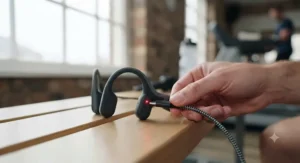
Setting up any of these seven headphones correctly in the first week makes a genuine difference to how much you enjoy using them. Start by fully charging the case or headset before first use — most manufacturers recommend an initial full cycle rather than a quick top-up, and skipping this step is a common reason people report disappointing early battery life. For bone conduction models specifically, spend your first session adjusting the band position; the transducers need firm, even contact with your cheekbone just in front of the ear canal, and even a few millimetres of misalignment noticeably muffles the sound.
A common first-30-days mistake is cranking the volume too high to compensate for gym background noise, particularly with open-ear designs like the Bose Ultra Open Earbuds or Anker Soundcore AeroFit Pro, where there’s no seal to block ambient sound. Reviewers and audiologists alike flag this as the single biggest risk to hearing health with open-format headphones — the CDC-cited safe listening rule of keeping volume under roughly 60% of maximum for extended sessions applies just as much here as with sealed earbuds. For sealed pairs such as the JBL Endurance Peak 3, spend time trying all three included ear tip sizes rather than settling for the pre-fitted default; a poor seal is the most common cause of both weak bass and buds falling out mid-run.
Maintenance is straightforward but easy to neglect. Wipe bone conduction transducers and sealed earbud tips with a slightly damp cloth after every sweaty session — built-up salt residue is a leading cause of both irritation and reduced adhesion over time. Store charging cases somewhere dry rather than in a damp gym bag, and check firmware updates monthly through each brand’s companion app, since Shokz, Jabra, JBL and Anker have all shipped meaningful sound and battery improvements via firmware in the past two years.
Real-World Scenario: Which Pair Suits Your Treadmill Routine
The interval trainer. If you’re doing structured HIIT sessions on the treadmill three times a week, with heart rate spikes and heavy breathing, bass-forward motivation matters, but so does not losing a bud mid-sprint. The JBL Endurance Peak 3‘s TwistLock hook and IP68 rating make it a strong pick here, with the Jabra Elite 8 Active as a pricier step up if ANC to block gym noise during recovery intervals appeals.
The long, steady-state marathon-block runner. If you’re logging 60–90 minute steady runs on the treadmill through a UK winter training block, comfort over hours matters more than punchy bass. The Shokz OpenRun or OpenRun Pro 2 make sense here: no in-ear pressure, no risk of ear fatigue, and enough battery to cover a long session with room to spare.
The gym-floor multitasker. If your treadmill session is bookended by weights, where you need to hear a spotter or a shouted “can I work in?”, open-ear awareness is non-negotiable, but you also want your sound to carry over clanking plates. The Bose Ultra Open Earbuds or Anker Soundcore AeroFit Pro thread that needle, offering noticeably richer sound than bone conduction while keeping your ears open.
How to Choose Bone Conduction vs Earbuds for Treadmill Running
- Decide how much you value situational awareness. If hearing gym announcements, spotters or your own breathing matters, favour bone conduction or an open-ear earbud over a sealed pair.
- Be honest about your bass expectations. Reviewers consistently rate sealed earbuds and premium open-ear buds like the Bose Ultra Open ahead of bone conduction for punch and depth.
- Check the sweat rating against your actual sweat output. Heavy sweaters should lean towards IP67/IP68-rated models rather than IPX4/IP55 designs.
- Match battery life to your longest weekly session, with margin — a 90-minute long run needs more headroom than a 30-minute HIIT session.
- Try the fit in person if you can. Bone conduction comfort is genuinely polarising; some runners love the sensation, others never adjust to it.
- Set a realistic budget band first, then pick the best-reviewed option inside it rather than stretching for a flagship you’ll resent paying for.
- Factor in glasses, hats or piercings if you wear them regularly on the treadmill — bone conduction and clip-style open-ear buds generally cause fewer conflicts than in-ear wings.
Common Mistakes When Buying Treadmill Headphones
A recurring pattern in aggregated reviews is buyers choosing based on brand recognition alone, then discovering the product doesn’t suit their specific ear shape or sweat level. Another frequent misstep is ignoring the IP rating entirely — an IPX4 pair, fine for light gym use, can genuinely fail under the sustained sweat output of a hard treadmill session, whereas an IP67 or IP68 rating offers real peace of mind. Buyers also commonly underestimate how much control scheme matters; a fiddly button or touch-control layout that seemed acceptable in a quiet shop can become genuinely frustrating mid-interval when you’re trying to skip a track without breaking stride. Finally, several reviewers flagged buyer’s remorse from choosing a sealed ANC pair for treadmill use and then missing the ability to hear gym staff or training partners — a mistake that’s easily avoided by being honest about the awareness question before buying rather than after.
Bone Conduction vs Earbuds: What to Expect in Real-World Performance
On paper, both formats look similar: Bluetooth 5.1 or higher, IP-rated builds, companion apps. In practice, the experience diverges quickly once you’re moving. Bone conduction headphones transmit sound as vibration through the skull, which means the sensation itself, not just the audio, differs from anything you’ve worn before — several reviewers describe an adjustment period of a few sessions before it stops feeling unusual. Once acclimatised, most users report forgetting they’re wearing anything at all, which is precisely the appeal for long treadmill sessions where ear fatigue from sealed buds becomes a real issue.
Sealed earbuds, by contrast, deliver an immediately familiar listening experience close to what you’d get from any premium wireless earbud, with the trade-off that a good seal is essential for both sound quality and staying in place. Reviewers of the Jabra Elite 8 Active and JBL Endurance Peak 3 consistently note that finding the right ear tip size makes a night-and-day difference to both bass response and secure fit — a step bone conduction buyers simply skip entirely.
Bone Conduction Bass Quality: Why It’s Still the Weak Point
Bass has been the recurring criticism of bone conduction since the format’s earliest AfterShokz-branded models, and it remains the single biggest gap between bone conduction and sealed earbuds today. The physics explain why: transmitting low frequencies effectively through bone requires more energy than transmitting mids and highs, and doing so without excessive vibration or discomfort against the cheekbone is a genuine engineering constraint. Shokz’s answer with the OpenRun Pro 2‘s DualPitch technology — adding a dedicated air conduction speaker purely for bass — is the clearest sign the company itself sees this as the format’s core limitation, not a solved problem. Reviewers who’ve tried the Pro 2 alongside earlier Shokz models consistently rate the bass improvement as real but still short of what a well-sealed earbud like the Jabra Elite 8 Active or JBL Endurance Peak 3 delivers. If bass-driven motivation is central to your treadmill sessions — think heavy hip-hop or electronic interval playlists — an honest recommendation is to expect a genuine compromise with any bone conduction pair, DualPitch or not.
Treadmill Audio Experience: Gym Noise, Belt Hum and Awareness
Treadmills generate their own steady background noise — belt hum, motor whir, the occasional beep from a neighbouring machine’s console — that behaves differently against open-ear and sealed designs. Open formats like bone conduction and the Bose Ultra Open Earbuds let that ambient hum blend with your audio, which most users adapt to quickly but which can mean nudging the volume up slightly compared with outdoor use, where ambient noise is often lower. Sealed designs with active noise cancellation, such as the Jabra Elite 8 Active, cut that background hum more effectively, letting you listen at a lower, safer volume — a genuine health advantage that mirrors the general workplace-noise principle set out by the UK’s Health and Safety Executive on noise-induced hearing loss: the less you need to raise volume to compensate for background noise, the lower your long-term risk. The trade-off, as covered above, is losing awareness of anyone trying to get your attention at the treadmill console or on the gym floor.
Gym Headphone Comparison: Awareness vs Immersion
Ultimately, this whole guide reduces to one spectrum: full immersion at one end, full awareness at the other, with every product here sitting somewhere along it. The Jabra Elite 8 Active with ANC engaged sits closest to full immersion; the Shokz OpenMove and OpenRun sit closest to full awareness; and the Bose Ultra Open Earbuds, Anker Soundcore AeroFit Pro, Shokz OpenRun Pro 2 and JBL Endurance Peak 3 (with its optional Ambient Aware mode) occupy the middle ground in various ways. Reviewers consistently frame this as a personal, not technical, decision — there’s no objectively “best” point on that spectrum, only the point that matches how you actually train and what your gym environment demands of you.
Long-Term Cost & Maintenance
Thinking beyond the initial price tag matters here, because these products age differently. Sealed earbuds’ silicone tips and the internal seals that maintain their IP rating can degrade over one to two years of heavy sweat exposure, and replacement tips (where available) add a small recurring cost. Bone conduction headphones have fewer wear parts to fail in the same way, and Shokz in particular has built a reputation — reflected in consistently positive long-term ownership reviews — for headsets that keep performing after years of daily gym use, provided the charging port is kept dry and clean. Battery degradation is the other long-term factor: lithium batteries in any of these products will hold less charge after roughly 300–500 charge cycles, which for a daily treadmill user works out to somewhere in the one-to-two-year range before you’ll notice a meaningful drop in per-session battery life. Factoring in typical UK retail prices, cost-per-year of ownership favours the Shokz OpenMove and JBL Endurance Peak 3 for budget-conscious runners, while the Jabra Elite 8 Active‘s exceptional durability rating may justify its higher upfront cost for anyone training daily across multiple years.
Safety and Regulations: What UK Runners Should Know
Bluetooth headphones sold in the UK must carry UKCA marking (or CE marking under current transitional arrangements) confirming compliance with relevant electromagnetic compatibility and radio equipment regulations — all seven products in this guide meet that requirement as standard for UK retail. Beyond regulatory compliance, the more relevant safety consideration for runners is hearing health. Guidance from the World Health Organization on safe listening is clear that listening at loud volumes for extended periods increases the risk of permanent hearing damage, and recommends keeping the volume at a level below 60% of maximum during extended listening sessions. UK charity RNID offers similar guidance specific to noise-induced hearing loss, and its advice is worth reading in full before you settle into a routine of daily treadmill listening. Sealed earbuds with active noise cancellation, such as the Jabra Elite 8 Active, offer a practical hearing-health advantage here, since effective ANC lets you listen at a lower volume for the same perceived clarity against gym background noise.
Features That Actually Matter (And Those That Don’t)
Multipoint Bluetooth pairing, IP ratings and genuine battery life under real use are the features that actually change your day-to-day experience — everything else is largely marketing polish. Multipoint matters more than most buyers initially realise, letting you switch seamlessly between your phone and a gym TV or laptop without manually re-pairing, a feature present on the Shokz OpenRun Pro 2, Jabra Elite 8 Active and Bose Ultra Open Earbuds but absent on the budget JBL Endurance Peak 3. Companion apps with adjustable EQ are genuinely useful for tuning bone conduction’s weaker bass to taste, but “spatial audio” and “immersive sound” modes, while pleasant for casual listening, add little value for the average treadmill session where you’re moving too much to notice subtle staging effects. Fast charging is worth paying attention to, since a 5–10 minute top-up delivering an hour or more of playback (available on most products here) meaningfully reduces the anxiety of forgetting to charge overnight — a detail Amazon listings rarely emphasise but that genuinely affects daily usability.
Buyer’s Decision Framework
If you sweat heavily and train daily, choose a sealed IP68-rated pair like the Jabra Elite 8 Active or JBL Endurance Peak 3, because durability under repeated moisture exposure will save you money over years of ownership. If situational awareness is non-negotiable — for gym safety, hearing announcements, or simply because sealed buds bother your ears — choose bone conduction, and within that category, choose the OpenRun Pro 2 if bass matters to you or the standard OpenRun if it doesn’t. If you want the richest possible sound while still staying open-eared, choose the Bose Ultra Open Earbuds or Anker Soundcore AeroFit Pro, budget permitting. And if you’re simply not sure which category suits you yet, start with the Shokz OpenMove as a low-cost way to test whether open-ear listening works for your ears before committing to a pricier pair.
Frequently Asked Questions
❓ Is bone conduction or earbuds better for treadmill running?
❓ Do bone conduction headphones work well on a treadmill?
❓ Why does bone conduction bass sound weak?
❓ Are wireless earbuds safe to use on a treadmill?
❓ How loud is too loud for treadmill headphones?
Conclusion
There’s no single winner in the bone conduction vs earbuds for treadmill running debate, and if anything, that’s the most useful takeaway here — the “best” pair depends entirely on how much you value hearing your surroundings versus hearing every last decibel of bass. The Shokz OpenRun Pro 2 and standard OpenRun remain the strongest bone conduction picks for runners who prioritise comfort and awareness above all else, with the OpenMove offering a genuinely low-risk way to test the format first. On the earbud side, the Jabra Elite 8 Active and JBL Endurance Peak 3 deliver the durability and sound isolation serious sweat-heavy training demands, while the Bose Ultra Open Earbuds and Anker Soundcore AeroFit Pro carve out a compelling middle ground for runners who want open-ear awareness without fully sacrificing audio richness.
Whichever direction you lean, the research is consistent on one point: fit and comfort under real movement matter more than any single spec on a page, so where possible, try before you commit, keep receipts for a return window, and pay attention to how your ears actually feel after twenty real minutes on the belt — not just the first excited five.
Recommended for You
- Bone Conduction Headphones Treadmill: 7 Best Picks (2026)
- Wireless Earbuds For Treadmill Workout: 7 Top 2026 Picks
- Fitness Tracker for Treadmill Workouts: 7 Best Picks for 2026
Disclaimer: This article contains affiliate links. As an Amazon Associate, I earn from qualifying purchases. If you purchase products through these links, we may earn a small commission at no additional cost to you.
✨ Found this helpful? Share it with your friends! 💬🤗
