

In This Article
Stand in front of the gel shelf at your local running shop and you’ll feel it too — that flicker of decision paralysis. Two brands dominate the conversation among serious endurance athletes right now: SIS and Maurten. One built its name on dual-source carbohydrate science and a Tour de France pedigree; the other turned a slightly odd, jelly-like “hydrogel” into a marathon-world-record staple. SIS vs Maurten energy gels is one of the most searched match-ups in UK endurance nutrition, and for good reason — the answer genuinely depends on your gut, your goal race, and how much you’re prepared to pay per sachet.

This guide breaks the argument down properly. We’ve pulled real product specifications, cross-referenced aggregated customer sentiment from UK retailers and specialist review sites, and lined up seven genuine gels — budget, mid-range and premium — so you can see exactly where SIS, Maurten and their closest rivals earn their keep. Isotonic gel benefits, gel consistency and texture, and how elite runner nutrition strategies actually use these products all get proper airtime, not just a spec dump.
What is an energy gel, in plain terms? It’s a small, single-serve carbohydrate supplement — typically maltodextrin and fructose suspended in water or a gel base — designed to top up glycogen stores during exercise lasting over an hour. According to the Wikipedia entry on energy gels, the format provides energy for exercise and promotes recovery, commonly used in endurance events such as running, cycling, and triathlons, and the concept has barely changed in shape since it first appeared in the 1980s — even if the science inside the sachet has moved on considerably.
By the end of this article you’ll know which gel suits a nervous stomach, which one justifies its premium price tag, and which budget pick genuinely holds its own against the big names.
Quick Comparison Table
| Gel | Carbs per Serving | Format | Price Range | Best For |
|---|---|---|---|---|
| SIS Beta Fuel Energy Gel | 40g | Dual-source gel | £1.30–£1.80 per gel | Long, high-carb sessions |
| Maurten Gel 100 | 25g | Hydrogel | £2–£3 per gel | Gut-sensitive racers |
| Maurten Gel 160 | 40g | Hydrogel | £2.50–£3.50 per gel | Fewer sachets, longer races |
| SIS GO Isotonic Energy Gel | 22g | Isotonic gel | £1–£2 per gel | Beginners, frequent fuelling |
| Precision Fuel & Hydration PF 30 Gel | 30g | Neutral gel | £1.80–£2.40 per gel | Flavour-fatigue sufferers |
| HIGH5 Energy Gel Aqua | 23g | Isotonic, drink-like | Under £1 per gel | Budget-conscious beginners |
| TORQ Energy Gel | 30–33g | Electrolyte gel | £1.60–£2.10 per gel | Variety seekers, natural ingredients |
Reading this table cold, the split is obvious: SIS Beta Fuel and Maurten Gel 160 are the carb-density leaders, useful when you want fewer sachets doing more work. Maurten Gel 100 and Precision Fuel & Hydration PF 30 Gel trade raw carb count for gentler digestion, which matters far more than a spec sheet suggests once you’re three hours into a marathon. Meanwhile HIGH5 Energy Gel Aqua and SIS GO Isotonic Energy Gel sit at the accessible end, proving you don’t need premium hydrogel tech to survive a half marathon.
💬 Just one click — help others make better buying decisions too!😊
Top 7 Energy Gels: Expert Analysis
1. SIS Beta Fuel Energy Gel — highest carb density for long efforts
SIS Beta Fuel Energy Gel is the flagship product in Science in Sport’s high-carbohydrate range, and the standout feature is straightforward: 40g of carbohydrate in a single sachet, more than most rivals manage. The gel uses a dual-source blend — a 1:0.8 ratio of maltodextrin to fructose that replaced SIS’s older 2:1 formula.
That ratio matters more than it looks. According to SIS’s own published research, the 1:0.8 blend increases the percentage of ingested carbohydrate that is oxidised from 62% to 74% compared with a 2:1 ratio, while also being isotonic, meaning there’s no need for additional water to allow efficient absorption. In practice, that translates to less “sloshing” and fewer stomach cramps at the exact moment your legs need blood flow, not digestion. Based on the spec comparison with lower-carb rivals, SIS Beta Fuel is best suited to marathoners, ultra-distance cyclists and triathletes deliberately chasing the 80–120g-per-hour carb targets that modern sports science now recommends, rather than casual 5K runners who don’t need that much fuel in one hit.
Aggregated reviewer sentiment is broadly positive but not universal. One long-time user summed up a common theme, noting they use the gels for long runs and rate them well but find them quite expensive, adding that four to six gels per long run works out to a significant per-session cost. Other reviewers praise the flavour and describe it as tasting good with the usual reliable SIS service, alongside comments calling it a solid choice for endurance sport. What most buyers overlook is that the value proposition improves considerably once you’re buying multipacks rather than singles — the per-gel cost drops noticeably at 30-count box sizes.
Pros:
- ✅ Highest carb content per gel on this list (40g)
- ✅ Isotonic formula reduces need for extra water
- ✅ Backed by published oxidation-efficiency research
Cons:
- ❌ Noticeably pricier than SIS’s own GO Isotonic line
- ❌ Some reviewers find the texture thicker than expected
SIS Beta Fuel Energy Gel sits in the £1.30–£1.80 per-gel range depending on pack size, and check current price before buying, since multipacks shift that figure meaningfully. For anyone racing beyond two hours who wants to hit high carb targets without a locker full of sachets, it’s genuinely good value.
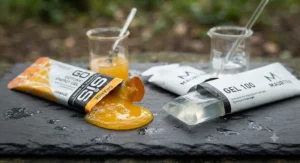
2. Maurten Gel 100 — gentlest option for sensitive stomachs
Maurten Gel 100 built its reputation on Hydrogel Technology — a patented process that encapsulates carbohydrate inside a gel matrix so it survives the acidic stomach environment intact, then releases in the small intestine where absorption actually happens. Each sachet weighs 40g and delivers 25g of carbohydrate, roughly 100kcal, hence the name.
The standout feature here isn’t raw carb count — it trails SIS Beta Fuel by 15g — it’s tolerance. Maurten Gel 100 and its bigger sibling use the same Hydrogel Technology and a carefully balanced 0.8:1 glucose-to-fructose ratio, made from just six natural ingredients with no colourants, flavours or preservatives. On paper this means a shorter, cleaner ingredients list than almost anything else on the shelf, which explains why so many elite marathoners — including sub-2:10 finishers — have adopted it as their race-day standard. Based on the spec comparison, this is the gel to reach for if previous gels have ever caused you gut distress mid-run; the trade-off is you’re taking on less fuel per sachet, so you’ll need more of them to hit high hourly carb targets.
Real-world reviewer feedback consistently highlights the neutral, almost flavourless taste as a genuine asset over long distances. One tester writing after months of comparative use reported that Maurten Gel 100 offers one of the more pleasant energy-ingesting experiences, with a neutral taste meaning you won’t get sick of them even after marathon-length efforts. That’s a meaningfully different reviewer sentiment to punchier, sweeter gels, where flavour fatigue is a genuine mid-race problem.
Pros:
- ✅ Minimal, natural six-ingredient formula
- ✅ Neutral taste avoids flavour fatigue on long efforts
- ✅ Widely used and trusted at elite marathon level
Cons:
- ❌ Lower carb-per-sachet than SIS Beta Fuel or Gel 160
- ❌ Premium pricing per gram of carbohydrate
Prices for Maurten Gel 100 typically sit in the £2–£3 per-gel range, at the time of research, making it one of the pricier options here — but for a nervous stomach on race morning, that premium often buys genuine peace of mind rather than just marketing gloss.
3. Maurten Gel 160 — fewer sachets for the same hourly target
Maurten Gel 160 is essentially Gel 100’s bigger sibling, built for athletes who want to hit high carbohydrate targets without fumbling through more wrappers than necessary during a race. The standout feature is simple: 40g of carbohydrate in a single 65g sachet, using the identical hydrogel process and 0.8:1 glucose-to-fructose ratio as the smaller gel.
Practically, this changes race-day logistics more than it changes physiology. As one comparison piece puts it, Gel 160 is well-suited to longer endurance races and sessions where fuelling opportunities are less frequent, and the larger format allows athletes to carry fewer sachets while still benefiting from the same proven hydrogel performance. What most buyers overlook is that this isn’t a “stronger” or more effective gel than the 100 — it’s the same technology in a bigger dose, which matters if you’re cycling and can’t easily reach for your jersey pocket every 15 minutes, but matters less if you’re running and prefer smaller, more frequent hits.
Cost-per-carbohydrate-gram analysis consistently favours the 160 over the 100, even though the sticker price per sachet is higher. One detailed breakdown concluded that while Gel 100 is cheaper per packet, Gel 160 costs less for the amount of carbohydrate you’re getting — genuinely useful ROI information if you’re fuelling a full Ironman-distance event and buying in bulk. Reviewer sentiment mirrors the Gel 100’s reputation for a smooth, tolerable texture, since the underlying formula and mouthfeel are nearly identical between the two sizes.
Pros:
- ✅ Better cost-per-gram of carbohydrate than Gel 100
- ✅ Fewer sachets needed across a long race
- ✅ Same trusted hydrogel tolerance as Gel 100
Cons:
- ❌ Bulkier 65g sachet is harder to stash in tight pockets
- ❌ Higher upfront price per unit than Gel 100
At around £2.50–£3.50 per gel, Maurten Gel 160 rewards athletes doing genuinely long efforts — think 70.3s, full Ironmans, ultramarathons — where the reduced sachet count outweighs the higher per-unit price.
4. SIS GO Isotonic Energy Gel — the original beginner-friendly isotonic
SIS GO Isotonic Energy Gel was, by SIS’s own account, the world’s first isotonic energy gel, and it remains the brand’s most accessible entry point. Each sachet delivers 22g of carbohydrate for around 87kcal — noticeably lighter than the Beta Fuel range, and that’s very much the point.
The standout feature is the texture-to-simplicity ratio. Because it’s isotonic, the gel delivers easy-to-digest carbohydrate without the liquid volume that often leaves you feeling bloated and sluggish, and comes in packaging designed to be easily carried in place of bulky sports bottles. Based on the spec comparison, this makes it a sensible first gel for anyone stepping up from a Couch to 5K programme into half-marathon territory, where the priority is simply not bonking, rather than hitting elite-level carb-per-hour numbers.
Real reviewer feedback is consistently strong on flavour and reliability rather than raw performance metrics. One long-term user described using them for years without gastrointestinal issues, calling the 30-gel pack great value for regular training sessions. A UK marathon tester writing more recently echoed that sentiment, describing the gel as light, refreshing and easy to digest — perfect if you struggle with heavier gels — and noting because it’s isotonic, you don’t need to take it with water, which is incredibly convenient when you’re on the move. That combination of digestibility and convenience is exactly what most beginners actually need, even if it doesn’t win a spec-sheet arms race against Beta Fuel or Maurten’s hydrogel range.
Pros:
- ✅ No water needed thanks to isotonic formula
- ✅ Long-standing reputation for easy digestion
- ✅ Widely available across UK supermarkets and retailers
Cons:
- ❌ Lower carb content means more gels needed per hour
- ❌ Less suited to elite-level high-carb fuelling strategies
Priced at roughly £1–£2 per gel depending on pack size and retailer promotions, SIS GO Isotonic Energy Gel is an easy recommendation for anyone testing whether gels work for them at all before committing to pricier options.
5. Precision Fuel & Hydration PF 30 Gel — the flavour-fatigue solution
Precision Fuel & Hydration PF 30 Gel takes a different approach entirely: instead of chasing a distinctive flavour, it deliberately goes mild and neutral. Each 51g sachet delivers 30g of carbohydrate via a 2:1 glucose-to-fructose ratio — a more traditional ratio than SIS Beta Fuel or Maurten’s hydrogel blend, but one with decades of sports science behind it.
The standout feature is texture over taste. The brand’s own product notes explain that the PF 30 Gel is formulated with a 2:1 glucose to fructose ratio to support efficient carbohydrate absorption while reducing the risk of stomach discomfort, and its smooth, easy-to-consume texture requires no additional water. What most buyers overlook is how much flavour fatigue affects gel tolerance over a marathon-length event — a gel that tastes brilliant for the first three servings can become genuinely nauseating by gel number eight, and a neutral flavour sidesteps that problem entirely.
Reviewer commentary consistently backs this up. One UK fitness writer testing multiple gels head-to-head reported that it has one of the best energy-to-weight ratios around, gets delivery and consistency right, and avoids the rush and crash of some gels, with a fairly neutral flavour that won’t cause taste fatigue even across a marathon’s worth of servings. That’s a meaningful endorsement from someone who has directly compared it against premium rivals including Maurten.
Pros:
- ✅ Neutral flavour reduces taste fatigue on long events
- ✅ Informed Sport certified for competitive athletes
- ✅ No artificial colours or flavours
Cons:
- ❌ No electrolytes included — needs pairing with a hydration product
- ❌ Sits at a premium price point for its 30g carb content
At around £1.80–£2.40 per gel, Precision Fuel & Hydration PF 30 Gel is a strong pick for anyone who has previously abandoned gels because of flavour overload rather than digestive issues.

6. HIGH5 Energy Gel Aqua — best value isotonic for newcomers
HIGH5 Energy Gel Aqua is the budget standout on this list, and it earns that position honestly rather than by cutting corners on the core science. Each 66g sachet delivers 23g of carbohydrate in a notably thin, drink-like consistency, made with real fruit juice concentrate rather than purely artificial flavouring.
The standout feature is genuinely the texture. Retailer product notes describe it as having a consistency more like a sports drink, so unlike many other gels, no water is needed, making it a good option for beginners trying gels for the first time. Based on the spec comparison, this is the gel to hand a nervous first-time marathoner who’s worried about the classic “gel gag” — that thick, syrupy mouthful that catches in the throat mid-stride. The dilution that gives it that lighter texture does mean it’s bulkier per gram of carbohydrate than a concentrated gel like Maurten’s, so it’s a genuine trade-off rather than a free upgrade.
Aggregated review sentiment across UK retailers is consistently favourable, particularly around ease of use. One product listing highlights that testers found it has a light, refreshing taste made using real fruit juices, and because it’s already diluted there’s no need to drink extra water alongside it. It’s worth noting reviewers do flag the practical trade-off too — the increased water content makes the sachets a bit heavier and bulkier to carry compared with concentrated gels, worth factoring in if you’re racing with minimal kit.
Pros:
- ✅ Cheapest gel on this list per serving
- ✅ Real fruit juice flavouring, no need for extra water
- ✅ Gentle, beginner-friendly texture
Cons:
- ❌ Bulkier sachets than concentrated gels
- ❌ Lower carb density means more sachets for longer races
HIGH5 Energy Gel Aqua typically retails under £1 per gel in multipacks, making it the strongest value pick here — genuinely competitive with SIS and Maurten on tolerance, even if it can’t match their headline carb figures.
7. TORQ Energy Gel — widest flavour range with electrolytes built in
TORQ Energy Gel rounds out this list as the British-brand all-rounder, delivering 30–33g of carbohydrate alongside a full electrolyte profile in a research-backed 2:1 maltodextrin-to-fructose formula. The standout feature is genuinely the variety and the ingredient philosophy — TORQ has built its reputation on avoiding artificial sweeteners entirely.
That electrolyte inclusion matters more than it might first appear. Each gel contains sodium, chloride, magnesium, potassium and calcium to replace the five key electrolytes lost through perspiration, helping maintain homeostasis, hold onto water and preserve muscle function. What most buyers overlook is that this means TORQ effectively bundles a hydration product into the gel itself — useful if you’d rather simplify your race-day nutrition plan than juggle separate electrolyte tablets alongside your carb source.
An independent UK gear-testing panel that put the black cherry yoghurt flavour through a structured taste and texture test awarded it strongly on mouthfeel, describing the texture as universally appreciated by testers, with one commenting it felt smooth and velvety, while the flavour was rated highly for its authentic yoghurt taste. The same review flagged that first-time TORQ users are often surprised by how potent the flavours are — a texture and taste comment worth bearing in mind if you prefer subtler gels like Maurten’s.
Pros:
- ✅ Built-in electrolyte blend simplifies race nutrition
- ✅ Genuinely wide flavour range, including caffeinated options
- ✅ No artificial sweeteners or colours
Cons:
- ❌ Strong flavours can be an acquired taste initially
- ❌ Slightly lower carb count than SIS Beta Fuel or Gel 160
TORQ Energy Gel sits around £1.60–£2.10 per gel, and the electrolyte inclusion means you’re effectively getting two products in one sachet — worth factoring into any straight price comparison against carb-only gels.
Top 7 Products: Specs & Value Comparison
| Gel | Carbs | Ratio | Electrolytes | Texture | Price Range | Best For |
|---|---|---|---|---|---|---|
| SIS Beta Fuel Energy Gel | 40g | 1:0.8 malto:fructose | No | Isotonic, smooth | £1.30–£1.80 | High-carb long events |
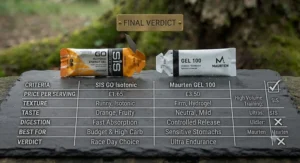
| Maurten Gel 100 | 25g | 0.8:1 glucose:fructose | No | Hydrogel, neutral | £2–£3 | Sensitive stomachs |
| Maurten Gel 160 | 40g | 0.8:1 glucose:fructose | No | Hydrogel, neutral | £2.50–£3.50 | Fewer sachets, ultra distance |
| SIS GO Isotonic Energy Gel | 22g | Maltodextrin-based | No | Isotonic, light | £1–£2 | Beginners |
| Precision Fuel & Hydration PF 30 Gel | 30g | 2:1 glucose:fructose | No | Smooth, neutral | £1.80–£2.40 | Flavour fatigue |
| HIGH5 Energy Gel Aqua | 23g | Glucose/maltodextrin | No | Thin, drink-like | Under £1 | Budget beginners |
| TORQ Energy Gel | 30–33g | 2:1 malto:fructose | Yes (5 key electrolytes) | Thicker, resealable | £1.60–£2.10 | Variety + hydration in one |
Looking at the comparison above, SIS Beta Fuel Energy Gel and Maurten Gel 160 deliver the most carbohydrate per sachet, but if gut comfort is your priority over the marathon’s back half, Maurten Gel 100 and Precision Fuel & Hydration PF 30 Gel justify their higher per-gram cost through gentler digestion. Budget-conscious beginners shouldn’t overlook HIGH5 Energy Gel Aqua, which sacrifices carb density for genuinely excellent tolerance and price.
✨ Don’t Miss These Exclusive Deals!
🔍 Take your gel strategy to the next level with these carefully selected products. Click on any highlighted item to check current pricing and availability. These picks will help you fuel your next big race with confidence!
Benefits vs Traditional Sports Drinks
| Factor | Energy Gels | Traditional Sports Drinks |
|---|---|---|
| Portability | Excellent — pocket-sized sachets | Requires bottle/hydration pack |
| Carb precision | Exact, labelled per serving | Depends on mixing accuracy |
| Hydration | Minimal (except HIGH5 Aqua-style gels) | Built in |
| Flexibility | Combine with any fluid source | Fixed carb-to-fluid ratio |
| GI comfort | Varies significantly by brand | Generally gentler if diluted correctly |
Gels win decisively on portability and precision — you know exactly how many grams of carbohydrate you’re taking with each SIS, Maurten or TORQ sachet, which sports drinks can’t offer once you’re topping up a bottle mid-race with water from an aid station. Where drinks pull ahead is combined hydration; if you’re racing somewhere hot, pairing a concentrated gel like Maurten Gel 100 with a separate electrolyte drink often outperforms trying to get everything from one product. The honest verdict is that most elite runner nutrition plans now use both together rather than picking one exclusively.
Practical Usage Guide: Getting the Most From Your Gels
Buying the right gel is only half the job — how you use it matters just as much. Get this wrong and even Maurten Gel 100, the gentlest option on this list, can still cause problems.
Start conservative. Never try a new gel — SIS, Maurten or otherwise — for the first time on race day. Test it during a training run at least three times first, ideally at race pace, so you know exactly how your gut responds under load. Timing matters more than most beginners expect: aim to take your first gel roughly 30–45 minutes into a long effort, then continue on a schedule rather than waiting until you feel low on energy, since by the time you notice fatigue, your glycogen stores are already significantly depleted.
Water pairing is where a lot of people go wrong. Concentrated gels like TORQ Energy Gel or standard Maurten sachets are designed to be taken with a few sips of water to aid absorption, whereas isotonic options like SIS GO Isotonic Energy Gel and HIGH5 Energy Gel Aqua are formulated specifically so you don’t need to. Mixing this up — necking a concentrated gel with zero water on a hot day — is one of the most common mistakes behind mid-race stomach cramps.
A common first-30-days mistake is over-fuelling too quickly. Jumping straight to 90g of carbohydrate per hour without gradually building tolerance is a recipe for gastrointestinal distress. Build up over several weeks of training, gel by gel, rather than attempting elite-level carb loads on your very first long run.
Real-World Scenario: Which Gel Fits Your Situation?
The nervous first-marathoner. Budget around £30–£40 for training, trains three times a week, has never used a gel before and is worried about stomach issues on the day. Best fit: SIS GO Isotonic Energy Gel or HIGH5 Energy Gel Aqua, both light, forgiving and inexpensive enough to experiment with across several long runs before committing to a race-day strategy.
The sub-3-hour marathoner chasing a PB. Trains six days a week, already comfortable with gels, wants maximum carbohydrate with minimal gut risk. Best fit: Maurten Gel 100, rotated with occasional Maurten Gel 160 sachets on the longest training runs, reflecting exactly the pattern used by many elite-adjacent club runners.
The Ironman-distance triathlete. Racing for 9–12+ hours, needs to hit sustained high-carb targets without carrying dozens of sachets. Best fit: SIS Beta Fuel Energy Gel or Maurten Gel 160, both delivering 40g per sachet, paired with TORQ Energy Gel‘s electrolyte-inclusive formula for hot-weather legs of the race.
Common Mistakes When Buying Energy Gels
- Buying on brand reputation alone. SIS and Maurten dominate search results, but that doesn’t automatically mean either is right for your gut — reputation reflects marketing reach and elite sponsorship as much as universal tolerance.
- Ignoring the carb-per-hour target. Buying a low-carb gel like SIS GO Isotonic and assuming one per hour is enough for a marathon effort is a common cause of late-race bonking; current guidance from the British Nutrition Foundation notes that athletes and individuals training at a higher recreational level, such as marathon training, may see improved performance from consuming additional carbohydrate during exercise.
- Never testing in training. Race-day debuts of a new gel are a leading cause of DNFs and mid-race pit stops.
- Overlooking price-per-gram. A cheaper gel with a lower carb count can end up costing more overall once you factor in how many sachets you need per hour.
- Assuming flavour beats function. The tastiest gel on the shelf isn’t always the one that survives four hours of continuous racing without triggering flavour fatigue.
What to Expect: Real-World Performance
On paper, the difference between a 22g SIS GO Isotonic gel and a 40g SIS Beta Fuel gel looks purely mathematical. In practice, the experience is quite different. The lighter isotonic gel goes down almost like a thin syrup — barely noticeable mid-stride — while the higher-carb dual-source gels have a noticeably thicker mouthfeel that some runners genuinely enjoy (it feels more “substantial”) and others find harder to swallow at high heart rates.
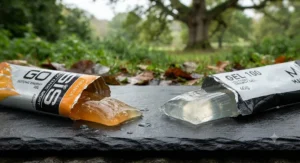
Maurten’s hydrogel products sit at the opposite texture extreme from traditional gels: reviewers frequently describe the consistency as jelly-like rather than syrupy, which is precisely the point of the encapsulation technology, but it does take a run or two to get used to if you’ve only ever used maltodextrin-based gels before.
What the spec sheet won’t tell you, but reviewers note repeatedly, is that carbohydrate ratio affects how a gel feels in the final third of a race far more than it affects the first third. Everything tastes fine and sits fine at kilometre five; the real test — and where SIS’s dual-source blend and Maurten’s hydrogel genuinely separate themselves from cheaper single-source gels — comes at kilometre 30.
Long-Term Cost & Maintenance
Energy gels aren’t a one-off purchase — for a regular marathon or Ironman trainee, they’re a recurring monthly cost that’s worth totting up honestly. A runner doing three long sessions a week, each requiring three to four gels, is looking at 9–12 gels weekly. At HIGH5 Energy Gel Aqua‘s sub-£1 price point, that’s a genuinely manageable training bill. At Maurten Gel 100‘s £2–£3 range, the same volume becomes a meaningfully larger monthly outlay — which is exactly why many athletes use a cheaper gel for daily training and save the premium options for race day itself.
Storage is simple but not zero-maintenance: keep gels somewhere cool and out of direct sunlight, since heat can affect texture and, in isotonic varieties, occasionally cause separation. Check use-by dates on bulk-bought multipacks, particularly if you’ve stockpiled ahead of a big event, since gels bought a year in advance can degrade in flavour even if technically still safe.
Buyer’s Decision Framework
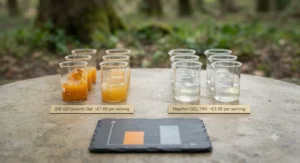
- If you’ve never used a gel before, choose an isotonic option like SIS GO Isotonic Energy Gel or HIGH5 Energy Gel Aqua, because the lighter texture minimises the risk of an unpleasant first experience.
- If your stomach has struggled with gels in the past, choose Maurten Gel 100, because its hydrogel technology and minimal ingredient list are specifically engineered to reduce gastrointestinal distress.
- If you’re racing longer than three hours and want fewer sachets, choose Maurten Gel 160 or SIS Beta Fuel Energy Gel, because both deliver 40g of carbohydrate per unit.
- If you want hydration and fuel combined, choose TORQ Energy Gel, because its built-in electrolyte blend removes the need for a separate hydration product.
- If budget is the deciding factor, choose HIGH5 Energy Gel Aqua, because it delivers reliable performance at the lowest per-serving cost on this list.
Features That Actually Matter (And Those That Don’t)
Genuinely important: carbohydrate ratio (glucose-to-fructose blends absorb faster and cause less GI distress than single-source sugars), sodium content if you’re a heavy sweater, and — above all — how the gel actually sits in your stomach at hour three, not hour zero.
Largely marketing noise for most recreational athletes: exotic flavour names, “nootropic” additions, and elaborate packaging claims. A study on carbohydrate nutrition and endurance performance published via PMC makes clear that ingesting a well-formulated carbohydrate-electrolyte solution or gel improves endurance capacity and may prevent a significant decay in performance — the underlying carbohydrate delivery is what drives results, not the flashiest branding on the wrapper.
Safety, Regulations & Compliance Guide
Energy gels sold in the UK fall under general food supplement regulations rather than medicines legislation, meaning manufacturers must list full ingredients and nutritional information but aren’t required to prove performance claims through clinical trials in the same way pharmaceuticals are. If you compete in tested sport, look for the Informed Sport logo — Precision Fuel & Hydration PF 30 Gel carries this certification, confirming batches are tested for banned substances, which matters if you’re a licensed competitive athlete rather than a purely recreational one.
Anyone with diabetes, IBS, or other digestive conditions should consult a GP or registered dietitian before adopting a gel-heavy fuelling strategy, since the concentrated sugar load these products deliver isn’t appropriate for everyone. The British Dietetic Association’s sport and exercise guidance recommends building nutrition around a varied, balanced diet first, with carbohydrate intake adjusted to match the demands of training and competition rather than relying on gels as a blanket solution.
SIS vs Maurten Energy Gels for Different Athletes
For beginners, SIS GO Isotonic Energy Gel offers a gentle, low-cost introduction without the intimidating price tag of Maurten’s premium range. For intermediate club runners chasing a first sub-4 marathon, SIS Beta Fuel Energy Gel provides genuine performance upside once carb-per-hour targets start mattering. For elite and elite-adjacent athletes with sensitive stomachs, Maurten Gel 100 and Gel 160 remain the gold standard, reflected in their widespread adoption at major marathon majors. For seniors or anyone managing existing digestive sensitivities, the milder, neutral-flavoured Precision Fuel & Hydration PF 30 Gel is worth prioritising over punchier, sweeter options.
Frequently Asked Questions
❓ Is SIS or Maurten better for marathon running?
❓ What is isotonic gel and why does it matter?
❓ How many energy gels should I take during a marathon?
❓ Do Maurten gels really need water?
❓ Are cheaper gels like HIGH5 as effective as premium options?
Conclusion
The SIS vs Maurten energy gels debate doesn’t really have a single winner — it has a “best fit,” and that fit depends entirely on your gut, your race distance and your budget. SIS Beta Fuel Energy Gel and Maurten Gel 160 lead on raw carbohydrate density for athletes chasing high hourly targets over long distances. Maurten Gel 100 remains the go-to for anyone whose stomach has let them down mid-race before. Budget picks like HIGH5 Energy Gel Aqua and SIS GO Isotonic Energy Gel prove you don’t need a premium price tag to fuel a solid half marathon, while Precision Fuel & Hydration PF 30 Gel and TORQ Energy Gel round out the field for flavour-sensitive and hydration-conscious athletes respectively.
Whichever you choose, the golden rule holds: test it in training, never on race day, and build your carbohydrate tolerance gradually rather than jumping straight to elite-level intake targets.
Recommended for You
- Energy Gels for Running: 7 Best UK Picks Tested for 2026
- Race Vest for Ultramarathon: 7 Best UK Picks Tested 2026
- Running Backpack with Water Bladder: 7 Best Picks for 2026
Disclaimer: This article contains affiliate links. As an Amazon Associate, I earn from qualifying purchases. If you purchase products through these links, we may earn a small commission at no additional cost to you.
✨ Found this helpful? Share it with your friends! 💬🤗
