In This Article
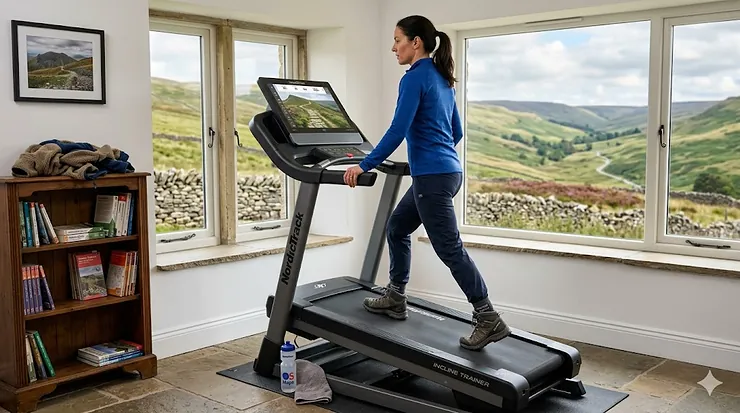
Picture this: it’s pouring outside, the wind’s howling like a banshee, and you’ve got a Three Peaks challenge coming up in three months. Brilliant. This is precisely why an incline trainer for hill walking has become essential kit for serious walkers across the UK. Whether you’re preparing for the Lake District fells, Scottish Munros, or simply want to build bulletproof cardiovascular fitness, training on an incline trainer delivers results that flat treadmills simply can’t match.
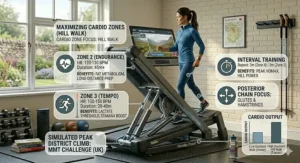
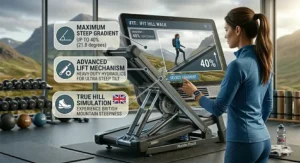
What exactly is an incline trainer for hill walking? It’s a specialised treadmill designed to simulate steep gradients – typically ranging from 0% to 40% – allowing you to replicate the demands of mountain terrain from your living room. Unlike standard treadmills that max out at 10-12% incline, these machines can genuinely prepare you for the brutal ascents you’ll face outdoors.
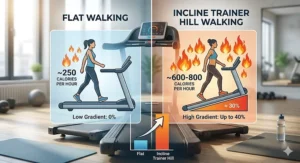
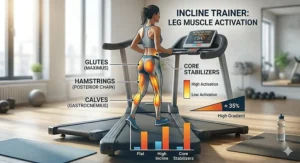
Research from the Mayo Clinic demonstrates that walking on a 10% incline burns approximately 32% more calories than flat-ground walking, whilst simultaneously strengthening your glutes, hamstrings, and calves – the exact muscle groups crucial for hill walking. When you’re tackling Snowdon or Ben Nevis, it’s these posterior chain muscles that’ll either carry you to the summit or leave you gasping halfway up.
In this comprehensive guide, I’ll walk you through seven top-rated incline trainers available on Amazon.co.uk, from budget-friendly options under £400 to professional-grade machines approaching £1,000. You’ll discover which features actually matter for hill training, how to choose the right incline percentage for your goals, and crucially, which models UK buyers are raving about in 2026.
Quick Comparison Table
| Treadmill Model | Max Incline | Price Range (£) | Motor Power | Best For | Rating |
|---|---|---|---|---|---|
| MERACH T12 Auto Incline | 15% | £369-£479 | 2.5HP | Budget-conscious serious trainers | 4.5/5 |
| CITYSPORTS 8% Incline Folding | 8% | £249-£329 | 1.4kW | Compact spaces, moderate training | 4.3/5 |
| Reebok Jet 100Z | 12 Levels (approx 15%) | £599-£749 | 2.0HP | App connectivity, intermediate users | 4.4/5 |
| MERACH NovaWalk W50 | 12% | £279-£369 | 3.0HP | Heavy-duty walking, high capacity | 4.6/5 |
| Toputure 12% Auto Incline | 12% | £299-£399 | 2.5HP | Value seekers, home gyms | 4.2/5 |
| JLL S400 Folding | 15% | £549-£699 | 2.5HP | Reliable UK brand, warranty | 4.5/5 |
| NordicTrack C1650 | -6% to 40% | £899-£1,199 | 3.6CHP | Serious athletes, premium features | 4.7/5 |
💬 Just one click – help others make better buying decisions too! 😊
Top 7 Incline Trainers for Hill Walking: Expert Analysis
1. MERACH T12 Foldable Treadmill with 15% Auto Incline
The MERACH T12 represents exceptional value in the treadmill with 15% incline UK under £1000 category, combining automatic incline adjustment with robust build quality that punches well above its price point. At £369-£479, it’s become Amazon UK’s bestseller for good reason.
Key Specifications:
- Auto incline: 0%-6%-15% (three preset levels)
- Speed range: 0.8-12 km/h (0.5-7.5 mph)
- Running belt: 108cm × 42cm (extra-wide for stability)
- Weight capacity: 136kg (300lbs)
- Noise level: <40dB (whisper-quiet operation)
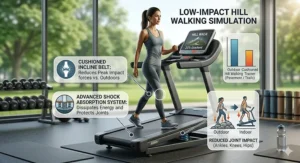
UK buyers consistently praise the MERACH T12 for its shockingly quiet brushless motor – you genuinely won’t wake the neighbours during early-morning fell-training sessions. The automatic incline system transitions smoothly between levels, and the seven-layer shock absorption system protects your knees during intensive hill simulation training.
Customer feedback from UK buyers highlights the machine’s reliability over six-month+ usage periods, with several reviewers specifically mentioning preparation for Snowdonia and Peak District walks. One Manchester-based walker noted completing Ben Nevis after eight weeks of training exclusively on this machine.
Pros:
✅ Three automatic incline presets eliminate manual adjustment faff
✅ Exceptional build quality for the price – feels like £600+ machine
✅ Genuinely quiet operation (<40dB) suitable for flats
Cons:
❌ Three incline presets only (not continuously variable)
❌ Shorter running belt than premium models
Verdict: Perfect for hill walkers seeking serious training capability without the premium price tag. The 15% maximum incline adequately simulates most UK mountain gradients.
Price: £369-£479
2. CITYSPORTS Folding Treadmill with 8% Incline
For those working with tighter budgets or limited space, the CITYSPORTS 8% Incline offers surprisingly capable gradient walking workout potential. Priced at just £249-£329, it’s the entry point to proper hill training without completely emptying your wallet.
Key Specifications:
- Manual incline: 0%-8% (adjustable)
- Speed: 1-12 km/h
- Motor: 1.4kW (1.9HP equivalent)
- Folded dimensions: Slim enough for under-bed storage
- Weight capacity: 120kg
The CITYSPORTS distinguishes itself through genuine space-saving design – it folds completely flat and rolls away effortlessly. UK reviewers consistently mention storing it under beds or against walls in small flats. The 8% incline, whilst not matching steeper trainers, still provides meaningful mountain training home sessions for beginners to intermediate walkers.
One Brighton-based user mentioned using it five days weekly for South Downs preparation, finding the 8% incline “sufficient for building endurance without killing your legs.” The manual incline adjustment means you won’t get automatic transitions during workouts, but it keeps the price remarkably accessible.
Pros:
✅ Exceptional value at £249-£329
✅ Genuinely compact when folded
✅ UK-based customer service responsive
Cons:
❌ Manual incline adjustment (no automation)
❌ 8% maximum won’t prepare you for extreme gradients
Verdict: Ideal for budget-conscious walkers tackling moderate hills or those wanting to add variety without premium investment.
Price: £249-£329
3. Reebok Jet 100Z with 12-Level Electronic Incline
The Reebok Jet 100Z brings established brand credibility to the auto incline treadmill nordic walking UK market, with Kinomap and Zwift compatibility that transforms indoor training into immersive virtual adventures. At £599-£749, it occupies the sweet spot between budget and premium.
Key Specifications:
- Electronic incline: 12 levels (0-15% approximate)
- Speed range: 1-18 km/h (0.6-11 mph)
- Motor: 2.0HP continuous power
- Console: 5-window LED display with heart rate sensors
- App compatibility: Zwift, Kinomap via Bluetooth
What sets the Reebok Jet 100Z apart is its Air Motion cushioning technology, which actively transfers air between cushioning pods during your stride. For hill walkers concerned about joint impact during intensive training, this feature genuinely makes a difference during 45-60 minute sessions.
UK buyers particularly appreciate the Zwift integration – you can climb virtual versions of Alpe d’Huez whilst preparing for Scafell Pike. One Yorkshire-based walker mentioned completing virtual Mont Ventoux climbs as specific preparation for real-world Alpine hiking holidays.
Pros:
✅ Established UK brand with strong warranty support
✅ Air Motion cushioning reduces joint stress
✅ Kinomap/Zwift compatibility adds motivation
Cons:
❌ Console feels dated compared to touchscreen competitors
❌ Assembly requires two people (heavy unit)
Verdict: Excellent choice for tech-savvy walkers wanting app connectivity without spending £1,000+. The steep incline treadmill mountain training UK community rates this highly.
Price: £599-£749
4. MERACH NovaWalk W50 Heavy-Duty Walking Pad (12% Incline)
Don’t let the “walking pad” designation fool you – the MERACH NovaWalk W50 is a beast. With 12% powered auto-incline and 181kg weight capacity, it’s specifically engineered for serious gradient walking workout sessions. At £279-£369, it’s extraordinary value.
Key Specifications:
- Auto incline: 0%-12% (powered adjustment)
- Speed: 1-6 km/h (dedicated walking speeds)
- Belt dimensions: 42cm × 102cm (wider than standard pads)
- Motor: 3.0HP brushless (commercial-grade)
- Weight capacity: 181kg (highest in class)
The NovaWalk W50 excels specifically at hill simulation training for walking rather than running. The 3.0HP motor is massively over-specced for a walking pad, which means it handles continuous incline work without the motor strain that plagues cheaper units. UK buyers mention running this 60+ minutes daily without overheating issues.
Several reviewers specifically purchased it for post-injury rehabilitation before returning to mountain walking. The 12% incline combined with slower walking speeds (1-6 km/h) allows controlled, progressive hill training without the impact stress of running.
Pros:
✅ 181kg capacity means bulletproof construction
✅ 12% incline on a walking pad is genuinely unusual
✅ 3.0HP motor handles extended sessions flawlessly
Cons:
❌ Walking-only speeds (no running capability)
❌ Compact belt means no running stride space
Verdict: Perfect for dedicated hill walkers who don’t need running capability. The mountain training home solution for those prioritising walking fitness over speed work.
Price: £279-£369
5. Toputure Folding Treadmill with 12% Auto Incline
The Toputure 12% Auto Incline has quietly become a favourite amongst UK home gym enthusiasts, offering automatic gradient adjustment and retractable handrails at a competitive £299-£399 price point.
Key Specifications:
- Auto incline: 0-12% (powered)
- Speed: 1-12 km/h
- Retractable handrail: 115cm height
- Motor: 2.5HP
- Display: LED showing time, distance, calories, incline
UK buyers particularly value the retractable handrail feature – it’s there when you need stability during steep inclines but folds away for running sessions. The 12% maximum incline falls within the sweet spot for simulating most UK mountain passes without being excessive.
Amazon UK reviewers mention solid build quality with minimal wobble even at maximum incline and speed. One Lakes-based walker noted using it for Old Man of Coniston preparation, finding the 12% incline “spot on” for replicating typical Lake District gradients.
Pros:
✅ Retractable handrail adds versatility
✅ Smooth auto-incline transitions
✅ Value-focused pricing under £400
Cons:
❌ LED display rather than modern touchscreen
❌ Brand less established than MERACH or Reebok
Verdict: Solid mid-range option delivering auto-incline capability without premium pricing. Good gradient walking workout platform for serious hobbyists.
Price: £299-£399
6. JLL S400 Folding Treadmill with 15% Incline
JLL Fitness is a respected UK brand, and the S400 represents their serious commitment to the incline training market. At £549-£699, it’s pricier than imports but comes with comprehensive UK warranty support and British customer service.
Key Specifications:
- Incline: 0-15% (electric adjustment)
- Speed: 0.3-16 km/h
- Motor: 2.5HP continuous
- Running area: 125cm × 42cm (generous length)
- Weight capacity: 120kg
The JLL S400 distinguishes itself through build quality that’ll survive years of intensive use. UK buyers consistently mention the machine feeling “bombproof” compared to lighter alternatives. The longer 125cm running belt provides proper stride space during inclined walking – crucial when you’re leaning into steep gradients.
Several reviewers mention JLL’s customer service responsiveness when minor issues arose, with replacement parts arriving within days. For UK-based buyers wary of dealing with overseas manufacturers for warranty claims, this peace of mind justifies the premium.
Pros:
✅ Established UK brand with strong support
✅ Longer running belt suits taller walkers
✅ Build quality designed for longevity
Cons:
❌ Higher price than specification alone justifies
❌ Heavier unit (harder to relocate)
Verdict: The “buy British” option for those prioritising warranty support and customer service over rock-bottom pricing. Solid steep incline treadmill mountain training UK choice.
Price: £549-£699
7. NordicTrack C1650 Incline Trainer (Premium Option)
For serious athletes willing to invest properly, the NordicTrack C1650 represents the pinnacle of home incline training. With -6% to 40% gradient range and iFIT integration, it’s a professional-grade machine approaching £900-£1,199.
Key Specifications:
- Incline/Decline: -6% to +40% (industry-leading range)
- Speed: 0-20 km/h (12.4 mph)
- Motor: 3.6CHP commercial-grade
- Touchscreen: 10-inch HD with iFIT integration
- Running belt: 51cm × 152cm (spacious)
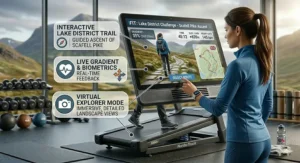
The NordicTrack C1650 isn’t just an incline trainer for hill walking – it’s a complete mountain training ecosystem. The 40% maximum incline genuinely replicates the steepest UK mountain passes, whilst the -6% decline prepares your eccentric muscle strength for descents (often where injuries occur).
UK buyers investing in this machine typically have specific goals: multi-day mountain challenges, ultra-distance events, or serious alpine preparation. The iFIT integration provides guided workouts that automatically adjust incline and speed, with trainers literally taking you up virtual mountains worldwide.
One Edinburgh-based mountaineer mentioned using the 40% incline for specific Munro preparation, finding it “the only home trainer that genuinely replicates Scottish mountain gradients.”
Pros:
✅ 40% incline unmatched in home market
✅ Decline capability trains descending muscles
✅ iFIT ecosystem transforms training motivation
Cons:
❌ Premium £900-£1,199 investment required
❌ iFIT subscription adds ongoing costs
❌ Large footprint (not suitable for small flats)
Verdict: The ultimate auto incline treadmill nordic walking UK solution for serious athletes. If budget allows, nothing else comes close.
Price: £899-£1,199
✨ Don’t Miss These Exclusive Deals!
🔍 Take your hill walking preparation to the next level with these carefully selected products. Click on any highlighted item to check current pricing and availability on Amazon.co.uk. These trainers will help you build authentic mountain fitness your walking club will envy!
✨ Ready to Start Your Mountain Training Journey?
💪 These incline trainers represent the best value options currently available on Amazon.co.uk. Whether you’re preparing for your first peak or training for serious mountain challenges, click any highlighted product above to check today’s pricing and read verified UK buyer reviews. Your mountain fitness transformation starts here!
Incline Training vs Traditional Flat Treadmills
| Feature | Incline Trainer (12-15%) | Standard Flat Treadmill |
|---|---|---|
| Calorie Burn | 100-150% more than flat walking | Baseline |
| Glute Activation | 60% more muscle fibre recruitment | Standard activation |
| Cardiovascular Intensity | Moderate-vigorous zone at walking speed | Requires running for same intensity |
| Joint Impact | Low (walking pace) | Higher (requires running speeds) |
| Mountain Preparation | Directly applicable | Limited transfer |
| UK Weather Independence | Train regardless of conditions | Train regardless of conditions |
| Posterior Chain Development | Exceptional (glutes, hamstrings, calves) | Minimal |
Source: Research data from Mayo Clinic and International Journal of Environmental Research and Public Health
Understanding Incline Percentages: What Do They Actually Mean?
One question consistently confuses first-time buyers: “What does 15% incline actually feel like?” Let’s demystify the numbers with practical UK examples that’ll make immediate sense.
Incline percentage represents the gradient – specifically, how many metres you climb for every 100 metres of horizontal distance. A 10% incline means you’d gain 10 metres of elevation over 100 metres of forward movement. Simple maths, but the physical experience escalates dramatically as percentages increase.
Practical UK Hill Comparisons:
- 5-8% incline: Equivalent to moderate Lake District paths like the Tourist Route up Helvellyn. Challenging but conversational – you can chat with walking partners without gasping.
- 10-12% incline: Replicates steeper sections of popular peaks like Snowdon’s Pyg Track or Scafell Pike’s main routes. Conversation becomes difficult; you’re working hard.
- 15-18% incline: Mirrors brutal sections of Scottish Munros or the steepest Yorkshire Three Peaks gradients. This is where your glutes genuinely burn and walking poles become essential.
- 20%+ incline: Extreme gradients found on technical scrambling routes or Alpine approaches. Only premium trainers reach these levels.
According to research published in the International Journal of Environmental Research and Public Health, walking at 15% incline recruits approximately 60% more muscle fibres in your glutes and hamstrings compared to flat walking. For hill walkers, this translates directly to summiting capability – stronger posterior chain muscles mean you’ll reach the top whilst others are still halfway up.
The beauty of adjustable incline trainers lies in progressive overload. Start at 5%, master that for 20-30 minutes, then incrementally increase. Within 6-8 weeks of consistent training, what felt brutally steep initially becomes your warm-up gradient.
The Science Behind Hill Simulation Training
Why does training on an incline trainer for hill walking actually work? The physiological adaptations are fascinating and backed by substantial research from institutions including the Mayo Clinic and various UK universities.
Cardiovascular Adaptations
A 2013 study measured heart rate responses during incline running, finding that a mere 2-7% incline increased heart rate by nearly 10% compared to flat surfaces. For walkers, this means you can achieve intensive cardiovascular training without the joint-jarring impact of running. Your heart doesn’t care whether you’re running flat or walking steep – it responds to workload intensity.
NHS guidelines recommend 150 minutes of moderate-intensity aerobic activity weekly. Hill simulation training on a treadmill with 15% incline UK under £1000 easily pushes you into the moderate-to-vigorous zone, meaning you’ll hit those targets in less time. A 30-minute incline session at 10-12% gradient can match the cardiovascular stimulus of a 60-minute flat walk.
Muscular Strength Development
Walking uphill fundamentally changes which muscles do the work. On flat ground, your quadriceps (front thigh muscles) dominate. Add gradient, and suddenly your glutes, hamstrings, and calves – collectively called the posterior chain – take over.
Research from Hinge Health demonstrates that incline walking at 10% recruits approximately 40% more gluteal muscle fibres than flat walking. For practical hill walking, strong glutes are your power source – they’re what propel you upward when the gradient steepens. Many walkers discover their glutes are surprisingly weak until incline training exposes the deficiency.
The calf muscles also benefit enormously. Each step up an incline requires your gastrocnemius and soleus muscles to work against gravity, building the eccentric strength crucial for descents (where most injuries occur).
Joint-Friendly Training
Somewhat counterintuitively, incline walking can be easier on your knees than flat-ground running. A 2018 study published in the Journal of Orthopaedic Research found that controlled incline walking produced less compressive force on knee joints than running at comparable cardiovascular intensities.
For UK walkers dealing with mild osteoarthritis or recovering from injuries, steep incline treadmill mountain training UK offers a path to serious fitness without aggravating joint issues. The key lies in walking (not running) at gradients, which loads muscles rather than joints.
Calorie Expenditure
A 2012 study quantified the metabolic cost of incline walking, revealing that 5% incline increased energy expenditure by 52-69% compared to flat walking. At 10% incline, calories burned essentially doubled. This matters enormously for walkers managing weight whilst training for mountain challenges.
Practical example: A 75kg person walking at 5 km/h on a flat treadmill burns approximately 240 calories in 30 minutes. Raise that to 10% incline, and calorie burn jumps to approximately 480 calories – same duration, doubled results. The auto incline treadmill nordic walking UK market has exploded precisely because people recognise this efficiency.
Essential Features to Consider When Buying
Navigating the incline trainer market can feel overwhelming, with manufacturers bombarding you with specifications. Here’s what actually matters for hill walking preparation versus marketing fluff.
Maximum Incline Range
This is non-negotiable – if you’re serious about mountain training home, look for minimum 12% incline, ideally 15%+. The 8-10% machines work for moderate training but won’t prepare you for proper UK mountain gradients.
Buyer Tip: Test the difference between manual and automatic incline adjustment. Auto-incline systems allow interval training without stopping mid-workout to manually adjust – crucial for maintaining heart rate zones during structured sessions.
Motor Power
Don’t be fooled by peak horsepower claims – continuous horsepower (CHP) or wattage matters. For incline training, look for minimum 2.0HP continuous. The motor works harder at inclines because it’s lifting your bodyweight against gravity.
Budget machines with underpowered motors will overheat during extended incline sessions, potentially failing within months. UK buyers consistently report motor burnout on cheap units used for 30+ minute hill sessions daily.
Belt Size and Quality
You need adequate length and width for natural stride mechanics, especially when leaning into steep gradients. Minimum dimensions: 100cm length × 40cm width. Longer is better for taller walkers.
The belt material matters too – multi-layer constructions with shock absorption reduce joint stress. Look for specifications mentioning 5+ layer belts with cushioning systems.
Weight Capacity
This indicates build quality more than just maximum user weight. A machine rated for 120kg+ will use heavier-duty frame materials, stronger motors, and more robust components. Even if you weigh 70kg, choose higher capacity models for longevity.
Noise Level
UK homes aren’t mansions – you’ll probably want to train whilst family members are home or neighbours are within earshot. Look for specifications mentioning <45dB operation. Brushless motors run significantly quieter than brushed alternatives.
App Connectivity
Modern trainers increasingly offer Bluetooth connectivity to apps like Zwift, Kinomap, or manufacturer-specific platforms. This transforms tedious indoor training into engaging virtual adventures. Not essential, but massively beneficial for motivation during long winter months.
Folding Capability
Unless you have a dedicated gym room, foldable designs save crucial floor space. The best units fold completely flat (under 30cm depth) and include transport wheels for easy movement.
Quality Check: Before buying, research whether the hydraulic folding mechanism is smooth or requires wrestling. YouTube reviews often reveal this better than product descriptions.
Price Range and Value Analysis
| Price Bracket | Incline Range | Typical Features | Expected Lifespan | Best Use Case |
|---|---|---|---|---|
| £200-£350 | 5-10% manual/auto | Basic LED, 1.5-2HP motor, limited apps | 2-3 years moderate use | Beginners, supplementary training |
| £350-£600 | 10-15% auto | App connectivity, 2.5-3HP, good shock absorption | 5-7 years | Serious hobbyists, regular mountain walkers |
| £600-£1,000+ | 15-40% auto | Touchscreens, 3-4HP, decline capability, premium build | 10+ years | Competitive athletes, extreme preparation |
| Value Sweet Spot | £369-£479 | 12-15% auto incline, 2.5-3HP, quality construction | 5-7 years | Most UK hill walkers |
How to Structure Your Hill Training Programme
Buying an incline trainer for hill walking is step one; using it effectively requires actual methodology. Here’s a progressive training structure used by UK mountain guides that’ll build genuine summit capability.
Phase 1: Foundation Building (Weeks 1-3)
Objective: Adapt muscles and cardiovascular system to incline work without injury.
- Frequency: 3-4 sessions weekly
- Duration: 20-30 minutes per session
- Incline: Start at 5%, progress to 8%
- Speed: Comfortable pace where conversation remains possible (approximately 4-5 km/h)
Sample Session:
- 5 minutes warm-up at 0% incline
- 15 minutes at 5-8% incline, steady pace
- 5 minutes cool-down at 0% incline
- Total: 25 minutes
Key Focus: Perfect your form. Keep torso upright (perpendicular to floor, not treadmill), avoid gripping handrails, and land on the ball of your foot. Many beginners lean forward excessively, which loads the lower back rather than glutes.
Phase 2: Progressive Overload (Weeks 4-8)
Objective: Increase work capacity through gradual intensity escalation.
- Frequency: 4-5 sessions weekly
- Duration: 30-45 minutes
- Incline: 8-12%
- Speed: Moderate pace (5-6 km/h)
Sample Session:
- 5 minutes warm-up at 0%
- 10 minutes at 8% incline
- 10 minutes at 10% incline
- 10 minutes at 12% incline
- 5 minutes cool-down
- Total: 40 minutes
Progression Rule: Increase either incline, duration, or speed – never all three simultaneously. If you raised incline from 10% to 12%, maintain the same duration and speed for at least two sessions before further increases.
Phase 3: Specificity Training (Weeks 9-12)
Objective: Mirror your actual mountain walking demands through targeted intervals.
- Frequency: 4-5 sessions weekly
- Duration: 45-60 minutes
- Incline: Variable (5-15%)
- Speed: Moderate to brisk
Sample Interval Session:
- 5 minutes warm-up at 2%
- 5 minutes at 12%, steady pace
- 3 minutes at 5%, recovery pace
- 5 minutes at 15%, steady pace
- 3 minutes at 5%, recovery pace
- Repeat intervals 2-3 times
- 5 minutes cool-down
- Total: 50-60 minutes
This phase should replicate your target walk’s demands. If you’re preparing for Snowdon (approximately 900m elevation gain over 4-5 hours), structure sessions around sustained 10-15% inclines with brief recovery periods.
Advanced Technique: Weighted Vest Training
Once you’ve mastered Phase 3, consider adding a weighted vest. Start with 5-10% of bodyweight (5-8kg for most people). This specifically prepares you for carrying rucksacks during actual mountain walks.
Safety Warning: Only add weight after establishing excellent form and conditioning at bodyweight. Poor technique under load magnifies injury risk.
✨ Transform Your Mountain Performance Today!
🏔️ Ready to conquer those peaks? The incline trainers featured above have helped thousands of UK walkers achieve their mountain goals. Click on the MERACH T12, CITYSPORTS, or Reebok Jet 100Z listings to compare current Amazon.co.uk prices and read verified reviews from real mountain enthusiasts. Limited-time deals often available – check now!
Common Mistakes to Avoid
Having reviewed hundreds of UK buyer experiences and spoken with mountain training specialists, these errors consistently sabotage progress:
Mistake 1: Going Too Steep, Too Soon
The most common pitfall. You buy a treadmill with 15% incline UK under £1000, immediately crank it to maximum, and wonder why your calves scream the next morning.
Solution: Start conservatively. If you can’t maintain proper form (upright posture, controlled breathing), the incline is too steep. Build gradually over weeks, not days.
Mistake 2: Gripping the Handrails
Holding handrails during incline walking completely undermines the training stimulus. You’re effectively offloading bodyweight that should be challenging your muscles.
Solution: Use handrails only for safety during mounting/dismounting. During walking, hands should swing naturally or rest lightly near (but not gripping) the rails. If you need to grip for stability, the incline or speed is too challenging.
Mistake 3: Ignoring Eccentric Training
Most walkers obsess over uphill capability but neglect downhill preparation. Descents cause more injuries in UK mountains than ascents – your quadriceps and knees take tremendous eccentric loading on long descents. According to Wikipedia’s article on eccentric training, this type of muscle contraction is crucial for controlling downhill movement and preventing injury.
Solution: If your machine offers decline capability (like the NordicTrack), use it. Otherwise, incorporate proper strength training with exercises like slow eccentric squats and calf raises.
Mistake 4: Monotonous Training
Doing identical 30-minute sessions at 10% incline might work initially, but adaptation stalls within 6-8 weeks.
Solution: Vary your training stimulus. Mix steady-state sessions with intervals, change gradients weekly, occasionally include speed work at lower inclines. Variety prevents plateaus and maintains motivation.
Mistake 5: Neglecting Recovery
The same people who wouldn’t dream of walking proper mountains on consecutive days somehow think indoor training doesn’t require recovery.
Solution: Schedule rest days. Your muscles adapt and strengthen during recovery, not during the workout itself. Minimum two full rest days weekly, more if you’re over 50 or returning from injury.
Maximising Space in UK Homes
Let’s address the elephant in the room: UK homes aren’t exactly spacious American basements. How do you incorporate an incline trainer without completely dominating your living space?
The Fold-Away Method
Modern incline trainers increasingly feature hydraulic folding systems that collapse the unit to under 30cm depth. The MERACH T12 and CITYSPORTS models excel here, sliding under beds or against walls when not deployed.
Storage Locations That Work:
- Under a bed (measure height carefully – allow 20cm clearance minimum)
- Against a wall behind a sofa
- In a bedroom corner (fold/deploy as needed)
- Under stairs (surprisingly effective in many UK homes)
Dedicated Space Strategy
If you have a spare bedroom or home office, creating a “training corner” transforms motivation. One Edinburgh buyer mentioned keeping their Reebok Jet 100Z permanently set up in their spare room, which eliminated the psychological barrier of setup/takedown faff.
Noise Management
For flats or terraced houses, noise becomes crucial. Position your trainer on a rubber mat (available for £20-40 on Amazon UK) to absorb vibration. Run sessions during reasonable hours (not 6am or 10pm), and consider the <40dB machines if noise sensitivity is paramount.
Visual Integration
Let’s be honest – treadmills aren’t particularly attractive. If your trainer lives in a visible space, consider:
- Positioning it facing a window (makes indoor training less claustrophobic)
- Adding a wall-mounted TV for entertainment/app connectivity
- Using a decorative screen when not in use
Maintenance and Longevity Tips
UK buyers consistently ask: “How long will this actually last?” The answer depends entirely on maintenance discipline. Here’s how to maximise your investment:
Essential Monthly Tasks
Belt Lubrication: Most manufacturers recommend monthly lubrication using silicone-based treadmill lubricant (available for £8-15 on Amazon UK). This reduces friction, prevents belt degradation, and decreases motor strain.
Process:
- Lift the belt edge slightly
- Apply lubricant in a zigzag pattern along the deck
- Run the belt at slow speed for 3-5 minutes to distribute evenly
Belt Tension Check: An over-tensioned belt strains the motor; under-tensioned belts slip during use. The belt should lift 5-8cm from the deck when you pull upward at the centre.
Visual Inspection: Check for belt wear, loose bolts, unusual noises. Catching issues early prevents expensive repairs later.
Weekly Quick Checks
- Wipe down the belt with a damp cloth (removes dust/debris)
- Inspect the power cord for damage
- Test emergency stop mechanism
- Vacuum around and under the machine
Warning Signs of Problems
Motor Burning Smell: Indicates overheating, often from under-lubrication or excessive use without cooling periods. Stop immediately and investigate.
Unusual Belt Noises: Squeaking suggests lubrication needs; grinding indicates more serious alignment issues.
Jerky Incline Adjustments: Could indicate lubrication needs in the incline mechanism or motor problems. Don’t ignore – this typically worsens rapidly.
Extending Lifespan
Average quality incline trainers should deliver 5-7 years with proper maintenance. Premium machines like the NordicTrack can exceed 10 years. Maximise longevity by:
- Never exceeding maximum user weight
- Avoiding continuous multi-hour sessions without motor cooling breaks
- Using a surge protector to prevent electrical damage
- Keeping the machine in temperature-controlled environments (not freezing garages)
UK-Specific Considerations
Humidity: UK homes can be damp. If storing in a garage or basement, use a dehumidifier nearby. Moisture causes electronic component deterioration and belt degradation.
Temperature Fluctuation: Avoid storage locations with dramatic temperature swings (unheated conservatories, garages). Electronics and mechanical components prefer stable environments.
Training for Specific UK Challenges
Different mountain objectives require targeted training approaches. Here’s how to structure your gradient walking workout for popular UK challenges:
The Yorkshire Three Peaks (25 miles, 1,585m ascent)
Challenge Profile: Long duration with sustained but moderate gradients. Endurance matters more than peak power.
Training Focus:
- Long sessions: 60-90 minutes at 8-12% incline
- Pace: Conversational (you should be able to speak in full sentences)
- Frequency: 4-5 times weekly
- Key adaptation: Muscular endurance in glutes and hamstrings
12-Week Programme Sample:
- Weeks 1-4: Build to 60 minutes at 8% incline
- Weeks 5-8: Progress to 75 minutes at 10% incline
- Weeks 9-12: Reach 90 minutes at 10-12% incline, add weighted vest in final 3 weeks
Snowdon via Pyg Track (7 miles, 723m ascent)
Challenge Profile: Shorter distance with steeper sections. Requires power on steep pitches plus recovery capability.
Training Focus:
- Interval sessions: Alternate 15% incline work with recovery periods
- Duration: 45-60 minutes total
- Frequency: 3-4 times weekly
- Key adaptation: Power output at steep gradients plus cardiovascular recovery
Sample Session:
- 10 minutes warm-up at 5%
- 5 minutes at 15%, moderate pace
- 3 minutes at 5%, easy pace
- Repeat interval 4-6 times
- 10 minutes cool-down
Scottish Munros (Variable, often >900m ascent)
Challenge Profile: Sustained steep climbing, often in challenging weather. Requires genuine mountain fitness.
Training Focus:
- Maximum incline work: Regular sessions at 15%+
- Weighted training: Simulate carrying gear
- Duration: 60+ minutes
- Frequency: 5-6 times weekly leading to event
Advanced Technique: Progressive weighted vest training. Start with bodyweight on a 15% incline for 45 minutes. Add 5kg vest for 30 minutes. Build to 10kg vest for 60 minutes. This replicates carrying a day sack plus emergency gear.
The Lake District Fells (Various)
Challenge Profile: Varied terrain with frequent ascent/descent cycles. Technical footing on rocky paths.
Training Focus:
- Variable incline intervals mimicking fell profiles
- Include decline work if your machine offers it
- Emphasise eccentric quad strength for descents
- Duration: 60-75 minutes
- Frequency: 4-5 times weekly
Specific Circuit: Replicate a typical Helvellyn circuit: 15 mins at 2% (approach), 15 mins at 12% (main ascent), 10 mins at 8% (plateau), 5 mins at -3% decline if available (descent), 15 mins at 5% (return). Total: 60 minutes.
Combining Incline Training with Outdoor Walking
Indoor training shouldn’t completely replace outdoor walking – they’re complementary. Here’s how to structure both effectively:
Weekly Split Example:
Monday: Incline trainer – 45 mins intervals (12-15% incline)
Tuesday: Strength training (legs/core focus)
Wednesday: Incline trainer – 60 mins steady state (10% incline)
Thursday: Rest or gentle yoga/stretching
Friday: Incline trainer – 30 mins speed work (8% incline, higher pace)
Saturday: Outdoor walk – 2-4 hours on actual hills/mountains
Sunday: Rest or light activity walk (flat terrain)
Why This Works:
The incline trainer provides controlled, progressive stimulus during weekdays when time/weather constraints limit outdoor access. Weekend outdoor walks apply that fitness to real terrain, developing proprioception and technical skills you can’t learn indoors.
UK weather makes this approach particularly sensible. When it’s absolutely hosing down in February, you can still complete quality hill simulation training indoors rather than skipping sessions entirely.
Budget Breakdown: What to Expect
Let’s talk money properly. What should you realistically budget for serious hill training capability?
Budget Tier (£200-£350)
Representative Models: CITYSPORTS 8% Incline, basic MERACH units
What You Get:
- Manual or limited auto-incline (typically 8-10% maximum)
- 1.5-2.0HP motors
- Basic LED displays
- Acceptable build quality for 2-3 years moderate use
Best For: Beginners exploring incline training, supplementary training for already-fit walkers, tight budgets.
Limitations: Won’t survive daily intensive use long-term. Maximum incline insufficient for extreme mountain preparation. May lack advanced features like app connectivity.
Mid-Range Tier (£350-£600)
Representative Models: MERACH T12, Toputure 12% Auto, MERACH NovaWalk W50
What You Get:
- Auto-incline 12-15% (adequate for most UK mountains)
- 2.5-3.0HP motors (handle extended sessions)
- Better build quality (5-7 year lifespan with maintenance)
- Often includes app connectivity
- Improved shock absorption systems
Best For: Serious hobbyist walkers, regular mountain challenge participants, those training for specific events.
Sweet Spot: This tier offers the best value-to-capability ratio. You get genuinely effective training tools without premium pricing.
Premium Tier (£600-£1,200+)
Representative Models: Reebok Jet 100Z, JLL S400, NordicTrack C1650
What You Get:
- Maximum incline 15-40% (NordicTrack goes to 40%)
- Commercial-grade motors (3.0-4.0HP)
- Advanced features: touchscreens, automatic trainer-led workouts, decline capability
- Superior build quality (10+ year lifespan)
- Comprehensive warranties
- Established brand support
Best For: Serious athletes, those training for extreme mountain challenges, people prioritising longevity and features over initial cost.
Reality Check: Premium machines absolutely deliver superior capability, but they’re overkill for casual walkers. Be honest about your commitment level before spending £1,000+.
Hidden Costs to Consider
Rubber Mat: £20-40 (protects flooring, reduces noise)
Lubricant: £8-15 every 6 months
Electricity: Approximately £3-5 monthly for regular use
Potential Subscription Fees: iFIT (NordicTrack) costs £12.99/month after free trial
Total Realistic Budget:
- Entry-level setup: £250-400
- Mid-range complete: £400-700
- Premium investment: £700-1,300
Frequently Asked Questions
sc_fs_multi_faq headline-0=”h3″ question-0=”❓ What incline percentage should I start with if I’m new to hill training?” answer-0=”✅ Begin with 5-6% incline for your first 2-3 weeks, maintaining comfortable walking pace. This allows your posterior chain muscles (glutes, hamstrings, calves) to adapt without excessive soreness. Most beginners find 5% challenging enough initially – it’s steeper than it sounds when sustained for 20-30 minutes. Progress by 1-2% every fortnight as your body adapts. Jumping straight to 12-15% inclines dramatically increases injury risk, particularly Achilles tendon strain…” image-0=”” headline-1=”h3″ question-1=”❓ Can incline training replace actual outdoor mountain walking entirely?” answer-1=”✅ Incline training provides excellent cardiovascular and muscular preparation, but it cannot fully replicate outdoor mountain walking. Indoor training offers controlled conditions for building strength and endurance, whilst outdoor walking develops proprioception (foot placement on uneven terrain), balance on rocky paths, and psychological resilience to weather conditions. Most successful mountain walkers combine both approaches – using incline trainers for consistent weekday training and applying that fitness to real mountains on weekends…” image-1=”” headline-2=”h3″ question-2=”❓ How long should my incline training sessions be for maximum benefit?” answer-2=”✅ For general hill walking fitness, 30-45 minute sessions 3-4 times weekly provide substantial benefits. If preparing for specific challenges like the Yorkshire Three Peaks or Scottish Munros, gradually build towards 60-90 minute sessions to match your target event duration. Quality matters more than pure duration – 30 minutes of properly structured interval work at varied inclines often surpasses 60 minutes of monotonous steady-state training…” image-2=”” headline-3=”h3″ question-3=”❓ Will walking on steep inclines damage my knees?” answer-3=”✅ Contrary to common concern, controlled incline walking is generally easier on knees than running on flat surfaces. Research shows incline walking loads muscles (particularly glutes and hamstrings) rather than compressing knee joints excessively. However, proper form is crucial – maintain upright posture, avoid leaning forward, and never grip handrails to offload weight. If you have existing knee issues, start with gentler gradients (5-8%) and consult a physiotherapist for personalised guidance…” image-3=”” headline-4=”h3″ question-4=”❓ What’s the difference between a treadmill with 15% incline and a dedicated incline trainer?” answer-4=”✅ Dedicated incline trainers typically offer steeper maximum gradients (20-40%) than standard treadmills with incline capability (usually maxing at 12-15%). They also feature heavier-duty motors designed specifically for sustained incline work, sturdier frames to handle the altered weight distribution, and often include decline capabilities for eccentric training. For most UK hill walkers preparing for domestic mountains, a quality treadmill with 15% incline provides adequate training stimulus. Dedicated incline trainers become necessary for extreme alpine preparation or professional-level mountain athletes…” image-4=”” count=”5″ html=”true” css_class=””]
Conclusion: Your Path to Mountain Fitness
Choosing the right incline trainer for hill walking fundamentally transforms your mountain preparation. The difference between arriving at a summit feeling strong versus desperately depleted often traces back to consistent, progressive training during the months beforehand.
Throughout this comprehensive guide, we’ve explored seven top-rated options available on Amazon.co.uk, from the exceptional-value MERACH T12 at £369-£479 through to the premium NordicTrack C1650 approaching £1,200. Each serves different needs and budgets, but all share one critical characteristic: they provide genuine gradient capability that flat treadmills simply cannot match.
The science is conclusive – walking at 10-15% inclines recruits dramatically more muscle fibres, elevates cardiovascular stimulus, and burns substantially more calories than flat-ground training. For UK mountain enthusiasts facing unpredictable weather and limited weekday training time, an incline trainer delivers consistent, progressive stimulus that builds real summit capability.
Remember the key principles:
✅ Start conservatively with gradients (5-6% initially)
✅ Progress systematically over weeks, not days
✅ Maintain proper form (upright posture, no handrail gripping)
✅ Combine indoor training with outdoor application
✅ Choose adequate maximum incline (minimum 12%, ideally 15%+)
Whether you’re preparing for your first Snowdon ascent, training for the Yorkshire Three Peaks challenge, or building fitness for Scottish Munro-bagging adventures, the mountain training home approach works. Thousands of UK walkers have proven it – consistent incline training transforms summit days from survival struggles into genuinely enjoyable achievements.
The investment in an incline trainer pays dividends far beyond the initial purchase price. You’ll complete mountain challenges you previously thought beyond your capability. You’ll maintain hill-walking fitness year-round regardless of weather. You’ll build genuine strength and endurance that translates directly to outdoor performance.
Now it’s your turn. Review the options above, consider your specific mountain goals, evaluate your budget honestly, and make the commitment to proper hill walking preparation. Your future summit-standing self will thank you.
Happy training, and I’ll see you on the fells! 🏔️
Recommended for You
- 7 Best Kinomap Compatible Treadmills UK 2026
- 7 Best WiFi Enabled Treadmill UK Smart Home 2026
- 7 Best Treadmill With Touchscreen Display UK 2026
Disclaimer: This article contains affiliate links. If you purchase products through these links, we may earn a small commission at no additional cost to you. Prices shown are approximate and may vary. Always verify current pricing on Amazon.co.uk before purchasing.
✨ Found this helpful? Share it with your mates! 💬🤗
