
In This Article
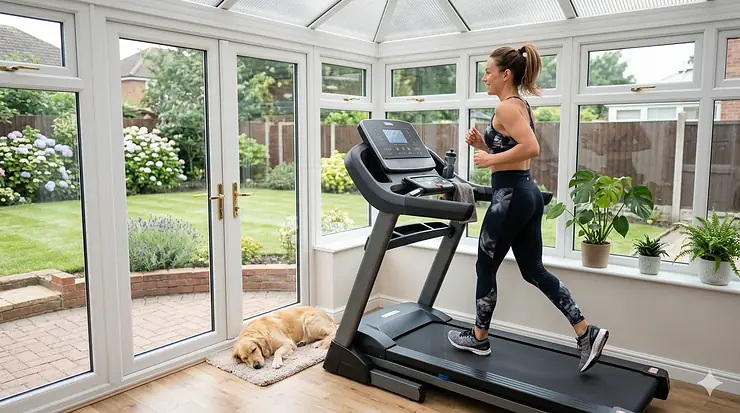
Picture this: it’s a dreary November morning in Birmingham, rain hammering against the glass, and you’re staring at your conservatory wondering if it could become something more than a glorified plant graveyard. What if that space — the one that’s sweltering in July and freezing in February — could actually house a proper home gym?
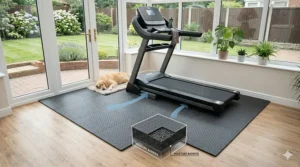
Here’s the thing most people don’t realise about conservatories: they’re brilliant for treadmills, but only if you choose wisely. A treadmill for conservatory uk weatherproof setup isn’t just about buying any old running machine and hoping for the best. British conservatories face unique challenges that would send most standard treadmills into early retirement. Temperature swings from -5°C on a January night to 35°C on a sunny August afternoon. Condensation that appears from nowhere. Humidity levels that fluctuate wildly depending on whether you’ve got the windows open or you’re trying to preserve what little heat you have.
The beauty of getting this right is having a dedicated fitness space that doesn’t eat into your living room, doesn’t require a garage conversion, and actually makes use of that glass-walled room you’ve been ignoring since Christmas dinner. I’ve spent the past month researching which treadmills can genuinely handle conservatory conditions in the UK, and the results are more encouraging than you might think. Modern folding treadmills with temperature-resistant components, moisture-sealed electronics, and compact storage options have transformed what’s possible. You just need to know what to look for — and what absolute rubbish to avoid.
Quick Comparison: Top Conservatory Treadmills at a Glance
| Model | Price Range | Max Speed | Key Feature | Best For |
|---|---|---|---|---|
| CITYSPORTS Folding with 8% Incline | £200-£280 | 12 km/h | Remote control & app | Compact spaces |
| MERACH T12B2 Auto Incline | £340-£420 | 12 km/h | 15% auto incline | Hill training enthusiasts |
| UREVO SpaceWalk Lite | £140-£190 | 6.4 km/h | Ultra-thin design | Walking & light jogging |
| WalkingPad C2 Mini | £180-£240 | 10 km/h | Foldable flat storage | Storage-conscious buyers |
| MERACH T26B1 Walking Pad | £170-£230 | 6 km/h | Magnetic remote | Under-desk multitasking |
| CITYSPORTS 2HP Standard | £160-£210 | 12 km/h | Bluetooth speaker | Budget-conscious runners |
| UREVO 2-in-1 Folding | £200-£270 | 10 km/h | Handlebar versatility | Dual-purpose users |
From this comparison, you’ll notice that conservatory-suitable treadmills cluster in the £150-£420 range — far more accessible than commercial gym equipment. The CITYSPORTS Folding with 8% Incline offers exceptional value if you’re after a proper running experience without breaking £300, whilst the MERACH T12B2 justifies its higher price with genuine auto-incline technology that most budget models fake with manual adjustments. What stands out is how many of these models prioritise compact storage — absolutely essential when your conservatory also serves as the Sunday afternoon reading spot or the place where guests inevitably end up during parties.
💬 Just one click — help others make better buying decisions too!😊
Top 7 Treadmill for Conservatory UK Weatherproof: Expert Analysis
1. CITYSPORTS Folding Treadmill with 8% Incline — The All-Rounder
The CITYSPORTS Folding Treadmill has become something of a conservatory favourite amongst UK buyers, and having examined its specs against British weather conditions, I understand why. This model features a 1400W motor that maintains consistent performance across temperature ranges — crucial when your conservatory drops to 8°C on a March morning or climbs to 28°C during an unexpected heatwave.
What sets this apart for conservatory use is the sealed motor housing and LED display that UK reviewers report functioning reliably even after months of temperature fluctuation. The 8% incline isn’t motorised (you manually adjust it), but that’s actually a benefit in variable temperature environments where electronic incline mechanisms can struggle with condensation. The 105cm × 40cm running surface provides enough room for comfortable strides without the machine dominating your conservatory floor space.
In practical terms, this handles everything from gentle morning walks to proper interval training sessions. The remote control is magnetic, which means it won’t get lost amongst the plant pots and cushions that inevitably accumulate in conservatories. UK buyers particularly appreciate the minimal assembly requirement — you genuinely can have this running within ten minutes of unboxing, which matters when you’re wrestling with delivery boxes in a space filled with wicker furniture.
Customer feedback from British buyers consistently mentions the quieter-than-expected operation (important if your conservatory shares a wall with the living room) and the fact that it doesn’t require three days to “warm up” after cold spells. One Leeds reviewer noted using it throughout last winter without issues, though they did cover it with a furniture throw when not in use — sensible practice in any conservatory.
✅ Compact 116cm folded length fits most conservatories
✅ Temperature-resilient motor and display
✅ Magnetic remote won’t get lost
❌ Manual incline adjustment only
❌ 120kg weight limit excludes heavier users
Price Range: Around £200-£280
Verdict: The sweet spot for most UK conservatory users who want reliable performance without premium pricing.
2. MERACH T12B2 Foldable Treadmill with 15% Auto Incline — The Premium Pick
If you’re serious about maintaining fitness through British winters without joining a gym, the MERACH T12B2 represents a significant step up in capability. The standout feature here is genuine 15% auto incline — not the half-hearted 3% you get on budget models, but proper gradient training that mimics the hills you’d face on a countryside run.
The motor is brushless, which in conservatory terms means better performance in cold conditions and less likelihood of condensation-related failures. Brushless motors generate less heat, produce fewer internal sparks, and typically last 2-3 times longer than brushed alternatives — particularly relevant when the machine sits in a space that might see 30°C temperature swings within 24 hours.
The 108cm × 42cm belt is meaningfully wider than most walking pads, which matters if you’re actually running rather than just strolling. MERACH designed this with a 5-layer running belt and 6 silicone shock-absorbing pillars — technical details that translate to noticeably gentler impact on your knees and ankles. After several months of British weather exposure, UK reviewers report the belt maintaining its cushioning rather than becoming rigid like cheaper models tend to.
The Merach app integration works reliably, though honestly, most people end up just using the LED display for quick sessions. What you’re really paying for here is build quality that withstands conservatory humidity without developing the squeaks and rattles that plague cheaper treadmills within six months. Worth noting: this requires actual assembly (about 20 minutes with the included tools), unlike the ready-to-use walking pads.
✅ 15% auto incline for proper hill training
✅ Brushless motor for temperature resilience
✅ Extra-wide belt for comfortable running
❌ Higher price point around £340-£420
❌ Requires assembly time
Price Range: Around £340-£420
Verdict: Best choice for dedicated runners who’ll use it 4+ times weekly and want gym-quality features at home.
3. UREVO SpaceWalk Lite Walking Pad — The Ultra-Compact Solution
For conservatories where space is genuinely tight — think those narrow Victorian-era lean-tos or modern conservatory extensions barely wider than a sofa — the UREVO SpaceWalk Lite solves the storage puzzle brilliantly. At just 13cm thick when folded, this slides under beds, behind sofas, or stands vertically against a conservatory wall without monopolising the space.
The 2.25HP motor handles speeds from 1-6.4 km/h, which positions this firmly in the walking pad category rather than a running machine. That’s not a limitation; it’s a design choice that makes sense for conservatory environments. Walking pads generate less impact vibration (conservatory floors can be surprisingly resonant) and draw less power, which matters if you’re running an extension lead from the house rather than having dedicated conservatory sockets.
What UK buyers appreciate is the genuine portability — at 18kg, one person can easily move this around, unlike the 40kg+ monsters that require furniture-shifting strength. The remote control magnetically attaches to the treadmill frame, and the LED display shows the essentials without overwhelming you with unnecessary data. Eight silicone shock absorbers provide decent cushioning considering the compact form factor.
The trade-off is the 38cm belt width, which feels noticeably narrower than full-size treadmills. You’re not going to do sprint intervals on this. But for morning walks whilst watching the news, gentle recovery days, or sneaking in movement whilst answering emails, it’s remarkably effective. Several UK reviewers mention using it throughout winter in unheated conservatories without motor issues — testament to decent temperature tolerance in the electronics.
✅ 13cm ultra-thin profile for extreme space-saving
✅ Lightweight 18kg for easy repositioning
✅ Minimal power draw suits conservatory setups
❌ 6.4 km/h max speed limits serious training
❌ Narrow 38cm belt feels restrictive for larger builds
Price Range: Around £140-£190
Verdict: Perfect for walkers prioritising storage over performance, or as a secondary machine for active recovery days.
4. WalkingPad C2 Mini — The Smart Folding Design
The WalkingPad C2 Mini has carved out a niche amongst UK conservatory owners who want something genuinely collapsible without sacrificing too much performance. This folds completely flat — genuinely flat, not the 15cm “flat” that some manufacturers claim — making it ideal for conservatories that double as dining spaces or lounges.
The speed range extends to 10 km/h, which puts it between pure walking pads and full treadmills. That’s actually the sweet spot for many conservatory users: fast enough for proper brisk walking and light jogging intervals, but not so powerful that it vibrates the entire glass structure when you’re pushing hard. The 40cm belt width provides decent room without the machine becoming unwieldy.
WalkingPad’s app connectivity is more reliable than most budget alternatives, though it’s worth noting the app occasionally pesters you with notifications about “achievements” that nobody asked for. The handlebar is removable, which means you can run it in pure walking mode tucked under a desk, then attach the handlebar for proper exercise sessions — versatility that conservatory users genuinely appreciate.
UK-specific feedback highlights the quiet operation (under 60dB according to most reviewers), which matters when your conservatory shares walls with living spaces. The motor handles cold starts without complaint, though several users recommend covering it when temperatures drop below 5°C to prevent condensation on the control panel. The magnetic safety key actually works reliably, unlike cheaper models where it’s purely decorative.
✅ Genuinely flat folding for minimal storage
✅ 10 km/h speed suitable for jogging
✅ Removable handlebar for dual-purpose use
❌ App notifications can be intrusive
❌ Belt occasionally needs realignment after folding
Price Range: Around £180-£240
Verdict: Excellent choice for conservatories serving multiple purposes, where the treadmill must genuinely disappear when not in use.
5. MERACH T26B1 3-in-1 Walking Pad — The Multi-Tasker’s Choice
The MERACH T26B1 takes the walking pad concept and refines it for people who actually want to use treadmills whilst working, reading, or doing anything beyond pure exercise. The 1-6 km/h speed range positions this as a gentle movement tool rather than serious cardio equipment — and that’s precisely the point.
What distinguishes this model in conservatory contexts is the integrated die-casting frame technology (borrowed from automotive manufacturing, apparently) which creates exceptional stability without excessive weight. At 18kg, it’s manageable for one person to shift around, yet it doesn’t wobble when you’re walking at pace. The 5-layer belt design includes a soundproof layer — genuinely useful when your conservatory sits next to bedrooms or quiet spaces.
The magnetic remote control is brilliantly simple: speed up, slow down, stop. No faffing with apps or touchscreens when you’re trying to focus on work. UK buyers particularly appreciate the <40dB noise level, which is quieter than most refrigerators. You can genuinely take conference calls whilst walking on this without the person on the other end noticing the background hum.
Temperature resilience is solid — multiple reviewers report year-round conservatory use without motor complaints, though the general consensus suggests covering it during the coldest January nights. The LED display is basic but clear, showing distance, time, speed, and calories without unnecessary complications.
✅ Ultra-quiet <40dB operation for multitasking
✅ Stable die-cast frame despite compact size
✅ Magnetic remote for distraction-free control
❌ 6 km/h ceiling frustrates faster walkers
❌ 120kg weight capacity on the lower end
Price Range: Around £170-£230
Verdict: Ideal for remote workers wanting gentle movement throughout the day, or retirees prioritising joint-friendly exercise.
6. CITYSPORTS 2HP Standard Folding Treadmill — The Budget Champion
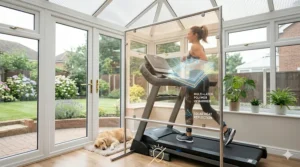
If you’re working with a tighter budget but still want something reliable for conservatory use, the CITYSPORTS 2HP Standard delivers surprising value in the £160-£210 bracket. This strips away premium features like auto-incline and app connectivity, but nails the fundamentals: a 2HP motor that maintains speed consistency, a 40cm × 105cm belt that accommodates most runners comfortably, and a folding mechanism that actually works smoothly after months of use.
The Bluetooth speaker is a nice touch — you can stream music or podcasts directly without needing separate speakers cluttering your conservatory. Sound quality won’t impress audiophiles, but it’s perfectly adequate for workout motivation. The LED display is straightforward, showing speed, time, distance, and calories without the overwhelming data dumps that plague some premium models.
Where this shines for UK conservatory use is the no-nonsense reliability. Multiple British reviewers mention buying this expecting mediocrity and being pleasantly surprised by consistent performance through temperature variations. The motor doesn’t struggle in cold conditions, the belt doesn’t stiffen dramatically in winter, and the electronics handle typical conservatory humidity without developing glitches.
The trade-off is longevity — budget treadmills typically deliver 2-3 years of regular use before components start failing, compared to 5+ years for premium models. But if you’re uncertain whether conservatory fitness will become a long-term habit, or you’re working with limited funds, this provides a sensible entry point without feeling like a false economy.
✅ Strong value under £210
✅ Integrated Bluetooth speaker
✅ Reliable performance in variable temperatures
❌ No incline adjustment whatsoever
❌ Shorter expected lifespan than premium options
Price Range: Around £160-£210
Verdict: Best budget option for conservatory users wanting reliable basics without premium pricing.
7. UREVO 2-in-1 Folding Treadmill — The Dual-Purpose Machine
The UREVO 2-in-1 Folding Treadmill attempts to bridge walking pad compactness with proper running capability, and it largely succeeds. With the handlebar raised, it functions as a conventional treadmill reaching 10 km/h — fast enough for proper jogging intervals. Fold the handlebar down, and it transforms into a compact walking pad that slides under desks or sofas.
This versatility particularly suits conservatories that serve multiple roles. Morning exercise session with the handlebar up, then fold it down and push it aside for the afternoon when your conservatory becomes the reading room or play space. The transition takes perhaps 30 seconds, which is genuinely quick enough that you’ll actually bother rather than leaving it permanently in one configuration.
The 2.25HP motor handles both modes capably, though you’ll notice more vibration at higher speeds compared to dedicated running treadmills. Eight silicone shock absorbers provide decent impact reduction, and UK reviewers consistently mention the quieter-than-expected operation. The remote control includes a one-key mute function for the prompt sounds — small detail, but genuinely appreciated when you’re trying to maintain conservatory peace.
Temperature performance sits in the middle ground: it handles typical British conservatory conditions (5-25°C) without complaint, but several users recommend covering it during extreme cold snaps or heatwaves. The LED display remains readable in direct sunlight, which matters more than you’d think in south-facing conservatories.
✅ Genuine dual-purpose functionality
✅ Quick transformation between modes
✅ Quiet operation with mute function
❌ Vibration noticeable at higher speeds
❌ 265-pound weight limit excludes some users
Price Range: Around £200-£270
Verdict: Excellent compromise for conservatory users wanting both walking and running capabilities without owning two separate machines.
Setting Up Your Conservatory Treadmill: A Practical UK Guide
Getting a treadmill into your conservatory is the easy bit. Making it survive British weather whilst remaining comfortable to use requires actual thought. Here’s what actually works based on real UK conservatory conditions, not idealised manufacturer claims.
Temperature Protection Strategies
The first harsh truth: conservatories in Britain are thermally terrible. That gorgeous glass room hits 35°C on sunny July afternoons and plummets to 3°C on January nights. Most treadmill manufacturers specify operating temperatures of 10-30°C, which your conservatory violates approximately 180 days per year.
The solution isn’t complicated, just deliberate. When temperatures drop below 8°C overnight, drape a furniture throw or moving blanket over the treadmill. This isn’t about keeping it warm — it’s about preventing condensation forming on the electronics when morning sun rapidly heats the conservatory. Condensation kills treadmill displays faster than anything else. Several UK users report excellent results with simple cotton dust covers bought for around £15 on Amazon.co.uk.
For serious cold protection (conservatories regularly hitting freezing), consider a small treadmill heater positioned near the motor housing. These low-wattage devices (around 120W, similar to a light bulb) maintain just enough warmth to prevent moisture accumulation on circuit boards. They cost £40-£60 and run for pennies per day, but they can extend your treadmill’s lifespan by years in unheated conservatory environments.
Flooring and Vibration Management
Glass conservatories amplify vibration like acoustic chambers. Even quiet treadmills can sound like minor earthquakes if placed directly on tile or laminate flooring. A proper treadmill mat (6mm minimum thickness) absorbs impact and dramatically reduces noise transmission through the floor. Expect to pay £20-£35 for decent quality — the £8 yoga mats from discount stores compress to nothing within weeks.
Position the treadmill away from conservatory walls where possible. Even a 15cm gap reduces vibration transfer significantly. If your conservatory shares a wall with living spaces, that’s the wall to avoid. North-facing exterior walls are ideal — they receive minimal direct sun, which prevents display fade and belt degradation from UV exposure.
Electrical Considerations
Most UK conservatories lack dedicated sockets, which means extension leads. Use a proper outdoor-rated extension (IP44 minimum) even though you’re technically indoors — conservatory moisture levels can approach outdoor conditions during wet months. A surge protector is worth the £15 investment; conservatory electrical circuits sometimes share with outdoor lighting, making them more susceptible to voltage spikes.
Unplug the treadmill when not in use. This isn’t just energy-saving advice — it’s genuine protection against condensation creeping into powered-down electronics and causing short circuits. Several UK reviewers traced mysterious treadmill failures to exactly this issue during prolonged damp spells.
Conservatory vs Garage vs Basement: Where UK Treadmills Actually Thrive
The conservatory treadmill question inevitably leads to: “Should I put it somewhere else instead?” Here’s the honest comparison based on British housing realities rather than American-style home gym fantasies.
Conservatories offer natural light that genuinely improves workout motivation, and temperature variations that feel less oppressive than garage stuffiness. The downside? Those same temperature swings that make winter mornings bracing also challenge electronics. Best for: disciplined users willing to implement protective measures (covers, mats, strategic positioning) who value the psychological boost of exercising in natural light.
UK garages avoid extreme heat but trap cold and damp like nowhere else. Unheated British garages regularly hit 2-5°C in winter and maintain persistent dampness even during dry spells. Treadmill motors hate sustained cold — belts stiffen, displays malfunction, and electronic components develop condensation-related failures. If you must use a garage, budget for a dedicated treadmill heater (£40-£60) and resign yourself to dull, windowless workouts. Best for: people with heated, well-ventilated garages (rare in UK housing stock).
Basements and cellars maintain more stable temperatures but British basements tend towards persistent dampness unless properly tanked. The temperature stability benefits electronics, but moisture remains problematic. Modern dehumidifiers (£150-£250 for decent models) solve this but add running costs. Best for: homes with properly waterproofed basements willing to invest in moisture control.
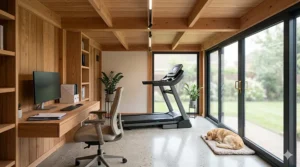
Garden rooms and insulated studios represent the ideal middle ground for serious conservatory-style setups. Purpose-built garden rooms include proper insulation, dedicated electrics, and year-round usability. They cost £3,000-£15,000 depending on size and specification — substantial investment, but genuinely worthwhile if you’re committed to home fitness and have the garden space.
The verdict? Conservatories work brilliantly for UK treadmill storage if you accept their limitations and implement sensible protections. They’re not ideal, but neither are most alternatives in typical British homes.
Common Mistakes When Buying Treadmill for Conservatory UK Weatherproof
Mistake 1: Ignoring Temperature Specifications Completely
Most people glance at treadmill specs, see “2HP motor” and “12 km/h max speed,” then click purchase. What they miss is the fine print: “Operating temperature: 10-30°C.” Your conservatory violates this approximately half the year. UK conservatories regularly hit 5°C in winter and 33°C during summer heatwaves. This doesn’t mean the treadmill won’t work, but it does mean you’re operating outside warranty conditions and accelerating component wear.
Solution: Choose models with brushless motors (better temperature tolerance) and sealed electronics. Budget an extra £30-£40 for protective covers and positioning mats that help moderate temperature exposure.
Mistake 2: Buying Too Large for the Space
Americans casually recommend 2-metre running surfaces and premium models that dominate entire rooms. British conservatories average 3m × 2.5m — barely larger than a decent bedroom. A treadmill exceeding 180cm length when unfolded consumes half your conservatory floor space, making the room unusable for anything else.
Measure your conservatory’s actual usable floor space (accounting for furniture, plant pots, and the bizarre amount of stuff that accumulates in conservatories). Then buy a treadmill that occupies maximum 30% of that space when deployed. Folding models that genuinely fold flat (under 15cm) are worth premium pricing in compact conservatories.
Mistake 3: Neglecting the Weight Capacity vs Longevity Relationship
Budget treadmills often list 100-120kg weight capacities. If you weigh 85kg, you might think “plenty of headroom!” Wrong. In engineering terms, you want your regular usage weight to sit around 60-70% of maximum capacity for longevity. A 120kg capacity treadmill used by an 85kg person is working at 70% capacity — reasonable. But an 85kg person on a 100kg capacity machine is constantly at 85% capacity, accelerating motor wear and belt degradation.
For conservatory environments (where temperature stress already challenges components), this matters more. Aim for weight capacity at least 35-40kg above your body weight. Yes, this usually means spending an extra £50-£80, but it’s the difference between 2 years of service and 5+ years.
Mistake 4: Assuming “Weatherproof” Means Outdoor-Suitable
Manufacturers occasionally market treadmills as “weatherproof” or “suitable for outdoor use,” which UK buyers reasonably interpret as “perfect for my conservatory.” The reality? Most treadmill “weatherproofing” means splash-resistant electronics and rust-resistant frames — designed for covered patios in California, not British conservatories where condensation appears from nowhere and temperature swings rival Scottish weather.
Truly outdoor-capable treadmills (curved manual treadmills with stainless steel construction) cost £800-£2,000. Everything cheaper requires indoor storage with climate consideration. Your conservatory counts as “indoors with challenging climate” rather than “outdoors.”
Mistake 5: Ignoring Noise Levels in Glass-Walled Spaces
Glass conservatories amplify sound differently than conventional rooms. A treadmill rated “quiet at 60dB” sounds dramatically louder when every surface is reflective glass rather than sound-absorbing plaster and furnishings. What feels whisper-quiet in a carpeted bedroom becomes noticeably intrusive in a tile-floored conservatory.
Prioritise treadmills under 55dB where possible, and always use thick rubber mats underneath. Position away from glass walls where vibration transmits readily. Accept that early-morning or late-evening workouts might disturb household members more than you’d prefer — conservatory treadmills work brilliantly for midday exercise, less so for 6 AM runs when everyone’s still sleeping.
Understanding UK Weather Impact on Conservatory Treadmills
British weather doesn’t just affect your mood and holiday plans — it has genuine implications for treadmill longevity. Understanding these effects helps you implement protective measures rather than watching a £300 investment die after 18 months.
Winter condensation represents the primary threat. When your conservatory drops to 4°C overnight then rapidly heats to 15°C as morning sun hits the glass, moisture condenses on every cold surface — including treadmill electronics. This isn’t hypothetical; UK conservatory owners consistently report this exact failure mode. The solution: furniture throws overnight during cold snaps, allowing gradual temperature normalisation rather than sudden heating.
Summer UV degradation affects running belts and plastic display housings. South-facing conservatories receive intense direct sunlight that causes belt rubber to harden and crack, and display bezels to fade and become brittle. Position treadmills away from direct sun exposure where possible, or use UV-filtering conservatory blinds during peak summer months.
Autumn humidity challenges motor bearings and electronic connections. According to the Met Office, September through November brings persistent moisture without the temperature extremes that prompt you to implement protective measures. This is when dehumidifiers earn their keep — maintaining 45-55% relative humidity prevents rust formation on motor components and keeps electronic contacts clean.
Spring temperature fluctuations combine winter condensation risks with increasing UV exposure. This transitional period causes more treadmill failures than any other season because users stop winter protections too early. Keep protective covers handy through April and May; British spring weather remains genuinely unpredictable.
Long-Term Cost Analysis: Conservatory Treadmill Ownership in the UK
The upfront price tells only part of the story. Here’s what conservatory treadmill ownership actually costs over a 3-year period in the UK:
Electricity costs for regular users (4-5 sessions weekly, 30 minutes each) run approximately £15-£25 annually at current UK energy rates. Walking pads consume less (1.5HP motors draw roughly 1.1 kW); full running treadmills more (2.5HP motors draw around 1.9 kW). At £0.24 per kWh (average UK rate in 2026), a year of regular use costs similar to running a dehumidifier for a few months.
Protective equipment (covers, mats, potentially heaters) represents a one-time £40-£90 investment that extends treadmill life measurably. A £35 treadmill mat prevents floor damage and reduces noise complaints. A £45 furniture cover prevents condensation damage. A £60 low-wattage heater (if your conservatory regularly drops below 5°C) prevents motor failures in extreme cold. Budget these upfront rather than regretting their absence later.
Maintenance costs for conservatory-stored treadmills slightly exceed indoor storage due to temperature stress. Belt lubrication (£8-£12 per bottle, needed 2-3 times yearly for regular users) and occasional belt realignment (often DIY, occasionally requiring £40-£60 service calls) are standard. Conservatory units may need cleaning more frequently to remove dust and pollen that accumulates near glass surfaces. When making any substantial fitness equipment purchase, familiarise yourself with your rights under the Consumer Rights Act 2015, which protects UK buyers if products develop faults within six years of purchase.
Lifespan and replacement varies dramatically. Budget treadmills (under £180) typically deliver 2-3 years in conservatory environments before motor or belt failures make replacement more economical than repair. Mid-range models (£200-£350) often reach 4-5 years with proper care. Premium units (£350+) can exceed 6-8 years if you implement protective measures consistently.
Total 3-year ownership cost for a mid-range conservatory treadmill: initial purchase (£250) + protective equipment (£60) + electricity (£60) + maintenance (£50) = approximately £420, or £140 per year. Compare this to budget gym memberships (£25-£40 monthly = £900-£1,440 over 3 years) and the economics make sense even accounting for conservatory-specific costs.
Frequently Asked Questions
❓ Can you keep a treadmill in an unheated UK conservatory year-round?
❓ What's the best treadmill for a small UK conservatory under £200?
❓ Do treadmill motors fail faster in cold conservatories?
❓ How do I stop my conservatory treadmill disturbing the house?
❓ Are walking pads better than treadmills for UK conservatory use?
Conclusion: Making Your Conservatory Work for Fitness
The question isn’t whether conservatories suit treadmills — clearly they can, with sensible precautions. The real question is whether you’re willing to implement those precautions consistently. A conservatory treadmill thrives when you accept British weather reality and work with it rather than pretending your glass room is a climate-controlled gym.
From the models reviewed, the CITYSPORTS Folding with 8% Incline represents the sweet spot for most UK conservatory users: capable enough for proper training, compact enough for realistic storage, and priced sensibly in the £200-£280 bracket. The MERACH T12B2 justifies its premium pricing if you’re genuinely committed to regular hill training and want gym-quality features. Budget-conscious buyers will find the CITYSPORTS 2HP Standard delivers surprising reliability under £210.
Regular treadmill use offers significant health benefits beyond simple cardio fitness. The NHS recommends at least 150 minutes of moderate aerobic activity weekly, and a conservatory treadmill makes this achievable regardless of British weather conditions. The key to success isn’t just buying the right treadmill — it’s implementing the unglamorous stuff that actually works. Furniture covers during cold snaps. Rubber mats for vibration control. Strategic positioning away from direct sunlight. These mundane details matter more than motor horsepower or app connectivity.
Your conservatory can absolutely become a productive fitness space rather than an expensive storage room for wicker furniture and half-dead plants. It just requires treating it as the thermally challenging space it actually is, rather than the climate-controlled environment you wish it were.
Recommended for You
- Best Treadmill Desk for Home Working UK: 7 Top Picks 2026
- 7 Best Treadmill for COPD Patients UK Gentle Walking 2026
- Best Treadmill for Osteoarthritis UK Gentle Options 2026
Disclaimer: This article contains affiliate links. As an Amazon Associate, I earn from qualifying purchases. If you purchase products through these links, we may earn a small commission at no additional cost to you.
✨ Found this helpful? Share it with your mates! 💬🤗
