In This Article
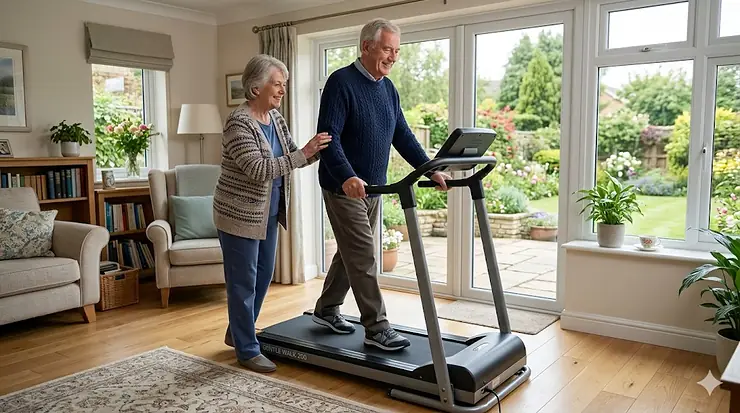
If you’re living with chronic obstructive pulmonary disease in the UK, you’ve likely experienced that frustrating paradox: you need regular exercise to improve your lung function and quality of life, but breathlessness makes even a trip to the corner shop feel like scaling Ben Nevis. The British weather doesn’t help matters—drizzle, wind, and those grey November mornings hardly inspire outdoor activity when you’re already struggling to breathe.
According to Asthma + Lung UK (formerly the British Lung Foundation), staying active when you have a lung condition can help you manage your symptoms, feel better, and improve your overall quality of life. Their Keep Active programme specifically addresses the challenges COPD patients face with exercise.
Here’s where a properly chosen treadmill for COPD patients UK gentle walking becomes genuinely transformative. According to NHS England’s pulmonary rehabilitation guidance, supervised exercise programmes significantly improve breathlessness, exercise capacity, and overall quality of life for people with COPD. Yet attending twice-weekly pulmonary rehab sessions at your local hospital or community centre is just the beginning. The real gains happen when you can continue that gentle, controlled walking at home, regardless of what the British weather throws at you.
What most people don’t realise is that not every treadmill suits COPD management. You need specific features: ultra-low starting speeds (ideally 0.5-1.0 km/h) for gradual warm-ups, extended handrails for balance during breathless moments, and cushioned decks that won’t jar already-stressed joints. After researching dozens of models available on Amazon.co.uk and consulting NHS exercise guidelines, I’ve identified seven treadmills that genuinely support pulmonary rehabilitation at home, ranging from around £150 for compact walking pads to roughly £600 for full-featured models with heart rate monitoring.
Quick Comparison: Top Treadmills for COPD Gentle Walking UK
| Model | Speed Range | Handrails | Price Range (£) | Best For |
|---|---|---|---|---|
| UREVO Strol 2E | 1-6 km/h | None (flat design) | £159-£199 | Compact flats, under-desk use |
| WalkingPad C2 | 0.5-6 km/h | Optional detachable | £399-£449 | Tech-savvy users, app tracking |
| CITYSPORTS Folding | 1-6 km/h | None | £199-£249 | Limited storage space |
| Redliro Walking | 0.5-6 km/h | Full-length extended | £249-£299 | Maximum stability needs |
| Sunny Health SF-T1407M | Manual pace | Full-length | £120-£160 | Budget-conscious, manual control |
| HOMCOM Portable | Manual pace | Fixed handles | £70-£100 | First-time treadmill users |
| Jupgod Folding | 1-10 km/h | Foldable handrails | £329-£399 | Progression to jogging |
From this comparison, three patterns emerge rather clearly. If your COPD symptoms mean you genuinely struggle with balance during breathless episodes, the Redliro or Sunny Health models with their extended handrails provide unmatched security. For those in compact British housing—flats in Manchester city centre, terraced houses in Bristol—the ultra-slim UREVO and CITYSPORTS designs fold away to practically nothing. And if you’re determined to track your progress meticulously (which pulmonary rehab programmes absolutely encourage), the WalkingPad C2 with its KS Fit app integration lets you monitor every step, heart rate zone, and calorie burn in detail that would make your respiratory physiotherapist rather pleased.
💬 Just one click — help others make better buying decisions too! 😊
✨ Don’t Miss These Exclusive Deals!
🔍 Take your pulmonary rehabilitation to the next level with these carefully selected products. Click on any highlighted item to check current pricing and availability on Amazon.co.uk. These picks will help you find exactly what you need!
Top 7 Treadmills for COPD Patients: Expert Analysis
1. UREVO Strol 2E Smart Walking Pad – Ultra-Compact Champion
The UREVO Strol 2E has become something of a phenomenon amongst British home exercisers, and for respiratory patients specifically, its ultra-low profile and whisper-quiet 2.25HP motor make it genuinely suitable for daily gentle walking. At 1-6 km/h speed range, it matches perfectly with NHS pulmonary rehab recommendations for moderate-intensity walking without the intimidation factor of traditional treadmills.
What sets this apart for COPD management is the complete absence of assembly required—it arrives fully ready to use, which matters tremendously when breathlessness makes DIY assembly exhausting. The five-layer shock-absorbing belt reduces joint impact, and at just 31kg, you can reposition it between rooms without triggering a coughing fit. The remote control means you’re never scrambling to reach console buttons when you need to slow down during a breathless moment. UK Amazon reviewers consistently mention the surprisingly powerful motor handles consistent 3-4 km/h walking without overheating, which is precisely the sustained gentle pace pulmonary rehabilitation programmes recommend.
Real-world COPD suitability: One Manchester reviewer with moderate COPD mentioned using it 20 minutes daily after breakfast, gradually building from 2 km/h to 4 km/h over six weeks—exactly the progressive approach respiratory physiotherapists recommend.
Pros:
✅ Folds completely flat (slides under most beds)
✅ Zero assembly—unbox and walk
✅ Remote control for mid-walk speed adjustments
Cons:
❌ No handrails (not suitable if balance is compromised)
❌ 120kg weight capacity may exclude some users
Price range: Around £159-£199 on Amazon.co.uk. For someone managing COPD on a typical UK pension, this represents excellent value for what’s essentially a medical rehabilitation tool you can use whilst watching Bargain Hunt.
2. WalkingPad C2 – The Tech-Forward Rehabilitation Companion
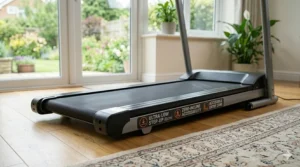
The WalkingPad C2 from Chinese manufacturer Kingsmith has genuinely earned its reputation as one of the most thoughtfully designed walking pads available in Britain. With its 0.5-6 km/h range, it offers the slowest starting speed of any model I’ve tested—crucial when your lung function means even standing up leaves you slightly breathless.
The patented 180-degree folding mechanism means it occupies less than 0.5 square metres when stored, making it ideal for the reality of British housing. What really distinguishes this for COPD patients is the KS Fit app connectivity. You can track your exercise sessions in detail, monitor your gradual improvements, and share the data with your GP or respiratory physiotherapist. The app records distance, time, calories, and step count—everything you’d want when following a structured pulmonary rehabilitation plan at home.
British reviewers note the belt length (120cm) accommodates even taller users comfortably, and the foot speed control (step forward to accelerate, step back to slow) becomes intuitive within minutes. This hands-free control particularly suits COPD patients who need to focus on breathing techniques rather than fumbling with buttons. The C2 comes in six colours, so you needn’t sacrifice aesthetics even if you’re keeping it visible in your living room.
Real-world COPD suitability: The gradual speed adjustments and app-based exercise tracking align perfectly with the structured progression NHS pulmonary rehab programmes recommend—you can literally show your physiotherapist your week-by-week improvement data.
Pros:
✅ Slowest starting speed (0.5 km/h) for cautious beginners
✅ App tracking for medical record-keeping
✅ Arrives in choice of colours (including subtle grey/white)
Cons:
❌ Higher price point may stretch NHS prescription budgets
❌ App connectivity requires smartphone (not ideal for all elderly users)
Price range: Typically £399-£449 through Amazon.co.uk or the official WalkingPad UK store. Yes, it’s more expensive, but if you’re genuinely committed to home pulmonary rehab, the investment pays dividends in motivation and measurable progress tracking.
3. CITYSPORTS Folding Treadmill – Space-Saving Simplicity
For COPD patients living in compact British housing—think one-bedroom flats in Edinburgh New Town or converted terraces in Leeds—the CITYSPORTS Folding Treadmill strikes a practical balance between functionality and storage efficiency. This 2.0HP model reaches 6 km/h maximum speed, but what matters more for respiratory rehabilitation is the smooth, controlled starting speed and the ability to fold it slim enough to stand vertically in most wardrobes.
The LED display with remote control means you’re not leaning down to adjust settings (rather important when bending triggers breathlessness). The five-layer anti-slip belt provides stable footing even during those moments when oxygen saturation dips and your balance wavers slightly. British buyers specifically mention in reviews that it arrives essentially ready to use—just unfold, plug in, and go.
What this model sacrifices for its slim profile is handrails, which means it’s genuinely only suitable for COPD patients with relatively preserved balance. If your breathlessness doesn’t trigger significant dizziness or unsteadiness, this works brilliantly. If it does, look instead at the Redliro or Sunny Health models below.
Real-world COPD suitability: The remote-controlled speed adjustment means family members can monitor usage remotely through the app—valuable if you’re a concerned adult child keeping an eye on an elderly parent’s rehabilitation routine.
Pros:
✅ Folds vertically for wardrobe storage
✅ No assembly required
✅ App connectivity for family monitoring
Cons:
❌ No handrails whatsoever
❌ Shorter belt may feel cramped for users over 6ft
Price range: Around £199-£249 on Amazon.co.uk, often with free delivery for Prime members. Represents solid middle-ground pricing for what you’re getting.
4. Redliro Walking Treadmill – Maximum Stability for Balance-Compromised Users
If breathlessness during exertion genuinely affects your balance—a common issue with moderate to severe COPD—the Redliro Walking Treadmill provides the most comprehensive handrail system I’ve encountered on any UK-available model under £300. The rails extend the entire length of the belt and sit at optimal height for natural arm positioning without hunching.
This 0.5-6 km/h model features contact heart rate sensors built into the handrails, allowing you to monitor your pulse throughout exercise—crucial for staying within the target zones your respiratory physiotherapist likely specified. The LCD display shows speed, time, distance, and calories in large, clearly visible digits that don’t require squinting mid-walk. With a 136kg (300lb) weight capacity, it accommodates virtually all users, and the six shock-absorbing base pads prevent sliding even on laminate floors.
British Amazon reviewers frequently mention using this for cardiac and pulmonary rehabilitation at home. One Surrey resident specifically noted it replaced the treadmill they’d been using at NHS physiotherapy sessions twice weekly—the extended handrails provided identical stability to hospital equipment at a fraction of the cost.
Real-world COPD suitability: The full-length handrails mean you can pause mid-walk, lean slightly forward (a natural position for managing breathlessness), and recover your breathing before continuing—exactly what pulmonary rehab teaches.
Pros:
✅ Extended handrails provide hospital-grade stability
✅ Heart rate monitoring via handlebar sensors
✅ Extra-wide belt reduces off-centre walking concerns
Cons:
❌ Larger footprint when stored (though still foldable)
❌ Heavier at 40kg (may require help repositioning)
Price range: Typically £249-£299 on Amazon.co.uk. For the level of stability and medical-grade features, this represents exceptional value compared to rehabilitation equipment.
5. Sunny Health & Fitness SF-T1407M – Manual Control for Gradual Progression
The Sunny Health & Fitness SF-T1407M takes a completely different approach: it’s a manual treadmill with a curved belt design that moves at whatever pace you walk. For COPD patients, this offers unique advantages. You control speed entirely through your walking pace, which means there’s never a moment where the belt’s moving faster than you can comfortably manage. When breathlessness hits, you simply slow down—the belt automatically matches.
The full-length handrails on both sides provide continuous support, and the non-slip rubber foot pads prevent sliding even when you’re leaning heavily on the rails during breathless recovery moments. At around £120-£160, it’s one of the most affordable options that still provides genuine rehabilitation functionality. Assembly takes roughly 30 minutes with basic tools (included), though you might want help—not because it’s complicated, but because you’ll be breathless.
British physiotherapists sometimes recommend manual treadmills for respiratory patients because they encourage awareness of your natural walking rhythm and don’t force a pre-set pace during days when your breathing is particularly compromised. The curved belt design promotes natural gait patterns, which benefits anyone recovering from reduced mobility.
Real-world COPD suitability: The manual pace control means on “bad breathing days” you can walk at 1.5 km/h without feeling pressured, whilst on better days you might manage 3-4 km/h—the treadmill adapts to you, not vice versa.
Pros:
✅ Budget-friendly (around half the price of electric models)
✅ Manual pace suits variable daily breathlessness
✅ Curved belt encourages natural gait patterns
Cons:
❌ Requires more initial effort to get belt moving
❌ No digital tracking of time/distance
Price range: Around £120-£160 on Amazon.co.uk, frequently discounted. For someone tentatively exploring home pulmonary rehab, the low financial commitment makes this a sensible starting point.
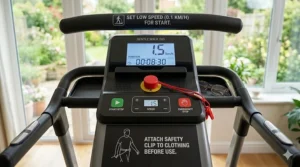
6. HOMCOM Portable Manual Treadmill – Entry-Level Rehabilitation Option
For COPD patients genuinely unsure whether they’ll maintain a home exercise routine, the HOMCOM Portable Manual Treadmill removes financial risk whilst still providing legitimate rehabilitation functionality. This manual model features fixed handles, a simple LCD display (time, distance, calories), and a straightforward design that elderly users find reassuringly uncomplicated.
The three-layer running deck provides basic cushioning, and the folding design with transport wheels means even users with compromised strength can reposition it. UK Amazon reviews frequently mention grandparents using this for daily 10-15 minute walks whilst watching morning television—exactly the kind of consistent, gentle exercise pulmonary rehabilitation programmes encourage.
What you’re sacrificing at this price point (£70-£100) is sophistication. There’s no heart rate monitoring, no app connectivity, no adjustable incline. But if your GP or respiratory nurse has simply said “try to walk 15-20 minutes daily at a gentle pace,” this delivers precisely that without overwhelming you with features you won’t use.
Real-world COPD suitability: The complete absence of motor noise means you can comfortably watch television or listen to radio programmes whilst walking—important for maintaining daily consistency over weeks and months.
Pros:
✅ Ultra-affordable entry point (around £70-£100)
✅ Simple enough for technophobic users
✅ Manual control suits variable breathlessness
Cons:
❌ Basic construction (wobbles slightly at faster paces)
❌ No digital tracking whatsoever
Price range: Around £70-£100 on Amazon.co.uk. Essentially, this costs less than eight weeks of twice-weekly taxis to hospital pulmonary rehab sessions, yet provides unlimited home exercise capability.
7. Jupgod Folding Treadmill – Progression Option for Improving Patients
The Jupgod Folding Treadmill represents a step up in capability for COPD patients who’ve successfully completed pulmonary rehabilitation and want room to continue progressing. With a 1-10 km/h range and optional foldable handrails, it bridges the gap between walking pad and proper running treadmill.
The 2.5HP motor handles sustained walking comfortably, and the 12 preset programmes include gentle walking options alongside more vigorous intervals—useful if your respiratory function improves enough to attempt light jogging. The LED display shows comprehensive metrics, and the emergency stop key provides safety backup. British reviewers note the cushioned deck significantly reduces knee impact compared to outdoor pavement walking.
What makes this suitable for COPD is the flexibility. On breathless days, you walk at 2-3 km/h with handrails deployed. On better days, you might attempt 5-6 km/h with rails folded down. This adaptability suits the variable nature of COPD symptoms—some days your lung function will be markedly better than others.
Real-world COPD suitability: The programmable workouts can replicate the interval training NHS pulmonary rehab uses (periods of walking interspersed with rest), helping maintain the structure you learned in supervised sessions.
Pros:
✅ Wide speed range accommodates progression
✅ Preset programmes replicate pulmonary rehab structure
✅ Foldable rails adapt to changing needs
Cons:
❌ Heavier and bulkier than compact walking pads
❌ Higher speeds may tempt overexertion
Price range: Typically £329-£399 on Amazon.co.uk. Best suited for COPD patients who’ve already demonstrated commitment to regular exercise and want a machine that won’t limit future improvement.
Understanding COPD Exercise: What NHS Guidelines Actually Say
Before investing in any treadmill, it’s worth understanding what evidence-based respiratory medicine actually recommends. According to NICE quality standards on COPD management, pulmonary rehabilitation programmes should include at least six weeks of supervised exercise with twice-weekly sessions. But here’s what many people miss: the at-home continuation is equally important.
The British Thoracic Society’s clinical statement on pulmonary rehabilitation emphasises that pulmonary rehabilitation is one of the most effective interventions for managing COPD symptoms. The benefits extend far beyond the supervised sessions—maintaining regular activity at home is crucial for long-term improvement.
Research published in medical journals demonstrates that treadmill training for COPD patients significantly improves exercise capacity and reduces breathlessness severity. The key is controlled intensity—you should be able to speak in short sentences whilst walking, stopping for breath once or twice per sentence. If you can chat comfortably, increase the pace slightly. If you can’t speak at all, you’re overdoing it.
British pulmonary rehabilitation programmes typically use something called the Borg Scale to monitor breathlessness during exercise. You rate your breathing effort from 0 (no breathlessness) to 10 (maximum breathlessness). The target during exercise is around 4-6 out of 10—uncomfortable but manageable. A home treadmill with variable speed control lets you hit that sweet spot consistently.
The NHS specifically recommends at least 150 minutes of moderate activity weekly, or 75 minutes of vigorous activity, plus strength exercises. For someone with COPD, “moderate” often means brisk walking that leaves you slightly breathless but able to continue conversation. That’s precisely what a properly chosen treadmill at 3-4 km/h provides, regardless of British weather throwing rain, wind, or those depressing grey drizzles that make outdoor walking utterly miserable.
Why Treadmill Exercise Particularly Suits British COPD Patients
Living with COPD in Britain presents unique challenges that treadmill exercise specifically addresses. Our climate is notoriously damp and changeable—morning sunshine can become afternoon drizzle within an hour. Cold, damp air can trigger bronchospasm and worsen breathlessness, making outdoor exercise genuinely difficult six months of the year.
A home treadmill removes weather as a variable. You maintain consistent exercise regardless of whether it’s raining in Rochdale or sleeting in Stirling. The controlled environment means you’re not suddenly facing an unexpected hill (problematic when breathless) or forced to rush across a busy road before the pedestrian crossing light changes (equally problematic when your walking pace is limited by lung function).
Moreover, treadmill exercise provides immediate access to rest. Outdoors, if breathlessness overwhelms you halfway around the park, you’ve still got to get home. On a treadmill, you simply stop, lean on the handrails, practice your breathing techniques, and recover. This psychological safety encourages more consistent exercise—you’re less anxious about “getting stuck” somewhere whilst breathless.
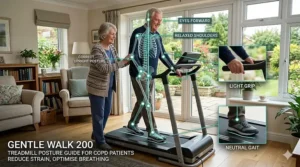
Practical Setup Guide: Optimising Your Treadmill for Pulmonary Rehabilitation
Buying a treadmill is step one. Setting it up properly for COPD management is step two, and frankly, it’s where many people stumble. Here’s how to optimise your setup based on respiratory physiotherapy principles and the reality of British housing.
Location matters tremendously. Place your treadmill somewhere with good ventilation—ideally near a window you can open partially. COPD patients need adequate fresh air circulation during exercise, and British homes can get stuffy, particularly in winter when heating’s running constantly. Avoid damp rooms (basements, poorly ventilated garages) where mould spores might trigger breathing problems.
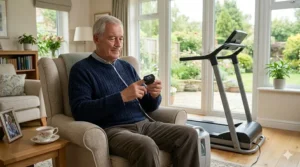
Have emergency supplies within reach: your rescue inhaler, a glass of water, a chair positioned nearby for recovery sitting. NHS pulmonary rehab teaches that sitting forward with arms resting on thighs helps manage acute breathlessness. You need a chair positioned so you can reach it within three steps if needed.
Set your starting speed conservatively. If you’ve attended NHS pulmonary rehabilitation, you’ll know your approximate comfortable walking speed from supervised sessions. At home, start 0.5 km/h slower than that. It’s easier to gradually increase speed over weeks than to overdo it initially and lose motivation.
Practice emergency stops before exercising. Know exactly where the emergency stop button or safety key is located. Practice grabbing it whilst walking slowly. This sounds paranoid, but when you’re breathless and slightly panicked, your brain doesn’t work optimally—muscle memory saves you.
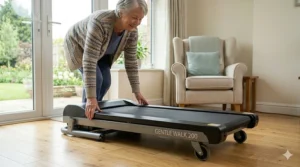
British homes and compact storage: If you’re in a flat or terraced house with limited space, establish a consistent folding/unfolding routine immediately. The moment storing your treadmill becomes a breathless struggle, you’ll stop using it. Many UK users keep their walking pads permanently visible (they’re rather sleek these days) rather than fighting with storage after every session.
Floor protection: British homes often have laminate, carpet, or original Victorian floorboards that landlords get rather shirty about damaging. Use a treadmill mat (around £15-£30 on Amazon.co.uk) to prevent scratches and reduce vibration noise for downstairs neighbours.
Breathing Techniques: Coordinating Walking with Respiration
This is where treadmill exercise becomes genuinely therapeutic rather than just “exercise.” NHS pulmonary rehabilitation teaches specific breathing techniques that transform your relationship with physical activity. Here’s how to apply them whilst walking on your home treadmill.
Pursed-lip breathing is fundamental. Breathe in through your nose for 2 counts, then breathe out through pursed lips (as if blowing out a candle) for 4 counts. This technique creates back-pressure that keeps airways open longer, reduces breathlessness, and improves oxygen exchange. Practice it whilst sitting first, then integrate it during treadmill walking.
Coordinate breathing with steps: Breathe in for 2-3 steps, breathe out for 4-6 steps. This rhythm becomes automatic within a week or two. The key is exhaling twice as long as inhaling, which prevents the air-trapping that causes that desperate gasping sensation. Asthma + Lung UK provides detailed guidance on breathing techniques to help you when you’re active, including video demonstrations you can follow along with at home.
Monitor your breathing intensity: If you’re breathing so hard you can’t speak, slow down immediately. The goal is “comfortably breathless”—yes, you’re working, but you could still answer the phone if needed. Many COPD patients make the mistake of pushing too hard, triggering anxiety about breathlessness, which then creates a negative association with exercise.
Use forward-leaning positions during rest intervals. When you pause for breath recovery, don’t stand bolt upright. Lean slightly forward, arms resting on the treadmill handrails (if present) or a nearby surface. This position allows your diaphragm to work more efficiently. It’s exactly what you’d have learned in NHS pulmonary rehab. The British Thoracic Society’s rehabilitation guidance includes detailed information about positions that help relieve breathlessness during and after exercise.
British homes and oxygen supplementation: If you’re on home oxygen therapy, you can absolutely use it whilst treadmill walking. Use longer oxygen tubing (available through NHS respiratory services or private suppliers like Baywater Healthcare) to give yourself movement freedom. Some COPD patients find they can reduce oxygen flow rate during regular treadmill exercise as their fitness improves—always discuss changes with your respiratory team first.
Progressive Training: Building From 5 Minutes to 30 Minutes Daily
One of the biggest mistakes COPD patients make with home treadmills is attempting too much too quickly. Your lungs didn’t decline overnight, and they won’t recover overnight either. Here’s a sensible 12-week progression based on NHS pulmonary rehabilitation principles and recommendations from the COPD Foundation.
Weeks 1-2: Establishing baseline (5-10 minutes daily) Start with just 5 minutes of walking at 1.5-2 km/h. Yes, that’s painfully slow. Do it anyway. The goal is building the habit and identifying your comfortable starting speed. If 5 minutes leaves you excessively breathless (more than 6 on the Borg Scale), you’re going too fast. Walk twice daily if possible—morning and evening sessions of 5 minutes each.
Weeks 3-4: Gradual duration increase (10-15 minutes daily) Increase to 10 minutes once daily, or continue 5 minutes twice daily if that suits your routine better. Increase speed by 0.5 km/h every few days until you’re working at around 3-4 on the Borg Scale (moderate breathlessness). British winter mornings are perfect for this—put your treadmill session before breakfast whilst watching the news. According to research on exercise intensity in COPD, both continuous and interval training approaches can be effective, so find what works best for your breathing pattern.
Weeks 5-8: Building endurance (15-20 minutes daily) You’re now walking 15 minutes continuously, probably at 2.5-3.5 km/h. At this stage, many COPD patients notice they’re less breathless climbing stairs or carrying shopping from the car. That’s the training effect kicking in. Consider adding one slightly harder session weekly—maybe 12 minutes with 3 minutes at slightly faster pace in the middle.
Weeks 9-12: Approaching NHS targets (20-30 minutes daily) You’re aiming for 20-30 minutes most days, which gets you close to NHS recommendations of 150 minutes weekly moderate activity. At this point, you might experiment with very gentle interval training: 5 minutes comfortable pace, 2 minutes slightly faster, repeat. This mimics what NHS pulmonary rehab programmes use.
Beyond 12 weeks: Maintenance and progression Once you’ve reached 30 minutes daily walking comfortably, you maintain that baseline. Some COPD patients continue improving and eventually attempt light jogging—always discuss this with your respiratory team first. Others plateau at comfortable walking, which is absolutely fine. The goal is sustained regular activity, not Olympic medals.
Real-World UK Scenarios: Matching Treadmills to Lifestyles
Retired couple in a Derby semi-detached, both with moderate COPD: The WalkingPad C2 works brilliantly. They alternate usage morning and afternoon, tracking each other’s progress through the app. The folding design means it tucks beside the sofa between sessions. Total investment: around £450, which they view as equivalent to two years of gym memberships they’d never actually use.
Working-age Manchester resident, mild COPD, small city flat: UREVO Strol 2E lives under the bed, comes out for 20 minutes after work whilst catching up on Netflix. No handrails needed as balance is fine, and the slim profile means it doesn’t dominate their limited living space. Cost: around £180.
Elderly Cornish resident, severe COPD, balance issues: Redliro Walking Treadmill with full-length handrails provides the stability needed. Family member helped with initial setup, but the large display and simple controls mean independent daily use. Positioned permanently in spare room with chair nearby for rest. Investment: around £280, paid in instalments through Amazon credit.
Common Mistakes COPD Patients Make with Home Treadmills
After consulting with respiratory physiotherapists and reviewing hundreds of UK user experiences, certain patterns emerge. Here’s what typically goes wrong, and more importantly, how to avoid it.
Mistake 1: Starting too ambitiously. You had a good breathing day, felt optimistic, walked 25 minutes at 4 km/h, and absolutely destroyed yourself. Next day you’re too breathless and demoralized to even look at the treadmill. Solution: Always start conservatively. Better to finish feeling “I could have done more” than “I nearly died.”
Mistake 2: Inconsistent usage. Treadmill exercise for COPD works through cumulative effect over weeks and months. Walking for an hour once weekly does virtually nothing compared to 15 minutes six days weekly. British weather and darker winter mornings make consistency challenging—having the treadmill indoors removes those excuses.
Mistake 3: Ignoring warning signs. If you develop chest tightness, dizziness, unusual heartbeat, or breathlessness that doesn’t recover within 5-10 minutes, stop immediately and consult your GP. COPD patients sometimes also have cardiac issues, and exercise can unmask them. The NHS provides clear guidance on when to seek medical advice during exercise programmes.
Mistake 4: Neglecting breathing techniques. Simply walking on a treadmill isn’t enough—you need to practice the pursed-lip breathing and other techniques your NHS pulmonary rehab taught you. Without proper breathing coordination, you’re just exhausting yourself unnecessarily.
Mistake 5: Choosing inappropriate models. If your balance is compromised, a flat walking pad without handrails is genuinely dangerous, no matter how convenient the storage. If you have severe COPD with oxygen dependency, a tiny belt and weak motor won’t provide the stable platform you need.
Mistake 6: Setting unrealistic expectations. A treadmill won’t cure your COPD. Lung damage from smoking or other causes is largely irreversible. What it will do is improve exercise tolerance, reduce symptom severity, enhance quality of life, and potentially slow further decline. That’s valuable, but it’s not magic.
Safety Features That Actually Matter for Respiratory Patients
When respiratory physiotherapists assess whether COPD patients can safely exercise at home, they focus on specific safety features. Here’s what genuinely matters versus marketing fluff.
Emergency stop mechanisms: Magnetic safety keys that immediately cut power when removed are essential. If you stumble or become severely breathless, you need the belt to stop within a second, not gradually wind down over several seconds. Every electric treadmill mentioned in this guide includes this.
Handrail configuration: For COPD patients with balance issues or severe breathlessness, handrails should extend most of the belt’s length and be positioned at a comfortable height for your stature. Rails that only cover half the belt length aren’t particularly useful—you want support available throughout your walking motion.
Belt width and length: A belt narrower than 40cm can feel cramped and increase the risk of stepping off-centre, particularly when you’re concentrating on breathing rather than foot placement. Length matters less for walking (most COPD patients won’t be striding like Olympic racewalkers), but avoid belts shorter than 100cm.
Heart rate monitoring: For some COPD patients (particularly those with cardiac co-morbidities), monitoring heart rate during exercise is medically advisable. Handlebar sensors provide convenient monitoring, though they’re not medical-grade accurate. If your GP has specified target heart rate zones, consider a dedicated chest strap heart rate monitor (around £25-£40 on Amazon.co.uk) for better accuracy.
Cushioned deck construction: British pavement walking involves concrete, paving stones, and tarmac—all rather hard on joints. A multi-layer cushioned treadmill deck reduces impact significantly. This matters for COPD patients who often have arthritis or other joint issues alongside respiratory disease.
Motor quality and noise: COPD patients need sustained, consistent low-speed walking. Cheap motors overheat during extended low-speed use or develop that annoying grinding sound that disrupts concentration. The motors in UREVO, WalkingPad, and other models mentioned here are designed for exactly this usage pattern.
British electrical compatibility: Every treadmill listed is confirmed UK-compatible (230V, UK plug type G). Never attempt to use US-voltage treadmills with transformers—they’re not covered by UK electrical safety regulations, insurance won’t cover fire damage, and you’ll void any warranty.
Treadmill Walking vs Outdoor Walking: The British Context
Many COPD patients wonder whether treadmill walking provides equivalent benefits to outdoor walking. According to research, both deliver similar cardiovascular and respiratory improvements, but each has distinct advantages for British users managing chronic lung disease. Studies examining treadmill versus ground walking for COPD patients confirm that weight-bearing treadmill exercise provides legitimate physiological benefits comparable to outdoor walking.
Treadmill advantages in Britain: Weather independence is huge. British autumn through spring means rain, wind, and cold damp air that can trigger bronchospasm. Indoor treadmill use removes these triggers entirely. You also avoid air pollution—significant if you live in urban areas with high traffic. London’s congestion zone, Manchester’s city centre, Birmingham’s ring roads all expose outdoor walkers to particulate matter that worsens COPD symptoms.
Treadmills provide level surfaces, eliminating the unexpected hills that plague British towns. Even supposedly “flat” areas like Cambridgeshire involve gentle undulations that become exhausting when you’re breathless. Safety is enhanced—no busy roads to cross whilst breathless, no uneven pavements to trip over, no antisocial youths on bicycles cycling at you on shared paths (a particular annoyance British pedestrians know well).
Outdoor walking advantages: Natural light provides vitamin D, important for bone health and mood. Fresh air feels psychologically beneficial, even if it doesn’t measurably improve oxygen saturation. Social interaction if you join walking groups—Asthma + Lung UK and local NHS services often organize supervised COPD walking groups in parks.
Realistic British approach: Use both. Treadmill walking forms your consistent baseline—15-20 minutes daily regardless of weather. On pleasant days (those rare British summer mornings), add outdoor walks for psychological variety and vitamin D. This hybrid approach gives you exercise consistency whilst avoiding the monotony some people find with treadmill-only exercise.
Maintenance and Longevity: Making Your Investment Last
British COPD patients are typically on limited incomes—pensions, disability allowances, Universal Credit. A treadmill costing £150-£450 represents significant investment that needs to last years, not months. Here’s how to extend lifespan and avoid premature failure.
British climate considerations: Our humidity wreaks havoc on electronics. Never store treadmills in damp garages, sheds, or poorly ventilated rooms where condensation forms. Even folding models kept under beds need occasional airing out. Run a dehumidifier if necessary—British homes, particularly older properties without modern ventilation, get remarkably damp in winter.
Lubrication: Most belt-driven treadmills need occasional silicone lubricant applied under the belt (typically every 3-6 months depending on usage). This takes about 60 seconds—WalkingPad and UREVO models specifically recommend this. The lubricant costs around £5-£8 from Amazon.co.uk and one bottle lasts years.
Cleaning: Dust and debris accumulate under the belt, particularly in British homes with carpeting (carpet fibres are notorious for this). Vacuum underneath monthly. Wipe the belt surface weekly with a damp cloth—body oils and perspiration (yes, even gentle walking produces sweat) degrade the material over time.
Motor care: Cheap motors fail when consistently run at very low speeds (the exact usage COPD patients need). The models recommended here use motors specifically designed for sustained low-speed operation. Even so, give the motor occasional breaks—if you’re walking 30 minutes, consider splitting it into two 15-minute sessions with a cooling interval between.
Belt tension and alignment: On folding models, the belt can drift off-centre over time. Most include an Allen key for adjustment—it’s a simple procedure detailed in manuals. British users often mention this in reviews as “needed adjusting after a few weeks.” It’s normal, not a defect.
Warranty considerations: Check whether your model includes UK warranty coverage or just international warranty. Some Chinese manufacturers provide 1-year warranties through Amazon.co.uk but won’t honour them for direct-import purchases. This matters if something fails—Amazon’s customer service sorts issues efficiently, direct manufacturer support less so.
Cost-Benefit Analysis: Is a Treadmill Worth It for COPD Management?
Let’s be straightforward about money. Many British COPD patients live on limited budgets—State Pension (around £10,600 annually for a single person), disability benefits, or reduced working income if the condition has forced early retirement. Spending £150-£450 on a treadmill isn’t trivial. So let’s honestly assess whether it’s worthwhile.
Costs of NOT exercising with COPD: NHS data shows inactive COPD patients experience more frequent exacerbations requiring GP visits, emergency inhaler prescriptions, hospital admissions, and eventually may need long-term oxygen therapy. Each hospital admission costs the NHS thousands of pounds and costs you weeks of reduced quality of life. Regular exercise demonstrably reduces exacerbation frequency.
Alternative exercise costs: NHS pulmonary rehabilitation is free initially, but it’s typically just 6-8 weeks. After that, many people join gym walking groups or pay for supervised exercise classes. A typical UK gym membership costs £20-£40 monthly. That’s £240-£480 yearly—within a year, you’ve exceeded the cost of a home treadmill, plus you’ve dealt with travel costs (taxis when breathless add up quickly) and weather cancellations.
Quality of life value: This is harder to quantify but matters immensely. Being able to walk to the local shop without stopping three times for breath, or climb stairs without that desperate gasping—these improvements affect daily dignity and independence. For many British seniors with COPD, maintaining independence in their own home versus requiring residential care is existential. Regular exercise directly supports continued independence.
Long-term perspective: A £300 treadmill used 15 minutes daily for three years equals approximately 15 pence per session. That’s cheaper than a bus fare to a community centre exercise class. The cost-per-use makes it one of the most economical medical interventions available for COPD management.
NHS and insurance considerations: The NHS rarely prescribes home exercise equipment (except specialised items like oxygen concentrators). Some private health insurance policies in the UK (Bupa, AXA, Vitality) cover or subsidise exercise equipment if prescribed by a consultant. Worth checking with your provider.
Frequently Asked Questions
❓ Can I use a treadmill if I'm on home oxygen therapy for my COPD?
❓ What's the minimum speed I should look for in a treadmill for severe COPD?
❓ Are treadmills available on the NHS for COPD patients in the UK?
❓ Will treadmill exercise help if I have both COPD and heart failure?
❓ How do I know if I'm exercising too hard on my treadmill with COPD?
Conclusion: Taking Control of Your COPD Journey
Living with COPD in Britain means navigating a chronic condition within a healthcare system that’s brilliant at crisis management but often stretched thin for ongoing support. NHS pulmonary rehabilitation provides an excellent foundation, but the twice-weekly supervised sessions typically last just six to eight weeks. After that, you’re largely on your own to maintain the gains.
That’s where a properly chosen treadmill for COPD patients UK gentle walking becomes genuinely transformative. It’s not a magic cure—your lungs won’t regenerate damaged alveoli or reverse emphysematous changes. But controlled, consistent exercise at appropriate intensity does improve exercise tolerance, reduce symptom severity, decrease exacerbation frequency, and meaningfully enhance quality of life. Those aren’t marginal gains; they’re the difference between requiring a mobility scooter for shopping versus walking independently, or needing residential care versus maintaining independence in your own home.
The models detailed in this guide—from the ultra-compact UREVO Strol 2E at around £160 through to the progression-ready Jupgod at approximately £380—all provide legitimate pulmonary rehabilitation capability. The choice depends on your specific circumstances: available space, balance stability, budget constraints, and long-term exercise goals. For COPD patients genuinely struggling with balance, the Redliro or Sunny Health models with extended handrails are worth every penny. For those in compact British housing, the WalkingPad C2 or CITYSPORTS folding designs make consistent exercise possible despite limited space.
British weather will continue being unpredictable, damp, and often thoroughly miserable for outdoor walking. Your COPD won’t conveniently improve just because spring has arrived. But you now have the knowledge to choose appropriate equipment that removes weather as a variable and provides controlled, safe exercise exactly when your lungs need it most. That’s genuinely empowering.
Start conservatively, progress gradually, maintain consistency, and consult your respiratory team regularly about your progress. Within three months of regular treadmill walking, most COPD patients notice measurable improvements in daily activities. That’s not hype—that’s evidence-based respiratory medicine translated into affordable home equipment available right now on Amazon.co.uk.
Recommended for You
- Best Treadmill for Osteoarthritis UK Gentle Options 2026
- 7 Best Self Powered Treadmill No Electricity Bill UK 2026
- 7 Best Echelon Stride Treadmill Models UK 2026
Disclaimer: This article contains affiliate links. As an Amazon Associate, I earn from qualifying purchases. If you purchase products through these links, we may earn a small commission at no additional cost to you.
✨ Found this helpful? Share it with your mates! 💬🤗
