
In This Article
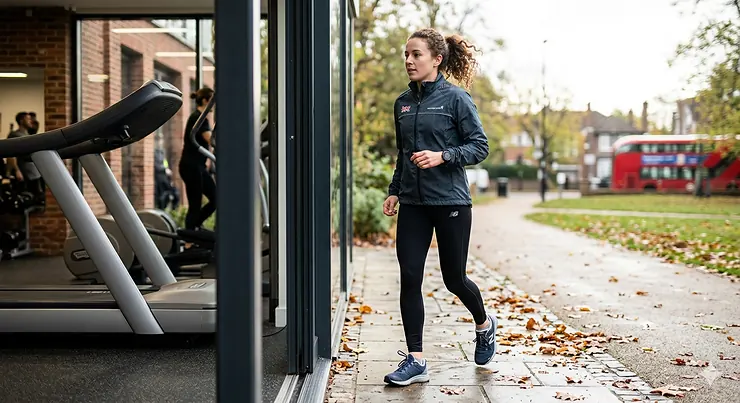
Here’s something most gym-goers won’t admit out loud: they’ve been running on the treadmill in trail shoes, cross-trainers, or — god forbid — their battered old pair of football boots from 2018. And their knees are quietly furious about it.
Finding the right shoes for treadmill and road running is genuinely one of those decisions that sounds fussier than it is, right up until the moment your shins start protesting on mile three. A proper dual-purpose running shoe handles the relentless, repetitive impact of a treadmill belt and the unpredictable camber, wet tarmac, and general chaos of Britain’s pavements. It needs cushioning that doesn’t feel like running on marshmallows, breathability for sweaty indoor sessions, and just enough grip to stop you aquaplaning through a puddle on the high street.
In short: shoes for treadmill and road running are versatile running shoes that perform equally well on the controlled indoor surface and the variable outdoor terrain, without specialising so heavily in one that they compromise the other. They tend to be lightweight, neutrally cushioned, and built with a durable yet not overly aggressive outsole.
This guide cuts through the noise. We’ve researched what’s actually available and well-reviewed on Amazon.co.uk right now, tested the spec claims against real-world running conditions, and assembled a list of seven genuinely excellent dual-purpose options — from budget-friendly to premium. Whether you’re a new runner building up to your first 5K or a seasoned pavement-pounder looking for a reliable training companion across all surfaces, there’s something here for you.
Quick Comparison: Best Shoes for Treadmill and Road Running UK 2026
| Shoe | Type | Heel Drop | Weight (Men’s) | Price Range (GBP) | Best For |
|---|---|---|---|---|---|
| Nike Air Zoom Pegasus 41 | Neutral | 10mm | ~283g | £90–£130 | All-rounders, everyday runners |
| HOKA Clifton 9 | Max cushion | 5mm | ~252g | £130–£155 | High-mileage, joint protection |
| Brooks Ghost 17 | Neutral | 12mm | ~296g | £110–£135 | Beginners, reliable daily trainer |
| ASICS Gel-Nimbus 27 | Max cushion | 8mm | ~307g | £130–£165 | Heavy runners, long-distance comfort |
| Saucony Ride 18 | Neutral/Responsive | 8mm | ~275g | £110–£135 | Mid-range performance, value |
| New Balance Fresh Foam X 1080v14 | Max cushion | 6mm | ~297g | £155–£175 | Versatile premium training |
| ASICS Novablast 5 | Energised neutral | 8mm | ~262g | £120–£145 | Speed-friendly, bouncy ride |
Reading the table: The HOKA Clifton 9 and ASICS Gel-Nimbus 27 dominate the max-cushion category — ideal for longer treadmill sessions or heavier runners who need extra joint protection. If you want a single shoe that genuinely does everything without fuss, the Nike Pegasus 41 and Saucony Ride 18 are your most versatile options. Brooks Ghost 17 stands out as the safest bet for beginners who want predictable, forgiving comfort from day one.
💬 Just one click — help others make better buying decisions too! 😊
✨ Don’t Miss These Exclusive Deals!
🔍 Take your running to the next level with these carefully selected shoes. Click on any highlighted product name to check current pricing and availability on Amazon.co.uk. Prime members enjoy next-day delivery on most options — rather useful when you’ve just committed to that Monday morning treadmill resolution.
Top 7 Shoes for Treadmill and Road Running: Expert Analysis
1. Nike Air Zoom Pegasus 41 — The Dependable All-Rounder
The Pegasus has been Nike’s bread-and-butter daily trainer for over four decades, and the 41st edition is arguably the most polished version yet. It ships with a ReactX foam midsole that delivers 13% better energy return than its predecessor — a meaningful improvement you’ll actually feel underfoot rather than just read on a spec sheet.
For dual-surface use, the Pegasus 41 excels because of two things. First, the dual Air Zoom units (one in the forefoot, one beneath the heel) add a lively, responsive pop that makes repetitive treadmill strides feel less robotic. Second, the updated engineered mesh upper is genuinely breathable — the indoor gym environment is often underestimated for heat build-up, and sweaty feet at kilometre six aren’t anyone’s idea of fun. The outsole uses a segmented rubber pattern that handles wet British pavements with reasonable confidence, though we’d stop short of calling it aggressive grip.
Who is this for? Honestly, almost anyone. The Pegasus 41 suits the runner who splits time evenly between the gym treadmill and weekend road runs — perhaps three indoor sessions a week followed by a Saturday park run. It handles easy 5Ks and long runs with equal grace. UK buyers will find it widely available through Amazon.co.uk in a broad range of sizes and colourways, with Prime delivery making it one of the more accessible premium options.
UK customer feedback on Amazon.co.uk is consistently strong, with many reviewers praising the comfortable fit out of the box and the shoe’s ability to hold up over 500–700 miles.
✅ Genuinely versatile for both surfaces
✅ Excellent energy return for price bracket
✅ Wide size range and colourway choice
❌ 10mm heel drop can feel high for those transitioning to lower-drop shoes
❌ Some wide-foot runners find the toebox slightly narrow
Price range: Around £90–£130 | A strong value proposition in its category — the de facto choice if you want zero drama and maximum dependability.
2. HOKA Clifton 9 — The Cushioned Commuter
HOKA has become something of a phenomenon in British running circles over the past few years, and the Clifton 9 is the shoe that built that reputation. At around 252g for a men’s size 9, it’s surprisingly light for a max-cushion trainer — lighter, in fact, than most neutral shoes from competing brands.
The compression-moulded EVA midsole sits higher than almost anything else at this price point, and on the treadmill, that translates to a noticeably soft, almost meditative landing with each stride. The rocker geometry guides your foot through the gait cycle smoothly — critical on a treadmill where you’re landing in virtually the same spot thousands of times per session. On the road, the rubberised outsole does a solid job on dry and moderately damp surfaces. It’s not designed for trail running or anything approaching muddy conditions (that’s the Speedgoat’s job), but for road and pavement it performs well.
What most UK buyers overlook is the Clifton 9’s particular suitability for runners dealing with minor joint issues — knee niggles, plantar fasciitis recovery, or the kind of shin tenderness that British runners accumulate over winter road running. The extra stack height acts as a buffer. For anyone over 85kg, or anyone logging serious mileage (60km+ per week), this shoe warrants serious consideration.
Amazon.co.uk reviews frequently highlight the comfortable fit across both standard and wide widths — the wide variant is available and worth considering for anyone with broader feet.
✅ Outstanding cushioning-to-weight ratio
✅ Available in wide fit on Amazon.co.uk
✅ Rocker geometry excellent for repetitive treadmill motion
❌ Less responsive feel for speed work or intervals
❌ Stack height can feel unsteady on uneven terrain
Price range: Around £130–£155 | Premium pricing, but the mileage these hold up over justifies the investment.
3. Brooks Ghost 17 — The Reliable Workhorse
If the Brooks Ghost were a car, it would be a reliable mid-range estate — not flashy, no unnecessary gadgetry, but utterly dependable and unlikely to leave you stranded. The Ghost 17 introduces DNA LOFT v3 cushioning: a softer, more responsive foam than previous generations that improves on the already-solid Ghost 16 without reinventing the wheel.
The key engineering success here is the smooth, neutral ride. At 12mm heel drop, it’s on the higher end — which makes it particularly forgiving for heel-strikers, the predominant foot-strike pattern among recreational runners in the UK. On the treadmill, the cushioning feels consistent from the first kilometre to the last. There’s no dead-spot feeling where the foam compresses too much. On the road, strategic rubber placement on the outsole provides adequate traction without the bulk of a trail shoe.
For beginners — someone fresh off a “Couch to 5K” programme, perhaps — the Ghost 17 is close to ideal. It requires no breaking-in period to speak of, fits generously across standard widths, and doesn’t punish poor form the way thinner, more responsive shoes might. It’s also a popular choice among running clubs across the UK, which speaks to its versatility across ability levels.
UK customer reviews on Amazon.co.uk consistently award 4.5 stars or higher, with particular praise for out-of-box comfort and durability across mixed surfaces.
✅ Outstanding comfort from the first wear
✅ Ideal for beginners and recreational runners
✅ Consistent performance across treadmill and road
❌ Slightly heavier than competitors at comparable price points
❌ Less energy return for experienced runners seeking performance feel
Price range: Around £110–£135 | Arguably the best value-for-money in the mid-range bracket for straightforward dual-surface use.
4. ASICS Gel-Nimbus 27 — The Premium Cushion King
The Gel-Nimbus is ASICS’s flagship max-cushion daily trainer, and the 27th iteration has earned its reputation as one of the most sophisticated shoes in this category. The FF BLAST PLUS ECO midsole foam stack sits at 43.5mm in the heel and 35.5mm in the forefoot — figures that sound almost architectural. Combined with the PureGEL insert in the heel, the impact absorption on hard surfaces is remarkable.
Here’s the practical translation for UK runners: if you’re doing back-to-back long runs on hard tarmac through autumn and winter — and British roads are brutally unforgiving, particularly on older urban surfaces — the Nimbus 27 acts like a daily defence against the cumulative pounding your joints take. On the treadmill, the aggressive rocker geometry (more pronounced than the Clifton 9) delivers a surprisingly quick toe-off despite the substantial stack, making it more versatile for moderate-tempo sessions than its bulky appearance might suggest.
Where the Nimbus 27 distinguishes itself from the competition is in its suitability for heavier runners (90kg+) and those with chronic lower-body issues. The PureGEL technology in the heel specifically addresses the sharper impact of heel striking — relevant because statistically, the majority of recreational British runners land heel-first, particularly on the treadmill where stride mechanics tend to shorten.
Premium pricing, but for the right runner — particularly one logging 50km+ per week across mixed surfaces — this represents a sound investment in long-term joint health.
✅ Best-in-class heel protection for heel-strikers
✅ Rocker geometry surprisingly versatile for tempo work
✅ Premium eco-conscious foam construction
❌ Heaviest shoe in this list — noticeable on faster runs
❌ Comes at the higher end of the price spectrum
Price range: Around £130–£165 | Worth every penny if you’re a high-mileage runner or carry extra bodyweight.
5. Saucony Ride 18 — The Smart Mid-Range Choice
Saucony has always occupied an interesting space in the UK running market — slightly under the radar compared to Nike and ASICS, but consistently delivering shoes that outperform their price point. The Ride 18 is arguably the best example of this. The updated PWRRUN+ foam midsole offers notably more energy return than standard EVA — you feel a distinct rebound with each stride that keeps the legs honest on longer treadmill sessions.
At 8mm heel drop, it occupies middle ground between the high-drop Brooks Ghost 17 and the low-drop HOKA Clifton 9, making it a reasonable transitional shoe for runners who are gradually adjusting their drop preference. The engineered mesh upper is among the most breathable in this comparison — a practical consideration for indoor gym running where air circulation is limited. On the road, the outsole grip is well-balanced: sufficient for damp pavements without being aggressive enough to cause premature wear on the treadmill belt.
The Ride 18 is the shoe I’d recommend to someone who trains consistently — perhaps four or five sessions per week — splitting time between outdoor 10K runs and interval sessions on the treadmill. It’s responsive enough for moderate speed work without sacrificing the cushioning needed for recovery runs the following day. Saucony’s UK presence has grown substantially on Amazon.co.uk, with reliable Prime-eligible stock in most common sizes.
✅ Excellent energy return for price bracket
✅ Breathable upper ideal for indoor sessions
✅ Versatile heel drop — manageable for most foot types
❌ Less well-known brand in UK running shops (fewer in-person fitting options)
❌ Not available in wide fit on all Amazon.co.uk listings
Price range: Around £110–£135 | Arguably the sharpest value-for-performance shoe on this list.
6. New Balance Fresh Foam X 1080v14 — The Premium Training Companion
The Fresh Foam X 1080v14 represents New Balance’s premium daily trainer, and the v14 marks a deliberate step away from the ultra-soft v13 that divided opinion. The reworked Fresh Foam X cushioning is firmer and more responsive — 38mm in the heel, 32mm in the forefoot, with a 6mm heel drop that positions it firmly in the moderate-drop camp.
What’s particularly intelligent about the 1080v14’s design is the rockered midsole geometry that works differently from HOKA’s approach. Where HOKA’s rocker is softer and more passive, New Balance’s is firmer and more purposeful — it guides you through the stride actively, which makes this shoe feel noticeably more engaging on both the treadmill and the road. For runners who find max-cushion shoes feel “dead” underfoot, the 1080v14 is the antidote: plush enough for 25km road runs, lively enough to make a treadmill tempo session worthwhile.
For the UK market specifically, New Balance has excellent availability on Amazon.co.uk, and the brand’s fit tends to suit the typical British foot shape — slightly wider through the midfoot than the average Nike or ASICS equivalent. The build quality is exceptional, with many UK runners reporting 800–900 miles before meaningful compression, which represents outstanding cost-per-mile value despite the higher initial outlay.
✅ Best overall versatility among max-cushion options
✅ Excellent UK fit (slightly wider last)
✅ Outstanding durability and long-term value
❌ Higher price point — a notable upfront investment
❌ v14 firmer feel may disappoint fans of the ultra-soft v13
Price range: Around £155–£175 | The premium option that actually justifies its premium price.
7. ASICS Novablast 5 — The Energetic Dark Horse
The Novablast 5 doesn’t always make the top-tier shortlists, which is frankly a shame, because it’s one of the most fun dual-purpose training shoes available on Amazon.co.uk right now. The FF BLAST+ midsole foam — the same material used in the Nimbus 27 but without the PureGEL heel insert — delivers a distinctly bouncy, energetic ride that makes routine runs feel marginally less routine.
At around 262g for a men’s size 9, it’s lighter than both the Nimbus 27 and the 1080v14, and that reduced weight is immediately perceptible on the treadmill. The shoe encourages a slightly more midfoot strike pattern, which is actually beneficial for treadmill running where the belt’s motion can exaggerate heel-striking tendencies. The 8mm heel drop is reasonable. The outsole is competitive enough for wet road running — ASICS uses their standard road rubber compound, which handles British autumn drizzle adequately.
The Novablast 5 is the shoe for runners who find themselves a little bored by their training shoes. It has a character that many “workhorse” daily trainers lack. That said, its slightly less stable platform (compared to the Nimbus 27) means it’s better suited to neutral runners with a consistent gait rather than those with significant overpronation.
On Amazon.co.uk, the Novablast 5 is available in a broad colour range and typically Prime-eligible for next-day delivery.
✅ Energetic, engaging ride — fun to run in
✅ Lighter than most max-cushion alternatives
✅ Excellent for moderate-paced treadmill sessions
❌ Less stable than Nimbus 27 — not ideal for significant overpronators
❌ Bouncy character may feel unusual for runners used to flat, traditional shoes
Price range: Around £120–£145 | Underrated and underpriced relative to its actual performance level.
How to Get the Most From Your Dual-Purpose Running Shoes: A UK Practical Guide
Buying the right shoe is step one. Making it last — and actually performing well in both environments — takes a little more thought.
Break them in gradually. Even the most cushioned shoe benefits from a gentle introduction. Wear your new pair for two or three shorter runs (3–5km) before committing them to your longer sessions. This is particularly important with max-cushion models like the Nimbus 27 or Clifton 9, where the foam needs to settle to your foot’s pressure points.
Keep separate shoes if you can afford to. Yes, the whole point of this article is dual-purpose shoes, but if your budget stretches to two pairs, rotate them. Alternating between two pairs extends the life of each by up to 50%, because the foam gets time to fully decompress between sessions. Run on the treadmill Monday, wear the other pair outdoors Wednesday. Your shoes will thank you.
Drying after road runs in the UK. This matters more than it sounds. British roads, particularly in autumn and winter, are reliably soggy. After a wet road run, remove the insoles and stuff the shoes loosely with newspaper to absorb moisture. Never place running shoes near a radiator or in direct sunlight — the heat degrades the EVA foam significantly faster than normal wear. A well-ventilated boot room or garage is ideal.
Treadmill-specific maintenance. Treadmill belts accumulate a fine layer of silicone lubricant that can transfer to your outsoles. This isn’t harmful to the shoe itself, but it does make your shoes temporarily slippier on outdoor surfaces immediately after a treadmill session. A quick wipe of the outsoles with a damp cloth before heading outdoors is a sensible habit.
When to replace them. The general rule is 500–800km depending on your body weight and surface. Heavier runners on hard tarmac should replace closer to 500km; lighter runners on mixed surfaces can push toward 700–800km. A simple test: if the midsole shows visible creasing or compression lines when viewed from the side, it’s time for new shoes. Running on compressed foam is a reliable route to shin splints.
Real-World UK Scenarios: Which Shoe Fits Your Life?
Running shoes aren’t one-size-fits-all, and neither are running habits. Here are three British runner profiles and the shoes that best match each.
The London Commuter-Turned-Runner. Meet Sarah. She lives in a one-bedroom flat in Clapham, works in the City, and has committed to running three times a week — two sessions on the treadmill at the gym near her office and one longer weekend run through Battersea Park. Storage space is limited (trainers live under the bed). She wants one pair that handles both environments without fuss. Best match: Nike Air Zoom Pegasus 41 or Saucony Ride 18. Both are compact to store, versatile enough for 5–12km distances, and available for next-day Prime delivery.
The Manchester Suburban Weekend Warrior. Tom runs Saturday mornings along the Mersey and does treadmill intervals twice a week at his local gym. He’s in his mid-forties, weighs around 90kg, and has had knee trouble in the past. He wants maximum impact protection without sacrificing all responsiveness. Best match: ASICS Gel-Nimbus 27 or New Balance Fresh Foam X 1080v14. The Nimbus 27’s PureGEL heel insert addresses his heel-striking pattern and heavier bodyweight. The 1080v14 offers excellent stability with a slightly more engaging ride if the Nimbus feels too passive.
The Edinburgh Student Runner. Priya is 22, recently started running, and is training for her first 10K in spring. She’s on a student budget, runs three or four times a week on the university gym treadmills and occasional road runs on Arthur’s Seat’s approach paths. She needs something comfortable, durable, and reasonably priced. Best match: Brooks Ghost 17. Beginner-friendly from day one, zero breaking-in drama, and at the lower end of the mid-range price bracket. It won’t excite her, but it also won’t let her down.
Can You Use Road Running Shoes on a Treadmill?
Short answer: yes, and this is actually the core insight that saves most runners a good deal of confusion and money. Road running and treadmill running are biomechanically similar enough that the vast majority of road running shoes perform perfectly well on a treadmill belt. The treadmill surface is softer than tarmac, which actually reduces the impact forces your shoe needs to handle — meaning a good road running shoe will, if anything, feel more comfortable indoors than outside.
What you should avoid on a treadmill are trail running shoes. Their aggressive, knobby outsoles are designed for traction on mud, grass, and gravel — not smooth rubber belts. Running in trail shoes on a treadmill doesn’t cause dramatic harm, but it will wear down the outsole lugs significantly faster than normal and can create a slightly unstable, uneven feel. Keep the trail shoes for the trails.
Cross-trainers are a similar story. They’re built for lateral movement, weightlifting, and HIIT workouts — not the forward-motion, repetitive impact of running. They lack the specific cushioning distribution that running shoes provide, and using them regularly for treadmill running significantly increases injury risk over time.
The only nuance worth noting: if you’re running exclusively on the treadmill (no road running at all), a slightly lighter, more minimal shoe can work well because the treadmill’s belt absorbs some impact. But for true dual-surface use — which is what this guide is about — a balanced road running shoe is the right tool for the job.
How to Choose Shoes for Treadmill and Road Running in the UK: 6 Essential Criteria
- Cushioning level matched to your body weight and mileage. Lighter runners (under 70kg) logging under 40km per week can get away with moderate cushioning. Heavier runners or high-mileage athletes need max-cushion options like the Nimbus 27 or Clifton 9.
- Heel drop appropriate to your running style. Heel-strikers generally fare better with higher drops (10–12mm, like the Brooks Ghost 17). Midfoot strikers can work comfortably in the 5–8mm range (HOKA Clifton 9 or Saucony Ride 18). Zero-drop is a specialist choice — not recommended without gradual transition.
- Breathability for indoor use. Treadmill sessions happen in heated gyms with limited airflow. Engineered mesh uppers (Pegasus 41, Saucony Ride 18) dramatically reduce foot temperature compared to thicker, traditional uppers. Don’t underestimate this.
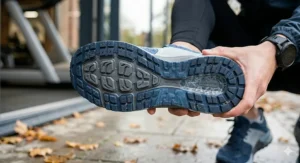
- Outsole durability across surfaces. A durable rubber compound handles both the treadmill belt and British road grit. Check that the outsole isn’t purely carbon rubber (too hard for treadmill comfort) or purely blown rubber (too soft for road durability).
- Fit and width options. British feet tend to run slightly wider than the US or European average. Always check whether a wide-fit variant is available — HOKA Clifton 9 and Brooks Ghost 17 both offer this on Amazon.co.uk.
- Budget in context. Don’t buy at the absolute limit of your budget for your first pair. Save some capacity for replacement every 6–9 months. At moderate mileage (40km per week), a £130 shoe lasts roughly 12–18 months — reasonable cost of ownership.
Features That Actually Matter (And Those That Don’t)
Matters: Midsole foam quality. This is where the real difference between shoes exists. EVA vs PWRRUN+ vs ReactX vs Fresh Foam X all behave differently over 500km of use. Premium foams maintain their cushioning properties substantially longer than budget EVA.
Matters: Outsole rubber placement. Strategic high-wear zones (heel, forefoot) reinforced with harder carbon rubber extend outsole life significantly. Check the bottom of any shoe you’re considering.
Matters: Upper breathability. Especially relevant for treadmill use, as mentioned. A sweaty, overheated foot is more prone to blisters and less mechanically efficient.
Doesn’t matter (much): Reflective detailing. Useful for early-morning outdoor runs, but not a purchase driver. Most of these shoes have some reflective elements anyway.
Doesn’t matter: Carbon plates — in daily trainers. Carbon-plated shoes are racing tools, not everyday trainers. The plate adds stiffness and energy return for fast running, but on a treadmill tempo session or a leisurely Sunday road run, a well-constructed foam midsole does the job more comfortably without the awkward gait changes a carbon plate can encourage.
Doesn’t matter as much as manufacturers claim: Drop-in insoles. The stock insoles in most quality running shoes at £100+ are perfectly adequate. Aftermarket insoles are useful for specific orthopaedic needs, but if you’re buying a good shoe, the stock setup is usually designed with care.
According to research published by the British Journal of Sports Medicine, cushioning properties and overall fit have a significantly greater impact on running injury prevention than any other footwear variable — worth keeping in mind when navigating marketing claims.
Long-Term Cost & Value of Running Shoes in the UK
The sticker price of a running shoe is somewhat misleading. The more useful metric is cost per kilometre. Consider: a £165 ASICS Gel-Nimbus 27 that lasts 800km costs approximately 20p per kilometre. A £75 budget running shoe that degrades at 400km costs 19p per kilometre — virtually the same, but without the superior cushioning and joint protection. Premium shoes earn their price.
According to data from Statista UK, the number of regular runners in the UK has grown substantially, with millions now running at least once per week. That growth has driven significant investment from major brands in UK-specific product development, which means Amazon.co.uk now carries better stock, more colourways, and faster delivery than at any point in recent history.
UK prices include 20% VAT, which means the £130 shoe you’re seeing on Amazon.co.uk represents a lower pre-tax cost than the equivalent US dollar price — a useful context when comparing against US running review sites where prices are shown excluding sales tax.
Maintenance costs are minimal: a good shoe cleaner (around £5–£10), occasional insole replacement (£15–£25 for quality aftermarket insoles), and proper drying practices are all you need. Running shoes don’t require servicing in the traditional sense, but treating them well extends their life meaningfully.
Treadmill to Road Transition: What Actually Changes for Your Feet
This is perhaps the most underappreciated topic in recreational running. If you train predominantly on the treadmill and then attempt a significant road run — a charity 10K, say, or a half marathon — without adequate outdoor mileage, your body is in for a surprise.
Treadmill running is a controlled, biomechanically simplified version of outdoor running. The belt assists your leg turnover slightly; there’s no wind resistance, no camber variation, no road surface changes, and no psychological variability. When you move outdoors, all of these factors reappear simultaneously. Your stabiliser muscles — the smaller, often-neglected muscles in the ankle, calf, and hip — suddenly have to work considerably harder.
The NHS’s running guidance recommends a gradual transition between surfaces, suggesting that runners who primarily use treadmills should incorporate at least one outdoor run per week to maintain the neuromuscular adaptations required for outdoor terrain.
The good news: a quality dual-purpose running shoe supports both environments through a single transition. The key is not demanding too much too soon from your outdoor runs if your training has been exclusively indoor. Build outdoor mileage incrementally — and choose a shoe with sufficient outsole traction to handle the occasional puddle, drain cover, or slightly uneven pavement that British roads reliably provide.
FAQ
❓ What's the difference between treadmill running shoes and road running shoes?
❓ Can you use road running shoes on a treadmill without damaging the belt?
❓ How often should I replace my treadmill and road running shoes in the UK?
❓ Are wide-fit running shoes for both treadmill and road available on Amazon.co.uk?
❓ Do I need different shoes for treadmill and outdoor running in the UK?
Conclusion
Finding the right shoes for treadmill and road running in the UK is, when it comes down to it, about finding a shoe that doesn’t force you to compromise. You want the cushioning for a long treadmill session, the traction for a damp Saturday morning 10K, and the breathability for the gym environment — all in one package.
The seven shoes reviewed here each deliver that brief in different ways. The Nike Air Zoom Pegasus 41 and Saucony Ride 18 are the most straightforwardly versatile. The HOKA Clifton 9 and ASICS Gel-Nimbus 27 are the best for runners prioritising cushioning and joint protection. The Brooks Ghost 17 is the most sensible starting point for beginners. The New Balance Fresh Foam X 1080v14 is the premium choice that rewards the investment. And the ASICS Novablast 5 is the underrated option that makes training feel a little less like a chore.
All seven are available on Amazon.co.uk, many with Prime next-day delivery, and all carry the quality assurance of established running footwear brands with full UK consumer rights protection under the Consumer Rights Act 2015.
One last thought: the best running shoe is the one that doesn’t give you a reason to skip a session. Buy well, treat it well, and replace it before the midsole gives up the ghost. Your joints will be quietly grateful.
✨ Don’t Miss These Exclusive Deals!
🔍 Check current prices and availability on Amazon.co.uk for all seven shoes reviewed above. Prime members get free next-day delivery on most options — check each product page for current stock and sizing availability.
Recommended for You
- 7 Best Maximum Cushion Treadmill Shoes UK (2026 Guide)
- Best Carbon Plate Shoes for Treadmill 2026: 7 Expert UK Picks
- Best Cushioned Running Shoes for Treadmill UK 2026
Disclaimer: This article contains affiliate links. As an Amazon Associate, I earn from qualifying purchases. If you purchase products through these links, we may earn a small commission at no additional cost to you.
✨ Found this helpful? Share it with your mates! 💬🤗
