In This Article
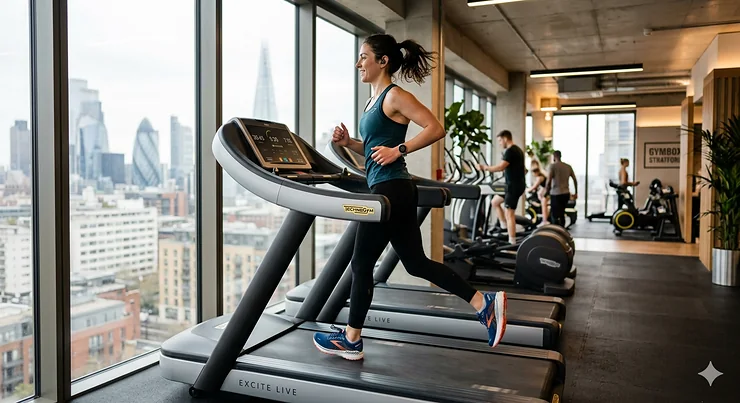
If you’ve ever stepped onto a treadmill, clocked a few kilometres, and been rewarded with sore knees and a slightly baffled expression, there’s a decent chance your feet are trying to tell you something. Stability shoes for treadmill running exist precisely for this moment — that intersection of physics, biomechanics, and the quiet despair of wondering why running hurts when everyone promises it’s good for you.
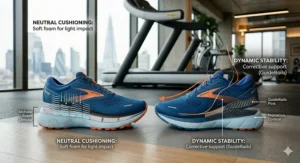
Here’s the short version: if your feet roll inward with each stride (a very common pattern known as overpronation), a neutral shoe essentially lets that happen unimpeded. Stability shoes, on the other hand, use medial posts, guide rail systems, or firmer foam geometry to gently redirect your foot toward a more neutral path. On a treadmill — where you’re repeating the exact same motion hundreds of times per session on a consistent surface — this corrective guidance matters enormously. The repetitive, controlled environment of a treadmill actually amplifies biomechanical inefficiencies far more than road running does.
Research published by the British Journal of Sports Medicine has shown that overpronation-related injuries account for a significant proportion of running-related lower limb problems, including medial tibial stress syndrome (shin splints), patellofemoral pain, and plantar fasciitis. Stability shoes treadmill running isn’t just a category of footwear — it’s a practical intervention.
This guide covers seven stability running shoes available on Amazon.co.uk right now, with honest commentary on who each one actually suits, what the specs mean in real life, and how to avoid wasting your money. Let’s get into it.
Quick Comparison: Top 7 Stability Shoes for Treadmill Running at a Glance
| Shoe | Stability Technology | Drop | Weight (Men’s) | Best For | Price Range (GBP) |
|---|---|---|---|---|---|
| Brooks Adrenaline GTS 25 | GuideRails™ | 10mm | ~301g | Daily training, all overpronators | £125–£145 |
| ASICS Gel-Kayano 32 | 4D Guidance System | 8mm | ~310g | Premium comfort, high mileage | £145–£165 |
| ASICS GT-2000 14 | FlyteFoam Blast Max | 8mm | ~265g | Lighter daily trainer | £110–£130 |
| HOKA Arahi 7 | J-Frame EVA | 5mm | ~262g | Lightweight, responsive feel | £120–£140 |
| Saucony Guide 18 | Wide midsole + raised sidewalls | 6mm | ~268g | Mild overpronators, versatile training | £110–£130 |
| New Balance 860v14 | Stability Plane + Fresh Foam X | 8mm | ~288g | Medial post fans, structured support | £110–£130 |
| Mizuno Wave Inspire 21 | Wave Plate + Enerzy NXT | 10mm | ~272g | Durability-focused runners | £100–£120 |
The table above reveals something instructive: the most expensive shoe (Kayano 32) isn’t necessarily the right choice for everyone. Budget-minded runners could do exceptionally well with the Mizuno Wave Inspire 21 or Saucony Guide 18, both of which punch well above their price bracket. The notable outlier is the HOKA Arahi 7 — its 5mm drop and J-Frame technology represent quite a different philosophy from the traditional medial post approach, which is either a revelation or mildly disorienting depending on what you’re used to.
✨ Don’t Miss These Exclusive Deals!
🔍 Ready to find your perfect treadmill running companion? Click any highlighted product name to check current pricing and availability on Amazon.co.uk. These picks are updated for 2026 and cover every budget and running style.
💬 Just one click — help others make better buying decisions too! 😊
Top 7 Stability Shoes for Treadmill Running: Expert Analysis
1. Brooks Adrenaline GTS 25 — Best All-Round Stability Shoe for Treadmill Running
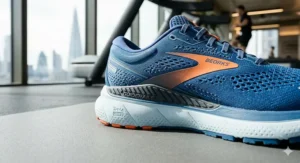
The Brooks Adrenaline GTS 25 is the shoe that’s spent 25 years quietly convincing overpronators that stability footwear doesn’t have to feel like orthopaedic furniture. This iteration brings a genuine 10mm drop (the first in the series’ history), a revised heel bevel for smoother transitions, and extra nitrogen-infused DNA LOFT v3 foam — 3mm more in the forefoot and 1mm more in the heel than its predecessor.
What does that mean on a treadmill? The GuideRails™ system, which uses foam bumpers along the midsole perimeter rather than a traditional dense medial post, only engages when your foot strays from its natural motion path. You don’t feel the support until you need it — rather like a good co-pilot. For treadmill running specifically, where stride consistency matters, this reactive guidance is enormously sensible. The 37mm heel stack height offers excellent impact absorption on those long indoor sessions, and the engineered mesh upper is breathable enough to keep your feet comfortable through a humid winter gym session (those are, if anything, more common than outdoor ones in Britain).
This is the shoe I’d recommend without hesitation to someone doing 30-60 minutes of treadmill work three to five days a week, from a gentle jog to marathon training. It’s not the most exciting shoe in the world — it’s about as rock-and-roll as a nice cup of tea — but it is, consistently, one of the most trusted stability trainers available. UK reviewers on Amazon.co.uk frequently cite its out-of-the-box comfort and note it requires almost no break-in period.
✅ GuideRails engage only when needed — no over-correction
✅ Excellent cushioning depth for long treadmill sessions
✅ Virtually zero break-in period
❌ Not especially lively or responsive for faster work
❌ Slightly narrow toebox — wide-footed runners should size up or explore wide fit options
Price range: £125–£145. Excellent value for a flagship stability trainer. Prime-eligible on Amazon.co.uk with next-day delivery available.
2. ASICS Gel-Kayano 32 — Premium Treadmill Stability Shoe for High Mileage Runners
The Gel-Kayano has been around since 1993. Thirty-two iterations later, ASICS has distilled decades of stability shoe engineering into something notably different from its ancestors. The Kayano 32 drops to an 8mm heel-to-toe differential (down from earlier versions), adopts the 4D Guidance System — a lateral outer-biased cushioning structure that guides the foot through a more neutral gait — and delivers a genuinely plush ride that prioritises long-run comfort over snappy response.
On a treadmill, the Kayano 32 is at its absolute best on easy to moderate paces. That wide platform (119.8mm at the heel) makes the shoe almost impossible to roll on, and the Hybrid ASICSGRIP rubber outsole — which in wet-condition testing returned a friction score significantly above average — provides confident traction on treadmill belts regardless of how worn the belt surface might be. For runners logging serious weekly mileage and prioritising joint protection, this is the shoe to consider. It’s also worth noting that ASICS produces the Kayano in wide widths, which is genuinely appreciated by those of us with feet that belong to a slightly more generous mould.
The Kayano 32 suits mild-to-moderate overpronators more than severe cases; if your gait analysis reveals aggressive inward rolling, the Brooks Adrenaline GTS 25 or New Balance 860v14 (with its firmer medial geometry) may offer more corrective intervention.
UK customer reviews consistently highlight the immediate comfort and the way the shoe performs across long indoor sessions, with several noting it remains comfortable past the 90-minute mark.
✅ Exceptional cushioning for long treadmill runs
✅ Wide platform offers inherent stability
✅ Available in wide fit options
❌ Premium price point — noticeably pricier than competitors
❌ Less suitable for severe overpronators needing firm corrective support
Price range: £145–£165. A premium investment, but one with a track record spanning three decades.
3. ASICS GT-2000 14 — Best Lightweight Stability Shoe for Treadmill Training
Where the Kayano occupies the premium end of ASICS’s stability stable, the GT-2000 14 targets runners who want meaningful overpronation control without the weight or cost of its sibling. The 14th generation brings the FF Blast Max foam from the Novablast 5 — a meaningful upgrade that transforms the midsole from serviceable to genuinely enjoyable. The 8mm drop, lightweight mesh upper, and PureGEL heel cushioning make this feel like a daily trainer that happens to have stability credentials, rather than a stability shoe that’s been grudgingly made wearable.
For treadmill runners doing speed work or tempo intervals alongside easy miles, the GT-2000 14 is particularly compelling. It weighs around 265g in men’s sizing — notably lighter than the Kayano — and that lightness translates to a less fatiguing feel over faster-paced treadmill sessions. The FF Blast Max foam also returns energy more enthusiastically than older FlyteFoam iterations, giving you a slight bounce that makes 5km intervals feel less like punishment.
What most buyers overlook: the GT-2000 14 fits narrow, particularly in the midfoot. If you’re between sizes or have wider feet, going up half a size is genuinely good advice, and the wider fit variant is worth seeking out on Amazon.co.uk if it’s available in your size.
UK reviewers frequently compare it favourably to the New Balance 860v14 and Brooks Adrenaline GTS — most finding it edges ahead in cushioning feel while remaining competitive in control.
✅ Lightweight for a stability shoe — great for mixed treadmill workouts
✅ FF Blast Max foam adds energy return
✅ Excellent durability even with heavy mileage
❌ Fits narrow — size up or seek wide variant
❌ Less cushioning depth than Kayano for ultra-long sessions
Price range: £110–£130. Strong mid-range value, particularly for performance-focused treadmill runners.
4. HOKA Arahi 7 — Best Lightweight Stability Shoe with a Rocker Feel
The HOKA Arahi 7 is what happens when a brand known for maximum cushioning decides to apply that philosophy to stability. The J-Frame technology — a J-shaped section of denser EVA foam wrapping from the heel up the medial side of the midsole — provides overpronation guidance without a traditional medial post, keeping the weight down and the flexibility up. The Early Stage Meta-Rocker geometry gently propels you through the gait cycle, which on a treadmill translates to a smooth, efficient roll-through that can feel quite addictive.
At around 262g and with a 5mm drop, the Arahi 7 is the most performance-oriented shoe on this list. That low drop does require some acclimatisation, particularly for runners coming from higher-drop traditional stability shoes — your calves will know about it for the first couple of weeks. However, the trade-off is a more natural-feeling stride that many runners find reduces overall fatigue during long treadmill sessions.
The J-Frame cradles the arch in a way that’s been described, memorably, as feeling like “a hug from someone who actually understands personal space.” It’s there when you need it, absent when you don’t. For treadmill runners who also race occasionally and want a shoe that can double up as a light-speed-work trainer, the Arahi 7 occupies a genuinely useful position. It’s worth checking Amazon.co.uk for current stock as the Arahi 8 has recently launched; if you can find the 7 at a reduced price, it represents excellent value.
✅ Lightweight and versatile — works for easy miles and tempo sessions
✅ J-Frame technology is smooth and non-intrusive
✅ Meta-Rocker promotes efficient gait cycle on treadmill
❌ 5mm drop requires adaptation from traditional stability shoe users
❌ Runs slightly narrow — some UK reviewers recommend half-size up
Price range: £120–£140, potentially lower as the Arahi 8 takes over.
5. Saucony Guide 18 — Best Versatile Treadmill Shoe for Mild Overpronators
The Saucony Guide 18 does something quietly clever: rather than relying on a hard medial post or aggressive foam geometry, it uses an ultra-wide midsole base with raised sidewalls to create a natural “cupping” effect around the foot. The result is a midsole that prevents both inward rolling (overpronation) and outward rolling (supination) — making the Guide 18 one of the few stability shoes that genuinely works for a wide spectrum of gait patterns.
For treadmill running, this versatility is a genuine asset. Gait analysis results shift with fatigue; towards the end of a long treadmill session, your foot mechanics change as muscles tire. The Guide 18’s broad, cushioned platform provides a stable foundation throughout, not just during the early, fresh miles. The updated upper for the 18th edition gives a touch more room without sacrificing the secure midfoot lockdown, and the improved insole stays put rather than creeping around during longer efforts.
The Guide 18 is particularly well-suited to runners who’ve been told they overpronate mildly and aren’t sure they need a “heavy” stability shoe. It provides guidance without the pronounced corrective feel of, say, a traditional medial post — which for many runners is actually the sweet spot. At its price range, it also competes convincingly with far more expensive options.
UK reviews on Amazon.co.uk are notably positive about the breathable upper and the out-of-the-box fit, with multiple reviewers using it specifically for treadmill training in gym settings.
✅ Works for overpronators and mild supinators alike
✅ Breathable upper — ideal for indoor/gym environments
✅ Excellent stability without over-corrective stiffness
❌ Midsole may feel less cushioned than Kayano for very long runs
❌ Fit runs slightly shorter/tighter than previous Guide versions
Price range: £110–£130. Outstanding value — arguably underrated at this price.
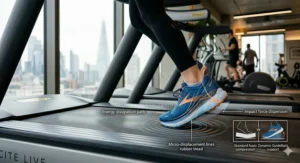
6. New Balance Fresh Foam X 860v14 — Best for Traditional Medial Post Fans
The New Balance 860v14 is for runners who want their stability to be unmistakable. The Stability Plane — a rigid plate embedded in the midsole, solid on the inner (arch) side and cut out for flexibility on the outer side — functions much like a traditional medial post but with slightly more nuance. The result is a midsole that steers the foot firmly toward neutral, backed by Fresh Foam X cushioning that’s plush without being wobbly.
For treadmill running, the 860v14’s firm, structured ride is particularly reassuring during long sessions. The shoe feels planted and deliberate underfoot — it doesn’t bounce you around, it guides you. Runners who’ve historically gravitated toward maximum stability and found modern “holistic support” approaches a bit too subtle will appreciate the 860v14’s more traditional character.
The Fresh Foam X above the Stability Plane is softer than the plate itself, which creates an interesting two-layer cushioning effect: firm corrective geometry below, comfortable foam above. It’s a notably capable shoe for heavier runners or those who spend 60+ minutes on the treadmill in a single session and need sustained support through fatigue.
New Balance fits tend to run slightly wider than ASICS, which is worth knowing if you’ve been struggling with narrow-fitting stability shoes elsewhere.
✅ Firm, clear medial support — no ambiguity in the stability
✅ Suits heavier runners and long treadmill sessions
✅ New Balance’s typically generous fit accommodates wider feet
❌ Slightly heavier feel compared to Arahi 7 or GT-2000 14
❌ Less energy return than newer foam competitors
Price range: £110–£130. Dependable, traditional stability done well.
7. Mizuno Wave Inspire 21 — Best Durable Budget-Friendly Stability Shoe
The Mizuno Wave Inspire 21 is the quiet professional of this list. While other brands shout about nitrogen-infused foams and proprietary rail systems, Mizuno builds its stability around the Wave Plate — a sinusoidal structure embedded in the midsole that simultaneously cushions and stabilises by distributing impact forces horizontally rather than purely vertically. It’s a beautifully simple piece of engineering that Mizuno has refined over 21 generations. The addition of Enerzy NXT foam in the 21st edition adds a layer of responsive cushioning that gives the shoe a noticeably less stiff, more lively feel than earlier Wave Inspire versions.
For treadmill running, the Wave Inspire 21’s durability is its headline feature. The Wave Plate outsole absorbs significantly more wear than foam-only midsoles; UK runners reporting 800km+ of use before meaningful sole degradation are not uncommon in customer reviews. For serious treadmill runners logging heavy weekly mileage, this longevity translates directly to better cost-per-kilometre value. The 10mm drop makes it accessible for heel-striking runners, and the breathable mesh upper copes well with the warmer, drier conditions of an indoor gym environment.
Mizuno shoes fit slightly narrow and short compared to European sizing norms — sizing up half a size is common advice that applies here too. The Wave Inspire 21 is Prime-eligible on Amazon.co.uk, which means it arrives quickly for those impatient moments when your current pair finally gives up the ghost.
✅ Exceptional durability — outlasts most foam-only competitors
✅ Wave Plate provides reliable, time-tested stability
✅ Very competitive price point for the quality offered
❌ Fits narrow — size up half a size recommended
❌ Less plush than Kayano or Adrenaline GTS 25 for comfort-focused runners
Price range: £100–£120. The best value stability shoe on this list, full stop.
How to Get the Most from Stability Shoes on a Treadmill: A Practical Guide
Treadmill-Specific Setup Tips
Before we talk about shoes, there’s a non-trivial point about treadmills themselves: most gym treadmills are set to a 0% incline by default, which actually creates a slight biomechanical disadvantage compared to outdoor running. Setting a 1–2% gradient mimics outdoor conditions more accurately — and because stability shoes are designed to manage the specific forces of forward motion on flat ground, this small adjustment helps them function as intended.
Rotation matters more indoors. On roads, subtle terrain variations mean your feet engage slightly differently each stride. On a treadmill, you’re doing the exact same motion, thousands of times. Rotating between two pairs of stability shoes, or alternating your stability treadmill shoe with a neutral shoe for shorter recovery runs, extends the lifespan of both pairs and gives your muscles slightly varied feedback.
Break-in protocol for new stability shoes: Regardless of brand, wear your new stability shoes for short 20-minute treadmill sessions for the first week. This is especially important with the HOKA Arahi 7 (5mm drop adjustment) or the New Balance 860v14 (Stability Plane requires a few sessions to mould to your foot). Jumping straight into a 90-minute session in brand-new stability shoes is a reliable way to develop new, unexpected pain — which rather defeats the purpose.
Sock choice on a treadmill: In a gym environment, you’re generating more foot heat than outside. A moisture-wicking running sock in a medium thickness is ideal — thin socks can cause friction-related blisters in the more structured heel counters of stability shoes like the Kayano 32 or Adrenaline GTS 25. Merino wool running socks are particularly effective at temperature regulation, and several UK brands stock them at reasonable prices.
Replace your shoes before they look worn. The corrective foam structures in stability shoes — medial posts, J-Frames, Stability Planes — degrade before the outsole rubber shows obvious wear. As a general rule, consider replacing treadmill-specific stability shoes between 500–700km of use. Running on a compromised stability shoe on a treadmill (repetitive surface, no natural terrain variation) is particularly counterproductive.
Which Stability Treadmill Shoe Is Right for You? UK Runner Profiles
Profile 1: The Lunchtime Gym Runner, Manchester Sarah runs 5km on the gym treadmill four times a week during her lunch break. She was told at a specialist running shop that she mildly overpronates, and she’s had occasional knee niggles after longer sessions. Budget: under £130.
Best pick: Saucony Guide 18 or ASICS GT-2000 14. Both provide gentle, non-intrusive stability that won’t over-correct mild pronation. The Guide 18’s wide midsole base gives Sarah the stability she needs without a rigid corrective feel that could worsen matters if her gait analysis wasn’t perfectly calibrated.
Profile 2: The Home Treadmill Enthusiast, Edinburgh James has a treadmill in the spare room, runs 45–60 minutes daily, and is preparing for his first half-marathon. He’s a moderate overpronator and prioritises cushioning comfort over ground feel. Budget: up to £160.
Best pick: ASICS Gel-Kayano 32. The premium cushioning depth and wide platform suit daily high-mileage indoor running, and the 4D Guidance System manages James’s moderate overpronation without demanding significant gait adjustment.
Profile 3: The Speed-Conscious Treadmill Runner, London Priya does tempo intervals and easy recovery runs on the treadmill three times weekly. She wants stability but doesn’t want to feel weighed down. Budget: around £130–£145.
Best pick: HOKA Arahi 7 or Brooks Adrenaline GTS 25. For speed work, the Arahi 7’s light weight and Meta-Rocker geometry are compelling. For a more traditional feel with comparable performance, the Adrenaline GTS 25’s GuideRails system is sophisticated enough for faster paces without sacrificing support.
Profile 4: The Budget-Conscious Commuter Runner, Birmingham Marcus runs before work on a gym treadmill, logs around 40km per week, and wants a shoe that’ll last. Budget: under £120.
Best pick: Mizuno Wave Inspire 21. The Wave Plate’s legendary durability, combined with Enerzy NXT cushioning and a price point under £120, makes this the obvious choice for high-mileage runners who don’t want to replace shoes every six months.
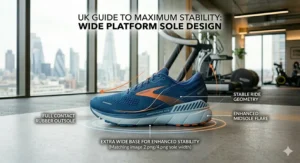
How to Choose Stability Shoes for Treadmill Running in the UK
- Get a gait analysis first. Most specialist running shops in the UK — including many on the high street — offer free treadmill gait analysis. Knowing whether you mildly or significantly overpronate changes everything. A slight overpronator in a maximum stability shoe can actually develop new problems as the correction overcorrects.
- Consider your weekly treadmill mileage. Under 30km/week: the Saucony Guide 18 or GT-2000 14 offers sufficient stability and cushioning. Over 50km/week: the Kayano 32 or Adrenaline GTS 25 provide the cushioning depth to protect joints over sustained high mileage.
- Match the drop to your running history. If you’ve been running in 10–12mm drop shoes for years, jumping straight into the 5mm Arahi 7 will load your Achilles tendon and calves more aggressively. Transition gradually, or choose a 8–10mm drop option as a starting point.
- Factor in treadmill environment. Gym treadmills are warm and dry — prioritise breathable mesh uppers. Home treadmills allow shoe rotation more easily, so pairing a cushioned stability shoe with a firmer option is straightforward.
- Check for wide fit options on Amazon.co.uk. Several models (Kayano 32, Adrenaline GTS 25) offer wide variants. UK buyers with wider feet routinely underestimate how much difference a proper-width shoe makes in stability performance — a shoe that’s too narrow rolls outward at the toe regardless of its medial support.
- Use GBP price tiers as a guide, not a judgement. The Mizuno Wave Inspire 21 at under £120 genuinely competes with shoes costing £40 more. Price reflects brand positioning and foam technology, not always real-world performance advantage.
- Check Amazon Prime eligibility. For UK buyers, Prime next-day delivery means you can order, try on the treadmill at home, and return within 14 days under the Consumer Contracts Regulations if the fit isn’t right — this 14-day cooling-off period is a legal right for online purchases in the UK and applies in full to footwear bought on Amazon.co.uk.
Stability Shoes vs Neutral Shoes for Treadmill Running: What the Research Says
There’s a persistent and understandable confusion in the running community about whether stability shoes are necessary, or whether they’re an elaborate marketing exercise. The honest answer is: it depends, and the distinction matters more on a treadmill than on roads.
Neutral shoes provide cushioning without corrective geometry. They’re excellent for runners with a neutral gait or high arches (who may supinate). For moderate-to-significant overpronators running repeatedly on a treadmill’s consistent, flat surface, a neutral shoe essentially permits the same inefficient mechanics to repeat, identically, for every single stride of a session. Over time, this accumulation of micro-stress on the medial ankle, knee, and hip structures increases injury risk.
Stability shoes intervene with varying degrees of firmness. The spectrum runs from mild guidance (Saucony Guide 18, HOKA Arahi 7) through moderate support (Brooks Adrenaline GTS 25, ASICS GT-2000 14) to firm control (New Balance 860v14, ASICS Gel-Kayano 32). Matching the degree of correction to the degree of overpronation is the key — which is why gait analysis genuinely earns its reputation as the single most useful thing an overpronating treadmill runner can do.
According to guidance from NHS England, biomechanical issues contributing to running injuries are best addressed through a combination of appropriate footwear, strengthening exercises, and sometimes orthotics. Stability shoes are part of that picture, not the entire solution.
| Criterion | Stability Shoe | Neutral Shoe |
|---|---|---|
| Overpronation correction | ✅ Yes | ❌ No |
| Best for treadmill repetition | ✅ Yes | ⚠️ Depends on gait |
| Weight | Slightly heavier | Lighter |
| Price range (GBP) | £100–£165 | £80–£150 |
| Injury prevention evidence | Strong for overpronators | Neutral gait only |
| Versatility | Daily training + gym | Broader running types |
The table makes the trade-offs clear: stability shoes are heavier and pricier on average, but for overpronators doing repetitive treadmill running, that trade-off is almost always worth making. Neutral runners, on the other hand, don’t benefit from the extra structure — and may actually find it slightly counterproductive.
✨ Don’t Miss These Exclusive Deals!
🔍 Check current prices on any of the seven shoes above by clicking their names throughout this article. Amazon.co.uk stocks all seven models in multiple colourways and sizes, with Prime members benefiting from free next-day delivery.
Features That Actually Matter in a Stability Treadmill Shoe (And Those That Don’t)
Matters: Medial post or equivalent geometry. This is the functional core of any stability shoe. Whether it’s a traditional dense medial foam post (New Balance 860v14), a guide rail system (Brooks Adrenaline GTS 25), a J-Frame (HOKA Arahi 7), or a Wave Plate (Mizuno Wave Inspire 21), you want to understand what’s actually correcting your gait — not just assume the word “stability” on the box is sufficient.
Matters: Cushioning depth for treadmill mileage. Treadmill belts have some inherent give, but you’re still generating significant impact forces. A heel stack below 30mm will feel noticeably firmer on long sessions; the Kayano 32’s ~38mm heel stack provides a different long-run experience than the Arahi 7’s lower profile.
Matters: Upper breathability. Gyms are warm. Poorly ventilated uppers cause foot fatigue and blistering during long indoor sessions in a way that’s genuinely unpleasant. The Saucony Guide 18 and ASICS GT-2000 14 both score highly here.
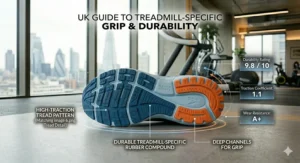
Doesn’t matter (as much as brands suggest): Outsole grip patterns. Treadmill belts are textured rubber, not slippery road surfaces. The elaborate multi-zone grip patterns on some shoes’ outsoles add weight and cost without meaningful treadmill benefit.
Doesn’t matter on a treadmill: Water resistance. Some models offer Gore-Tex variants at significantly higher prices. Unless you’re commuting to the gym in them, the premium for waterproofing is genuinely wasted money for a purely indoor shoe.
Matters, surprisingly: Heel collar height and padding. The Adrenaline GTS 25 has a notably higher heel collar than previous editions; some runners find this supremely secure, others find it irritating around the Achilles. If you have any history of Achilles sensitivity, the Guide 18 or Arahi 7’s lower-profile heel construction may serve you better.
Common Mistakes When Buying Stability Shoes for Treadmill Running
Buying on appearance alone. Stability shoe aesthetics have improved enormously — they no longer look like something prescribed by a podiatrist in 1987. But the temptation to buy based on colourway rather than stability technology type is real, and often costly. The Arahi 7 looks and feels modern and fast; if you’re a severe overpronator who needs firm medial correction, its gentle J-Frame may be insufficient.
Ignoring width. British consumers statistically tend to buy standard width without questioning it. Many overpronators have slightly wider feet due to arch collapse under load. Buying a narrow-fitting stability shoe defeats much of the corrective purpose — a foot that’s being squeezed laterally will find ways to compensate that undermine the medial support you’re paying for.
Assuming more stability is always better. This is genuinely important. A neutral runner wearing the New Balance 860v14’s firm Stability Plane will feel over-corrected — not just unnecessarily supported, but potentially pushed into mild supination. Match the correction level to the need.
Buying the cheapest option without checking specifications. Generic “stability” shoes from unknown brands at £30–£50 on Amazon.co.uk may carry the label but lack the engineered geometry of the seven models reviewed here. At minimum, verify whether the shoe has a documented stability technology (medial post, guide rail, Wave Plate, J-Frame) before purchasing.
Neglecting the 14-day return window. Under the UK’s Consumer Contracts Regulations, you have a 14-day right to return online purchases. Use it. Order two sizes, try both on the treadmill, return the one that doesn’t fit. Amazon.co.uk makes this genuinely frictionless.
Frequently Asked Questions About Stability Shoes for Treadmill Running
❓ What is a stability running shoe and do I need one for treadmill running?
❓ Are stability shoes treadmill running shoes different from road stability shoes?
❓ How do I know if I overpronate and need stability running shoes?
❓ Can I use the same stability shoes for the treadmill and outdoor running?
❓ How long do stability running shoes last on a treadmill?
Conclusion: Finding the Right Stability Shoe for Your Treadmill Runs
The honest truth about stability shoes treadmill running is this: there’s no single best option, but there’s almost certainly a best option for you. The Brooks Adrenaline GTS 25 earns its reputation as the default recommendation for good reason — it’s polished, reliable, and works across a wide range of overpronation severities. But if you want premium plush cushioning, the Gel-Kayano 32 is extraordinary; if you want something lighter and more versatile, the HOKA Arahi 7 or GT-2000 14 make compelling cases; and if you want genuine durability without spending a fortune, the Mizuno Wave Inspire 21 quietly outperforms shoes costing £40 more.
What unites all seven is the core principle: guided, consistent support for a foot that’s doing the same motion, hundreds of times per session, on a flat surface. Get a gait analysis if you haven’t already — most UK running specialists offer this at no charge — and use the profiles and comparisons above to match your specific situation to the right model.
Your treadmill miles deserve a shoe that’s actually working with your biomechanics. Everything else is just cushioning.
✨ Ready to Upgrade Your Treadmill Running?
🔍 Click any highlighted product name throughout this article to check current availability and pricing on Amazon.co.uk. Prime members get free next-day delivery, and all purchases benefit from the UK’s 14-day return right under the Consumer Contracts Regulations.
- Best Neutral Running Shoes for Treadmill UK 2026: Top 7 Picks
- Best Treadmill Running Shoes UK 2026: 7 Expert Picks
- Non Electric Treadmill UK Best Models: 7 Top Picks for 2026
Disclaimer: This article contains affiliate links. As an Amazon Associate, I earn from qualifying purchases. If you purchase products through these links, we may earn a small commission at no additional cost to you.
✨ Found this helpful? Share it with your mates! 💬🤗
