In This Article
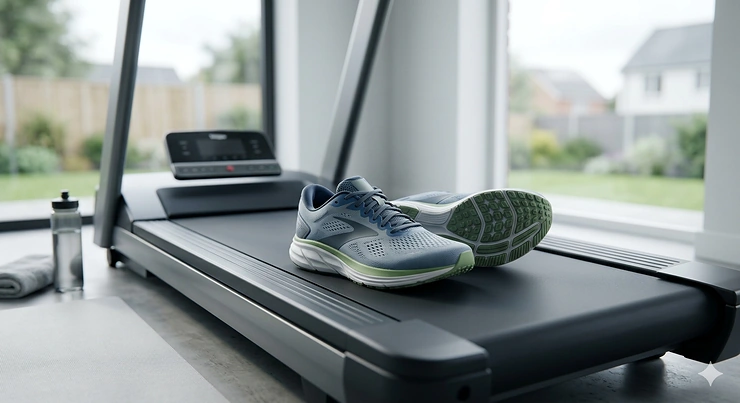
There’s a particular kind of optimism in buying a treadmill. You imagine early mornings, steady progress, a body that doesn’t ache for three days after a 5K. What nobody mentions — not the fitness influencers, not the gym sales rep — is that the shoes you bring to that belt matter enormously. Not just a bit. Enormously
 .
.
Here’s the thing most runners get wrong: neutral running shoes for treadmill use aren’t simply “any running shoe that isn’t falling apart.” The treadmill is a forgiving surface, yes, but it’s also relentlessly repetitive. Every stride lands in almost exactly the same spot, at almost the same angle, with almost the same force. Kilometre after kilometre. Without the natural terrain variation you’d get pounding the pavements of Birmingham or jogging along the Embankment, your feet, ankles, and knees absorb that repetition without mercy.
A proper neutral cushioned running shoe — one designed for runners with a neutral gait who neither over- nor under-pronate significantly — changes the entire equation. It distributes impact, keeps transitions smooth, and means the difference between feeling fresh after 8 km and hobbling to the sofa with your calves in open revolt.
What exactly is a neutral running shoe? Simply put: it’s a shoe without the medial post or guide rails that stability shoes use to correct inward rolling of the foot. For neutral runners (the majority of people, as it happens), they provide cushioning and response without interfering with your natural stride. According to research published by the British Journal of Sports Medicine, runners who wear shoes matched to their foot type report fewer lower-limb injuries over training cycles.
In 2026, the market for neutral cushioned running shoes is, frankly, overwhelming. Seven major brands have released updated flagship models this year alone. So we’ve done the legwork — the research, the spec comparisons, the digging through UK customer reviews — to bring you the definitive guide. All seven shoes featured here are currently available on Amazon.co.uk, Prime-eligible, and suited to treadmill training.
Let’s get into it. 🇬🇧
Quick Comparison: Top 7 Neutral Running Shoes for Treadmill (UK 2026)
| Shoe | Drop | Weight (Men’s) | Cushioning Level | Best For | Price Range (GBP) |
|---|---|---|---|---|---|
| Brooks Ghost 18 | 10mm | ~274g | Medium-High | Everyday training, all-rounders | £130–£145 |
| Nike Pegasus 42 | 10mm | ~283g | Medium | Versatile daily use, speed sessions | £120–£140 |
| ASICS Gel-Nimbus 28 | 5mm | ~305g | Maximum | Long slow runs, high-mileage weeks | £150–£175 |
| New Balance Fresh Foam X 1080v15 | 6mm | ~290g | Maximum | Plush comfort, easy/recovery runs | £150–£165 |
| HOKA Clifton 10 | 5mm | ~279g | Maximum | Beginners, joint-sensitive runners | £130–£155 |
| Saucony Ride 19 | 8mm | ~255g | Medium | Speed work, efficient transitions | £115–£135 |
| Brooks Glycerin 23 | 10mm | ~282g | High | Long runs, wide-foot runners | £130–£150 |
From this overview, the Ghost 18 and Pegasus 42 occupy the sweet spot between cushioning and responsiveness — ideal if your treadmill sessions mix easy miles with occasional tempo efforts. For runners racking up serious mileage or carrying any joint concerns, the Nimbus 28 and 1080v15 justify their higher price tags through genuinely superior impact protection. Budget-conscious runners should look closely at the Saucony Ride 19, which punches well above its price in terms of ride quality.
✨ Don’t Miss These Exclusive Deals!
🔍 Take your treadmill training to the next level with these carefully selected neutral running shoes. Click on any highlighted product name to check current pricing and availability on Amazon.co.uk. These picks will help you find exactly what your feet have been asking for!
💬 Just one click — help others make better buying decisions too! 😊
Top 7 Neutral Running Shoes for Treadmill UK 2026: Expert Analysis
1. Brooks Ghost 18 — The Trusted All-Rounder
The Ghost 18 is Brooks’ flagship neutral trainer and, arguably, the most dependable shoe on this list. Newly released in early 2026 and already available on Amazon.co.uk, it builds on a formula that has kept runners happy for nearly two decades — which is either reassuring or slightly dull, depending on your outlook. We’d say reassuring.
The nitrogen-infused DNA LOFT v3 midsole delivers cushioning that feels soft without being spongy. That balance matters more on a treadmill than you might think: a shoe that’s too plush can make faster intervals feel like running through treacle. The Ghost 18 avoids that trap. Stack heights of around 36mm at the heel and 26mm at the forefoot, combined with that 10mm drop, create a natural heel-to-toe roll that works particularly well for runners who predominantly heel-strike — which, if you’re being honest, is most of us on a treadmill.
The new redesigned upper for 2026 is a genuine improvement. A flexible flat-knit tongue and triple jacquard engineered mesh provide noticeably better breathability than its predecessors. On a treadmill, where there’s no passing breeze to cool you down, breathability isn’t a luxury — it’s essential.
UK customers on Amazon.co.uk consistently praise the Ghost 18’s longevity. One British reviewer noted they’d clocked over 700 km before any meaningful midsole compression — impressive durability for a shoe in this price bracket.
Who should buy it: The runner who doesn’t want to think too hard about footwear. Whether you’re a commuter squeezing in 5 km at 6am, a returning runner easing back into regular miles, or simply someone who has owned Ghosts before and trusts the brand — this one delivers.
✅ Proven comfort over long distances
✅ Excellent durability — good value per km
✅ Wide range of sizes and widths, including extra-wide options
❌ Not the most exciting shoe if you’re chasing pace
❌ Slightly heavier than some rivals at this cushioning level
Price range: £130–£145 on Amazon.co.uk. Check current price for latest availability. Prime-eligible.
2. Nike Pegasus 42 — The People’s Champion Gets Sharper
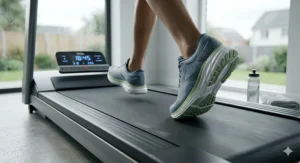
The Pegasus needs little introduction. It’s been Nike’s everyday neutral shoe for over 40 years, and the 42nd edition — released in April 2026 — brings a meaningful upgrade: Nike’s ReactX foam in the midsole. ReactX delivers around 13% more energy return than standard React, which translates to a noticeably springier push-off on each stride. On the treadmill, where your feet are doing the same motion hundreds of times per session, that extra energy return adds up. Your legs feel less beaten by the end.
The updated foot-shaped toe box is worth noting. Compared to the Pegasus 41, there’s meaningfully more room across the forefoot — good news for anyone whose feet spread slightly during longer runs (which is most people, and which most shoes stubbornly ignore). The full-length Air Zoom unit underfoot provides responsive cushioning without the bottoming-out you can get from softer foam-only options.
At a 10mm drop, it’s comfortable for heel-strikers and reasonably forgiving for midfoot runners. The weight sits at around 283g for a men’s UK 9, which is moderate — not featherlight, but not a plod either.
UK customers note that the Pegasus 42 runs true to size, which sounds unremarkable until you’ve ordered three pairs of different brands with wildly inconsistent sizing. For Amazon.co.uk purchases where you can’t try before you buy, that consistency is genuinely worth something.
Who should buy it: Versatile runners who use their treadmill sessions for both easy miles and harder interval work. The Pegasus handles both reasonably well — a genuine all-rounder.
✅ Excellent energy return from ReactX foam
✅ More spacious toe box than previous editions
✅ Widely available in all sizes on Amazon.co.uk
❌ Upper durability can wear faster with frequent treadmill use
❌ Not as plush as the Nimbus or 1080 for purely easy mileage
Price range: £120–£140 on Amazon.co.uk. Prime-eligible with next-day delivery available.
3. ASICS Gel-Nimbus 28 — Maximum Cushioning, No Compromises
ASICS released the Nimbus 28 in early 2026, and it represents the most polished version of their flagship max-cushion trainer to date. Stack heights of 39.5mm at the heel and 34.3mm at the forefoot put it firmly in the “plush” category — this is not a shoe that lets you feel much through the floor, and on a treadmill that’s precisely the point.
The FF BLAST+ midsole foam is the engine here. It’s soft and absorptive, prioritising comfort over energy return. If you’re doing long, easy runs — the kind where you’re barely breaking a sweat and mainly want to listen to a podcast without your knees complaining — the Nimbus 28 is exceptional. What the spec sheet won’t tell you is how stable it feels despite all that foam. The wide midsole platform prevents the lateral rocking you sometimes get with max-stack shoes, which makes it trustworthy across longer sessions.
The Hybrid ASICSGRIP outsole grips treadmill belts confidently, and the 5mm drop is lower than most competitors here — worth noting if you’re prone to Achilles issues, as lower drops reduce strain on that tendon.
At a slightly lower weight than the Nimbus 27 (ASICS have trimmed about 15g through updated foam formulation), it’s also less cumbersome in motion than you’d expect for a max-cushion shoe.
UK buyers with broader feet should note the 2E wide option available on Amazon.co.uk. UK customer reviews praise it specifically for treadmill use and recovery runs following hard outdoor sessions.
Who should buy it: High-mileage runners, anyone with joint sensitivity from the ankles up, and runners returning from injury who need maximum protection underfoot.
✅ Outstanding impact protection — ideal for joint-sensitive runners
✅ Lower drop suits those with Achilles or calf concerns
✅ Stable despite the high stack
❌ Less energy return — not suited to faster treadmill intervals
❌ Premium price bracket
Price range: £150–£175 on Amazon.co.uk. Check current price. Prime-eligible.
4. New Balance Fresh Foam X 1080v15 — Luxury That Earns Its Price
The 1080 line has long been New Balance’s statement of intent in the premium cushioning segment. The v15, released in early 2026, refines a shoe that was already very good. Fresh Foam X — New Balance’s proprietary midsole material — is engineered via data from thousands of foot strikes, and it shows. The cushioning is balanced: soft enough to feel genuinely plush underfoot, firm enough that your foot isn’t swimming in foam with every landing.
At a 6mm drop, the 1080v15 sits between the heel-centric Ghost 18 (10mm) and the near-flat Nimbus 28 (5mm). For treadmill runners who’ve been told by a physio to “work towards a lower drop” — common advice in the UK running community — this is a sensible middle ground.
What elevates the 1080v15 above many competitors is the upper. The Hypoknit construction wraps around the foot with extraordinary precision — it’s genuinely closer to wearing a well-fitted sock than a running shoe, which sounds hyperbolic until you put them on. No hot spots, no pressure points. On a treadmill session of 60–90 minutes, that sock-like fit prevents the foot friction that cheaper uppers cause over extended time.
Fresh Foam X is also notably durable. Running on a treadmill is generally kinder to outsole rubber than road running, but internal midsole compression matters — and the 1080v15’s foam holds its shape well past the 500km mark.
Who should buy it: Runners who want to treat their feet properly without apology. Premium daily training shoe for those doing consistent 5–6 day weeks.
✅ Exceptionally plush, well-balanced cushioning
✅ Superb upper fit — minimal friction over long sessions
✅ Excellent midsole longevity
❌ Upper price point
❌ Slightly heavy for those wanting a more nimble feel
Price range: £150–£165 on Amazon.co.uk. Prime-eligible.
5. HOKA Clifton 10 — The Beginner’s Best Friend (And More)
HOKA’s Clifton is the brand’s approachable entry point: not as aggressive-looking as some of their other models, not as specialist as the Bondi. The Clifton 10, released in 2026, maintains HOKA’s signature maximum cushioning philosophy while tweaking the rocker geometry for smoother transitions.
That rocker sole geometry — the curved shape that tips your foot forward through each stride — is HOKA’s secret weapon on the treadmill. Because you’re not navigating terrain, the treadmill lets the rocker do its job undisturbed. The result is a remarkably fluid, almost effortless forward motion that reduces the energy cost of each stride. It doesn’t make you faster, precisely, but it makes running feel less like hard work.
The compression-moulded EVA foam midsole provides maximum cushioning. At around 279g (men’s UK 9) and with a 5mm drop, it’s lighter and lower than many would expect for a max-stack shoe. The engineered mesh upper is breathable and comfortable, and the redesigned heel tab for 2026 addresses one of the few complaints levelled at the Clifton 9 — it no longer digs into the Achilles during longer sessions.
HOKA’s wide toe box is worth highlighting. British feet — particularly men’s — tend to be wider than the narrow lasts many European brands default to. The Clifton 10’s naturally wider platform means less squeezing and more comfort across the board.
UK customer feedback frequently mentions this as a first “proper” running shoe — particularly from runners transitioning from walking or returning after a break. It’s forgiving in ways more technical shoes aren’t.
Who should buy it: Beginners, runners with joint concerns, anyone who wants maximum comfort without complexity.
✅ HOKA’s rocker geometry makes treadmill running feel smoother
✅ Wide toe box — excellent for British foot shapes
✅ Maximum cushioning with surprisingly manageable weight
❌ Slightly heavier than the Clifton 9 — some long-time fans will notice
❌ Not ideal for runners who prefer ground feel and responsiveness
Price range: £130–£155 on Amazon.co.uk. Prime-eligible.
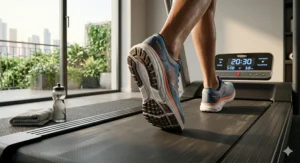
6. Saucony Ride 19 — The Quiet Overachiever
The Saucony Ride is what happens when a brand refuses to be flashy about doing something extremely well. Released in early 2026, the Ride 19 is Saucony’s versatile daily neutral trainer — not as maximally cushioned as the Triumph line, not as race-focused as the Endorphin, but thoroughly excellent in the space between.
The PWRRUN midsole compound is noticeably responsive. At just around 255g for a men’s UK 9, it’s the lightest shoe on this list, and that lightness translates to a more athletic, energetic feel on the treadmill. Where the Nimbus or 1080v15 invite steady cruising, the Ride 19 nudges you to move with a bit more purpose. Speed sessions, tempo runs, interval work — it handles all of them with a sure-footed confidence that belies its moderate price.
The 8mm drop is a sensible middle ground, accessible to both heel-strikers and midfoot runners. The upper is structured and secure — no unnecessary bells and whistles, just a fit that locks the foot in place without restriction.
Here’s the practical detail most UK buyers overlook: for treadmill running specifically, the Ride 19’s lighter weight reduces fatigue during longer sessions measurably. When you’re running indoors in a static environment, even small differences in shoe weight accumulate across thousands of strides.
UK Amazon reviews highlight the consistent sizing and excellent out-of-the-box comfort — no “breaking in” period required, which matters when you’ve ordered online without trying them first.
Who should buy it: Efficiency-focused runners, those doing mixed easy/tempo treadmill sessions, and anyone wanting the best performance under £135.
✅ Lightest shoe on this list — less fatigue over long sessions
✅ Excellent responsiveness for pace work
✅ Strong value at mid-range UK price
❌ Less cushioning than max-stack options — not ideal for recovery runs
❌ More neutral feel — those wanting added stability should look elsewhere
Price range: £115–£135 on Amazon.co.uk. Prime-eligible.
7. Brooks Glycerin 23 — Plush, Wide, and Wonderfully Uncomplicated
The Glycerin sits above the Ghost in Brooks’ lineup — more cushioning, a bit more price, and noticeably more comfort underfoot. The Glycerin 23, released in early 2026, refines the formula with updated DNA LOFT v3 foam across a full-length midsole that’s softer than the Ghost’s whilst retaining structure.
The 10mm drop is identical to the Ghost 18, so familiar Brooks fans transitioning between the two models won’t need an adjustment period. What the Glycerin offers that the Ghost doesn’t is a wider, more accommodating last — the foot bed is broader and deeper, which makes it particularly well suited to runners with wider feet or those who’ve always felt “squeezed” by more tapered designs.
For treadmill use specifically, the Glycerin 23’s plush midsole absorbs the repetitive impact of indoor running particularly well. It’s not the most energetic shoe — don’t buy it expecting a bouncy, propulsive ride — but for long, steady sessions where comfort is the primary goal, it delivers in spades.
UK customer reviews on Amazon.co.uk specifically mention it as an excellent option for treadmill walking as well as running. It’s one of the few shoes on this list that genuinely works for both at a high level, which makes it a practical choice for runners who mix walking intervals into their treadmill sessions.
Who should buy it: Wide-foot runners, those who walk and run on the treadmill, and anyone stepping up from the Ghost wanting more cushioning without changing brand.
✅ Wider last — more accommodating for broader feet
✅ Full-length plush midsole — excellent sustained comfort
✅ Works brilliantly for both running and brisk walking
❌ Not ideal for faster treadmill work — lacks responsive energy return
❌ Slightly pricier than the Ghost 18 for what is, ultimately, a comfort-first shoe
Price range: £130–£150 on Amazon.co.uk. Prime-eligible.
How to Get the Most From Your Treadmill Shoes: A Practical UK Guide
Breaking Them In Without Breaking Yourself
The single most common mistake UK buyers make after ordering running shoes online is taking their new pair straight to a 10 km treadmill session. Don’t. Even the most comfortable shoes benefit from a transition period, particularly if you’re moving from a higher-drop shoe (say, a 12mm walking trainer) to one of the lower-drop options on this list like the Nimbus 28 or Clifton 10.
Start with 20–30 minutes at an easy pace for the first two or three sessions. Let your Achilles tendons, calves, and plantar fascia adapt to the new geometry. Ignore this advice and you’ll be Googling “plantar fasciitis treatment UK” within a fortnight.
When to Replace Your Treadmill Shoes
The midsole foam in a running shoe typically degrades between 500–800 km, regardless of how the outsole looks. The outsole rubber on treadmill shoes lasts considerably longer than road shoes — the belt is far gentler on rubber than pavement — which means the shoe can look fine whilst the cushioning has long since lost its protective properties.
A simple test: stand on one shoe on a hard floor. If you can feel the floor noticeably through the midsole, the cushioning has compressed and it’s time to replace. UK buyers can often find previous-season models at reduced prices on Amazon.co.uk — the Ghost 17, for instance, frequently appears at a meaningful discount now the 18 is out.
Treadmill-Specific Maintenance Tips
Treadmill decks are often lubricated with silicone, which can transfer to your outsoles over time. Wipe down your shoes’ outsoles occasionally with a dry cloth. This prevents slipping and prolongs the rubber. Store your treadmill shoes separately from outdoor running shoes — keeping them dedicated to indoor use not only extends their life but maintains a consistent feel session to session, which is more useful than it sounds for training consistency.
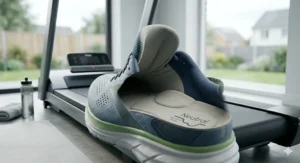
Know Your Runner: Which Shoe Fits Your UK Lifestyle?
Not all treadmill runners are the same. Here are three real-world profiles drawn from common patterns in UK buying behaviour:
Profile 1: The London Commuter Treadmill Runner
Meet Dan, 34, North London. He keeps a treadmill in his flat (space is tight — it folds against the wall). He runs 4 days a week, usually 5–8 km, mostly during lunch breaks when working from home. He doesn’t want to think about his shoes. He just wants them to feel good and last.
Best pick: Brooks Ghost 18. Reliable, durable, comfortable from day one. The Ghost 18 won’t ask anything of Dan except to lace it up. Prime delivery means a replacement pair arrives next day when needed.
Profile 2: The Manchester Gym Goer Returning to Running
Meet Sarah, 41, Manchester suburb. She’s back to running after a two-year break following a knee injury. She runs three times a week on the gym treadmill, building up slowly under physio guidance. Impact absorption is her priority.
Best pick: HOKA Clifton 10 or ASICS Gel-Nimbus 28. Both provide maximum cushioning that reduces joint loading. The Clifton’s rocker geometry additionally promotes efficient movement, reducing the risk of over-striding that can aggravate knee issues.
Profile 3: The Serious Amateur in Sheffield
Meet James, 27, Sheffield. He runs six days a week, mixes treadmill intervals with outdoor long runs, and is training for a spring marathon. He wants a treadmill shoe that handles tempo runs without feeling like a lead weight.
Best pick: Saucony Ride 19. Lightweight, responsive, and handles pace work with genuine conviction. At this frequency of use, he’ll be replacing shoes roughly every 4–5 months — the Ride 19’s mid-range price means that’s financially manageable.
How to Choose Neutral Running Shoes for Treadmill in the UK: 6 Steps
Choosing the right neutral shoe doesn’t require a biomechanics degree. It does require a moment of honest self-assessment. Here’s a practical framework:
- Confirm you’re actually a neutral runner. Get a gait analysis at a specialist running shop — Up & Running, Sweatshop, and most independent running retailers offer free assessments. A neutral gait means your foot rolls inward no more than 15% on landing. If you overpronate significantly, you need a stability shoe, not a neutral one.
- Decide your priority: cushioning or responsiveness. If you want plush comfort for easy miles, prioritise the Nimbus 28, 1080v15, or Clifton 10. If you want energy return and a more dynamic ride, look at the Pegasus 42 or Ride 19.
- Consider your drop preference. Higher drop (10mm: Ghost 18, Pegasus 42, Glycerin 23) suits heel-strikers and feels familiar to most runners. Lower drop (5–6mm: Nimbus 28, Clifton 10, 1080v15) reduces strain on the Achilles over time but requires adaptation if you’re coming from high-drop shoes.
- Check for width options. If you’re between sizes or have wider feet, check the 2E and 4E listings on Amazon.co.uk. Brooks, ASICS, and New Balance all offer extended widths in these models.
- Account for treadmill-specific needs. Treadmill outsoles don’t need heavy lugs or trail rubber. Prioritise midsole quality over outsole durability — the belt won’t wear rubber like asphalt does.
- Buy the most recent model when possible. All seven shoes on this list have been released or updated in 2026. Older-generation models at discounted prices are tempting but may have outdated midsole technology, particularly if they’ve been sitting in a warehouse for over a year.
What to Expect From Neutral Shoes in Real UK Treadmill Conditions
The good news about treadmill running: it removes most of the variables that make outdoor shoe selection complicated. No wet leaves. No uneven kerbs. No potholed pavements. The belt is predictable, smooth, and consistent — which means shoe performance on a treadmill is arguably more reliable than outside.
That said, a few UK-specific realities are worth noting. UK treadmill centres — gyms, leisure centres, home setups — often sit in poorly heated spaces. A garage treadmill in January in Edinburgh is a cold start. Shoe foam performs slightly differently in cold temperatures: it takes a minute or two longer to warm up and flex fully. Starting your session slowly regardless of weather allows the midsole foam to reach its optimal operating temperature.
The repetitive nature of treadmill running means midsole compression happens more evenly across the shoe than in road running, where the outside edge typically wears faster. This actually makes treadmill shoes last slightly longer — UK runners who split their mileage 50/50 between treadmill and road can reasonably expect to extend shoe life by 10–15%.
Finally, treadmill incline settings. Most runners in UK gyms use 1% incline to simulate outdoor resistance — a well-established practice that accounts for the absence of wind resistance. At 1% incline, shoe fit becomes more important: the heel needs secure lockdown to prevent slippage on each upstroke. The Ghost 18 and 1080v15 both excel here, with secure heel cups that hold the foot firmly even at elevation.
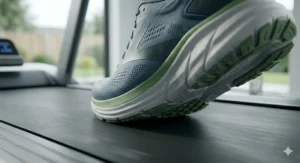
Common Mistakes When Buying Neutral Running Shoes in the UK
Buying based on looks. It happens. A shoe looks brilliant in a colour you like, so into the basket it goes. The problem is that treadmill running amplifies any fit issues — a slightly too-tight upper that’s “fine for a 20-minute walk” becomes a genuine problem at the 45-minute mark. Fit, cushioning, and drop should come before colourway.
Choosing a stability shoe when you don’t need one. Stability shoes add a medial post or guide rail to control overpronation. If you’re a neutral runner in a stability shoe, you’re artificially altering your gait — which over hundreds of treadmill kilometres can cause lateral knee pain or IT band problems. Worth getting that gait analysis.
Ignoring UK sizing differences. Most shoes on Amazon.co.uk list both UK and EU sizes. Brooks uses UK sizing directly; Nike and ASICS typically use UK sizes on their UK listings. Check the conversion charts if ordering from third-party sellers. An honest mistake on UK vs US sizing (UK 9 ≠ US 9 in most brands) is surprisingly common and time-consuming to fix.
Keeping shoes too long. British runners are, as a general rule, rather too loyal to aging footwear. When your treadmill shoes hit 600–700 km, retire them to casual walking. The midsole has done its job.
Buying US-only models. A handful of colourways and limited editions on American running websites don’t ship to the UK, or attract Brexit-related import duties and VAT charges that push the landed cost significantly higher than buying from Amazon.co.uk directly. Always check Amazon.co.uk first.
Neutral Shoes vs Stability Shoes for Treadmill: Which Do You Actually Need?
| Factor | Neutral Shoe | Stability Shoe |
|---|---|---|
| Designed for | Neutral/underpronation gait | Overpronation |
| Midsole structure | Even cushioning throughout | Medial post or guide rail on inner edge |
| Feel | Natural, unrestricted motion | Slightly corrective, guided |
| Best for treadmill | Yes — smooth, repetitive surface suits neutral design | Only if gait analysis confirms overpronation |
| Risk if mismatched | Minor | Moderate — can cause lateral issues in neutral runners |
| Example models | All 7 on this list | Brooks Adrenaline GTS, ASICS Gel-Kayano |
This comparison makes the practical case clear: if you’re a neutral runner, putting yourself in a stability shoe on the treadmill introduces unnecessary corrective forces into a gait that doesn’t need correcting. The smooth, predictable treadmill surface is where neutral shoes truly shine — no lateral demands, no terrain variation, nothing but a clean, efficient stride.
The Clifton 10 and Nimbus 28 offer naturally wider bases that provide stability without the corrective midsole structure — a good option for runners who feel “a bit wobbly” in pure neutral shoes but don’t meet the technical criteria for stability footwear.
✨ Don’t Miss These Exclusive Deals!
🔍 Upgraded your treadmill game? These carefully selected neutral running shoes are waiting for you on Amazon.co.uk. Click any highlighted product name to check current pricing and Prime delivery options. Your knees will thank you.
Long-Term Cost and Value in the UK: What You’re Actually Paying Per Kilometre
Let’s talk brass tacks — or rather, pounds and pence. UK running shoes sit in a noticeable VAT-inclusive price bracket: the seven models on this list range from the mid-£110s to around £175. Every Amazon.co.uk price includes 20% VAT, unlike US prices which add sales tax at checkout. That context matters when comparing to American running sites.
| Shoe | Est. Lifespan (km) | Mid-Range UK Price | Cost per 100km |
|---|---|---|---|
| Brooks Ghost 18 | 650–800 | ~£137 | ~£19 |
| Nike Pegasus 42 | 600–750 | ~£130 | ~£19 |
| ASICS Gel-Nimbus 28 | 600–700 | ~£162 | ~£25 |
| New Balance 1080v15 | 600–750 | ~£157 | ~£23 |
| HOKA Clifton 10 | 500–650 | ~£142 | ~£24 |
| Saucony Ride 19 | 600–750 | ~£125 | ~£19 |
| Brooks Glycerin 23 | 650–800 | ~£140 | ~£19 |
The Ghost 18, Pegasus 42, Ride 19, and Glycerin 23 cluster around £19 per 100km — excellent value by any measure. The Nimbus 28 and Clifton 10 cost more per kilometre but offer protection that, for joint-sensitive runners, translates into avoiding physiotherapy appointments. A single NHS physiotherapy referral waiting list is currently stretching well past three months in many UK areas; a private appointment runs £50–£80. Two avoided appointments fully offsets the premium cost of the Nimbus 28.
Amazon Prime members benefit from next-day delivery on all seven models, which is worth noting for UK runners mid-training cycle who’ve just run their current pair into retirement and don’t want a gap in their programme.
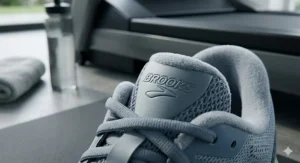
Frequently Asked Questions
❓ Are neutral running shoes suitable for treadmill running if I have flat feet?
❓ Do I need different shoes for treadmill and outdoor running in the UK?
❓ How do I know when my neutral running shoes need replacing?
❓ Can I use zero drop neutral shoes on a treadmill as a beginner?
❓ Are all seven shoes on this list available on Amazon.co.uk with UK sizing?
Conclusion: Find Your Match and Get Running
The treadmill is a brilliant training tool — forgiving, consistent, weather-proof, and available at midnight if that’s when inspiration strikes. But it asks something specific of your shoes. Repetition. Impact. Reliability, session after session.
The seven neutral running shoes for treadmill use we’ve covered here all answer that brief with varying degrees of emphasis. The Ghost 18 and Glycerin 23 are the dependable classics — never thrilling, always there. The Pegasus 42 and Ride 19 add a little more athletic edge for runners who don’t just want to log miles but want to move. The Nimbus 28, 1080v15, and Clifton 10 are the cushioning champions — buying silence from joints that might otherwise have opinions about your training volume.
Whatever your pace, your programme, or the size of the room your treadmill lives in, there’s a shoe on this list that fits your running life. All are on Amazon.co.uk. All are Prime-eligible. All are worth every penny of their respective price ranges.
Pick the one that matches where you are in your running right now — and buy the next tier up for when you get better. Because you will.
✨ Don’t Miss These Exclusive Deals!
🔍 Ready to upgrade your treadmill training? Click on any highlighted shoe name in this article to check current pricing, size availability, and delivery options on Amazon.co.uk. Happy running! 🏃♀️🇬🇧
Recommended for You
- Best Treadmill Running Shoes UK 2026: 7 Expert Picks
- Non Electric Treadmill UK Best Models: 7 Top Picks for 2026
- Best Zero Electricity Treadmill UK 2026: 7 Sustainable Self-Powered Picks
Disclaimer: This article contains affiliate links. As an Amazon Associate, I earn from qualifying purchases. If you purchase products through these links, we may earn a small commission at no additional cost to you.
✨ Found this helpful? Share it with your mates! 💬🤗
