
In This Article
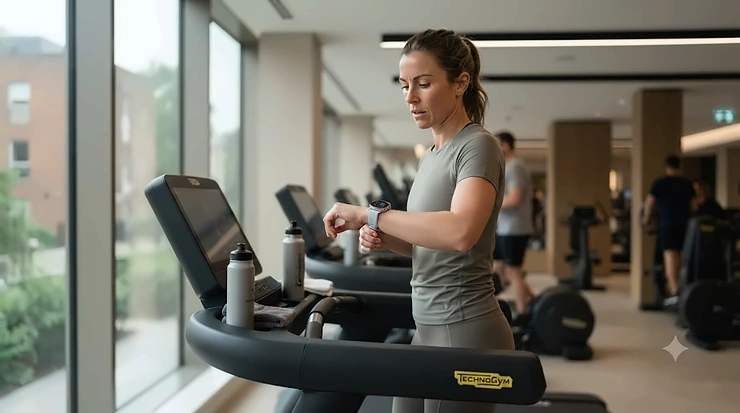
Buy a running watch for treadmill sessions and you quickly discover a dirty little secret: the satellite that’s supposed to make these things clever is completely useless indoors. A running watch for treadmill use is a GPS sports watch that switches to its onboard accelerometer (and, ideally, supports a footpod) to estimate pace and distance the moment satellite signal disappears — which is exactly what happens the second you step onto a belt inside a gym. Rather than mapping your route via satellite, the watch is essentially guessing your stride length from the way your wrist swings, then doing some quiet maths to turn that into a pace on your screen.
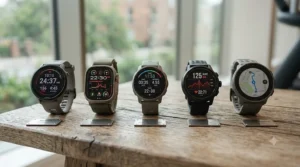
For anyone who splits their training between the canal towpath and a wet-Tuesday treadmill session, that distinction matters enormously. Reviewers at outlets like TechRadar and Wareable have spent 2026 putting the latest crop of GPS watches through exactly this test, and the results vary wildly — some watches nail treadmill pace within a few percent, others drift by double digits the moment you change speed. We’ve pulled together seven genuinely available watches, from a sub-£100 Amazfit through to Garmin’s flagship Forerunner 970, and paired the spec sheets with real aggregated reviewer sentiment so you’re not choosing blind.
Before you spend a penny, it’s worth remembering that a watch is only ever a nice-to-have layer on top of good training habits. The NHS physical activity guidelines for adults recommend at least 150 minutes of moderate activity a week, and a treadmill session counts just as much toward that as an outdoor run — your watch is there to make the numbers meaningful, not to replace the basics. With that context sorted, let’s get into which running watch for treadmill training is actually worth your money in 2026.
Quick Comparison Table
| Watch | Best For | Indoor Accuracy Tech | Price Range |
|---|---|---|---|
| Garmin Forerunner 165 | Best for beginners | Self-calibrating accelerometer | £230-£260 |
| Coros Pace 4 | Best overall value | Accelerometer + auto stride learning | Around £250 |
| Amazfit Active 2 | Best budget pick | Accelerometer, footpod pairing | Under £100 |
| Polar Pacer Pro | Best mid-range barometer watch | Accelerometer + manual calibration | £150-£260 |
| Garmin Forerunner 265 | Best mid-premium AMOLED | Accelerometer, ANT+ footpod support | £400-£450 |
| Apple Watch Series 11 | Best for iPhone owners | Auto workout detection + accelerometer | £350-£400 |
| Garmin Forerunner 970 | Best premium all-rounder | Dual-frequency GPS + advanced accelerometer | £550-£650 |
Looking at the spread above, there’s no single “best” watch for treadmill running — it depends entirely on how much you value raw accuracy versus price. Budget picks like the Amazfit Active 2 get remarkably close to premium accuracy for casual training, but if you’re chasing marathon-specific pacing data, the Forerunner 970’s more advanced sensor suite earns its higher price tag. Notice, too, that none of these watches use actual GPS indoors — every single one falls back on the same fundamental technology, just with varying degrees of sophistication in how it’s implemented.
💬 Just one click — help others make better buying decisions too!😊
Top 7 Running Watches for Treadmill Running: Expert Analysis
Choosing a running watch for treadmill sessions isn’t really about GPS chipsets — it’s about how intelligently the watch handles the accelerometer data once GPS drops out. We’ve picked seven watches that cover every budget and, crucially, that have a genuine track record indoors, not just outdoors on a sunny trail.
1. Garmin Forerunner 165 — best self-calibrating accelerometer for beginners
The headline draw here is Garmin’s tried-and-tested accelerometer, which quietly refines itself every time you run outdoors with GPS switched on. In practice, that means your treadmill accuracy actually improves the more you use the watch outside — the algorithm is learning your unique stride length and cadence rather than relying on a generic “average runner” model. The 165 doesn’t get Garmin’s newer dual-frequency positioning found on pricier siblings, so outdoor GPS lock-on is a touch slower in built-up areas, but that’s largely irrelevant for treadmill sessions where GPS isn’t in play anyway.
Reviewers consistently flag this as the sensible entry point into the Garmin ecosystem: it delivers accurate pace, distance and heart-rate data through a genuinely colourful, easy-to-read AMOLED screen without the premium price tag of the mid-tier Forerunners. Based on the spec comparison with its stablemates, what most buyers overlook about the 165 is that it lacks Training Readiness and Training Status metrics — fine if you just want clean numbers, less fine if you’re chasing structured marathon training. It’s best suited to newer runners who want dependable treadmill tracking without wading through a menu of advanced recovery metrics they’ll never touch.
Aggregated reviewer sentiment across Wareable and TechRadar’s 2026 testing rounds is strongly positive, with the 165 repeatedly named a top beginner pick specifically because of its tracking reliability rather than any flashy feature.
Pros:
- ✅ Accelerometer self-calibrates from your outdoor runs automatically
- ✅ Bright, easy-to-read AMOLED screen at a beginner-friendly price
- ✅ Long battery life relative to its size and weight
Cons:
- ❌ No dual-frequency GPS, so outdoor lock-on lags rivals
- ❌ Missing advanced recovery metrics like Training Readiness
At around £230-£260, the Forerunner 165 sits comfortably as one of the best-value entry points into serious treadmill tracking, particularly if you plan to log plenty of outdoor calibration miles too.
2. Coros Pace 4 — best overall value with dual-band GPS
The Pace 4’s standout feature for outdoor calibration is its dual-frequency GPS, a spec that used to be reserved for watches costing twice as much. What that means in practice: your outdoor runs — which feed the accelerometer’s learning process for indoor accuracy — are themselves more precise, particularly around tall buildings or under tree cover, so the accelerometer inherits a cleaner training signal. Coros also ships a vibrant 1.2-inch AMOLED display on the Pace 4, finally bringing it level with rivals like the Forerunner 165 on visual quality while keeping its famously low price and monster battery life intact.
Here’s what to weigh if you’re deciding between the Pace 4 and a Garmin: Coros has quietly built a reputation for genuinely excellent indoor-mode reliability, automatically calculating cadence and stride length even if you stray off satellite signal outdoors, which suggests the underlying accelerometer algorithm is unusually well-tuned. The “running fitness” composite metric distils a huge amount of training data into a single number, which beginners in particular seem to appreciate for cutting through data overload.
Reviewers at Wareable rate the Pace 4 as offering unbeatable value specifically because of the combination of heart-rate accuracy and GPS reliability at this price — a common refrain in aggregated sentiment is that it “punches above its price bracket” on tracking fundamentals rather than smart features.
Pros:
- ✅ Dual-frequency GPS improves the outdoor data that calibrates indoor mode
- ✅ Exceptional battery life for a watch under £250
- ✅ Automatic cadence and stride length calculation if signal drops
Cons:
- ❌ Fewer third-party app integrations than Garmin or Apple
- ❌ Smaller screen resolution than premium AMOLED rivals
Priced around £250, the Coros Pace 4 is arguably the single best-value option on this list for anyone who splits time between road and treadmill without wanting to spend Garmin flagship money.
3. Amazfit Active 2 — best budget pick under £100
It’s almost comical how much sensor hardware Amazfit has crammed into a watch this cheap. The Active 2’s headline advantage is built-in GPS support alongside footpod pairing, meaning you’re not locked into wrist-only accelerometer guesswork if you want to bolt on a dedicated foot sensor later. For a watch that typically retails under £100, this is a genuinely unusual level of future-proofing.
On paper, this means the Active 2 should be a compromise-heavy budget pick, but reviewer testing tells a different story. TechRadar’s comparison against the considerably pricier Apple Watch Ultra 2 found GPS route accuracy and distance tracking landing within two decimal places of each other on a gentle run — a startling result for a watch costing a fraction of the price. What most buyers overlook here is that the Active 2 lacks the years of accumulated stride-learning refinement that Garmin and Coros have built into their firmware, so its indoor accelerometer accuracy, while decent, hasn’t been stress-tested over the same volume of treadmill miles by long-term reviewers.
Aggregated sentiment is remarkably consistent: reviewers repeatedly call it the best budget smartwatch of 2026, praising the AMOLED screen and battery life while flagging heart-rate accuracy as the area most likely to disappoint serious athletes.
Pros:
- ✅ Exceptional value with GPS and footpod support under £100
- ✅ Bright AMOLED display rare at this price point
- ✅ Over 160 sport modes including dedicated treadmill tracking
Cons:
- ❌ Heart-rate accuracy inconsistent during high-intensity intervals
- ❌ Less refined accelerometer learning than premium rivals
At under £100, the Amazfit Active 2 delivers disproportionate value for casual and beginner treadmill runners who don’t need marathon-grade precision.
4. Polar Pacer Pro — best mid-range barometer and recovery tracking
Polar’s standout advantage on the Pacer Pro is its integrated barometer, a feature rarely found at this price point and one that pays dividends the moment you start incline training. The barometer feeds Polar’s Hill Splitter feature, which automatically detects uphill and downhill segments — useful for outdoor runs, though on a treadmill it can’t detect belt incline directly, so you’ll still want to log gradient manually for the most accurate effort data. Its MIP reflective display is genuinely one of the most sunlight-readable screens in this guide, even if it lacks the vibrancy of AMOLED rivals.
What the spec sheet won’t tell you, but reviewer testing does, is that Polar’s five-button control layout takes real adjustment if you’re coming from Garmin — testers at TechRadar and Coach both reported muscle-memory mix-ups in their first week. Based on the spec comparison with the Forerunner 265, the Pacer Pro’s accelerometer-based indoor tracking is broadly comparable for casual sessions, but it lacks Garmin’s decades of firmware refinement specifically tuned to treadmill gait recognition.
Reviewers consistently note that heart-rate tracking is “good for the most part” on steady runs but can have off days during intervals, with several suggesting a chest strap for anyone doing structured treadmill interval sessions. Aggregated sentiment across Countryfile, Coach and FionaOutdoors puts the Pacer Pro firmly in “excellent value” territory now that it’s a few years into its lifecycle.
Pros:
- ✅ Integrated barometer rare at this price for incline-aware training
- ✅ Excellent sunlight readability on its MIP display
- ✅ Detailed recovery insights via Nightly Recharge scoring
Cons:
- ❌ Five-button layout has a real learning curve
- ❌ No touchscreen or on-watch music storage
Now regularly available in the £150-£260 range depending on retailer promotions, the Pacer Pro represents strong value for runners who prioritise recovery data alongside solid treadmill tracking.
5. Garmin Forerunner 265 — best mid-premium AMOLED all-rounder
The 265’s defining feature is its beautiful AMOLED display paired with Garmin’s more mature accelerometer algorithms, benefiting from years of firmware refinement across the wider Forerunner range. Reviewers repeatedly describe it as boasting “more than enough features to warrant the higher price tag,” positioning it as the sensible upgrade path once a runner outgrows the entry-level 165.
Here’s what most buyers overlook about stepping up a tier: the accelerometer hardware itself may not differ dramatically from the 165’s, but the training-load algorithms wrapped around it — Training Readiness, Training Status, and more granular recovery metrics — extract considerably more insight from the same raw accelerometer data on your treadmill sessions. That’s the real justification for the price jump, not raw sensor accuracy alone. The Forerunner 265 also supports pairing an external footpod via ANT+, which is the single biggest accuracy upgrade available to any treadmill-focused runner willing to spend a little extra on hardware.
Aggregated review sentiment from Wareable frames the 265 as the best choice for runners who want a powerful training and recovery tool that also branches into other disciplines like cycling and swimming, rather than a single-purpose running tool.
Pros:
- ✅ Vivid AMOLED display with genuinely useful training-load metrics
- ✅ Supports external footpod pairing for treadmill-specific accuracy
- ✅ Broad multisport support beyond pure running
Cons:
- ❌ Noticeably pricier than the 165 for similar raw accelerometer hardware
- ❌ Battery life shorter than Garmin’s more basic models
Typically priced in the £400-£450 range, the Forerunner 265 suits runners who’ve outgrown entry-level tracking and want deeper analysis layered on top of solid treadmill fundamentals.
6. Apple Watch Series 11 — best for iPhone owners and auto-detection
Apple’s standout advantage on the Series 11 is genuinely excellent automatic workout detection, sensing the type of exercise you’re doing almost immediately without you lifting a finger to start a session. Forbes Vetted’s testing found the watch’s tracking held up well when cross-tested on a treadmill against other benchmark devices, describing the results as “pretty accurate” compared with rival fitness watches.
What the spec sheet doesn’t spell out is that Apple Watch treadmill accuracy leans heavily on wrist motion and Apple’s proprietary machine-learning model rather than dedicated running-watch algorithms, which is why serious treadmill-focused runners often pair it with a Stryd footpod for meaningfully tighter pace data — without one, discrepancies of over 20% between logged treadmill effort and true pace have been reported by long-term testers doing structured indoor interval sessions. Based on the spec comparison with dedicated running watches on this list, the Series 11 is at its best as a smartwatch that also happens to run well, rather than a running watch that also happens to be smart — a subtle but important distinction for anyone treadmill training seriously.
Reviewers consistently praise the Series 11 for daily wearability and cross-ecosystem integration with the Apple Health app, while noting battery life (typically under two days with heavy GPS and always-on display use) remains its clearest compromise versus dedicated sports watches.
Pros:
- ✅ Excellent automatic workout detection with minimal setup
- ✅ Seamless integration with the Apple Health ecosystem
- ✅ Bright, sharp display ideal for glancing at pace mid-run
Cons:
- ❌ Battery life trails dedicated running watches significantly
- ❌ Treadmill pace accuracy benefits heavily from an add-on footpod
Priced around £350-£400 for the standard Series 11, this is the strongest pick specifically for iPhone owners who want one device for daily life and treadmill training alike.
7. Garmin Forerunner 970 — best premium all-rounder for serious accuracy
The Forerunner 970’s headline feature is dual-frequency GPS combined with Garmin’s most advanced accelerometer and recovery-metric stack to date, and reviewers have been unambiguous that this is currently the gold-standard outdoor-to-indoor calibration loop on the market. Because the watch locks onto more reliable outdoor GPS data across a wider range of environments, the accelerometer model it builds for indoor treadmill use is correspondingly better trained on accurate ground-truth data.
A certified personal trainer quoted by Forbes described the accuracy as delivering “training and recovery data deep enough to actually act on” — high praise that reflects genuine depth rather than marketing gloss. What most buyers overlook about the 970 is that several of its flagship features, including Step Speed Loss and Running Economy insights, require pairing with Garmin’s HRM 600 chest strap to unlock fully, meaning the sticker price doesn’t tell the whole cost story if you want the complete experience. On paper this means budget-conscious buyers should factor in an additional accessory cost before committing.
Aggregated sentiment across Wareable and Forbes is consistently glowing on accuracy and screen quality, with the main criticism centred on price rather than performance — this is unambiguously a watch built for runners who take their data seriously, treadmill sessions included.
Pros:
- ✅ Dual-frequency GPS produces the most reliable accelerometer training data
- ✅ Deep recovery metrics that go well beyond basic pace and distance
- ✅ Bright AMOLED display with genuinely useful offline mapping
Cons:
- ❌ Some flagship features require an additional chest strap purchase
- ❌ Significant price premium over the rest of this list
At around £550-£650, the Forerunner 970 is squarely aimed at committed runners for whom marginal accuracy gains on the treadmill genuinely matter to their training outcomes.
Practical Usage Guide: Setting Up Your Watch for Accurate Treadmill Runs
Getting a running watch for treadmill sessions to behave accurately is less about the hardware and more about how you set it up in those first few weeks. Start by logging at least three or four outdoor GPS runs before you trust any indoor mode — this is the single biggest lever you have, because nearly every watch on this list uses those outdoor miles to refine its internal model of your stride length and cadence. Skip this step and you’re essentially asking the watch to guess your gait from a generic, average-runner template, which is where a lot of the worst accuracy complaints originate.
Once you’ve built that baseline, calibrate manually after your first treadmill session: most watches, including Garmin’s official instructions for calibrating treadmill distance, let you enter the treadmill’s own displayed distance at the end of a run to fine-tune the algorithm going forward. Common mistakes in the first 30 days include holding the handrails (which flattens your natural arm swing and confuses the accelerometer), recalibrating after every single run rather than letting the model settle, and ignoring incline changes, which alter your stride pattern in ways the watch can’t fully compensate for on a flat-belt assumption. A simple maintenance habit — recalibrating every few weeks, or whenever you change running shoes or return from injury — keeps drift in check without becoming an obsessive routine.
Real-World Scenarios: Which Treadmill Runner Are You?
The winter road runner. If you’re an experienced 10K runner who trains outdoors most of the year but retreats to the gym from November to March, you’ll benefit most from a watch with strong outdoor GPS credentials, since your treadmill accuracy depends entirely on the calibration data those outdoor sessions generate. The Coros Pace 4 or Garmin Forerunner 265 both fit this profile well, offering dual-band GPS outdoors that feeds a genuinely well-tuned indoor mode.
The gym-only beginner. If you’re newer to running and rarely venture outside with your watch, raw accelerometer sophistication matters less than ease of use and encouraging, digestible metrics. The Amazfit Active 2 or Garmin Forerunner 165 suit this profile — approachable, affordable, and accurate enough for pace-based motivation without overwhelming complexity.
The data-driven marathoner. If you’re training for a specific time goal and treadmill sessions form a meaningful chunk of your structured interval work, accuracy discrepancies of even 3-5% matter over a 20-mile week. This is where the Garmin Forerunner 970, ideally paired with a footpod, or the Polar Pacer Pro with a chest strap, earns its higher price through genuinely actionable recovery and pacing data.
Problem → Solution: Fixing Common Treadmill Tracking Issues
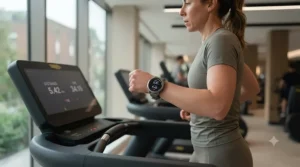
Runners hit the same handful of frustrations with treadmill tracking again and again, and most have a straightforward fix. First, watch pace doesn’t match the treadmill display — this is usually the treadmill’s fault as much as the watch’s, since belt-based speed sensors on older or poorly maintained machines can be meaningfully out of true; the fix is to trust your watch’s consistency over time rather than chasing an exact match with a single machine. Second, erratic pace during interval sessions is typically down to inconsistent arm swing rather than a hardware fault; try consciously maintaining natural arm movement through pace changes rather than glancing at your wrist mid-stride.
Third, distance drifting further off the longer you run points to accumulated stride-length error; recalibrating with the treadmill’s own displayed distance after each session (see the practical usage guide above) tightens this up considerably. Fourth, inaccurate readings when holding the handrails is unavoidable with pure accelerometer tracking — if you need the rails for balance or safety, a footpod like Stryd is genuinely the better solution since it measures foot motion directly rather than relying on arm swing. Finally, heart-rate spikes or drops that don’t match perceived effort are common on wrist-based optical sensors during high-cadence treadmill work; a chest strap resolves this far more reliably than any firmware update ever will.
Does GPS Watch Work on Treadmill?
Short answer: No — a GPS watch cannot receive satellite signal indoors, so on a treadmill it automatically switches to its built-in accelerometer to estimate your speed, distance and cadence instead of using GPS at all.
This is the single most misunderstood aspect of treadmill running watches, and it explains almost every accuracy complaint you’ll read online. Outdoors, your watch triangulates position from satellites and calculates speed and distance directly from that changing location data — genuinely precise, weather and building interference aside. Indoors, there’s no satellite signal to work with at all, so the watch falls back entirely on measuring the rhythm and intensity of your wrist movement, translating that into an estimated stride length and cadence, and multiplying the two to guess your pace.
The accuracy of that guess depends heavily on how well-trained the underlying algorithm is — which is precisely why outdoor calibration runs matter so much, as covered in our practical usage guide above. Typical error margins for accelerometer-only tracking sit somewhere between 5% and 15% for pace and distance, according to independent testing summarised by fitness tracker specialists, though this narrows considerably with consistent calibration and worsens with erratic pacing or handrail use. For a deeper look at how dual-frequency GPS technology actually works outdoors — and why it matters for the calibration data feeding your indoor mode — Wareable’s running watch buying guide breaks the technology down in plain terms.
How to Choose the Best Watch for Treadmill Distance Tracking
- Prioritise brands with mature accelerometer algorithms. Garmin and Coros have years of accumulated firmware refinement specifically for indoor gait recognition — this matters more for treadmill accuracy than headline GPS chipset specs.
- Check footpod compatibility if precision genuinely matters. If you’re training for time goals, the ability to pair a Stryd or Garmin footpod via ANT+ or Bluetooth is a bigger accuracy lever than any watch-only upgrade.
- Factor in your outdoor running frequency. A watch’s indoor accuracy is only as good as the outdoor GPS data it’s learned from — if you rarely run outside, expect looser accelerometer estimates regardless of price.
- Weigh screen readability against battery life. AMOLED displays look fantastic on a gym treadmill but drain faster; MIP displays like Polar’s sacrifice some vibrancy for genuinely excellent battery longevity.
- Consider whether you need a barometer. It’s largely irrelevant for flat-belt treadmill running but valuable if incline training or outdoor hills form part of your routine too.
- Don’t ignore comfort during long sessions. Treadmill runs often mean longer, steadier efforts than variable outdoor terrain; a heavier or bulkier watch that’s fine outdoors can become genuinely irritating over 60 minutes on a belt.
- Set a realistic budget band and stick to it. As our comparison table shows, accuracy gains beyond the mid-range tier are real but increasingly marginal — the jump from £100 to £250 matters more than £450 to £650 for most casual treadmill runners.
Accelerometer Treadmill Watch: What’s Actually Happening on Your Wrist
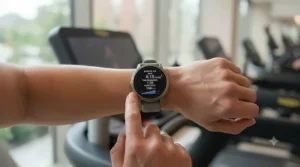
Every accelerometer treadmill watch on this list is doing fundamentally the same job: using a tiny motion sensor to detect the rhythm of your arm swing, translating that rhythm into an estimated cadence, and combining it with a stride-length model built from your outdoor GPS history to calculate speed and distance. Reviewers and running coaches consistently note that this is “context-dependent” modelling of human movement rather than a direct measurement — the watch isn’t measuring your speed at all, it’s inferring it from patterns it has learned to associate with speed.
That inference breaks down in predictable ways. Height and weight matter more than most buyers realise: taller runners with longer, more grounded strides can see distance overreported by several percent per mile if the default stride-length assumption doesn’t match their actual gait, while shorter, high-cadence runners tend to see the opposite — consistent underreporting. Incline changes confuse the model further, since your stride mechanics shift subtly on a gradient in ways a flat-belt accelerometer assumption doesn’t anticipate. None of this makes accelerometer tracking useless — for the vast majority of casual and even competitive runners, it’s more than accurate enough to track training load and general progress — but it does explain why the same watch can feel spot-on for one runner and consistently frustrating for another with a very different build and gait.
Indoor Run Mode GPS Watch vs Footpod: Which Wins for Accuracy?
| Method | Distance Accuracy | Setup Effort | Best For |
|---|---|---|---|
| Watch-only indoor run mode | Moderate (5-15% typical error) | None — works out of the box | Casual and beginner treadmill runners |
| Dedicated footpod (e.g. Stryd) | High — often within 1% after brief use | Attach to shoe laces, pair once | Structured training and race-pace work |
| Treadmill direct connection (ANT+/Bluetooth) | High — matches the treadmill’s own belt sensor | Depends on gym equipment support | Runners with access to compatible treadmills |
The data here is fairly clear-cut: independent, long-term footpod testing consistently finds dedicated foot-mounted sensors outperforming wrist-based accelerometers for both accuracy and consistency, largely because they measure motion directly at the point of ground contact rather than inferring it from arm swing several feet away. That said, watch-only indoor mode remains genuinely good enough for the majority of casual runners who care more about tracking trends over time than hitting an exact split to the second.
If precision genuinely matters to your training — marathon-specific pacing, structured interval sets, or simply a habit of holding the handrails that skews accelerometer data — the modest cost of a footpod is one of the best-value upgrades available to any treadmill runner, regardless of which watch from this list you’ve chosen.
Footpod Running Watch: Is a Stryd or Garmin Pod Worth Adding?
A footpod clips onto your shoelaces and measures your foot’s motion in three-dimensional space, sidestepping the accelerometer’s arm-swing guesswork entirely. Long-term reviewers who’ve logged thousands of kilometres with Stryd specifically report that, unlike Garmin’s own footpod, it typically needs no calibration at all beyond entering your height and weight — a meaningful convenience if you’re the type of runner who’d rather just run than fiddle with settings.
Here’s what’s worth weighing before you buy one: Stryd’s pace data comes from motion capture rather than GPS, so according to the brand’s own treadmill and Stryd support guidance, it maintains the same accuracy indoors as it does outdoors — genuinely useful if hotel gym treadmills or unfamiliar machines are a regular part of your travel routine. Garmin’s own footpod, by contrast, is cheaper and pairs seamlessly with the brand’s ecosystem, but independent long-term testing suggests it drifts further from true pace the more your speed diverges from whatever pace you originally calibrated it at. For most runners doing varied-pace treadmill sessions, that’s a meaningful practical difference, not just a marketing footnote.
Common Mistakes When Buying a Treadmill Indoor Running Watch
The most frequent mistake is buying purely on GPS chipset specifications — dual-frequency positioning is genuinely valuable outdoors, but it does nothing for you the moment you step onto a treadmill, where the accelerometer takes over entirely regardless of how advanced the GPS hardware is. A second common error is assuming a higher price automatically means better indoor accuracy; as our seven-product comparison shows, the accelerometer hardware itself often doesn’t differ dramatically between an entry-level and mid-range watch from the same brand — you’re mostly paying for the analysis layered on top of that same raw sensor data.
A third mistake is overlooking footpod compatibility entirely, closing the door on the single biggest accuracy upgrade available without buying a new watch outright. Fourth, many buyers skip outdoor calibration runs altogether and then complain the indoor mode feels wildly inaccurate — without that outdoor learning phase, you’re essentially judging a system before it’s had the chance to learn your gait. Finally, don’t underestimate battery life for treadmill-specific use: if you’re doing 45-60 minute sessions several times a week, a watch that burns through GPS-mode battery quickly indoors as well as outdoors will become a genuine daily hassle rather than a minor inconvenience.
Long-Term Cost & Maintenance
Thinking purely about the sticker price undersells the real cost of ownership for a treadmill-focused running watch. A £100 Amazfit Active 2 with no accessory needs is, on paper, extraordinary value — but if serious training later demands a footpod for tighter accuracy, that’s an additional cost on top, closing some of the gap with mid-range dedicated watches that already support ANT+ pairing natively. Similarly, the Forerunner 970’s flagship recovery features requiring Garmin’s HRM 600 chest strap for full functionality means its effective price is higher than the watch alone suggests.
Battery replacement isn’t generally a factor with modern sports watches, since most use rechargeable lithium batteries designed to last several years of daily charging cycles rather than swappable cells, though charging cable and strap replacements are a small ongoing cost worth budgeting for, particularly with proprietary charging pucks that aren’t interchangeable between brands. Looked at over a two-to-three-year ownership period, the mid-range watches on this list — the Coros Pace 4 and Polar Pacer Pro in particular — tend to offer the strongest value once accessory and longevity considerations are weighed against the ultra-budget and premium extremes.
Features That Actually Matter (And Those That Don’t)
For treadmill running specifically, dual-frequency GPS is marketing gloss the moment you step indoors — it improves the outdoor calibration data feeding your accelerometer model, but it contributes nothing directly to indoor accuracy itself. Similarly, elaborate mapping and navigation features, however impressive on a trail, are entirely wasted on a belt going nowhere. What genuinely matters is accelerometer maturity (essentially, how many years of firmware refinement a brand has put into indoor gait recognition), footpod compatibility, and battery efficiency during extended indoor sessions where the screen tends to stay lit more consistently than during a varied outdoor run.
Recovery and training-load metrics — VO2 max estimates, Training Readiness scores, and similar — are genuinely useful if you’re following a structured plan, but they’re built from the same underlying accelerometer and heart-rate data regardless of price tier; you’re paying for smarter analysis of that data, not fundamentally different sensor accuracy. If your priority is simply reliable pace and distance tracking for casual treadmill fitness, resist the pull toward premium models chasing features you’re unlikely to use, and put the savings toward a footpod instead — pound for pound, it’s the more meaningful accuracy upgrade.
Frequently Asked Questions
❓ Does a running watch for treadmill use need GPS at all?
❓ Why is my treadmill indoor running watch showing a different distance than the machine?
❓ Is an accelerometer treadmill watch accurate enough for marathon training?
❓ What's the best watch for treadmill distance tracking on a budget?
❓ Do I need a footpod running watch setup, or is the wrist accelerometer enough?
Buyer’s Decision Framework
If you run outdoors most weeks and only occasionally use a treadmill, choose a mature accelerometer watch like the Garmin Forerunner 165 or Coros Pace 4, because your regular outdoor GPS sessions will keep the indoor model well-calibrated automatically. If you’re gym-based year-round with little outdoor running, choose a watch with strong out-of-the-box accuracy and consider a footpod sooner rather than later, since you won’t benefit from the outdoor-learning advantage that mature ecosystems rely on. If budget is your primary constraint, choose the Amazfit Active 2 and accept a slightly wider margin of error in exchange for genuinely remarkable value. And if data precision drives your training decisions — structured intervals, race-pace work, marathon blocks — choose the Garmin Forerunner 970 or Polar Pacer Pro paired with a dedicated footpod, because at that level of seriousness, the accuracy gap between accelerometer-only and footpod-assisted tracking genuinely affects the quality of your training data.
Conclusion
There’s no single perfect running watch for treadmill training — only the right compromise between accuracy, price and how much of your running life happens outdoors versus on a belt. What’s consistent across every watch we’ve covered, from the sub-£100 Amazfit Active 2 to the flagship Garmin Forerunner 970, is that none of them use GPS indoors at all; they’re all leaning on accelerometer technology refined by your outdoor running history, which is why calibration habits matter as much as the hardware you choose.
For most casual and beginner treadmill runners, the Coros Pace 4 or Garmin Forerunner 165 will comfortably cover your needs without overspending on features you won’t use. If budget is genuinely tight, the Amazfit Active 2 remains a startlingly capable option. And for runners who treat their treadmill sessions as seriously as race day itself, pairing a premium watch with a dedicated footpod closes the accuracy gap that wrist-based accelerometers simply can’t fully solve on their own. Whichever you choose, a few outdoor calibration runs in the first weeks will do more for your treadmill accuracy than any single spec on the box.
Recommended for You
- Blister Prevention Socks Treadmill: 7 Best Picks 2026
- Compression Socks Treadmill Workout: 7 Top Picks for 2026
- Best Socks for Treadmill Running 2026: 7 Top UK Picks Tested
Disclaimer: This article contains affiliate links. As an Amazon Associate, I earn from qualifying purchases. If you purchase products through these links, we may earn a small commission at no additional cost to you.
✨ Found this helpful? Share it with your friends! 💬🤗
