

In This Article
Here’s the short answer before we get into the weeds: electrolyte tablets for running are effervescent or dissolvable tabs, usually built around sodium, potassium, calcium and magnesium, designed to replace what you lose through sweat during a run. Drop one in your bottle, wait for the fizz to settle, and you’ve got a hydration mix for athletes that does more heavy lifting than water alone. For most runners training in the UK’s changeable weather, that’s the whole point — plain water rehydrates you, but it can’t replace lost sodium, and that gap is where cramps, fatigue and the dreaded mid-long-run bonk creep in.

If you’ve ever finished a long Sunday run feeling like your legs belong to someone else, or you’ve had that swollen, puffy-fingers sensation after a hot half marathon, there’s a fair chance sodium — not fitness — was the missing piece. This guide walks through seven real, currently available products, why the numbers on the label actually matter, and how to pick the right one for your training block rather than just grabbing whatever’s cheapest on the shelf at your local Boots.
We’re going to get specific. Not “this is great, buy it” specific, but the kind of specific that tells you why a 320mg sodium tab behaves completely differently on your body than a 1,000mg one, and why that distinction should shape your shopping list more than the flavour name on the tube. Along the way we’ll look at sugar free electrolyte tablets running enthusiasts increasingly favour, what a genuine hydration mix for athletes should contain, and how sodium replacement running strategies differ from a casual gym-goer’s needs entirely. According to the NHS guidance on dehydration, athletes are specifically flagged as a group who can lose large amounts of fluid through sweat during prolonged exercise — which is precisely why this category exists.
Quick Comparison Table
| Product | Sodium per Tablet | Best For | Price Range |
|---|---|---|---|
| SiS GO Hydro Electrolyte Tablets | ~345mg | All-round training and racing | £6-8 (20 tabs) |
| Nuun Sport Electrolyte Tablets | ~300-360mg | Everyday budget hydration | £6-7 (10 tabs) |
| High5 Zero Electrolyte Tablets | 200mg (400mg at 2-tab dose) | Cheapest daily option | Under £6 (20 tabs) |
| Precision Hydration PH 1000 | ~500mg per 500ml serving | Moderate-high sweat losses | £8-10 (10 tabs) |
| Precision Hydration PH 1500 | ~750mg per 500ml serving | Heavy, salty sweaters | £8-10 (10 tabs) |
| GU Hydration Drink Tabs | 320mg | Sensitive stomachs, low sugar | £6-8 (12 tabs) |
| Nuun Sport + Caffeine Tablets | ~300-360mg + caffeine | Late-race fatigue, hot hilly routes | £7-9 (10 tabs) |
A glance at that table tells its own story: sodium content across these seven products spans from 200mg right up to roughly 750mg per serving, which is nearly a fourfold difference. That’s not brands being inconsistent for the sake of it — it reflects genuinely different sweat rates and training scenarios, from a mild club 5K to a scorching marathon where you’re losing well over a litre of sweat an hour. If you’ve never sweat-tested yourself, starting in the 300-500mg range and adjusting from feedback (headaches, cramping, or swollen fingers are all clues) is the sensible, low-risk approach most sports nutritionists recommend.
💬 Found a product here that fits your training? Give it a click and help other runners find their match too!😊
Top 7 Electrolyte Tablets for Running: Expert Analysis
1. SiS GO Hydro Electrolyte Tablets — best all-rounder for training and race day
Science in Sport built its reputation the hard way — this is the brand that kept the British Sailing Team hydrated at the 2008 Beijing Olympics, and that pedigree still shapes the Go Hydro formula today. Each effervescent tablet dissolves into 500ml of water and delivers around 345mg of sodium, alongside potassium, calcium, magnesium and a trio of B vitamins (B1, B2, B6) that support carbohydrate and protein metabolism during effort.
On paper, that sodium figure sits comfortably in the “moderate sweater” bracket — enough to matter on a warm 10-miler without being so aggressive it upsets your stomach on an easy recovery jog. What most buyers overlook about this tablet is the B-vitamin inclusion; it’s a small addition, but for runners doing back-to-back training days, that extra metabolic support is a genuinely useful bonus most rivals skip entirely. The tablets are Informed Sport approved too, meaning every batch is tested against the World Anti-Doping Agency’s banned substance list — relevant if you’re a competitive club runner subject to testing, and reassuring even if you’re not.
Reviewers consistently report that the fizz and flavour hold up well compared to chalkier rivals, with 13 flavour options giving you enough variety to avoid palate fatigue on a long training block. A common theme in aggregated feedback is that the tablets dissolve cleanly without the gritty residue some cheaper alternatives leave behind.
Pros:
- ✅ Informed Sport batch-tested, ideal for competitive runners
- ✅ B vitamins support metabolism during long sessions
- ✅ Wide 13-flavour range prevents taste fatigue
Cons:
- ❌ Sodium level may be too low for very heavy sweaters
- ❌ Pricier per tablet than budget rivals like High5
Sitting around £6-8 for a tube of 20, working out to roughly 30-40p per tablet, SiS GO Hydro represents solid mid-range value — you’re paying a small premium for testing credentials and formulation polish, and for most club-level runners that trade-off is worth it.

2. Nuun Sport Electrolyte Tablets — best budget household name
Nuun is arguably the tablet that introduced a whole generation of runners to the category in the first place, and it remains one of the most recognisable names on a gym bag clip or car cupholder. The formula covers all five classic electrolytes — sodium, potassium, chloride, magnesium and calcium — with roughly 300-360mg of sodium per serving depending on flavour, plus just 1g of sugar, which is low enough to avoid a syrupy aftertaste but present enough to aid absorption.
Here’s what the spec sheet won’t tell you outright: that modest sugar inclusion isn’t filler, it’s functional. Small amounts of glucose actually improve sodium and water uptake in the gut via the sodium-glucose cotransport mechanism, so Nuun’s “not quite sugar-free” approach is arguably smarter than a pure zero-sugar formula for anyone running over an hour. For shorter runs or gym sessions, that distinction matters less — you’re unlikely to notice a meaningful performance difference either way.
The tablets are vegan, non-GMO and gluten-free, ticking boxes that matter to a growing slice of the running community. Aggregated customer sentiment repeatedly flags the wide flavour range (Nuun has produced everything from Fruit Punch to Tri-Berry) as a genuine strength for people who find hydration tablets get boring fast.
Pros:
- ✅ Well-balanced five-electrolyte formula
- ✅ Vegan, non-GMO and gluten-free
- ✅ Huge flavour variety across the range
Cons:
- ❌ Contains 1g sugar per tab, unsuitable if strictly avoiding sugar
- ❌ Sodium content is moderate, not ideal for heavy sweaters
At around £6-7 for a 10-tablet tube, Nuun sits in the mid-to-lower price bracket and remains one of the easiest entry points into structured hydration for runners who haven’t tried tablets before.
3. High5 Zero Electrolyte Tablets — cheapest daily hydration option
If your priority is stretching a training budget across marathon block after marathon block, High5 Zero is difficult to beat on pure cost-per-tablet. At less than 30p per tab when bought in a 20-count tube, it’s consistently the most affordable option on test across most independent reviews, and the brand still manages to pack in 200mg of sodium, 70mg of potassium, 9mg of calcium and 56mg of magnesium per tablet.
Here’s the practical wrinkle: High5 themselves recommend using two tablets per 750ml bottle rather than one, which effectively doubles the sodium delivered to around 400mg per bottle — so don’t judge this one purely on the single-tablet figure without reading the dosing instructions. Based on the spec comparison, that adjusted dose puts High5 Zero roughly on par with Nuun once you account for real-world usage, just at a noticeably lower price point.
The inclusion of vitamin C (28mg) is likely more about taste and shelf stability than any meaningful adaptation benefit — magnesium deficiency from sweat alone is genuinely rare even in heavy exercisers, so don’t over-index on the mineral panel here. What matters more is the sodium delivery and the fact reviewers describe the pink grapefruit flavour as notably pleasant compared with the sometimes-medicinal taste of older-generation tablets.
Pros:
- ✅ Cheapest option on test, under 30p per tablet
- ✅ Zero calories, genuinely sugar-free formula
- ✅ Pleasant, well-reviewed flavour profile
Cons:
- ❌ Requires two tablets per bottle for full effect
- ❌ Lower single-tablet sodium than premium rivals
For runners doing high mileage on a tight budget — students, beginners building up to their first half marathon, or anyone training through a cost-of-living squeeze — High5 Zero at under £6 for the standard tube is hard to argue with on value alone.
4. Precision Hydration PH 1000 Electrolyte Tablets — best for personalised, moderate-to-high sweat losses
Precision Fuel & Hydration (formerly Precision Hydration) built its whole business model around a single, genuinely useful idea: not every runner sweats the same amount of sodium, so a one-size-fits-all tablet is a compromise for almost everyone. PH 1000 is the middle tier of a four-strength system (250, 500, 1000 and 1500mg of sodium per litre), and this particular tube delivers roughly 1,000mg of sodium per litre when mixed as directed — working out to around 500mg per single 500ml tablet dose, alongside 260mg potassium, 40mg calcium and 20mg magnesium.
What most buyers overlook about this tier system is that it’s designed to pair with the brand’s (paid) sweat test service, so if you genuinely don’t know your sweat sodium concentration, PH 1000 is a sensible default starting point rather than a guess. Based on the spec comparison against SiS and Nuun, PH 1000 sits meaningfully higher on sodium delivery, which makes it a stronger fit for hot-weather training or runners who finish sessions with visible white salt marks on their kit — a classic tell-tale sign of a salty sweater.
The tablets are NSF Certified for Sport and independently batch tested against the WADA prohibited list, which matters if you’re racing under a governing body. Reviewers consistently note a mild citrus flavour that’s noticeably less sweet than mainstream rivals, and a small but recurring theme in aggregated feedback mentions the hypotonic formula sitting more comfortably on the stomach during hard efforts than isotonic sports drinks.
Pros:
- ✅ Sodium level matched to genuine sweat-loss science
- ✅ NSF Certified for Sport, safe for competitive athletes
- ✅ Mild, less-sweet flavour suits longer efforts
Cons:
- ❌ Pricier than mainstream tablets at £8-10 per tube
- ❌ Only 10 tablets per tube versus 20 from some rivals
At around £8-10 for a 10-tablet tube, the value calculation depends heavily on whether you actually need that extra sodium. For a moderate sweater doing club 10Ks, it may be overkill; for anyone training for a summer marathon or an ultra, the ROI shows up in fewer cramp-related DNFs.
5. Precision Hydration PH 1500 Electrolyte Tablets — best for heavy, salty sweaters
PH 1500 is the strongest tablet in Precision Fuel & Hydration’s line-up, and it exists specifically for the subset of runners whose sweat sodium losses sit at the genuinely high end of the spectrum — think visible salt crusting on a black running vest after a summer long run, or persistent cramping despite drinking plenty of fluid. This tube delivers 1,500mg of sodium per litre, translating to roughly 750mg per single 500ml tablet, making it noticeably stronger than every other product on this list.
The honest analytical take here is that PH 1500 is a specialist tool, not a default choice. Reviewers consistently note the flavour is more overtly salty than PH 1000 or 500 — which makes sense given the sodium concentration, but it’s worth knowing before your first race-day use rather than discovering it mid-marathon. What the spec sheet won’t tell you, but reviewers and sports scientists both flag, is that heavy sweaters who under-dose on sodium are disproportionately represented among runners who experience exercise-associated hyponatremia symptoms, so getting this concentration right genuinely matters more than flavour preference for this specific group.
Manufactured in Europe and batch tested against the WADA prohibited substance list, PH 1500 carries the same competition-safe credentials as its siblings. It’s not a tablet for every run — using it on an easy 5K would likely deliver far more sodium than you need — but for hot-weather marathon training or events where you know from experience you’re a heavy salty sweater, it fills a genuine gap the mainstream brands don’t address.
Pros:
- ✅ Highest sodium concentration in this round-up
- ✅ Purpose-built for heavy or salty sweaters
- ✅ WADA-list batch tested for competitive use
Cons:
- ❌ Too strong for casual or short-distance use
- ❌ Noticeably saltier taste than lower-strength tiers
Priced similarly to PH 1000 at £8-10 per tube, this is very much a “know your own sweat profile before buying” purchase — brilliant for the right runner, unnecessary for most others.

6. GU Hydration Drink Tabs — best for sensitive stomachs and low sugar
GU Energy Labs is better known in the UK for its energy gels, but its Hydration Drink Tabs deserve more attention from runners specifically hunting sugar free electrolyte tablets running-focused formulas that are still gentle on digestion. Each tablet dissolves into roughly 500ml of water and provides 320mg of sodium and 55mg of potassium, sweetened with stevia and a touch of cane sugar rather than heavier sugar loads.
The honest read here is that GU’s electrolyte panel is narrower than SiS or Precision Hydration — there’s no significant calcium or magnesium dose called out — so this isn’t the tablet for someone chasing a full-spectrum mineral profile. What it does deliver well is a clean, low-calorie sodium hit (just 10 calories per tab) that a common theme in aggregated review feedback describes as gentle on the gut during hard efforts, which matters enormously if you’ve ever had to make an unplanned pit stop mid-long-run thanks to a stomach-unfriendly sports drink.
GU’s own guidance notes that athletes can lose over 1,000mg of sodium per hour in hot or humid conditions, and recommends supplementing with 300-800mg of sodium per hour of exercise as a starting benchmark — GU Hydration Tabs sit near the lower-middle of that range per tablet, meaning most runners will want two tabs per hour on a hot day rather than one.
Pros:
- ✅ Gentle formula, well tolerated by sensitive stomachs
- ✅ Only 10 calories and minimal sugar per tablet
- ✅ Easy to scale dosage for hourly sodium targets
Cons:
- ❌ Narrower electrolyte profile than rivals
- ❌ Fewer UK-specific flavour options than SiS or Nuun
At roughly £6-8 for a 12-tablet pack, GU Hydration Tabs are competitively priced against SiS and sit as a smart pick specifically for runners whose limiting factor is stomach tolerance rather than raw sodium need.
7. Nuun Sport + Caffeine Electrolyte Tablets — best for late-race fatigue on hot, hilly routes
Take the standard Nuun Sport formula — sodium, potassium, chloride, magnesium and calcium, with 1g of sugar for absorption support — and add a modest caffeine dose, and you’ve got a tablet purpose-built for the specific moment in a long run or race where your legs are fine but your brain has checked out. Nuun’s caffeinated variant sits in the same 300-360mg sodium range as standard Nuun Sport, with caffeine added on top rather than instead of anything.
Here’s what most buyers overlook: caffeine taken mid-exercise isn’t just a mental pick-me-up, there’s a reasonable body of sports science suggesting a modest caffeine dose 20 minutes or so before a tough climb or a hard final push can genuinely improve perceived effort and output. The counterargument — that caffeine is a diuretic and therefore counterproductive in a hydration product — has been increasingly challenged by research suggesting habitual caffeine users don’t see the same fluid-loss penalty as occasional users, so the “it’ll dehydrate you” worry is less clear-cut than it once was.
Aggregated reviewer sentiment on caffeinated hydration tablets in general suggests they’re best reserved for genuinely tough sessions — a hilly long run, a hot afternoon 10-mile race, or the final third of a marathon — rather than daily use, partly to preserve caffeine sensitivity and partly because nobody needs a jolt for an easy recovery jog.
Pros:
- ✅ Combines full electrolyte profile with a caffeine boost
- ✅ Useful for late-race mental and physical fatigue
- ✅ Same trusted Nuun formulation base
Cons:
- ❌ Not suitable for caffeine-sensitive runners or evening use
- ❌ Overkill for short or easy training runs
Typically priced around £7-9 for a 10-tablet tube, this is a specialist addition to a kit bag rather than an everyday staple — smart for race day or a brutal hill session, unnecessary for a Tuesday night 5K.

Practical Usage Guide: Setting Up Your Hydration Routine
Getting the timing right matters as much as picking the right tablet. In the first 30 days of using electrolyte tablets, the most common mistake runners make is treating them like a magic fix rather than part of a broader fluid strategy — necking a tablet mid-run without having drunk anything for the previous hour won’t undo a dehydration deficit instantly.
A sensible starting routine: dissolve one tablet in your bottle around 60-90 minutes before a run over 60 minutes long, sip steadily rather than gulping, and reassess after a few sessions based on how you feel — headaches, unusual fatigue, or visible salt residue on your kit are all useful feedback signals. For runs under 45 minutes in mild weather, plain water is often genuinely sufficient; save the tablets for when sweat losses actually add up. Store tubes somewhere dry, since effervescent tablets are notoriously sensitive to humidity and will start fizzing prematurely in a damp gym bag or car boot in summer.
A common optimisation trick experienced marathoners use is “practising” their exact race-day hydration mix during long training runs weeks in advance, rather than trying a new tablet for the first time on race morning — your gut and your pacing plan both benefit from familiarity, and an unfamiliar formula is a classic cause of mid-race stomach trouble.
Real-World Scenarios: Which Tablet Fits Your Training?
If you’re a first-time half marathon trainee running three times a week in mild UK conditions, your sweat losses are probably moderate and your budget matters more than marginal sodium gains — High5 Zero or standard Nuun Sport will comfortably cover you without overcomplicating things.
If you’re training for a summer marathon and you’ve noticed white salt marks on your kit after long runs, you likely fall into the heavy-sweater category, and it’s worth trialling Precision Hydration PH 1000 or, if the salt marks are especially pronounced, stepping up to PH 1500. Pair either with a consistent long-run practice routine well before race day.
If you’re a club runner doing structured interval sessions and the occasional Sunday long run, with a sensitive stomach that’s let you down mid-session before, GU Hydration Drink Tabs or SiS GO Hydro offer a gentler, well-tolerated middle ground with solid credentials for anyone racing under governing-body rules.
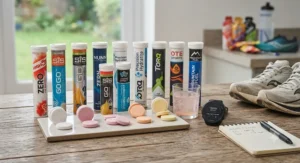
How to Choose Electrolyte Tablets for Running
- Know your sweat rate first. Weigh yourself before and after a typical run (accounting for fluid drunk) — significant weight loss suggests you need a higher-sodium option like Precision Hydration’s stronger tiers.
- Match sodium content to conditions, not just distance. A hot, humid 10K can demand more sodium replacement than a cool, mild half marathon.
- Check the sugar content against your goals. If you’re managing calorie intake or blood sugar, sugar free electrolyte tablets running-specific options like High5 Zero or GU deserve priority.
- Consider stomach sensitivity. Some formulas, particularly those with more added sugar or a fuller mineral panel, sit heavier during hard efforts — trial new tablets in training, never on race day.
- Factor in certification if you compete. Informed Sport or NSF Certified for Sport labelling matters if you’re subject to anti-doping testing.
- Price per serving over price per tube. A £10 tube of 10 tablets can work out cheaper per session than a £6 tube of 20, depending on your dosing needs.
- Flavour variety for long-term adherence. The best tablet is the one you’ll actually keep using — taste fatigue is a real and underrated dropout cause.
Common Mistakes When Buying Electrolyte Tablets for Running
The single biggest mistake is buying based on brand recognition alone rather than checking the actual sodium figure per tablet — as this guide has shown, that number varies by nearly 4x across mainstream products, and the “famous” option isn’t automatically the right dose for your body. A second common error is assuming more electrolytes is always better; excessive sodium intake without matching sweat losses can cause its own discomfort, so more isn’t a blanket win.
Runners also frequently underestimate storage sensitivity, leaving tubes in a hot car boot where humidity triggers premature fizzing and wastes tablets before they’re even used. Finally, a subtle but costly mistake is buying a single flavour in bulk — taste fatigue is real, and a half-used tube abandoned in a drawer because you’re sick of the flavour is money wasted regardless of how good the formula is on paper.
Electrolyte Tablets vs Traditional Sports Drinks
| Factor | Electrolyte Tablets | Traditional Sports Drinks |
|---|---|---|
| Portability | Small tube, fits any pocket | Bulky bottles or heavy powder tubs |
| Sugar/calorie control | Often adjustable, many sugar-free | Typically fixed, often high-sugar |
| Cost per serving | 30-90p depending on brand | Similar or slightly higher pre-mixed |
| Best For | Runners wanting precise dosing control | Runners also needing carbohydrate fuel |
The core trade-off is control versus convenience. A sports drink typically bundles carbohydrate and electrolytes together in a fixed ratio, which is genuinely useful if you’re fuelling and hydrating in one go on a long run. Electrolyte tablets, by contrast, let you dial sodium up or down independently of your carbohydrate strategy — useful if you’re already fuelling with gels and just need the hydration side handled separately. Neither is objectively superior; the right choice depends on whether you want your fuel and fluid combined or kept apart.
💬 Ready to sort your hydration strategy? Compare the picks above and grab the one that matches your next long run!😊

Sodium Replacement for Running: What to Expect in Real-World Performance
Specs on a label only tell half the story — what actually happens on the road matters more. In practice, adequate sodium replacement during a long run typically shows up as steadier energy through the back half of a session, fewer or milder cramps in calves and hamstrings, and less of that heavy, swollen-fingers feeling some runners get in hot weather. Under-dosing on sodium, by contrast, often masquerades as simple tiredness — you might blame poor fitness or bad sleep when the real issue is that you’ve been drinking water without replacing what you’re sweating out.
Reviewers across multiple independent hydration tablet comparisons consistently note that the taste and dissolve quality of a tablet genuinely affects how much people actually drink — a tablet you find unpleasant gets under-consumed, which defeats the purpose regardless of how well-formulated the sodium content is on paper. That’s a genuinely underrated factor: the “best” tablet nutritionally is worthless if you leave half the bottle undrunk because you don’t like the taste.
Long-Term Cost & Maintenance of an Electrolyte Tablet Habit
Running a consistent electrolyte tablet habit through a full marathon training block (typically 16-18 weeks, 3-5 sessions a week) adds up faster than most runners initially budget for. At an average of 40-60p per tablet across the mid-range brands featured here, using one tablet per qualifying long run and interval session works out to somewhere in the £15-25 range across a full block — genuinely modest against the cost of running shoes or race entry fees, but worth factoring into a season’s kit budget nonetheless.
The value calculation shifts meaningfully if you’re using premium tiers like Precision Hydration’s stronger tablets multiple times a week rather than only on genuinely hot or long sessions — reserving the strongest, priciest tablets for when conditions actually demand them (rather than using them as a daily default) is the single easiest way to keep the long-term cost sensible without compromising on the sessions where sodium replacement genuinely matters.
Safety, Regulations and Compliance for Electrolyte Supplements in the UK
Electrolyte tablets sold in the UK are classed as food supplements rather than medicines, which means they fall under food law rather than medicines regulation. Labelling requirements are set out under UK food supplement legislation, and manufacturers must accurately declare nutrient content and avoid making disease-treatment claims on packaging — you can read the specifics on GOV.UK’s food labelling and supplement guidance.
On the health side, it’s worth understanding why sodium replacement matters beyond simple performance — in rare but documented cases, endurance runners who drink large volumes of plain water without adequate sodium replacement can develop exercise-associated hyponatremia, a dangerous drop in blood sodium levels. A peer-reviewed review of exercise-associated hyponatremia in marathon runners found symptomatic and asymptomatic cases affecting a meaningful minority of marathon finishers, with risk factors including excessive fluid intake and inadequate sodium replacement over long events. This isn’t intended to alarm casual 5K runners — the risk is concentrated in longer events, hot conditions and runners who over-drink water relative to their sweat losses — but it’s a genuine reason electrolyte replacement is more than a marketing angle for anyone tackling marathon distance or beyond.

Frequently Asked Questions
❓ Do I actually need electrolyte tablets for running, or is water enough?
❓ What's the difference between electrolyte tablets and an electrolyte drink for marathon training?
❓ Are sugar free electrolyte tablets running-safe for long distances?
❓ How much sodium do I need per hour of running?
❓ Can electrolyte tablets help prevent dehydration on hot runs?
Conclusion
Choosing the right electrolyte tablets for running isn’t really about finding the single “best” product — it’s about matching sodium content, sugar preference and budget to your own sweat profile and training load. A budget-conscious beginner training for a first 10K has genuinely different needs to a marathon runner sweating buckets on a July long run, and this guide’s seven picks span that whole spectrum deliberately.
If you’re still unsure where to start, the safest default is a moderate-sodium, mid-priced option like SiS GO Hydro or Nuun Sport — trial it across a few long runs, pay attention to how your body responds, and adjust up toward Precision Hydration’s stronger tiers only if you notice genuine heavy-sweater signs like visible salt marks or persistent cramping. Whatever you land on, the goal is the same: steadier energy, fewer cramps, and one less variable to worry about on race day.
🔍 Take your hydration strategy to the next level with these carefully selected electrolyte tablets. Click on any highlighted product to check current pricing and availability. These picks will help you build a genuinely reliable running routine your training plan can count on! 🏃♂️💧
Recommended for You
- 7 Best Energy Bars for Runners in 2026
- Caffeine-Free Energy Gels for Runners: 7 Best Picks for 2026
- SIS vs Maurten Energy Gels: 7 Best Picks Ranked for 2026
Disclaimer: This article contains affiliate links. As an Amazon Associate, I earn from qualifying purchases. If you purchase products through these links, we may earn a small commission at no additional cost to you.
✨ Found this helpful? Share it with your friends! 💬🤗
