

In This Article
Anyone with long hair who runs knows the particular indignity of a headband that gives up halfway through mile three. One minute it’s holding everything neatly off your face, the next it’s slid back to sit uselessly at the crown of your head like a sad little crown, and you’re left shoving hair out of your eyes at every junction. A proper running headband for long hair has to do two jobs at once — manage sweat and manage hair — and most cheap options are only really built for one.

Sweat itself is a fairly remarkable bit of biology: it’s your body’s primary cooling mechanism, produced by eccrine glands across the scalp and forehead in particular volume during sustained effort. You can read more about how perspiration works if you’re curious about the underlying physiology — it helps explain why some fabrics feel clammy within ten minutes while others stay genuinely dry, which comes down to how quickly a material can move that moisture away from skin rather than just soaking it up and holding onto it.
This guide rounds up seven real, currently available headbands that specifically suit long hair — meaning wide enough to hold a full head of hair back, grippy enough not to migrate backwards, and breathable enough not to turn into a soggy strip by the second mile. We’ve looked at genuine specifications and aggregated review patterns rather than marketing copy alone, and we’ve been honest about where each one falls short. Let’s find your fit.
Quick Comparison Table
| Headband | Material | Width | Price Range | Best For |
|---|---|---|---|---|
| Under Armour UA Performance Headband | Multi-channel performance polyester | Standard | £10-£15 range | All-round wicking performance |
| adidas Interval Reversible Headband | Cotton terry, AEROREADY | Standard | £10-£15 range | Reversible everyday training |
| BUFF CoolNet UV Half | Recycled REPREVE microfiber | Wide | £10-£15 range | UPF 50 sun protection |
| Raquex Cotton Headband | Cotton terry blend | Standard | Under £10 | Budget UK-made pick |
| Eono Elastic Sports Headband (2-pack) | Elastic stretch fabric | Wide | Under £10 | Best value for long hair |
| Beister Sports Headbands (5-pack) | Polyester/spandex | Wide | Under £10 | Non-slip grip on a budget |
| GripGrab Under-Helmet Sweatband | Thin technical wicking fabric | Slim | £10-£15 range | Slip resistance under caps/helmets |
Scanning across the table, the clearest split is width versus technical fabric sophistication rather than price alone — the BUFF CoolNet UV Half and Eono Elastic Sports Headband both offer generous width that suits a full head of long hair, while the GripGrab pick trades width for a slimmer, more technical profile designed to sit comfortably under a cap or helmet. If sun protection matters on longer daylight runs, the BUFF pick’s UPF 50 rating is worth the modest premium over the budget multipacks.
💬 Just one click — help others make better buying decisions too!😊
Top 7 Running Headbands for Long Hair: Expert Analysis
1. Under Armour UA Performance Headband — best all-round wicking performance
The Under Armour UA Performance Headband opens this list because it’s a genuinely well-regarded piece of technical kit rather than a basic elastic strip. It’s constructed from Under Armour’s multi-channel performance fibres, a fabric technology specifically engineered to move sweat away from skin rather than simply absorb and hold it.
The multi-channel fibre structure is the detail worth understanding: rather than a flat weave that soaks up moisture like a towel, these channels actively wick sweat toward the fabric’s outer surface where it can evaporate faster, which matters enormously on a long hot run when a heavier, saturated headband becomes genuinely uncomfortable and can start to slip from its own added weight. Based on the spec comparison with basic cotton alternatives, this construction is precisely why technical sportswear brands charge a premium over supermarket sweatbands.
Reviewers consistently report that the material holds up well over repeated washing without losing its stretch or shape, and several long-haired runners specifically note that it sits securely without the mid-run slide common to thinner headbands. The embroidered logo sits flat rather than printed, meaning it won’t crack or peel with regular sweat exposure and washing over several years.
Pros:
- ✅ Genuine sweat-wicking multi-channel fibre technology
- ✅ Holds shape and stretch after repeated washing
- ✅ Secure fit reported by long-haired runners
Cons:
- ❌ Pricier than basic multipack alternatives
- ❌ Standard width, not the widest option here
At around £10-£15 at the time of research, the Under Armour UA Performance Headband is a solid mid-range pick for runners who want proven technical performance from an established sports brand.

2. adidas Interval Reversible Headband — best reversible everyday training pick
The adidas Interval Reversible Headband brings a genuinely practical twist to a simple category: it’s reversible, meaning two looks and two slightly different feels from one headband, built from an improved cotton terry construction with adidas’s AEROREADY moisture-wicking technology woven through.
What most buyers overlook about the reversible design is that it isn’t purely cosmetic — flipping the headband effectively doubles the wear life between washes, since you can rotate which side sits against skin. The cotton terry face gives a plusher, more absorbent feel than a pure synthetic headband, which some runners genuinely prefer against the forehead even though it takes slightly longer to dry out than a fully synthetic equivalent like the Under Armour pick above.
Here’s what to weigh: cotton terry, even blended with AEROREADY wicking fibres, will always feel a touch heavier once properly soaked through on a long, hot run compared with a fully technical mesh headband. For runs under an hour or in cooler UK conditions, that’s rarely an issue, and reviewers consistently praise the embroidered three-bar logo and clean, simple styling that works equally well off the running track. Aggregated feedback also highlights the snug, adjustable-feeling stretch as suiting a wide range of head sizes without pinching.
Pros:
- ✅ Reversible design doubles wear life between washes
- ✅ Plusher cotton terry feel against skin
- ✅ AEROREADY wicking technology built in
Cons:
- ❌ Heavier once soaked than fully synthetic options
- ❌ Slower to dry than mesh-based alternatives
Typically priced in the £10-£15 range, the adidas Interval Reversible Headband suits runners who want genuine brand-name technical performance with a slightly softer everyday feel.
3. BUFF CoolNet UV Half — best for UPF 50 sun protection
For long summer runs where sun exposure across the parting and hairline is a genuine concern, the BUFF CoolNet UV Half stands apart from the rest of this list. It’s built from 95% recycled REPREVE performance microfiber with HeiQ cooling technology and Polygiene odour control, and it carries a UPF 50 sun protection rating across the fabric itself.
The seamless, four-way stretch construction is worth dwelling on, because it’s a genuinely different approach to the classic elastic-and-fabric headband format most of this list uses. Rather than a stitched loop, it’s a single continuous tube of stretch fabric that can be worn as a wide headband, folded for extra coverage, or repositioned lower to cover more of the ears in cooler conditions — genuine versatility that few dedicated headbands offer. On paper this means one product doing the job of two or three more specialised pieces.
What the spec sheet won’t tell you, but reviewers note, is that the HeiQ cooling technology creates a noticeably cooler sensation against skin in the first few minutes of wear compared with standard polyester, though that effect fades somewhat as the fabric saturates during a longer effort. Aggregated sentiment consistently praises the UPF 50 rating as genuinely useful for runners prone to sunburn along the parting.
Pros:
- ✅ UPF 50 sun protection built into the fabric
- ✅ Seamless four-way stretch, versatile styling
- ✅ Made from 95% recycled microfiber
Cons:
- ❌ Cooling sensation fades once fully saturated
- ❌ Pricier than basic multipack alternatives
At around £11-£13 depending on colourway, the BUFF CoolNet UV Half is the strongest pick here for anyone running regularly in strong sunshine.
4. Raquex Cotton Headband — best budget UK-made pick
The Raquex Cotton Headband earns its spot as the value option from a genuine British sports brand. Raquex specialises in racquet sports gear but designs and stocks its sweatbands entirely in the UK, and the headband itself is built from an absorbent, stretchy cotton terry cloth material measuring roughly 5cm by 18cm.
Cotton terry is the same fundamental fabric family used in classic tennis wristbands, and it’s worth being honest about the trade-off here: it’s genuinely absorbent and comfortable against skin, but it works by soaking sweat up rather than actively wicking it away like the technical synthetic blends further up this list. Based on the spec comparison with the moisture-wicking picks above, that means a Raquex headband will feel heavier and damper on a long, sweaty run, but for shorter sessions or lower-intensity training it’s a perfectly comfortable, genuinely soft option.
Reviewers consistently describe the fit as snug without being uncomfortably tight, and the fact that it’s designed and stocked entirely within the UK appeals to buyers who prefer supporting a domestic small business over an overseas multipack seller. It’s also sold as part of a combined wristband-and-headband set, which suits anyone building a full sweatband kit from scratch.
Pros:
- ✅ Genuine UK-designed and UK-stocked brand
- ✅ Soft, comfortable absorbent cotton terry
- ✅ Snug fit without excessive tightness
Cons:
- ❌ Absorbs rather than actively wicks sweat
- ❌ Gets noticeably heavier on longer, sweatier runs
At under £10, the Raquex Cotton Headband is an easy, low-risk entry point for anyone testing whether a headband suits their running routine before investing in pricier technical fabric.
5. Eono Elastic Sports Headband (2-pack) — best value for genuinely long hair
Sold under Amazon’s own Eono brand, the Eono Elastic Sports Headband is explicitly marketed around exactly the problem this guide addresses: keeping long hair out of the way during exercise. It’s a wide, high-stretch elastic band sold in packs of two, designed specifically to bind hair back as well as manage sweat.
The wider profile is the key differentiator here versus several slimmer alternatives on this list — a genuinely wide headband simply has more surface area to physically corral a full head of hair, rather than just wicking the sweat that reaches the forehead. Based on the spec comparison with slimmer, purely sweat-focused headbands, this wider design earns its keep specifically for anyone with a lot of hair to manage rather than just a fringe or hairline to protect.
Reviewers consistently note that the high-stretch fibre holds firmly without loosening even after repeated wears and washes, and several specifically mention using it doubled up as a hair band for washing their face or applying makeup, which speaks to genuinely versatile, durable elastic. It isn’t a premium technical fabric in the way the Under Armour or BUFF picks are, but for the price, it does the core job — hair control plus reasonable sweat absorption — very well indeed.
Pros:
- ✅ Wide design specifically suits long, thick hair
- ✅ High-stretch elastic holds without loosening
- ✅ Comes as a genuinely useful 2-pack
Cons:
- ❌ Less technical wicking than premium synthetic picks
- ❌ Narrower colour range than branded alternatives
Priced under £10 for the pair, the Eono Elastic Sports Headband is the standout budget pick specifically for long-haired runners.
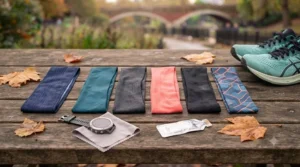
6. Beister Sports Headbands (5-pack) — best non-slip grip on a budget
The Beister Sports Headbands pack delivers five headbands built from an 86% polyester, 14% spandex blend specifically engineered for elasticity and a non-slip fit, and the sheer quantity in one pack makes it a sensible pick for anyone who wants a fresh headband for every run without doing laundry mid-week.
The elastic construction is genuinely worth noting here: Beister’s own material specification emphasises that the fabric holds its shape without deforming under stretch, which directly addresses the classic long-hair headband failure mode — a band that gradually loosens and rides backward as hair pushes against it from underneath. On paper this means a headband engineered from the outset to resist exactly the kind of gradual creep that ruins a run.
What most buyers overlook about multipacks like this is the practical laundry benefit: rotating through five headbands across a training week means each one gets properly washed and dried between wears rather than being reused damp, which matters both for hygiene and for the fabric’s long-term wicking performance. Reviewers consistently describe the fit as snug without leaving marks on the forehead, and the lightweight construction — Beister states under half an ounce per band — means it disappears during a run rather than becoming a distraction.
Pros:
- ✅ Five headbands for genuine mid-week rotation
- ✅ Elastic engineered specifically to resist slipping
- ✅ Lightweight, barely noticeable during runs
Cons:
- ❌ Colour/pattern selection varies by pack
- ❌ Less premium fabric feel than branded picks
At under £10 for the full five-pack, the Beister Sports Headbands set delivers strong value for runners prioritising non-slip performance over brand prestige.
7. GripGrab Lightweight Summer Under-Helmet Sweatband — best slip resistance for slim profile wear
Rounding out the list, the GripGrab Lightweight Summer Under-Helmet Sweatband takes a genuinely different technical approach. Originally designed for cyclists needing a thin, moisture-wicking layer under a helmet, it translates surprisingly well to running — particularly for anyone who also wears a cap and wants a slim headband that won’t add bulk underneath.
The thin profile is deliberate rather than a compromise: a slimmer band sits closer to the skull with less fabric to bunch or fold, which in practice often improves slip resistance compared with a bulkier headband, since there’s simply less material for hair and movement to work against. Based on the spec comparison with the wider picks earlier in this list, this is the trade-off worth understanding — width helps corral more hair, but a slim, closely fitted technical band can actually out-perform a wider one on pure grip during high-intensity efforts like interval sessions or hill repeats.
Reviewers consistently praise the fast-drying performance fabric, noting it dries within minutes of finishing a session rather than staying damp, and cyclists-turned-runners in particular highlight how comfortably it sits under a cap peak without adding noticeable bulk. It’s a slightly more niche pick than the others here, but for anyone layering headwear, it’s genuinely useful.
Pros:
- ✅ Slim profile fits comfortably under caps or helmets
- ✅ Dries remarkably fast after sweaty sessions
- ✅ Close fit improves grip during high-intensity efforts
Cons:
- ❌ Less coverage for very long or thick hair
- ❌ Originally designed for cycling, not running-specific
Priced in the £10-£15 range, the GripGrab Lightweight Summer Under-Helmet Sweatband is the smart pick for runners who want maximum slip resistance in the slimmest possible package.
How to Wear and Care For Your Running Headband
Getting the fit right in the first few wears makes a genuine difference to how long a headband lasts and how well it performs, so it’s worth taking care of a few basics early on.
Position matters more than most runners realise. A headband worn too high, sitting on the crown rather than snug against the hairline, has far less to grip onto and will slide within the first mile regardless of how technical the fabric is. Position it so the front sits roughly an inch above the eyebrows, snug against the forehead, with the back sitting at the base of the skull rather than higher up — this maximises contact with skin rather than hair alone, which is where most of the actual grip comes from.
For long hair specifically, gather hair into a low ponytail or bun before fitting the headband rather than after — trying to tuck loose hair under an already-positioned band is precisely how bands like the Eono Elastic Sports Headband end up pushed backward within the first few minutes.
Washing routine matters for longevity. Technical wicking fabrics, like those in the Under Armour and BUFF picks, generally perform best when air-dried rather than tumble-dried, since high heat can degrade the elastic fibres and reduce stretch recovery over time. Cotton terry options, like the Raquex Cotton Headband, are more forgiving of machine drying but will naturally shrink slightly over repeated hot washes — a cool wash extends their useful life considerably.
The most common early mistake is over-stretching a new headband to get it over the head rather than rolling it on gently, which can permanently loosen the elastic within the first few wears — a small habit change here genuinely extends how long any headband holds its grip.
Which Headband Suits Your Running Life? Real-World Scenarios
Matching a headband to your actual running habits, rather than buying whatever’s cheapest or most visible online, makes a real difference to how happy you’ll be with it three months in.
The regular long-distance runner training year-round. If you’re logging serious weekly mileage in the UK’s genuinely varied weather, the Under Armour UA Performance Headband or adidas Interval Reversible Headband earn their higher price through proven technical fabric that holds up to frequent washing without losing shape or grip over years of use.
The runner with genuinely long, thick hair. For anyone managing a full head of hair rather than just a fringe, width matters more than brand name — the Eono Elastic Sports Headband and BUFF CoolNet UV Half both offer the coverage needed to actually corral substantial hair rather than just wicking sweat from an exposed hairline.
The summer sun-conscious runner. If sunburn along the parting is a recurring issue on longer daylight runs, the BUFF CoolNet UV Half‘s UPF 50 rating does genuine, measurable work that a standard headband simply can’t match.
The budget-conscious beginner testing the waters. Anyone unsure whether a headband will even suit their routine shouldn’t overspend upfront — the Raquex Cotton Headband or Beister Sports Headbands multipack both offer a low-risk way to establish the habit before committing to premium technical fabric.
The runner who also cycles or wears a cap. For anyone layering headwear, the slim GripGrab Lightweight Summer Under-Helmet Sweatband avoids the bulk and bunching that wider headbands create under a cap peak or helmet strap.

How to Choose a Running Headband for Long Hair
Choosing a running headband for long hair genuinely comes down to a manageable handful of factors, tackled roughly in order of importance:
- Width and coverage. Wider bands, like the Eono Elastic Sports Headband, physically corral more hair; narrower bands prioritise a closer, more technical fit but manage less hair volume.
- Fabric type. Synthetic wicking blends actively move sweat away from skin; cotton terry absorbs it, feeling softer initially but heavier once saturated on longer runs.
- Grip construction. Look for elastic specifically engineered to resist deformation under stretch — this is what actually prevents mid-run slippage rather than marketing language alone.
- Sun protection needs. If you run regularly in strong daylight, a UPF-rated option like the BUFF pick offers genuine, measurable protection along the hairline and parting.
- Washing frequency and drying method. Multipacks like the Beister set suit runners who want a fresh, properly dried headband every session rather than reusing one damp.
- Layering with other headwear. If you also wear a cap or helmet, a slimmer profile avoids uncomfortable bulk underneath.
- Budget versus expected mileage. Occasional runners can reasonably start with a budget cotton or multipack option; regular high-mileage runners typically see better long-term value from technical synthetic fabrics.
Non-Slip Running Headband: Common Mistakes When Buying
Searching specifically for a non-slip running headband sounds like it should guarantee a secure fit, but buyers make a few recurring mistakes worth flagging honestly.
The first mistake is assuming “elastic” automatically means “non-slip.” Plenty of budget headbands stretch generously but lack the specific fibre engineering — like the deformation-resistant construction found in the Beister Sports Headbands — that actually stops a band from gradually loosening as it warms and stretches with body heat over a run.
The second mistake is choosing width purely on appearance rather than hair volume. A narrow, stylish-looking headband simply has less surface area gripping the hairline, and for genuinely thick or long hair, that narrower contact area is often the real cause of slippage rather than any flaw in the elastic itself — this is precisely why wider options like the Eono Elastic Sports Headband or BUFF CoolNet UV Half tend to perform better for this specific use case.
The third mistake is ignoring fabric weight when saturated. A cotton terry headband like the Raquex Cotton Headband feels perfectly secure dry, but as it absorbs sweat across a long run, the added weight can genuinely contribute to slippage in a way a lighter, actively wicking synthetic fabric avoids.
The fourth mistake is skipping the washing routine — a headband caked in dried sweat and skin oils loses grip far faster than a properly laundered one, regardless of how good the original fabric engineering was.
Running Headband vs Cap for Sweat: Which Wins?
The running headband vs cap for sweat question comes up constantly, and the honest answer depends heavily on conditions and hair length rather than either option being universally superior.
| Factor | Headband | Cap |
|---|---|---|
| Sweat management | Direct hairline contact, effective | Absorbs into fabric, less direct |
| Sun protection | Minimal unless UPF-rated | Full crown and face shade |
| Hair management | Excellent for long hair | Limited, hair often escapes |
| Heat retention | Minimal, breathable | Can trap heat on hot days |
| Rain performance | Poor, gets soaked quickly | Peak keeps rain off face |
Interpreting the table above, headbands generally win decisively for pure hair management — a cap does very little to actually control long hair, which often escapes around the sides or through the back opening regardless of how it’s tied. Caps, meanwhile, win clearly on sun protection for the face and crown, and on keeping rain out of your eyes, which a headband does nothing to address.
For many long-haired runners, the honest answer is neither exclusively — pairing a slim headband like the GripGrab Lightweight Summer Under-Helmet Sweatband underneath a cap combines hair control with sun and rain protection, at the cost of slightly more heat retention on genuinely hot days. If you have to pick just one for a typical UK training run, a headband edges ahead for comfort and hair management across the widest range of conditions, while a cap remains the better single choice specifically for bright, sunny long runs.
Moisture-Wicking Headband for Runners: What the Fabric Tech Means
A genuinely moisture-wicking headband for runners relies on a fairly specific bit of textile engineering, and understanding it helps explain why some headbands feel dramatically drier than others during the same run.
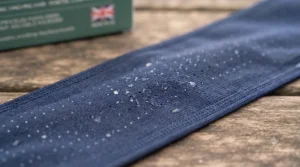
Moisture management in technical fabrics works through capillary action, where synthetic fibres are engineered to actively pull sweat away from the skin and spread it across a larger external surface area, where it evaporates far faster than it would sitting against skin or soaking into a thick cotton weave. This is a well-documented property of performance textiles, and it’s the fundamental difference between headbands like the Under Armour UA Performance Headband, built specifically around this technology, and simpler cotton terry options like the Raquex Cotton Headband, which instead work by absorption alone.
The practical upshot on a run: a genuinely wicking fabric stays lighter and feels drier for longer, because moisture is constantly being moved away and evaporated rather than accumulating. Cotton, while comfortable and soft, essentially acts as a sponge — effective initially, but progressively heavier and damper as a run continues, which is exactly why serious long-distance runners tend to favour synthetic wicking blends over natural fibre alternatives despite cotton’s softer initial feel.
Reviewers consistently note the difference most clearly on runs over 45 minutes to an hour, where a cotton headband noticeably saturates while a technical synthetic equivalent remains comparatively dry throughout.
Sweatband Basics: What to Expect From Real-World Performance
The word sweatband covers a genuinely wide range of products, from the classic thick towelling wristband-style headband to today’s slim, technical running-specific designs, and it’s worth setting realistic expectations for what any sweatband can and can’t do.
No sweatband, however advanced the fabric, eliminates sweat production — the body’s cooling mechanism keeps working regardless of what’s on your forehead. What a good sweatband actually does is manage where that sweat goes: absorbing or wicking it away from the eyes and face rather than letting it drip and distract you mid-stride. This distinction matters when setting expectations, particularly for anyone trying a headband for the first time after relying on nothing, or after a running cap that offered no real forehead management at all.
Real-world performance also depends heavily on ambient conditions. A sweatband that performs brilliantly on a cool fifty-minute training run may saturate noticeably faster during a hot, humid session, simply because the body is producing proportionally more sweat to compensate for reduced evaporative cooling in humid air. This is why aggregated reviews for the same headband can vary so much between summer and winter training logs — the fabric hasn’t changed, but the demand placed on it has.
For anyone new to sweatbands generally, starting with a genuinely absorbent multipack option, like the Beister Sports Headbands, before investing in premium technical fabric is a sensible, low-cost way to establish what level of sweat management actually suits your personal training intensity and typical UK weather conditions.
Hair Management for Runners With Long Hair
Hair management, distinct from pure sweat control, is really its own separate consideration for runners with long hair, and it’s worth thinking about the two needs somewhat independently even though a single headband is usually asked to handle both.
The core physical challenge is friction and movement: as you run, human hair shifts with each stride, and a headband positioned purely for sweat management — sitting neatly on the forehead — often provides insufficient grip against the sheer volume and movement of long, thick hair pushing against it from below. This is precisely why width matters so much for this specific use case, as discussed earlier with picks like the Eono Elastic Sports Headband.
Practical hair management technique matters just as much as the headband itself. Tying hair into a low, snug ponytail or bun before fitting a headband, rather than leaving it loose, dramatically reduces the pulling force working against the band throughout a run. For genuinely long hair, a double-loop tie sitting low at the nape of the neck, combined with a wide headband positioned to sit just above the ears, tends to outperform any single product choice on its own.
For runners who find even the widest standard headband insufficient, pairing it with a small number of bobby pins at the temples — tucking any escaping strands back under the band’s edge — is a low-cost, low-effort addition that noticeably extends how long a headband holds a full head of hair in place across a longer run.
Slip Resistance: Features That Actually Matter (And Those That Don’t)
Slip resistance gets marketed heavily across this entire product category, but not every feature genuinely contributes to it, and it’s worth separating substance from styling.
What actually matters: fibre composition that specifically resists stretching out of shape, like the polyester-spandex blends found in both the Beister Sports Headbands and Under Armour picks, genuinely reduces the gradual loosening that causes mid-run slippage. Direct contact area against skin — meaning width and snug positioning at the hairline — also matters enormously, as covered earlier. Proper drying between wears preserves elastic recovery, meaning a well-cared-for headband maintains its original grip far longer than one left damp in a gym bag.
What matters less than the marketing suggests: colour, pattern, and general styling have precisely zero bearing on slip resistance, despite how prominently many budget listings feature them. Branded logos and embroidery, similarly, add nothing functional — they’re a purchase-decision signal about overall build quality at best, not a grip mechanism in themselves. Silicone strips, sometimes marketed heavily on budget headbands, can genuinely help on very straight, fine hair, but reviewers report mixed results on thicker or curlier hair textures, where the strip’s contact area is simply too narrow to meaningfully out-perform a well-engineered elastic band alone.
The honest takeaway: fibre quality, snug positioning technique, and proper laundering do more for genuine slip resistance than any single marketed “grip feature,” which is worth remembering before paying a premium purely for a silicone-lined product over a well-reviewed standard elastic alternative.
Long-Term Cost & Maintenance
| Consideration | Budget Multipack | Mid-Range Technical | Premium Technical |
|---|---|---|---|
| Typical price range | Under £10 | £10-£15 | £13-£20+ |
| Expected lifespan | 6-12 months regular use | 1-2 years | 2-3+ years |
| Wicking performance | Basic absorption | Genuine wicking | Advanced wicking + extras |
| Cost per year (rough) | £8-£15 | £8-£12 | £6-£10 |
Interpreting the figures above, the cost-per-year gap narrows considerably once realistic lifespan is factored in — a £6 budget multipack replaced roughly every eight months works out to a broadly similar annual cost as a £15 technical headband lasting two years, particularly once you account for the multipack’s advantage of having spares on hand rather than a single point of failure. Where premium picks like the BUFF CoolNet UV Half genuinely pull ahead is in added functionality per pound spent — the UPF rating and recycled material credentials add real value beyond pure headband lifespan that a basic multipack simply can’t match.
Safety and Practical Considerations for Hot-Weather Running
Managing sweat effectively isn’t purely a comfort issue — in genuinely hot conditions, it connects directly to broader heat safety while running. The NHS advises that there’s a high risk of heat exhaustion or heatstroke during hot weather or exercise, with early symptoms including tiredness, dizziness, headache, and heavy sweating — worth knowing regardless of how good your headband is, since no amount of sweat management substitutes for proper hydration and pacing in genuinely high temperatures.
A well-fitted headband contributes usefully here by keeping sweat and hair out of your eyes, which in practice helps you maintain safer footing and awareness on uneven pavements or trails during long, tiring efforts — a small but genuine safety benefit beyond pure comfort. It’s worth pairing any headband choice with sensible hot-weather practice: running during cooler parts of the day, carrying water on longer efforts, and slowing pace when conditions are genuinely humid rather than relying on gear alone to compensate.
For runners managing long hair specifically, it’s also worth checking that whichever headband you choose doesn’t sit so tightly that it causes headaches or restricts peripheral awareness during longer efforts — comfort and safety here go hand in hand rather than being separate concerns.
Frequently Asked Questions
❓ What's the best running headband for very long, thick hair?
❓ Do non-slip running headbands actually work?
❓ Is a headband or cap better for running in the heat?
❓ How often should I wash my running headband?
❓ Can a headband help prevent hair pulling out of a ponytail while running?
Conclusion
Finding the right running headband for long hair really comes down to matching width and fabric to your actual hair volume and typical training conditions, rather than assuming any single popular option will automatically work. For pure hair-corralling power, the wide Eono Elastic Sports Headband and BUFF CoolNet UV Half do the heaviest lifting, while runners chasing proven technical wicking performance will get more consistent long-term results from the Under Armour UA Performance Headband or adidas Interval Reversible Headband.
Budget-conscious runners testing whether a headband suits their routine at all can start confidently with the Raquex Cotton Headband or Beister Sports Headbands multipack, both of which deliver genuine, reliable performance without a premium price tag. And for anyone layering headwear or chasing the slimmest possible profile under a cap, the GripGrab Lightweight Summer Under-Helmet Sweatband fills a genuinely useful niche the wider options can’t match.
Whichever you choose, remember that technique matters as much as the product itself — positioning at the hairline rather than the crown, tying hair low and snug beforehand, and proper washing between sessions will meaningfully extend the grip and lifespan of any headband on this list. Get those basics right, and even a budget pick will outperform an expensive one worn carelessly.
Recommended for You
- Best Buff for Running in Winter 2026: 7 Picks That Actually Work
- Running Hat for Sun Protection: 7 Best UPF Picks for 2026
- Thermal Running Hat For Winter Runs: 7 Genuinely Warm Picks (2026)
Disclaimer: This article contains affiliate links. As an Amazon Associate, I earn from qualifying purchases. If you purchase products through these links, we may earn a small commission at no additional cost to you.
✨ Found this helpful? Share it with your friends! 💬🤗
