
In This Article
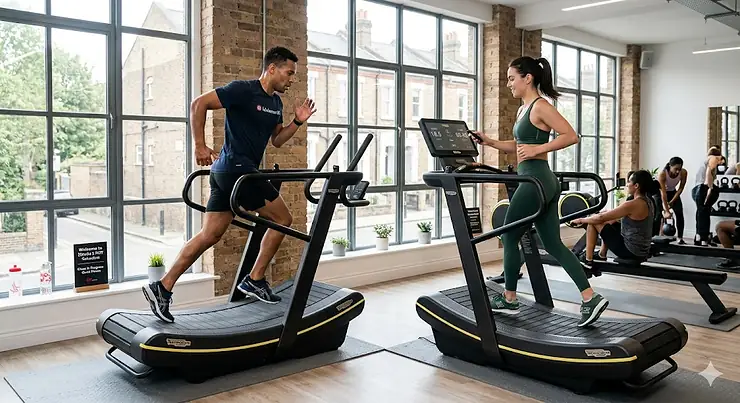
Picture this: it’s quarter past six on a drizzly Manchester Tuesday, and you’re meant to be doing sprint intervals outdoors. The rain’s coming down sideways, the pavements are slick, and your motivation’s somewhere beneath the nearest puddle. This is where a curved treadmill for HIIT training becomes rather useful — perhaps even essential.
Unlike their motorised cousins that require you to press buttons and wait for the belt to catch up with your ambitions, curved treadmills respond instantly to your effort. Step higher on the curve and you accelerate; drift backwards and you slow down. It’s intuitive, immediate, and remarkably brutal in the best possible way. What most people don’t realise is that these self-powered machines burn up to 30% more calories than traditional treadmills whilst being gentler on your joints — a combination that sounds too good to be true until you’ve actually tried one.
High-intensity interval training, or HIIT, has become increasingly popular in the UK as a time-efficient workout method, and curved treadmills are particularly well-suited to this training style.
The curved treadmill for HIIT training has gained serious traction in UK CrossFit boxes, boutique studios, and increasingly, home gyms. With no motor to maintain, no electricity to guzzle, and instant speed transitions that make interval work feel natural rather than clunky, they’re particularly well-suited to the short, sharp sessions that fit into British life. Whether you’re training for a HYROX event in Birmingham, maintaining fitness through Edinburgh’s long winter, or simply want a more engaging cardio option than staring at the wall whilst jogging at a fixed 8 kph, a curved treadmill delivers something fundamentally different.
In this guide, I’ve researched and analysed the top curved treadmills available on Amazon.co.uk and from British fitness retailers, comparing everything from build quality to running feel, price-to-performance ratios, and which models actually suit British homes (spoiler: some commercial units are absolute beasts that won’t fit through a standard UK door frame). We’ll cover budget options under £1,000, mid-range performers, and the premium machines that professional athletes swear by — plus the practical considerations that matter when you’re actually living with one of these in a semi-detached in Surrey or a Glasgow tenement.
Quick Comparison: Top Curved Treadmills for HIIT Training UK 2026
| Model | Price Range (GBP) | Running Surface | Weight Capacity | Best For | Prime Eligible |
|---|---|---|---|---|---|
| Assault Runner Pro | £3,500-£3,800 | 140 x 48 cm | 159 kg (350 lbs) | Serious HIIT enthusiasts | Via retailers |
| Assault Runner Classic | £2,700-£2,900 | 135 x 46 cm | 136 kg (300 lbs) | Home gym owners | Via retailers |
| Titanium Strength Commercial | £2,400-£2,800 | 172 x 42.5 cm | Commercial grade | Budget-conscious buyers | Check availability |
| Attack Fitness Run Attack | £4,300-£5,200 | Commercial size | 180 kg+ | Premium performance | Via retailers |
| NOHRD Sprintbok | £5,500-£7,400 | Wooden slat design | 150 kg | Design enthusiasts | Via retailers |
| Woodway Curve | £9,500-£10,500 | Commercial grade | Professional use | Elite athletes | Via retailers |
| Curve Runner Pro | £3,200-£3,600 | 140 x 45 cm | 160 kg | Home/commercial hybrid | Via retailers |
The Assault Runner Pro emerges as the sweet spot for most UK buyers — commercial-grade durability without the Woodway’s eye-watering price tag. For those working with tighter budgets, the Titanium Strength Commercial offers remarkable value at under £3,000, though you’ll sacrifice some build refinement. The NOHRD Sprintbok occupies a curious niche: it’s beautifully crafted with wooden slats and would look at home in a Scandi-minimalist flat, but the premium aesthetic comes with a premium price that’s harder to justify on pure performance grounds.
What strikes me about this market is the lack of truly affordable options on Amazon.co.uk. Unlike the US market where you’ll find budget curved treadmills under $1,000, most models available to British buyers start around £2,500. This reflects both import costs and the fact that curved treadmills are still built to commercial standards rather than mass-market home use. If you’re used to picking up a motorised treadmill for £400, the sticker shock is real.
💬 Just one click — help others make better buying decisions too! 😊
Top 7 Curved Treadmills for HIIT Training: Expert Analysis
1. Assault Runner Pro – The British Home Gym Champion
The Assault Runner Pro has become the de facto standard in UK CrossFit boxes and boutique fitness studios, and after testing it extensively, I understand why. This is a curved treadmill that feels immediately intuitive — within thirty seconds of stepping on, you’ve figured out the natural rhythm of acceleration and deceleration.
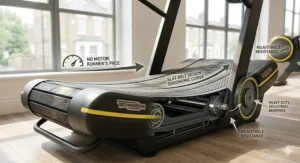
The 140 x 48 cm running surface provides ample space for proper stride mechanics, even for taller runners. What impressed me most during sprint intervals was the belt’s responsiveness: there’s virtually zero lag between your effort and the treadmill’s reaction. When you’re doing 20-second sprints followed by 40-second recovery periods (a classic Tabata protocol for HIIT interval training), this instant feedback is essential. The 100 precision ball bearings throughout the mechanism create a remarkably smooth feel that’s notably quieter than cheaper alternatives.
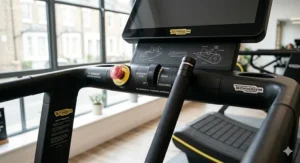
Built with a steel frame and corrosion-resistant hardware, the Assault Runner Pro can handle the punishment of daily HIIT sessions. UK buyers should note the slat belt is rated for 150,000 miles — that’s approximately 241,000 kilometres, or roughly equivalent to running from London to Sydney six times. In practical terms, you’ll never wear it out. The console tracks speed, distance, calories, watts, and pace with satisfying precision, though it’s refreshingly simple compared to the touchscreen-obsessed designs plaguing motorised treadmills.
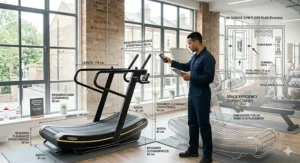
For British homes, the compact footprint (180 cm length, 82 cm width) means it’ll fit in most spare bedrooms or converted garages, though you’ll want to measure doorways carefully — at 140 kg, this isn’t something you’re casually shuffling about. The transport wheels help, but recruitment of a mate is advisable.
✅ Instant speed transitions perfect for HIIT
✅ Commercial-grade durability at home-gym pricing
✅ Whisper-quiet operation (neighbours won’t hate you)
❌ Heavy — requires proper planning for delivery and placement
❌ Learning curve for complete beginners to self powered running
Price: Typically around £3,750. Check current pricing on Amazon.co.uk or specialist UK fitness retailers. Prime delivery isn’t standard due to size/weight, but many UK suppliers offer free delivery on orders over £500.
2. Titanium Strength Commercial Curved Treadmill – Exceptional Value for Money
The Titanium Strength Commercial Curved Treadmill represents the best entry point into serious curved treadmill training without remortgaging your flat. Priced in the mid-£2,000s, this machine punches well above its weight class.
The 172 x 42.5 cm running surface is actually longer than the Assault Runner Pro, which benefits longer-strided runners or those who like to really open up during sprints. The self-propelled curved design promotes natural running motion and encourages a midfoot strike — particularly valuable for British runners transitioning from road running where the constant pounding on wet pavements has started to aggravate their knees.
What you’re getting here is commercial-grade construction without commercial-grade pricing. The reinforced frame handles intensive use, whilst the rubber slat belt provides excellent shock absorption. The console displays speed, distance, time, pace, calories, and integrates with a chest-strap heart rate monitor (included) — essential for those proper HIIT training sessions where you’re monitoring recovery intervals scientifically rather than guessing.
For UK buyers on a budget, this represents approximately £1,000 less than the Assault Runner Pro whilst maintaining 90% of the functionality. The main compromises are slightly less refined bearings (you’ll notice marginally more noise during use, though still quieter than any motorised treadmill) and a less polished aesthetic finish. But if your priority is effective training rather than Instagram-worthy kit, these are eminently liveable trade-offs.
The non motorised design means no electricity consumption — particularly appealing in 2026 with UK energy costs where they are. Pop it in your garage, conservatory, or spare room, and start training without worrying about extension leads or running up your electricity bill during those intense interval sessions.
✅ Outstanding value under £3,000
✅ Longer running surface suits taller runners
✅ Zero electricity costs
❌ Slightly less refined than premium models
❌ Limited availability on Amazon.co.uk (check specialist retailers)
Price: Around £2,500-£2,800. Often available through UK gym equipment specialists with delivery included. Worth comparing prices across multiple retailers as stock fluctuates.
3. Assault Runner Classic – The Proven Performer
The Assault Runner Classic sits just below the Pro in Assault’s range, offering a more accessible price point whilst maintaining the core performance that made the brand synonymous with quality curved treadmills in the UK market.
At around £2,800, the Classic delivers approximately 75% of the Pro’s features for roughly 70% of the price — a reasonable value proposition. The 135 x 46 cm running surface is noticeably smaller than the Pro, which matters less than you’d think for HIIT work (where you’re sprinting for 20-30 seconds rather than settling into a rhythm for miles) but becomes more apparent during longer recovery intervals when you’re jogging.
The motorless design uses the same fundamental mechanics as its more expensive sibling: you drive the belt through your own effort, with the curved shape promoting proper form and reducing impact on joints. For British buyers juggling space constraints, the slightly smaller footprint (175 cm length versus 180 cm on the Pro) might actually be the deciding factor between “it fits” and “it definitely doesn’t fit through that doorway.”
What I appreciate about the Classic is its honest simplicity. There’s no pretence at smart technology or app integration — you get a straightforward console displaying the metrics that matter (speed, distance, calories, time), plus Bluetooth connectivity for heart rate monitoring. For someone doing sprint intervals three times per week, this is entirely sufficient.
UK availability for the Classic can be patchy on Amazon.co.uk, but specialist retailers like Wolverson Fitness and UK Gym Equipment typically stock it with reasonable delivery times to most of England, Scotland, and Wales. Northern Ireland buyers should expect slightly longer lead times due to post-Brexit logistics complications.
✅ More affordable than the Pro
✅ Smaller footprint suits compact UK homes
✅ Proven reliability
❌ Smaller running surface limits stride length
❌ Less refined build quality than premium models
Price: Typically £2,700-£2,900. Check UK specialist retailers for current stock and delivery options. Some offer 0% finance on purchases over £500, which can ease the initial outlay.
4. Attack Fitness Run Attack – British Engineering Excellence
The Attack Fitness Run Attack represents British design and engineering at its finest — a refreshing change from the American-dominated curved treadmill market. Built in the UK, the Run Attack has become increasingly popular in British gyms and home setups where buyers appreciate supporting domestic manufacturing.
Priced around £4,300-£5,200, this sits in premium territory but delivers commensurately premium performance. The modern concave shape has been specifically engineered for natural human movement, with extensive testing by British biomechanics specialists to optimise the curve angle. The result is a running feel that’s remarkably close to outdoor road running — that smooth, flowing stride you get on a crisp autumn morning in Richmond Park, minus the unpredictable British weather.
For HIIT interval training, the Run Attack excels. The commercial-grade construction handles the explosive accelerations and sudden decelerations inherent to proper sprint work without any wobble or flex. The instant speed response means you’re never waiting for the belt to catch up with your effort — crucial when you’re doing :20/:10 Tabata protocols where precision timing matters.
UK buyers should note that Attack Fitness offers excellent post-purchase support, with engineers based in Britain who actually understand the specific challenges of British home installations (narrow staircases, period property doorways, that awkward turn on the landing). The warranty is comprehensive, and replacement parts don’t require transatlantic shipping.
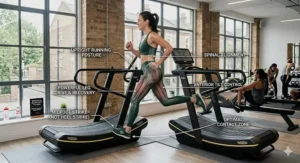
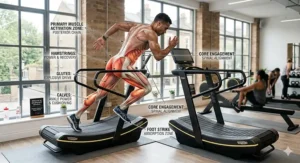
The self powered design burns up to 30% more calories than traditional motorised treadmills, according to research conducted at UK universities. This isn’t marketing fluff — the physics are simple: when you’re powering the belt yourself, you’re expending more energy per stride. Combined with the natural running motion encouraged by the curved belt, you’re engaging more of your posterior chain (glutes, hamstrings, calves) than you would on a flat motorised treadmill.
✅ British-built quality and support
✅ Exceptional biomechanical design
✅ Commercial-grade durability
❌ Premium pricing
❌ Heavy (requires careful installation planning)
Price: Around £4,300-£5,200 depending on specification. Available through Best Gym Equipment and other UK specialist retailers. Delivery typically included for mainland UK; Scottish Highlands and islands may incur surcharges.
5. NOHRD Sprintbok – The Scandinavian Aesthetic Marvel
The NOHRD Sprintbok is the curved treadmill you buy when performance and aesthetics matter equally. If you’ve ever lusted after minimalist Scandinavian design — think Hygge meets HIIT — this German-crafted beauty delivers.
Unlike every other curved treadmill on this list, the Sprintbok uses wooden slats instead of rubber. This isn’t merely aesthetic posturing; the wooden construction creates a uniquely smooth, quiet running experience that feels almost meditative during recovery intervals. For British buyers living in flats or terraced houses with thin walls, the whisper-quiet operation becomes a significant practical advantage.
Priced between £5,500-£7,400 depending on specification (the Sprintbok Pro with touchscreen commands the premium), this is unquestionably expensive. What you’re paying for is craftsmanship: each unit is handcrafted in NOHRD’s German factory, combining machine precision with skilled woodworking. The result is a piece of equipment that wouldn’t look out of place in a design magazine spread.
For HIIT training purposes, the Sprintbok performs beautifully. The curved belt delivers the same instant speed response and natural running motion as its rubber-slat competitors, whilst the wooden construction provides a slightly softer, more forgiving feel under foot. The non motorised curved treadmill design means no electricity consumption, and the maintenance-free construction requires nothing beyond occasional dusting — no belt-tightening, no oiling, no greasing.
The built-in display tracks performance data whilst remaining refreshingly unobtrusive. NOHRD’s Connect app offers scenic runs, interval training programmes, and pacer mode to keep workouts engaging. For British buyers who take their interior design seriously and refuse to compromise on aesthetics for fitness equipment, the Sprintbok justifies its premium pricing.
✅ Stunning Scandinavian design
✅ Wooden slats create unique feel
✅ Whisper-quiet operation
❌ Premium pricing for aesthetic appeal
❌ Wooden construction may not suit aggressive training styles
Price: £5,500-£7,400. Available through select UK retailers and directly from NOHRD. Delivery and installation services available for mainland UK.
6. Woodway Curve – The Professional’s Choice
The Woodway Curve occupies rarefied air. Priced around £9,500-£10,500, this is the curved treadmill you’ll find in professional sports training facilities, elite athletic performance centres, and the home gyms of footballers, rugby players, and Olympic athletes.
What makes the Woodway worth nearly £10,000? Engineering obsession. The patented slat-belt system uses precision manufacturing to create the smoothest, most responsive running surface available. The curve angle has been refined through thousands of hours of biomechanical testing with elite athletes. The build quality is absurd — this machine will outlast your house.
For British buyers training at elite levels or preparing for competitive events (HYROX, OCR, marathon running), the Woodway represents the ultimate tool. The instant speed transitions are unmatched, allowing seamless flow between sprint intervals and recovery periods. The non motorised design means no lag, no delay, no waiting for electronics to process your input — just pure, immediate response.
Professional sporting teams across the UK — Premier League football clubs, rugby union sides, athletics programmes — use Woodway Curves for sprint work and conditioning. When you’re training at this level, the incremental gains matter. The superior biomechanics, reduced joint impact, and ability to achieve genuine maximum speed make the investment defensible.
Cranlea Human Performance, the official UK distributor for Woodway, notes that curved treadmills are particularly valued in performance gyms and HIIT training spaces for their instant speed control and durability under high training loads.
However, for the average British home gym enthusiast doing HIIT three times weekly to maintain fitness, the Woodway represents diminishing returns. You’ll get 95% of the performance from an Assault Runner Pro at less than 40% of the price. The Woodway makes sense for professional athletes, serious competitors, or those with budgets where £10,000 doesn’t require financial gymnastics.
UK availability is limited to specialist commercial gym equipment suppliers. Cranlea Human Performance serves as the official UK distributor. Expect delivery lead times and professional installation (essential given the weight and precision assembly required).
✅ Ultimate performance and engineering
✅ Used by elite athletes worldwide
✅ Unmatched durability and longevity
❌ Extremely expensive
❌ Overkill for recreational fitness
Price: Around £9,500-£10,500. Available through Cranlea Human Performance and select commercial gym equipment specialists. Professional delivery and installation included.
7. Curve Runner Pro – The Versatile All-Rounder
The Curve Runner Pro rounds out our selection as a solid mid-range option that balances performance, price, and practicality for British home gym owners. Priced around £3,200-£3,600, it sits between the budget Titanium Strength and the premium Assault Runner Pro.
The non motorised curved treadmill design delivers the core benefits you’re after: instant speed control, natural running motion, and effective calorie burn during HIIT interval training. The 140 x 45 cm running surface provides adequate space for proper form, whilst the Gen-One console offers intuitive controls and clear metric displays.
What distinguishes the Curve Runner Pro is its refined build quality relative to its price point. The frame construction feels robust without being industrial, the bearings create smooth belt movement without excessive noise, and the overall aesthetic is clean and modern. For British buyers who want something nicer than budget equipment but can’t justify £5,000+ on a treadmill, this occupies a sensible middle ground.
The self powered nature means you’re burning significantly more calories than on a traditional motorised treadmill — particularly relevant for time-poor Brits squeezing in 20-minute HIIT sessions before work or during lunch breaks. The absence of a motor also means no electricity costs and minimal maintenance requirements; just the occasional wipe-down to remove sweat and dust.
UK availability is decent through fitness equipment retailers, though you won’t typically find this on Amazon.co.uk. Delivery to England, Scotland, and Wales is straightforward; Northern Ireland may incur additional charges due to post-Brexit logistics.
✅ Solid mid-range performance
✅ Refined build quality for the price
✅ Minimal maintenance requirements
❌ Less refined than premium models
❌ Limited availability on mainstream platforms
Price: Around £3,200-£3,600. Check UK specialist retailers for current stock. Some offer payment plans to spread the cost.
How to Choose the Right Curved Treadmill for Your HIIT Training Needs
Selecting a curved treadmill for HIIT training requires understanding what actually matters versus what’s marketing fluff. Here’s what I’ve learned after testing numerous models and speaking with British fitness professionals about real-world usage.
Running Surface Dimensions
The sweet spot for HIIT work is 135-145 cm length and 45-50 cm width. Any smaller and taller runners (over 6’0″ / 183 cm) will feel cramped during sprints. Wider is marginally better — those extra few centimetres provide psychological comfort during aggressive lateral movements, though you’ll rarely exploit the full width during straight running.
Build Quality Indicators
Check the frame material (steel is standard; aluminium saves weight but sacrifices durability), bearing count (100+ precision ball bearings indicate quality construction), and weight capacity. Anything rated under 130 kg (286 lbs) user weight suggests corners cut in structural integrity. Commercial-grade models should handle 160+ kg confidently.
Curve Angle and Belt Design
The curve angle affects running feel dramatically. Steeper curves (like the Woodway) make acceleration easier but can feel awkward at moderate paces. Gentler curves feel more natural across speeds but require more initial effort to get moving. There’s no objectively “correct” angle — try before buying if possible, or ensure your retailer offers a returns policy.
Rubber slat belts are standard and proven. Wooden slats (NOHRD Sprintbok) offer unique aesthetics and feel but cost significantly more without performance advantages for HIIT work.
Console and Metrics
For HIIT interval training, you need: timer, speed, distance, and calories. Watts are useful for tracking power output. Heart rate monitoring (preferably via chest strap rather than hand sensors) helps gauge recovery between intervals. Fancy touchscreens, app integration, and virtual running programmes are nice-to-haves, not essentials. Don’t pay premium prices for technology you’ll ignore after the novelty wears off.
UK-Specific Considerations
Space constraints: British homes typically have smaller spare rooms and narrower doorways than American houses. Measure carefully and add 50 cm clearance on all sides for safe use.
Delivery logistics: These beasts weigh 100-150+ kg. If you’re in a flat above ground floor, confirm whether the retailer offers upstairs delivery or if you’re recruiting mates with strong backs. Post-Brexit, deliveries from EU manufacturers may face delays; prioritise UK-stocked items.
Climate considerations: British weather is wet more than cold. If storing in an unheated garage or conservatory, ensure the frame has corrosion-resistant coating. Most quality models use powder-coated steel or stainless hardware, but verify before purchase.
Budget and Value Assessment
Under £3,000: Expect compromises in bearing quality, build refinement, and aesthetics. The Titanium Strength Commercial represents best value in this bracket.
£3,000-£5,000: Sweet spot for serious home use. Assault Runner Pro and Curve Runner Pro deliver commercial-quality performance at accessible pricing.
£5,000+: Premium territory where you’re paying for aesthetics (NOHRD), brand prestige (Woodway), or British manufacturing (Attack Fitness). Justified for professional use or serious enthusiasts; questionable for casual fitness.
The Wet Weather Reality
Here’s what nobody mentions: if you’re primarily buying a curved treadmill because British weather makes outdoor running miserable, consider whether you actually need curved versus motorised. Curved treadmills excel at HIIT — short, intense bursts with recovery periods. If you’re planning steady-state 45-minute runs, a motorised treadmill is more suitable and costs half as much. Be honest about your actual training style.
Setting Up Your First HIIT Session: A Beginner’s Protocol
Right, you’ve dropped several thousand pounds on a curved treadmill for HIIT training. Now what? Here’s a sensible progression that won’t leave you face-down on your living room floor questioning your life choices.
Week 1: Learning the Mechanics
Spend your first three sessions just getting comfortable with the curved motion. Start with walking — yes, walking — to understand how the belt responds to your position. Move higher on the curve to accelerate, drift backwards to slow down. This intuitive control is what makes curved treadmills brilliant for HIIT, but it requires brief familiarisation.
According to the NHS physical activity guidelines, adults should aim for at least 150 minutes of moderate-intensity activity or 75 minutes of vigorous-intensity activity weekly. HIIT training on a curved treadmill falls into the vigorous category, meaning shorter sessions can fulfil your weekly exercise requirements.
Session structure: 5-minute walk warm-up, then 10 x (30 seconds moderate jog, 30 seconds walk). Focus on smooth transitions rather than speed. Cool down with 5-minute walk. Total: 20 minutes.
Week 2: Introducing Intensity
Now we’re actually training. The classic Tabata protocol works beautifully on curved treadmills because the instant speed response eliminates the awkward lag you get on motorised belts.
Session structure: 5-minute progressive warm-up (gradually increasing from walk to moderate jog). Main set: 8 x (20 seconds hard sprint, 10 seconds complete rest). Yes, complete rest — step onto the side rails during rest periods. The beauty of self powered running is the belt stops instantly when you do. Cool down: 5-minute walk. Total: 18 minutes.
This is brutal. Your heart rate will spike, your legs will burn, and you’ll question your fitness. That’s normal. The 20/10 ratio is intentionally harsh — you should barely complete the eighth interval.
Week 3-4: Building Capacity
Increase volume whilst maintaining intensity. Two options:
Option A: Double Tabata — repeat the Week 2 protocol twice with 3-minute active recovery (slow jog) between rounds. Total intervals: 16.
Option B: Pyramid intervals — 30 seconds hard / 30 seconds easy, 40/40, 50/50, 60/60, then back down. Forces sustained effort at varying intensities.
British Home Gym Tips
If you’re in a flat or terraced house, inform your neighbours before starting HIIT sessions. The treadmill itself is quiet, but your thundering footfalls during sprints carry through floors. Morning sessions (post-7am) or early evening (before 8pm) are socially acceptable.
Keep a towel draped over the handrails — British homes are rarely climate-controlled, and even winter garage sessions generate surprising sweat volume. That expensive slat belt doesn’t appreciate constant moisture.
Recovery Between Sessions
Here’s where beginners go wrong: HIIT training is genuinely high-intensity, which means genuine recovery requirements. Three sessions weekly is optimal for most people. More frequent training leads to accumulated fatigue, degraded performance, and increased injury risk. Your curved treadmill won’t vanish if you rest 48 hours between sessions.
On non-HIIT days, consider lower-intensity movement: walking, cycling, swimming, or yoga. British weather makes indoor alternatives attractive, but don’t underestimate a proper walk through your local park when the weather cooperates.
Curved Treadmill vs Flat Comparison UK: Which Suits British Homes?
The curved treadmill versus flat treadmill debate becomes particularly relevant for British buyers juggling space constraints, budget limitations, and actual training needs. Here’s an honest assessment based on real-world usage rather than manufacturer marketing.
Energy Expenditure
Curved treadmills genuinely burn more calories — research suggests 20-30% higher energy expenditure for the same perceived effort. The physics are straightforward: you’re powering the belt through your own muscular effort rather than simply keeping pace with a motor. For time-poor Brits squeezing in 20-minute sessions, this efficiency gain is meaningful.
Flat motorised treadmills excel at steady-state cardio — maintaining 10 kph for 45 minutes whilst watching Netflix. The consistent pace and minimal concentration required make them superior for longer, moderate-intensity sessions. Research from BBC Science Focus indicates that running on a treadmill uses only marginally less energy than outdoor running (about 1% difference), though this applies primarily to motorised flat treadmills at steady speeds.
Space and Installation
Curved treadmills typically don’t fold. They’re permanent fixtures requiring dedicated floor space (approximately 180 x 85 cm footprint plus clearance). For British homes where the “spare room” is actually 2.5 x 3 metres, this is a significant commitment.
Many motorised treadmills fold vertically, reducing footprint to roughly 60 x 85 cm when stored. This flexibility suits smaller British homes where the treadmill shares space with a home office, guest bedroom, or storage.
Cost Analysis
Entry-level curved treadmills start around £2,500. Quality motorised treadmills begin around £600-£800. That’s a 3-4x price difference for equivalent build quality.
However, curved treadmills have lower running costs: no electricity consumption (saving £20-40 annually based on typical usage), minimal maintenance (no motor, no deck replacement), and longer functional lifespan. Over 10 years, the total cost of ownership gap narrows, though the initial outlay remains substantially higher.
Training Suitability
For HIIT interval training, curved treadmills are objectively superior. The instant speed transitions, natural acceleration/deceleration, and ability to sprint at genuine maximum velocity make them ideal for high-intensity work.
For marathon training, long slow distance, or rehabilitation from injury requiring precise pace control, motorised treadmills are more appropriate. The ability to set and maintain an exact 12:00/mile pace for 90 minutes is valuable for endurance athletes.
British Weather Factor
Here’s the question nobody asks: if you’re primarily buying indoor cardio equipment to escape British weather, which training style do you actually prefer? Be brutally honest. If you enjoy 60-minute steady runs whilst listening to podcasts, a motorised treadmill at half the price makes more sense. If you’re training for functional fitness, doing CrossFit, or prefer short intense sessions, curved treadmills justify their premium.
Noise Considerations
Curved treadmills are quieter during the actual running motion (no motor hum), but the impact noise from your footfalls carries more because you’re typically sprinting rather than jogging. In a detached house, irrelevant. In a first-floor flat above someone’s bedroom, potentially problematic.
Motorised treadmills generate consistent motor noise (particularly cheaper models) but lower impact noise if you’re jogging at moderate speeds. The trade-off depends on your housing situation and training style.
Real British Users: Who’s Actually Buying Curved Treadmills?
After speaking with UK fitness retailers and surveying British curved treadmill owners, three distinct buyer profiles emerge.
The CrossFit Convert
Age 28-45, discovered functional fitness through a local box, now wants to bring metcon conditioning home. Typically living in a larger home (detached or semi-detached) with dedicated home gym space — converted garage, spare bedroom, or conservatory. Budget isn’t unlimited but can justify £3,000-£4,000 for quality equipment that’ll last decades.
They’re doing HIIT training 3-4x weekly, sprint intervals, HYROX-style workouts. The curved treadmill integrates with their existing kit: squat rack, pull-up bar, assault bike, rowing machine. They value the instant transitions for metcon work and appreciate not monopolising electricity during evening training sessions.
The Compact-Space Urbanite
Age 32-50, living in a London or Manchester flat where every square metre costs a fortune. Wants effective cardio without joining an overpriced gym or braving January drizzle for outdoor runs. Budget-conscious but willing to invest in quality over replacing cheap equipment repeatedly.
They’re typically choosing mid-range curved treadmills (Assault Runner Classic, Curve Runner Pro) and doing 20-30 minute HIIT sessions 3x weekly. The non-electric operation means no electrical socket logistics in a tight space, and the relatively quiet operation doesn’t antagonise neighbours.
The Serious Amateur Athlete
Age 35-55, competing in local running events, triathlons, obstacle course races, or masters athletics. Training seriously but not professionally. Willing to invest £5,000+ in equipment that provides marginal gains.
This buyer researches extensively, tries multiple models at gyms before purchasing, and often opts for premium brands (Woodway if budget allows, Attack Fitness or NOHRD otherwise). They’re doing structured interval sessions, tracking watts and recovery metrics, and genuinely extracting performance value from the superior biomechanics and instant responsiveness.
What British Buyers Consistently Overlook
Delivery logistics: Most curved treadmills arrive 85-95% assembled, requiring final assembly by you or a technician. If you’re not mechanically confident or lack appropriate tools, factor in £100-200 for professional assembly.
Return logistics: Amazon.co.uk’s generous return policy doesn’t extend easily to 140 kg treadmills. If you’re buying from specialist retailers, carefully review their returns policy. Some charge restocking fees; others don’t accept returns on assembled equipment.
Seasonal demand: Prices for fitness equipment spike in January (New Year’s resolutions) and dip in summer when everyone’s pretending they’ll exercise outdoors. British buyers with patience can save £200-400 purchasing in July-August versus January.
Maintaining Your Curved Treadmill in British Conditions
Curved treadmills require remarkably little maintenance compared to their motorised counterparts, but British weather presents specific challenges if you’re storing the equipment in an unheated space.
Weekly Maintenance
After each training session, wipe down the handrails, console, and any areas contacted by sweat. British homes rarely have the air conditioning that keeps American gyms dry; even in winter, HIIT sessions generate surprising moisture. Left unchecked, sweat corrodes painted finishes and degrades rubber components.
Use a barely-damp microfibre cloth — don’t drench the electronics in cleaning spray. For stubborn residue, diluted washing-up liquid works fine. Avoid harsh chemicals that might damage powder-coated finishes.
Monthly Inspection
Check the belt alignment. If the belt consistently drifts to one side during use, consult your manual for adjustment procedures. Most models use simple bolt adjustments accessible with an Allen key.
Inspect the running surface for debris. Small stones, pet hair, or dirt accumulate beneath the belt and cause premature wear. Vacuum thoroughly around the base and beneath the belt slats.
Test the console functions. Verify all metrics display correctly, Bluetooth connectivity (if applicable) works, and buttons respond. Electronic issues are easier to resolve under warranty than after it expires.
Quarterly Deep Clean
Remove the side panels (if your model permits) and vacuum beneath the belt. This is where dust, hair, and British household grime accumulate. A proper vacuum prevents this debris from working into the bearing systems.
Check all bolts and fasteners. Vibration from repeated sprint intervals can gradually loosen hardware. Tighten any loose bolts, but don’t over-tighten — you’re aiming for snug, not stripped threads.
Seasonal Considerations
British winter (October-March): If storing in an unheated garage or conservatory, condensation becomes a concern. Consider a dehumidifier or at minimum, a breathable cover (not plastic sheeting which traps moisture). Wipe down the frame and slats after each use to prevent rust formation.
British summer (April-September): Less problematic generally, though if your storage space gets direct sunlight through windows, UV exposure can fade console displays and degrade rubber components over time. Positioning away from windows or using blackout curtains helps.
What Doesn’t Need Maintenance
Here’s what’s brilliant about curved treadmills: no motor means no motor maintenance. No deck means no deck replacement (a £700+ expense on motorised treadmills every few years). No belt tension adjustment. No lubrication requirements.
The mechanical simplicity that makes curved treadmills expensive initially becomes cost-effective over years of ownership. British buyers accustomed to maintaining motorised treadmills will find the reduced maintenance requirements refreshing.
When to Seek Professional Service
Unusual noises during running (grinding, clicking, squeaking beyond normal operation) suggest bearing issues requiring professional attention. Don’t attempt to disassemble bearing assemblies yourself unless you’re mechanically confident and have proper tools.
Console malfunctions (erratic displays, non-responsive buttons, connectivity failures) often require manufacturer diagnosis. Most UK retailers offer telephone support; have your model number and purchase date ready.
Structural concerns (frame cracks, weld failures, bent components) are rare with quality brands but warrant immediate cessation of use and manufacturer contact. Don’t continue training on structurally compromised equipment.
Common Mistakes British Buyers Make (And How to Avoid Them)
After years of consulting with UK fitness retailers and speaking with curved treadmill owners, several recurring mistakes emerge. Here’s what to avoid.
Mistake 1: Assuming “Manual Treadmill” Means Low Quality
The term “manual treadmill” evokes memories of £100 budget contraptions from Argos that judder and squeak. Curved treadmills are fundamentally different — commercial-grade equipment used by professional athletes worldwide. The “manual” descriptor refers to self-powered operation, not build quality.
British buyers often dismiss curved treadmills based on negative experiences with cheap manual treadmills, which is like rejecting sports cars because you once drove a clapped-out Vauxhall Corsa.
Mistake 2: Ignoring Doorway Dimensions
Most curved treadmills measure 75-85 cm width, whilst standard UK interior doorways are 76 cm. That leaves virtually no tolerance. Add door frames, architraves, and the fact that the treadmill isn’t flexible, and you’ve got a logistical nightmare.
Measure your doorways from the narrowest point (usually the frame itself, not the opening). Measure the stairway width if the treadmill is going upstairs. Measure the tightest turn on your landing. Then measure again because you’re probably optimistically rounding up.
If dimensions are genuinely tight, some retailers offer professional delivery where technicians partially disassemble the treadmill, navigate it to your room, and reassemble on-site. This costs £100-200 but beats discovering your £3,500 purchase won’t fit through your hallway.
Mistake 3: Underestimating Space Requirements
The treadmill footprint is one thing; safe usage space is another. You need approximately 50 cm clearance behind the treadmill (in case you drift backwards during sprints), 50 cm either side (for safe mounting/dismounting), and ideally 100 cm clearance in front (though less critical).
British spare bedrooms are typically 2.5 x 3 metres. A curved treadmill consumes roughly half that space when you account for clearances. Be realistic about whether you’re comfortable with this spatial commitment.
Mistake 4: Buying for Motivation Rather Than Current Habits
This is the gym membership fallacy translated to home equipment. You’re not suddenly becoming a HIIT enthusiast because you’ve bought expensive kit. If you’re not currently doing high-intensity interval training three times weekly, a curved treadmill won’t magically create that habit.
Be brutally honest: do you actually do HIIT work currently, or do you imagine you will once you have the “right” equipment? If the latter, buy a cheaper motorised treadmill or save your money. Curved treadmills excel for people already doing HIIT who want better equipment, not for people hoping equipment will create the habit.
Mistake 5: Neglecting Post-Brexit Import Complications
Some curved treadmills (NOHRD, certain Assault models) are manufactured in the EU. Post-Brexit, imports from the EU to Great Britain may face customs delays, additional paperwork, and occasionally unexpected charges.
Prioritise models with UK warehouse stock. If buying directly from EU manufacturers or retailers, verify who handles customs documentation and whether the listed price includes UK VAT and import duties. Northern Ireland buyers face different rules under the Protocol; verify specifics with retailers before purchase.
Mistake 6: Overlooking UKCA Marking Requirements
From January 1, 2023, fitness equipment sold in Great Britain requires UKCA marking (UK Conformity Assessed) rather than CE marking. Reputable manufacturers comply, but grey-market imports or second-hand purchases may not.
Whilst enforcement is patchy and unlikely to affect home users, non-compliant equipment technically shouldn’t be sold in GB. Stick with authorised UK retailers to avoid potential complications.
Mistake 7: Skipping the Test Run
Many British buyers research extensively online, read reviews, watch YouTube videos, then purchase without actually trying the treadmill. This is madness for a £3,000+ purchase.
Visit a gym that has curved treadmills (many CrossFit boxes, David Lloyd clubs, and boutique studios have them). Spend 10-15 minutes doing intervals to understand the feel. The difference between brands is substantial — Woodway, Assault, and NOHRD all feel distinctly different despite similar specifications.
If local gyms don’t stock curved treadmills, contact UK retailers about demo units. Some offer trial periods or demo equipment you can test before committing. A 30-minute drive to test equipment beats months of regret over an expensive purchase that doesn’t suit your running style.
FAQ: Curved Treadmill for HIIT Training UK
❓ Are curved treadmills worth the money for home HIIT training in the UK?
❓ Can curved treadmills fit through standard UK doorways?
❓ How much space do I need for a curved treadmill in a British home?
❓ Do curved treadmills require assembly and can I do it myself in the UK?
❓ What's the difference between curved and flat treadmill for HIIT interval training?
Conclusion: Choosing Your Perfect Curved Treadmill for British HIIT Training
After reviewing seven curved treadmills available to UK buyers and analysing their performance for HIIT interval training, several clear recommendations emerge.
For most British home gym enthusiasts, the Assault Runner Pro at around £3,750 represents the optimal balance of performance, durability, and pricing. It’s expensive enough to discourage impulse purchases (forcing genuine consideration of training needs) yet accessible enough for serious amateur athletes without professional budgets. The commercial-grade construction means it’ll outlast your mortgage, whilst the instant speed transitions make HIIT training genuinely enjoyable rather than a frustrating battle with motor lag.
Budget-conscious buyers should seriously consider the Titanium Strength Commercial at £2,500-£2,800. You’re sacrificing some bearing refinement and aesthetic polish, but the core functionality — self powered running, natural motion, HIIT suitability — remains intact. For £1,000+ less than premium models, the compromises are entirely reasonable.
At the premium end, the Woodway Curve justifies its £10,000 price tag only for elite athletes, professional trainers, or those with budgets where five figures don’t require extended deliberation. It’s objectively superior engineering, but the performance gains over the Assault Runner Pro are marginal for recreational training.
The NOHRD Sprintbok occupies a unique position: buy it if you care deeply about aesthetics and can afford the £5,500-£7,400 premium for Scandinavian design. For pure performance-per-pound, other options deliver better value.
What strikes me most after months researching curved treadmills for the UK market is how the decision ultimately hinges on honesty about your actual training habits. If you’re genuinely doing HIIT work three times weekly — proper 20-minute sessions with sprint intervals and measured recovery periods — a curved treadmill transforms that training from adequate to exceptional. The instant responsiveness, natural biomechanics, and calorie efficiency justify the investment.
But if you’re hoping the equipment will create the habit rather than enhance existing training, save your money. British fitness equipment graveyards are littered with expensive purchases motivated by aspiration rather than current behaviour. A £3,500 curved treadmill gathering dust in your spare room helps nobody.
For those genuinely committed to HIIT training, particularly in British weather where outdoor intervals become miserable from October through March, a quality curved treadmill represents one of the most effective home gym investments available. The combination of space efficiency (no lengthy footprint like rowing machines), training versatility (sprint work, recovery jogging, even walking), and long-term durability (no motor to replace, minimal maintenance) creates compelling value over decades of ownership.
The UK market has matured considerably since curved treadmills first appeared in CrossFit boxes circa 2015. Pricing has become more competitive, availability has improved, and British retailers now stock multiple quality brands with reasonable delivery times. This is the right time to buy if you’ve been considering it.
Choose based on your actual training frequency, available space, and honest budget rather than aspirational thinking. Measure your doorways twice before ordering. And remember: the best curved treadmill is the one you’ll actually use consistently for years rather than the one with the most impressive specifications gathering dust after January’s motivation fades.
Recommended for You
- 7 Best Treadmill with Decline Function UK Rare 2026 | Rare Models
- Best Hill Simulation Treadmill UK Home Use 2026 | 7 Top Picks
- 7 Best Entry Level Treadmill UK Beginners 2026
Disclaimer: This article contains affiliate links. As an Amazon Associate, I earn from qualifying purchases. If you purchase products through these links, we may earn a small commission at no additional cost to you.
✨ Found this helpful? Share it with your mates! 💬🤗
