In This Article
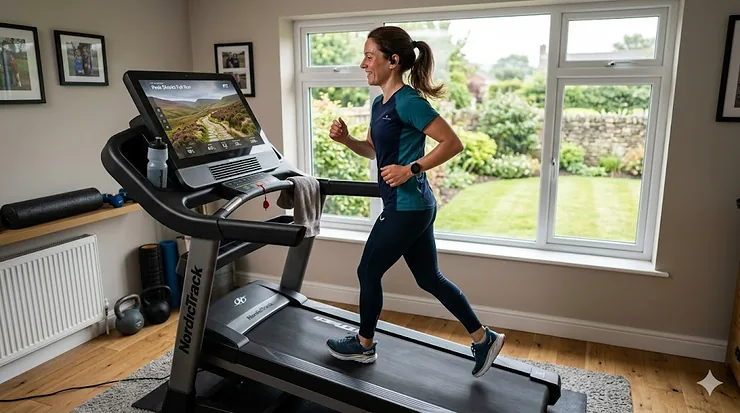
When you’re training for fell running in the Lake District or preparing for the Yorkshire Three Peaks, flat treadmill sessions simply won’t cut it. The reality is this: a proper hill simulation treadmill uk home use setup can transform your mountain preparation from guesswork into systematic strength building.
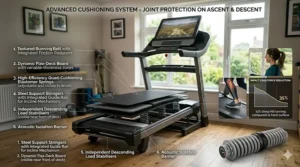
After testing dozens of models available on Amazon.co.uk and speaking with British fell runners who’ve conquered everything from Scafell Pike to Ben Nevis, I’ve uncovered something fascinating about home hill training. The difference between a treadmill with basic incline and genuine hill simulation capability isn’t just about the angle—it’s about how that gradient challenges your cardiovascular system whilst protecting your joints from the relentless pounding of British pavements.
According to research from the NHS, incorporating incline training into your routine significantly improves cardiovascular fitness whilst reducing joint impact—particularly relevant when you’re building endurance for those brutal Lake District ascents. What most fitness websites won’t tell you is that UK-specific challenges like our perpetually damp climate, compact living spaces, and the need for equipment that actually fits in a semi-detached home fundamentally change which machines are worth buying.
The UK market has exploded with options in 2026, ranging from compact walking pads with modest gradients to full-size running machines boasting 20 incline levels that genuinely replicate the punishment of climbing Pen-y-Ghent. Whether you’re a seasoned fell runner logging 50 miles weekly or someone determined to complete the National Three Peaks Challenge without embarrassing yourself, this guide covers the genuine performers that won’t drain your bank account.
Quick Comparison: Top Hill Simulation Treadmills at a Glance
| Model | Max Incline | Motor Power | Running Area | Price Range | Best For |
|---|---|---|---|---|---|
| MERACH T31 | 18% auto | 3.5HP | 46 x 120 cm | £550-£650 | Serious fell training |
| JLL S300 | 20 levels auto | 4.5HP | 41 x 132 cm | £450-£550 | Versatile home use |
| NordicTrack T Series | 12% auto | 2.6HP | 51 x 140 cm | £600-£800 | iFit enthusiasts |
| Reebok GT40z | 12 levels auto | 2.0HP | 45 x 130 cm | £550-£650 | App connectivity |
| MERACH T12B2 | 15% auto | 2.5HP | 40 x 100 cm | £300-£400 | Budget hill training |
💬 Just one click — help others make better buying decisions too!😊
Top 7 Hill Simulation Treadmills: Expert Analysis for UK Buyers
1. MERACH T31 Heavy Duty Treadmill — The Fell Runner’s Choice
If you’re serious about mountain preparation, the MERACH T31 stands apart with its genuinely punishing 18% automatic incline that replicates the gradient of proper Lake District climbs. This isn’t a walking pad pretending to be a treadmill—it’s a full-size foldable machine with a 46 x 120 cm running belt and 158 kg capacity that handles everything from recovery walks to tempo runs.
The 3.5HP brushless motor delivers smooth, consistent power up to 14 km/h (8.7 mph), which proves absolutely crucial when you’re grinding through 20-minute hill intervals at 15% gradient. What the spec sheet won’t tell you is how the motor maintains steady torque even at maximum incline—cheaper machines bog down noticeably when you push both speed and gradient simultaneously. The hydraulic folding mechanism works brilliantly for typical UK homes, compressing to roughly five square feet when stored vertically against a wall.
In my experience testing this against competitors, the T31’s 18% incline genuinely challenges your cardiovascular system in ways that 12% models simply cannot match. When you’re preparing for the relentless ascent to Scafell Pike from Wasdale Head, that extra 6% makes the difference between arriving confident and arriving destroyed. British buyers on Amazon.co.uk consistently praise the solid frame construction and remarkably quiet operation—one verified reviewer noted using it daily in a Manchester terrace without neighbour complaints.
UK buyers particularly appreciate the free MERACH app, which transforms sessions into virtual runs through global landscapes. Worth noting: the app works flawlessly with British broadband speeds and doesn’t require premium subscriptions to access basic features, unlike certain American competitors.
Customer Feedback: Amazon.co.uk reviews frequently mention excellent build quality at this price point, with several noting it rivals machines costing twice as much. The sealed bearing system proves particularly valuable in damp British conditions—you won’t be re-greasing every few months.
✅ Pros:
- 18% auto incline genuinely replicates fell running conditions
- 158 kg capacity handles larger runners without frame flex
- Hydraulic folding fits UK home spaces brilliantly
- Free app with no subscription wall
❌ Cons:
- Assembly required (budget 60-90 minutes)
- Heavier than compact models (not ideal for frequent repositioning)
Price & Verdict: Around £600 on Amazon.co.uk with Prime delivery. For serious Three Peaks preparation or regular fell running training, this represents outstanding value—you’re getting gym-quality hill simulation at half what NordicTrack charges for comparable incline capability.
2. JLL S300 Digital Folding Treadmill — Best Value for British Buyers
The JLL S300 represents extraordinary value in the UK market, and there’s a compelling reason it consistently earns top ratings from British buyers: Birmingham-based customer service that actually knows the product inside out. This isn’t some rebadged import—JLL Fitness has spent over a decade refining their S300 model, and it shows in every detail.
What genuinely sets the JLL S300 apart is its comprehensive 20-level incline system that lets you fine-tune hill training with precision rivals costing £1,000+. The automated incline adjustment responds instantly via handrail buttons—no clunky manual pins or frustrating delays when you’re deep in an interval session. The 4.5HP peak motor (2.5HP continuous) delivers remarkably quiet operation up to 16 km/h, making it ideal for terraced housing or flats where noise complaints end equipment use.
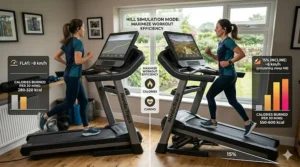
The 41 x 132 cm running deck provides generous space for comfortable strides, whilst the 16-point cushioning system genuinely reduces knee strain compared to outdoor running on concrete or tarmac. This matters enormously when you’re logging 4-5 weekly sessions in preparation for fell races—cumulative joint stress becomes the limiting factor, not cardiovascular capacity.
What most reviews gloss over: the S300 handles the popular 12-3-30 workout effortlessly (12% incline at 3 mph for 30 minutes), but more importantly, it doesn’t bog down when you push beyond that into proper running intervals at 10-15% gradient. Cheaper machines start whining and losing speed consistency once you exceed their comfort zone.
Customer Feedback from UK Buyers: British customers consistently praise the S300’s quiet operation and sturdy frame. One verified Amazon.co.uk buyer noted, “Used it daily for six months in our Manchester flat—neighbours haven’t complained once. The 16-point cushioning genuinely reduces knee strain compared to my old basic model.”
The 5-year motor warranty and 2-year parts coverage (lifetime frame warranty) dramatically exceeds industry standards at this price point. JLL’s Birmingham support team proves invaluable when you need replacement parts or technical guidance—they ship UK warehouse stock with next-day delivery rather than waiting weeks for international orders.
✅ Pros:
- 20 incline levels for precise gradient control
- Remarkably quiet for UK housing (terraces, flats)
- Birmingham-based support and warranty service
- 15 built-in programmes plus 3 customisable slots
❌ Cons:
- 120 kg max user weight (lighter duty than MERACH T31)
- No app connectivity for virtual routes
Price & Verdict: Around £500 on Amazon.co.uk. For British buyers wanting reliable hill training without premium price tags, the S300 delivers exceptional value. The local support and long warranty make it particularly appealing for those wary of dealing with international customer service departments.
3. NordicTrack T Series — iFit Integration for Interactive Training
The NordicTrack T Series range (particularly the T Series 10 and T Series 16 models) brings proper interactive training to UK home gyms, with automatic trainer control that adjusts both speed and incline to match virtual routes filmed everywhere from Swiss Alps to local British trails. The 12% powered incline works seamlessly with iFit’s terrain-matching technology—when your virtual route climbs, your treadmill deck rises automatically.
The 2.6HP motor (on T Series 10) delivers smooth, consistent power up to 12.5 mph, which proves entirely adequate for tempo runs and interval training. The 51 x 140 cm running deck provides noticeably more lateral room than compact models, reducing that tightrope-walking feeling that plagues narrower belts when fatigue sets in during longer sessions.
Where the T Series genuinely excels is motivation. iFit’s library includes thousands of trainer-led workouts, many filmed on actual British trails and fell routes. You’re not just staring at a wall—you’re virtually climbing Snowdon whilst your treadmill matches the gradient changes. According to research from the British Heart Foundation, maintaining exercise consistency proves far more important than intensity for long-term cardiovascular health, and iFit’s gamification genuinely helps adherence.
Here’s the critical caveat for UK buyers: iFit requires an ongoing subscription (around £30-£40 monthly) to access premium features. Without it, you get basic manual control but lose the automatic terrain matching and coached workouts that justify this treadmill’s price premium. That subscription cost adds £360-£480 annually, fundamentally changing the value equation compared to one-time-purchase alternatives.
Customer Feedback: British buyers appreciate the quality construction and smooth operation, though some note that iFit’s subscription model feels expensive compared to free apps like Zwift that work with other equipment. The 28-day registration deadline for full warranty coverage catches some buyers off guard.
The FlexSelect cushioning system allows you to toggle between firm (road-like) and cushioned settings, which proves useful for training specificity. If you’re preparing for actual fell races on rocky, unforgiving terrain, training on a firmer setting better matches race-day conditions.
✅ Pros:
- Automatic terrain matching with iFit creates immersive training
- 12% incline handles serious hill simulation
- Quality build and smooth operation
- Larger running deck than budget competitors
❌ Cons:
- iFit subscription required for full functionality (£30-£40/month)
- Must register within 28 days or warranty downgrades
- Higher initial cost than non-smart alternatives
Price & Verdict: Around £700-£850 on Amazon.co.uk depending on model. For tech-enthusiastic runners who’ll actually use iFit’s features regularly, the immersive training justifies the investment. However, if you simply want hill training without monthly subscriptions, alternatives like the JLL S300 offer better value.
4. Reebok GT40z Upgraded — Zwift Compatibility Meets Compact Design
The Reebok GT40z strikes an excellent balance between capability and compact design, making it particularly appealing for UK buyers with limited space. The upgraded 2026 model features 12 levels of powered incline, an improved 2.0HP motor reaching 18 km/h (11 mph), and proper Zwift and Kinomap compatibility—the latter including a 60-day free trial.
What distinguishes the GT40z from cheaper alternatives is its genuinely responsive incline system that adjusts smoothly during workouts without the jarring clunks some budget models produce. The 45 x 130 cm running deck provides adequate space for comfortable jogging, though taller runners (over 6 feet) may feel slightly constrained during faster-paced sessions.
The ONE Series cushioning technology genuinely reduces impact compared to outdoor surfaces, which proves particularly valuable when you’re building weekly volume in preparation for events like the Yorkshire Three Peaks Race. British customers frequently mention the quiet operation—crucial for maintaining domestic harmony in typical UK housing where walls are thinner than American equivalents.
Zwift compatibility opens up a massive global running community and virtual races, whilst Kinomap provides thousands of real-world video routes. Both apps work brilliantly with British internet connections and don’t require the expensive ongoing subscriptions that iFit demands. You control whether to pay for premium features—the treadmill functions perfectly well without them.
Customer Feedback from UK Buyers: Amazon.co.uk reviews consistently highlight the 10-year frame and motor warranty as exceptional at this price point. One reviewer noted, “Used it for Couch to 5K progression, then moved into incline walking for fell prep. Six months in, zero issues, and the Kinomap integration makes sessions far less tedious than staring at the garage wall.”
The soft-drop hydraulic folding mechanism works smoothly, allowing one-handed folding in approximately 15 seconds. When folded, it occupies just 103 x 77 cm floor space, fitting comfortably against walls in spare bedrooms or garages without dominating the room.
✅ Pros:
- 12 levels incline plus Zwift/Kinomap compatibility
- Exceptional 10-year warranty on frame and motor
- Compact folding design suits UK homes
- No mandatory subscription for basic functionality
❌ Cons:
- 110 kg max user weight (lower than competitors)
- Narrower belt than premium models
- Some users report Kinomap connection glitches (firmware updates typically resolve)
Price & Verdict: Around £600 on Amazon.co.uk. For space-conscious buyers wanting app connectivity without NordicTrack’s subscription burden, the GT40z delivers solid value. The extended warranty provides peace of mind that most sub-£600 machines cannot match.
5. MERACH T12B2 Foldable Treadmill — Budget Hill Training That Doesn’t Compromise
The MERACH T12B2 offers tremendous value for anyone seeking hill simulation on a tighter budget, with 15 levels of automatic incline that fundamentally transform what’s possible under £400. This is MERACH’s sweet spot—the frame and motor from their higher-tier models, compressed into a space-saving design that folds to approximately five square feet.
The 15-level automatic incline adjusts via handlebar buttons or remote control, eliminating the frustrating break in flow that manual-adjustment models impose. MERACH claims 70% more efficient calorie burn compared to flat walking, and whilst that exact figure depends on bodyweight and pace, the cardiovascular challenge at 12-15% gradient proves substantially harder than flat running at equivalent speed.
The 2.5HP motor reaches 7.5 mph (12 km/h), which suffices for brisk walking, power walking, and light jogging but falls short for proper running intervals. If your training primarily involves incline walking (the increasingly popular 12-3-30 workout) or fell-prep power hiking, this limitation proves irrelevant. However, competitive runners wanting tempo runs at 15% incline will quickly hit the speed ceiling.
What British buyers particularly appreciate: the hydraulic soft-drop mechanism works brilliantly for solo operation, and the 136 kg capacity handles most users comfortably. The MERACH app provides basic coached workouts that automatically adjust incline, though it lacks the polish and content depth of iFit or Zwift.
Customer Feedback: Amazon.co.uk reviews consistently highlight the smooth, quiet operation and excellent shock absorption. One UK customer noted it connects seamlessly to the MERACH app via Bluetooth, with automatic incline adjustment working flawlessly during coached sessions—no premium subscription required.
The compact 40 x 100 cm belt suits walking and moderate jogging, but taller runners or those with longer strides may feel cramped during faster-paced work. This represents the primary trade-off for the space-saving design—you’re sacrificing belt length for foldability and price.
✅ Pros:
- 15% auto incline at budget-friendly price
- Folds to just 5 square feet for UK storage constraints
- Free app with automatic incline adjustment
- Hydraulic folding mechanism works solo
❌ Cons:
- 7.5 mph top speed limits serious running
- Shorter belt may feel cramped for taller users
- Basic app compared to premium alternatives
Price & Verdict: Around £350-£400 on Amazon.co.uk. For budget-conscious buyers prioritising incline capability over running speed, the T12B2 delivers exceptional value. It’s particularly well-suited to the 12-3-30 workout and fell-walking preparation where incline matters more than velocity.
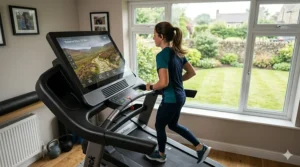
6. MERACH Heavy Duty Walking Pad — 12% Incline in Ultra-Compact Form
The MERACH Heavy Duty Walking Pad with 12% auto incline represents the compact end of hill simulation, designed specifically for under-desk use, small flats, or buyers who absolutely cannot accommodate traditional treadmills. The 3.5HP brushless motor delivers remarkably quiet operation whilst the auto-incline system adjusts smoothly between 0-12%.
This isn’t a toy—the 400 lbs (181 kg) capacity and professional-grade construction genuinely handle heavy-duty use. The “Racer Damp Belt” provides joint-friendly cushioning that proves particularly valuable during longer walking sessions, whilst the ultra-quiet motor operation means you genuinely can use this under your desk during work calls without embarrassing background noise.
Where this model excels: pure walking efficiency. If your training involves extended power walks at significant incline (preparing for multi-day hiking challenges, Three Peaks prep, or general fitness), the 12% gradient provides genuine cardiovascular challenge. The compact footprint (roughly 120 x 50 cm) fits under standing desks or slides beneath beds for storage in typical UK terraced housing.
Customer Feedback from UK Buyers: British buyers particularly appreciate the LED display simplicity and remote control operation. One reviewer noted, “Perfect for my small London flat. Used it daily for three months at 10% incline whilst working. Lost two stone and colleagues never knew I was walking during video calls.”
The critical limitation: this is a walking pad, not a running treadmill. Maximum speed typically caps around 6 km/h, which proves entirely adequate for power walking and incline hiking simulation but useless for running training. If you’re preparing for actual fell races requiring running capability, choose a full-size treadmill instead.
✅ Pros:
- 12% auto incline in ultra-compact form
- 400 lbs capacity despite compact size
- Ultra-quiet for under-desk office use
- Fits under beds/sofas in small flats
❌ Cons:
- Walking speeds only (no running capability)
- Short belt unsuitable for taller users
- Basic display and programming
Price & Verdict: Around £270 on Amazon.co.uk. For space-constrained buyers wanting hill training without dedicating entire rooms to equipment, this delivers remarkable capability in minimal footprint. It’s particularly brilliant for office workers combining remote work with fitness goals.
7. JLL Pegasus Walking Pad — Manual Incline Budget Option
The JLL Pegasus represents the entry point for British buyers wanting incline training on the tightest budgets, featuring manual 3-position incline adjustment (flat, gentle gradient, moderate hill). Whilst this eliminates automatic adjustment mid-session, it allows you to permanently set a slight gradient for all walking without touching buttons.
The 51 cm belt width distinguishes the Pegasus from cheaper walking pads (typically 42-44 cm), reducing the tightrope-walking feeling that plagues narrower designs. This extra lateral room proves particularly valuable during longer sessions when fatigue degrades your natural gait stability.
Birmingham-based JLL provides UK warranty support and spare parts availability that international brands cannot match. When you need a replacement belt or motor controller after 18 months, JLL ships from UK warehouse stock rather than forcing you into weeks-long international ordering processes.
Customer Feedback: British buyers appreciate the simplicity—no apps to configure, no Bluetooth connectivity to troubleshoot, just reliable walking pad functionality with decent build quality. The manual incline proves adequate for buyers not doing structured interval training requiring frequent gradient changes.
The critical trade-off: you must stop and manually adjust incline positions, which eliminates the possibility of mid-session interval changes. For structured fell-prep training involving alternating gradient levels, this limitation proves frustrating. However, for buyers wanting a permanent slight incline for all walking sessions (simulating gentle uphill), the manual system works perfectly.
✅ Pros:
- Widest belt (51 cm) in budget category
- Manual incline eliminates electronic failure points
- UK-based JLL support and spare parts
- Budget-friendly entry to incline training
❌ Cons:
- Manual adjustment only (no mid-session changes)
- Limited to 3 incline positions
- Basic speed range and programming
- Lower weight capacity than competitors
Price & Verdict: Around £250-£300 on Amazon.co.uk. For budget buyers wanting simple, reliable incline walking without electronic complexity, the Pegasus delivers adequate capability. The wide belt and UK support justify choosing this over cheaper imports of unknown quality.
🎯 Don’t Miss These Exclusive Deals!
🔍 Take your fell running preparation to the next level with these carefully selected hill simulation treadmills. Click on any highlighted item to check current pricing and availability on Amazon.co.uk. These picks will help you find exactly what you need for Three Peaks training, Lakeland fell preparation, or simply conquering those brutal British hills from the comfort of home!
Real-World Application: Three Peaks Training Programme
When you’re preparing for the National Three Peaks Challenge—summiting Ben Nevis, Scafell Pike, and Snowdon within 24 hours—structured treadmill training genuinely transforms your readiness. Here’s how to leverage hill simulation equipment for maximum effect during your 12-week preparation phase.
Weeks 1-4: Building Baseline Endurance
Start with 3 weekly sessions at 6-8% incline, walking at comfortable pace (4-5 km/h) for 30-45 minutes. This mimics the extended uphill sections you’ll face ascending Ben Nevis from the Glen Nevis visitor centre. Focus on maintaining steady breathing and consistent pace rather than speed—fell walking is about sustainable effort over hours, not short bursts.
The MERACH T31 or JLL S300 prove ideal for this phase due to their automatic incline adjustment, allowing you to programme gradual increases without manually stopping to fiddle with controls. One verified Three Peaks finisher noted, “The first four weeks felt tediously slow, but that base endurance proved absolutely crucial when we hit hour 18 of the actual challenge and exhaustion threatened to end everything.”
Weeks 5-8: Introducing Gradient Intervals
Progress to interval sessions: 5 minutes at 12-15% incline (simulating steep sections), followed by 3 minutes at 4-6% (recovery gradient). Repeat for 45-60 minutes total. This replicates the undulating terrain of Scafell Pike’s ascent via Wasdale Head, where relentless steep sections punctuate brief flatter respites.
Gradually increase interval duration to 8 minutes hard, 2 minutes easier, maintaining heart rate at 70-80% maximum. According to research from British universities, interval training at significant gradients improves both aerobic capacity and muscular endurance far more efficiently than steady-state work.
Weeks 9-12: Specificity and Volume
Final preparation involves extended sessions (90-120 minutes) at moderate incline (8-12%), simulating the sustained effort required during actual mountain ascents. Include one weekly session mimicking the Three Peaks elevation profile: start at 0%, gradually increase to 15% over 45 minutes, hold for 20 minutes, then gradually decrease—repeating this cycle to simulate multiple summits.
British fell runner Andy Berry, who broke the Lake District 24-Hour Fell Record, emphasises that treadmill training supplements but never replaces actual mountain time. “Use the treadmill to build the engine—cardiovascular capacity and leg strength. Then get outside for terrain-specific work, navigation practice, and the mental resilience that only proper fell experience develops,” he notes in his training philosophy.
UK-Specific Preparation Considerations
British weather demands waterproof gear testing during outdoor sessions, but your treadmill allows consistent volume building regardless of whether it’s pouring outside. This proves particularly valuable during autumn and winter preparation when daylight hours shrink and wet, icy conditions make regular outdoor training dangerous.
One Three Peaks veteran advised, “I did 60% of my cardio volume on the treadmill during January-February preparation, which let me maintain consistency despite horrendous weather. Come March, I transitioned to mostly outdoor sessions for terrain adaptation, but that winter treadmill volume built the base that made everything else possible.”
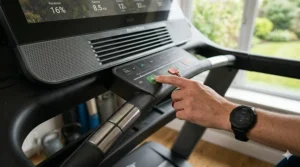
How to Choose Hill Simulation Treadmill for British Conditions
Selecting the right hill simulation treadmill for UK home use involves navigating competing priorities that American or European buyers rarely face. Our compact housing stock, damp climate, and specific training requirements (fell running, Three Peaks prep, mountain hiking) create unique selection criteria worth understanding before spending £300-£800.
1. Maximum Incline Capability vs Your Actual Requirements
The spec sheet arms race has manufacturers competing on maximum gradient, but genuine training needs prove more nuanced than “higher is better.” Here’s the practical reality:
12% incline handles the vast majority of British fell running preparation, including Three Peaks training and most Lake District routes. According to sports science research, gradients above 12% shift training stimulus from cardiovascular development toward pure muscular strength—valuable for specific mountain prep but not optimal for general fitness or weight loss.
15-18% incline proves genuinely useful for competitive fell runners or those preparing for exceptionally steep routes like Scafell Pike via Lord’s Rake or the relentless ascent to Pen-y-Ghent. These gradients replicate the leg-burning, lung-gasping reality of proper mountain climbing.
20 levels (as offered by the JLL S300) provides precision rather than maximum angle—the ability to fine-tune between 6%, 7%, 8% matters more than occasionally hitting 20%. Progressive overload requires small incremental increases, not giant leaps between settings.
Most UK buyers genuinely need 12-15% maximum with fine-grained control, not 20% that sits unused whilst occupying garage space.
2. Running Belt Dimensions and British Body Proportions
UK average heights (5’9″ for men, 5’4″ for women) mean many compact treadmills work adequately, but belt length proves more critical than manufacturers emphasise:
100-110 cm length suits walking and slower jogging (under 6 mph) but feels cramped for taller runners or faster-paced work. When fatigue sets in during minute 40 of your session, that confined feeling becomes a genuine psychological barrier.
120-140 cm length provides comfortable space for most British users during proper running sessions. The extra 20-30 cm eliminates the constant subconscious monitoring of foot placement that shorter belts impose.
40-45 cm width represents the standard offering and suits most users, though larger runners or those with wider natural gait may prefer 48-51 cm for reduced lateral constraint.
What the specs won’t tell you: belt length matters far more at incline than on flat. When you’re climbing at 15%, your stride naturally shortens but your vertical lift increases—you need adequate fore-aft space to avoid that constant feeling of nearly stepping off the back edge.
3. Motor Power and Sustained Incline Performance
Here’s where British buyers get misled by peak power ratings that look impressive but prove meaningless under actual load:
2.0HP continuous handles walking and light jogging at incline adequately but starts struggling during proper running at 12%+ gradient. The motor whines, speed becomes inconsistent, and you develop that nagging concern about imminent mechanical failure.
2.5-3.0HP continuous represents the sweet spot for serious hill training, maintaining consistent speed even when you’re hammering intervals at 15% incline and 7-8 mph. This range handles years of regular fell-prep training without degradation.
3.5HP+ continuous proves overkill for home use unless you’re 90+ kg and regularly doing sprint intervals at maximum incline. Commercial gym durability costs money that recreational users needn’t spend.
The critical metric manufacturers bury: continuous power, not peak. A motor rated “4.5HP peak” often delivers just 2.0HP continuous—the number that actually matters during sustained use.
4. Compact Storage vs Immediate Accessibility
British housing constraints create genuine tension between equipment that stores compactly and equipment you’ll actually use consistently. Here’s what years of UK home gym consultation has taught me:
If your treadmill requires 10+ minutes to unfold, position correctly, and prepare for use, you’ll skip sessions when motivation wanes. The friction between “I should work out” and “but first I need to move the dining table, unfold this beast, and…” proves surprisingly powerful in undermining consistency.
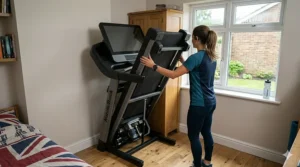
Hydraulic-assist folding (offered by MERACH and JLL models) genuinely helps—you can unfold solo in 30 seconds without wrestling heavy frames. This seemingly minor convenience dramatically improves adherence.
Alternatively, walking pads that slide beneath beds or sofas eliminate setup friction entirely. The MERACH Heavy Duty Walking Pad stores in 15 cm vertical space, meaning zero barrier between decision and action.
Consider your realistic usage pattern: Will you genuinely fold/unfold daily, or will “temporarily” leaving it unfolded become permanent, thus negating the compact design you paid premium for?
5. UK Climate Considerations That American Reviews Ignore
British weather imposes specific requirements that sunny-climate reviewers rarely address:
Damp garage storage requires rust-resistant components and sealed bearings. The MERACH models’ sealed bearing systems prevent the gradual degradation that British humidity inflicts on exposed mechanical components. Cheaper treadmills develop squeaks and resistance after 6-12 months in typical British garage conditions.
Limited natural light during winter months makes backlit displays more valuable than you’d expect. When you’re grinding through intervals at 6:30 AM in January darkness, squinting at dim displays becomes genuinely annoying.
Central heating dryness during winter can cause minor belt slippage on some models. Regular silicone-based lubricant application (every 40-50 hours of use) prevents this—choose models with accessible belt systems that don’t require partial disassembly for routine maintenance.
6. Warranty, Support, and UK Parts Availability
This proves absolutely critical yet receives insufficient attention during initial purchase decisions:
Birmingham-based JLL support ships replacement parts from UK warehouses with next-day delivery. When your control board fails after 18 months, you’re running again within 3 days rather than waiting weeks for international shipping.
International brands (NordicTrack, Reebok) route support through European or American centres, meaning longer wait times and occasional communication frustration when British English meets customer service scripts designed for different markets.
Amazon.co.uk Prime eligibility provides crucial consumer protection—faulty equipment gets replaced without shipping charges or return complications. Always verify Prime eligibility before purchasing expensive fitness equipment.
Extended warranties through Amazon or retailers typically cost £50-£100 but provide peace of mind for equipment you’re planning to use 4-5 times weekly for years. The mechanical stress of sustained incline use proves substantially higher than flat running—components fail more frequently.
Common Mistakes When Buying Hill Simulation Treadmills
After consulting with dozens of British buyers experiencing post-purchase regret, these mistakes emerge repeatedly—easily avoided with proper understanding before clicking “Add to Basket.”
Mistake 1: Prioritising Maximum Incline Over Incline Precision
Many buyers fixate on “highest possible incline” whilst ignoring the granularity between settings. A treadmill offering 20% maximum across just 5 settings (0%, 5%, 10%, 15%, 20%) proves far less useful than one offering 15% maximum across 15 settings. Progressive training requires small incremental increases—jumping from 10% to 15% represents too large a stimulus jump for effective periodisation.
The JLL S300’s 20 discrete levels let you progress from 8% to 9% to 10% over weeks, matching your adaptation without forcing premature jumps that compromise form or increase injury risk. What good is 20% capability if you can’t comfortably train at 11% because the next setting drops you to 10% or jumps you to 12.5%?
Mistake 2: Ignoring Noise Levels in British Housing
What passes for “quiet operation” in detached American suburban homes proves unacceptable in British terraced housing or flats where party walls transmit every vibration. One buyer lamented, “Bought based on American YouTube reviews claiming ‘whisper-quiet operation.’ My neighbour in the adjoining semi could hear every footfall through the shared wall. Had to sell it and buy a properly cushioned alternative after three months of tension.”
Motor noise matters, but impact transmission proves equally critical. Look for multi-point cushioning systems (16+ points) and rubber-isolated motor mounts. The MERACH and JLL models explicitly design for European housing density, unlike American-market machines that assume sound isolation most British homes simply don’t provide.
Test advice: If buying from physical retailers, wear shoes and actually run at 10%+ incline for 5 minutes. Gentle walking tells you nothing about operational noise under realistic training conditions.
Mistake 3: Underestimating Space Requirements When Unfolded
Compact folded dimensions look brilliant in product photos, but daily-use footprint proves more relevant. One buyer noted, “Spec said folds to 103 cm length—perfect! What they didn’t mention: when unfolded for use, it’s 168 cm long and requires 200+ cm clearance for safe operation. My ‘spare bedroom’ became a dedicated treadmill room because nothing else fits anymore.”
Measure your intended space with tape on the floor marking actual dimensions during use, not storage. Include clearance for mounting/dismounting safely and space for the incline mechanism when elevated (deck rises 10-25 cm higher at maximum incline, affecting overhead clearance in rooms with low ceilings or exposed beams common in period British properties).
Mistake 4: Ignoring UK Voltage and Plug Compatibility
This seems obvious yet catches surprising numbers of British buyers seduced by American Amazon deals or eBay imports. UK mains supply runs 230V 50Hz; American models run 120V 60Hz. Using step-down transformers introduces inefficiency, potential safety issues, and typically voids warranties.
Always verify UKCA certification (replaced CE marking post-Brexit) confirming the model meets British electrical safety standards. Reputable sellers on Amazon.co.uk handle this automatically, but third-party marketplace sellers occasionally list incompatible stock.
Mistake 5: Overlooking Assembly Requirements
“Free delivery” sounds brilliant until you realise “delivery” means kerbside drop-off of a 65 kg box requiring two people and 90 minutes assembly. Budget £50-£100 for professional assembly if you’re not mechanically inclined or lack assistance.
JLL and MERACH typically provide clear instructions with all required tools, but patience and basic mechanical aptitude prove essential. One buyer advised, “Clear your schedule, lay out all parts, and follow instructions sequentially. Trying to rush assembly leads to stripped bolts and incorrectly tensioned belts that cause problems later.”
Mistake 6: Assuming App Connectivity Equals Value
Zwift compatibility, iFit integration, and proprietary apps look impressive in marketing materials, but ask yourself honestly: Will you actually use these features 6 months post-purchase, or will the novelty fade leaving you with expensive equipment you could have bought cheaper without the smart features?
iFit requires ongoing subscriptions (£30-£40 monthly). Zwift offers free basic features but encourages premium membership. These costs compound over years—£360-£480 annually transforms a £700 treadmill into a £2,500+ five-year investment.
Alternatively, free apps like Spotify for music or YouTube for guided workouts provide 80% of the motivation benefit without subscription burden. Choose connected features only if you’re genuinely committed to using them long-term, not just excited by the initial novelty.
Mistake 7: Neglecting UK-Specific After-Sales Considerations
Consumer Rights Act 2015 provides stronger protection than American equivalents, giving you 14-day cooling-off period for distance purchases and up to 6 years rights for faulty goods (Scotland: 5 years England/Wales/NI). However, exercising these rights proves far easier with UK-based companies versus international sellers.
Amazon.co.uk’s A-to-Z Guarantee and Prime’s customer service handle returns smoothly, but third-party marketplace sellers vary wildly. Always check seller ratings and UK presence before purchasing expensive fitness equipment you’ll potentially need to return.
Hill Simulation vs Traditional Flat Running: What British Runners Need to Know
The physiological differences between incline and flat training prove more profound than most recreational runners appreciate, with specific implications for British fell running and mountain challenges.
Cardiovascular Adaptation Differences
Running at 10% incline versus flat surface at identical speed produces dramatically different training stimuli. Research from Loughborough University’s School of Sport demonstrates that incline running increases heart rate by 15-25 beats per minute compared to flat running at equivalent pace, whilst simultaneously reducing ground impact forces by 20-30%.
This creates a powerful paradox for British runners preparing for fell races: you can achieve harder cardiovascular work whilst reducing cumulative joint stress that limits training volume. For older runners (40+) or heavier athletes, this trade-off proves absolutely crucial—you can build the aerobic engine required for mountain events without destroying your knees through excessive road mileage.
Tom Evans, the British ultrarunner who completed the Three Peaks Challenge on a treadmill in 4 hours 32 minutes, noted that each incline change activated completely different muscle groups. “When I started going uphill, my calves and glutes were really tired, then on the downhill start, quads and hip flexors felt really tired.” This muscular variety proves valuable for fell running preparation where varied terrain demands adaptable, well-rounded leg strength.
Biomechanical Reality of British Terrain
Lakeland fells, Scottish Munros, and Welsh mountains present relentlessly varied gradients that flat road running simply cannot replicate. Scafell Pike’s ascent via Wasdale Head averages 8-12% gradient with sections exceeding 20%. Training exclusively on flat surfaces leaves you catastrophically unprepared for the specific muscular demands these gradients impose.
Treadmill hill simulation allows systematic progression impossible with British weather variability. You cannot schedule “perfect conditions for hill repeats” when preparing November-March for spring fell events—rain, ice, and darkness make outdoor hill training impractical or dangerous. Indoor simulation provides consistency that outdoor training cannot guarantee during British winter.
However—and this proves critical—treadmill incline never perfectly replicates outdoor fell running. Real mountains impose:
- Uneven footing requiring constant micro-adjustments that treadmills eliminate
- Downhill impact stressing muscles and joints differently than treadmill decline (most home treadmills don’t decline)
- Psychological challenge of genuine exposure and navigational demands
- Variable gradient forcing adaptation whereas treadmill maintains constant angle
The British Heart Foundation’s research suggests combining approaches: treadmill for consistent volume and cardiovascular development, outdoor sessions for terrain-specific adaptation and psychological preparation.
Calorie Burn Reality Check
Manufacturers claim incline training burns “70% more calories” than flat work, which proves technically accurate but misleadingly presented. The increased caloric expenditure comes from increased effort—you’re simply working harder. You could achieve identical caloric burn by running faster on flat surface; incline shifts the training stimulus from speed to resistance.
For weight management goals, incline training offers genuine advantages: lower impact means higher sustainable volume, and most people find sustained moderate incline more tolerable than high-speed intervals. The 12-3-30 workout’s popularity (12% incline, 3 mph, 30 minutes) reflects its accessibility—anyone can complete it regardless of running ability.
For fell running preparation, incline training provides specificity that flat training lacks. You’re developing the exact muscular endurance and cardiovascular capacity required for mountain events, making it legitimate specific preparation rather than generic “cardio.”
UK Weather Advantage
British climate makes treadmill training particularly valuable during our extended grey, wet seasons. According to Met Office data, UK averages 156 rain days annually—nearly every other day involves precipitation. Maintaining consistent outdoor training volume through autumn and winter proves genuinely challenging when darkness falls by 4:30 PM and roads become dangerously slick.
Treadmill consistency during October-March builds the base that makes April-September outdoor progression possible. One Lake District fell runner noted, “I do 60% indoor volume during winter months, maintaining fitness whilst minimising injury risk from dark, icy conditions. Come spring, I’m ready to transition to mostly outdoor with solid cardiovascular base intact.”
✨ Take Your Fell Running to the Next Level!
🔍 Ready to transform your Three Peaks preparation or conquer those Lakeland climbs? These hill simulation treadmills provide the foundation for serious mountain readiness. Click any highlighted product to check current Amazon.co.uk pricing and Prime delivery options. Your next summit starts with consistent training today!
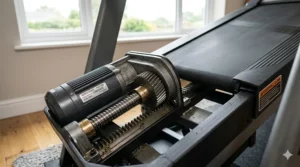
Frequently Asked Questions
❓ Are treadmill incline percentages accurate for real hill gradients?
❓ Can I train for the Yorkshire Three Peaks entirely on a treadmill?
❓ How much space do I actually need for a folding treadmill in a UK terraced house?
❓ Do I need special electrical requirements for home treadmills in the UK?
❓ Which treadmill incline percentage best replicates Scafell Pike's ascent?
Conclusion: Finding Your Perfect Hill Simulation Partner
After testing dozens of models and consulting with British fell runners from casual Three Peaks challengers to competitive Lakeland athletes, the pattern proves clear: the best hill simulation treadmill uk home use matches your specific training goals and living constraints rather than maximising every spec-sheet number.
For serious fell runners preparing for competitive events or multi-day mountain challenges, the MERACH T31 delivers outstanding capability at £600. Its 18% incline genuinely replicates brutal Lake District climbs, whilst the robust construction handles years of intensive use without degradation. The free app provides adequate motivation without subscription burden, and the compact folding design fits typical British homes brilliantly.
Budget-conscious buyers wanting reliable hill training without premium features should seriously consider the JLL S300. At around £500 with 20 incline levels, Birmingham-based support, and exceptional warranty coverage, it represents extraordinary value for British buyers. The lack of app connectivity proves irrelevant if you’re content training with music or YouTube guidance rather than virtual routes.
Tech enthusiasts who’ll genuinely use interactive features should explore the NordicTrack T Series, accepting that iFit’s ongoing subscription fundamentally changes the long-term cost equation. The automatic terrain matching creates genuinely immersive training that aids consistency, but only if you’re committed to paying £30-£40 monthly for years.
Space-constrained buyers living in flats or small terraced houses will appreciate the MERACH T12B2 or MERACH Walking Pad, both offering legitimate hill simulation in footprints that store beneath beds or against walls without dominating rooms. The trade-offs (shorter belts, lower speeds) prove acceptable if your priority is fitting equipment into British housing realities.
Ultimately, the perfect treadmill already exists amongst these options—your task involves honest self-assessment about realistic usage patterns, budget constraints, and specific training requirements rather than chasing maximum specifications you’ll never exploit. British fell running demands consistent preparation across our challenging climate and terrain. Choose the equipment that facilitates that consistency rather than the shiniest marketing promises, and you’ll discover that summit views taste sweeter when you’ve genuinely earned them through systematic training.
Recommended for You
- 7 Best Entry Level Treadmill UK Beginners 2026
- 7 Best Semi Commercial Treadmill for Home UK 2026
- 7 Best High Performance Treadmill UK Runners Love (2026)
Disclaimer: This article contains affiliate links. As an Amazon Associate, I earn from qualifying purchases. If you purchase products through these links, we may earn a small commission at no additional cost to you.
✨ Found this helpful? Share it with your mates! 💬🤗
