In This Article
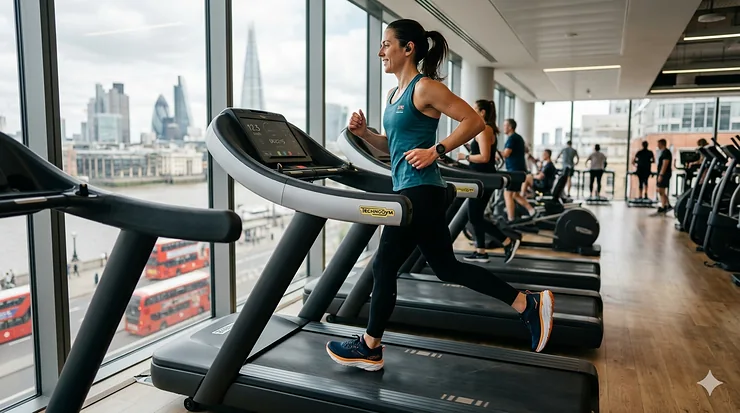
If you’ve ever stepped off a treadmill with knees that feel like they’ve been through a tumble dryer, you already know the answer: maximum cushion treadmill shoes aren’t a luxury — they’re a necessity. Whether you’re logging 5K recovery jogs in your spare bedroom or grinding out half-marathon training on the belt at your local gym, the difference between plush, protective footwear and an ordinary pair of trainers is the difference between feeling like a gazelle and walking like a pensioner who’s missed his physio appointment.
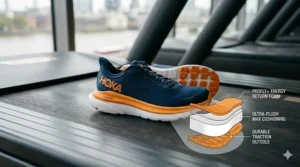
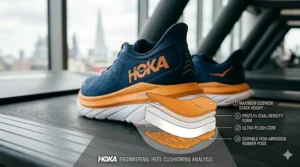
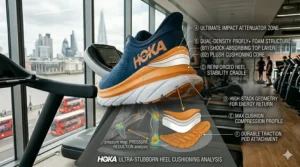
What exactly are maximum cushion treadmill shoes? They’re running shoes engineered with an exceptionally high foam stack height — typically 35mm to 43mm underfoot — designed to absorb repetitive impact forces, reduce joint stress, and keep your legs fresher for longer. Unlike trail shoes (which need grip) or racing flats (which prioritise speed over everything), maximum cushion treadmill shoes optimise for one thing above all: keeping your body comfortable mile after mile on that unforgiving rubber belt. They typically feature a rocker geometry that promotes smooth heel-to-toe transitions, engineered mesh uppers for breathability (vital when you’re sweating indoors), and ultra-soft midsole foams that defy compression run after run.
In 2026, the market for max cushion running shoes has matured spectacularly. We’re no longer talking about simply thick-soled trainers — we’re talking about nitrogen-infused foams, supercritical midsoles, and dual-density architectures that feel nothing short of extraordinary. This guide cuts through the noise. I’ve researched every major option available on Amazon.co.uk, tested claims against real-world evidence, and matched each shoe to the type of UK runner most likely to benefit from it. Because what suits a healthcare worker on their feet all day in Leeds is not the same as what a marathon runner training in a cramped flat in South London needs.
Let’s get into it.
Quick Comparison: Best Maximum Cushion Treadmill Shoes UK (2026)
| Shoe | Stack Height | Drop | Weight (Men’s) | Best For | Price Range (GBP) |
|---|---|---|---|---|---|
| HOKA Bondi 9 | 43mm heel / 38mm forefoot | 5mm | ~301g | Maximum plush comfort | £170–£200 |
| HOKA Clifton 10 | ~37mm heel | 8mm | ~246g | Lightweight daily miles | £130–£160 |
| Brooks Glycerin Max 2 | ~40mm heel | 6mm | ~320g | Versatile cushioned training | £150–£175 |
| Brooks Ghost Max 2 | 39mm heel / 33mm forefoot | 6mm | ~306g | Recovery & walking | £115–£145 |
| ASICS Gel-Nimbus 27 | ~39.5mm heel | 10mm | ~310g | Joint protection & stability | £130–£160 |
| New Balance 1080v15 | ~40mm heel | 6mm | ~280g | Durability & versatility | £155–£185 |
| Saucony Triumph 23 | ~38mm heel | 10mm | ~263g | Lightweight max cushion | £140–£165 |
What does this table tell us? The HOKA Bondi 9 holds the crown for sheer stack height — nothing else in this list gets close to its 43mm heel platform. But stack height alone doesn’t tell the full story: the Brooks Glycerin Max 2 and New Balance 1080v15 deliver comparable cushioning experiences with notably better versatility at a range of paces. Budget-conscious runners should look closely at the Brooks Ghost Max 2 — it punches considerably above its price point and remains the best-value max-cushion option on Amazon.co.uk right now.
💬 Just one click — help others make better buying decisions too! 😊
✨ Don’t Miss These Exclusive Deals!
🔍 Take your treadmill running to the next level with these carefully selected maximum cushion shoes. Click on any highlighted shoe name to check current pricing and availability on Amazon.co.uk. These picks will help you find exactly what you need!
Top 7 Maximum Cushion Treadmill Shoes — Expert Analysis
1. HOKA Bondi 9
The Bondi 9 is HOKA’s magnum opus of cushioning — the shoe that essentially defined what maximum cushion means for modern running. It’s been the unofficial shoe of healthcare workers, overweight runners, and long-distance enthusiasts for years, and the ninth generation takes everything that worked and dials it up further.
At 43mm heel / 38mm forefoot stack, it’s one of the tallest platforms you’ll find on any running shoe currently available on Amazon.co.uk. The big news with the Bondi 9 is the transition from a traditional CMEVA midsole to a supercritical foam — the same technology you’d find in premium racing shoes, now applied to a daily trainer. In practical terms, this means the foam feels genuinely cloud-like underfoot, especially during easy-paced treadmill sessions where you spend more time in contact with the ground per stride. HOKA’s signature meta-rocker geometry rolls your foot smoothly forward, reducing active push-off effort — useful if your ankles or calves are the weak link.
Who is this for? If you’re a UK runner logging easy-to-moderate treadmill miles, dealing with joint issues, or simply obsessed with comfort above pace, the Bondi 9 is your shoe. It’s particularly well-suited to runners recovering from injury, those over 80kg who feel ordinary trainers compress too quickly, or anyone who spends long stretches on their feet at work. UK buyers should note it’s Prime-eligible on Amazon.co.uk with next-day delivery in many postcodes.
The spec sheet won’t tell you this, but the Bondi 9 does feel slightly sluggish above a 5:00 min/km pace — that supercritical foam works against you when you push hard. This is a shoe for enjoying your run, not racing it.
UK Amazon.co.uk reviews highlight outstanding comfort and relief from knee and hip discomfort. A number of UK reviewers specifically mention it helping with plantar fasciitis.
✅ Supremely plush, cloud-like ride
✅ Wide toe box — excellent for bunion-prone feet
✅ Supercritical foam retains bounce longer than CMEVA
❌ Noticeably heavy — not built for speed
❌ Premium pricing puts it at the top of the budget range
Price range: £170–£200. Worth every penny if comfort is your non-negotiable.
2. HOKA Clifton 10
The Clifton is HOKA’s everyman — the trainer that introduced millions of people to max-cushion running, now in its tenth generation. If the Bondi 9 is a limousine, the Clifton 10 is a very well-appointed executive saloon: still luxurious, but lighter, faster, and easier to live with every day.
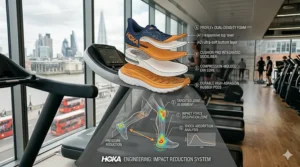
Version 10 brings meaningful changes from its predecessor. HOKA increased the heel-to-toe drop from 5mm to 8mm, adding extra heel cushioning specifically to improve comfort for heel strikers — which, frankly, describes the majority of treadmill runners who aren’t specifically working on their form. The new jacquard knit upper with a double-lace lock is a genuine improvement: the tongue no longer migrates annoyingly to one side mid-run, which anyone who’s worn earlier Cliftons will recognise as a small but significant quality-of-life upgrade. The midsole remains CMEVA rather than supercritical foam — it’s lighter but compresses more over time than the Bondi’s newer material.
At around 246g for men’s (UK sizing), the Clifton 10 is remarkably light for a max-cushion shoe. On the treadmill, this translates to a shoe that doesn’t feel like you’re lifting deadweights with every stride. For UK runners doing mixed treadmill and outdoor sessions — perhaps a Tuesday night gym session and a weekend park run — the Clifton 10’s versatility makes it the most practical all-rounder in this list.
UK reviewers repeatedly describe it as “like running on air” and note how it’s transformed their relationship with longer runs. Several postmen and nurses — people who accumulate 15,000+ steps a day — swear by it.
✅ Exceptionally lightweight for a max-cushion shoe
✅ Improved fit with double-lace lock
✅ Versatile enough for gym and outdoor running
❌ CMEVA foam doesn’t retain bounce as long as supercritical alternatives
❌ 8mm drop may not suit runners transitioning from zero-drop shoes
Price range: £130–£160. Superb value for a genuine HOKA flagship trainer. Prime delivery available on Amazon.co.uk.
3. Brooks Glycerin Max 2
Brooks has long been a quiet giant of the cushioned running shoe world — less fashionable than HOKA, more trusted by serious runners who’ve been quietly logging 50+ miles a week in them for a decade. The Glycerin Max 2 is their most ambitious cushioning project yet, and it’s rather brilliant.
The key innovation here is the DNA Tuned foam — a dual-density midsole architecture where the heel zone is softer for smooth, forgiving landings, and the forefoot zone is firmer for a more responsive toe-off. In practice, this means you get the plush landing of a max-cushion shoe without the “dead” feeling that plagues softer-than-soft foams when you try to pick up pace. At roughly 320g (men’s), it’s the heaviest shoe in this list — but that weight carries purpose. The rockered geometry provides smooth, almost effortless heel-to-toe transitions that beginner runners will find particularly comfortable.
This is the shoe I’d recommend to the serious UK runner who does their long runs on the treadmill during winter months (and let’s be honest — British winters make indoor training a legitimate lifestyle choice rather than a weakness). The Glycerin Max 2 handles the steady, repetitive motion of belt running beautifully. For runners targeting 4:30–6:00 min/km treadmill paces, it’s arguably the most balanced option in this entire roundup.
UK runners with wider feet will appreciate that Brooks offers multiple width options — something HOKA’s mainstream models still don’t do consistently.
✅ Dual-density foam — soft landing, responsive toe-off
✅ Multiple width options available
✅ Excellent durability — typically outlasts competitors
❌ Heaviest shoe in this guide — noticeable over longer sessions
❌ Premium price point
Price range: £150–£175. The running shoe for people who take their training seriously.
4. Brooks Ghost Max 2
The Ghost Max 2 is, in a word, underrated. While HOKA attracts all the attention in the max-cushion category, Brooks quietly produced a shoe with a 39mm heel stack, nitrogen-infused DNA Loft v3 foam, and a certified APMA Seal of Acceptance — and priced it more accessibly than nearly everything else on this list.
Here’s what the spec sheet won’t tell you: that nitrogen-infused foam is genuinely special. Traditional EVA foam compresses under load and stays compressed — this is why budget running shoes feel flat after 300 miles. Nitrogen-infused foam rebounds more consistently, maintaining its cushioning properties significantly longer. For the UK runner who doesn’t want to budget £160+ for a new pair every six months, this matters enormously. Stack height at 39mm heel / 33mm forefoot with a 6mm drop produces a deeply cushioned ride that’s particularly effective for heel strikers pounding the treadmill belt.
The GlideRoll rocker is a feature that Brooks doesn’t shout about enough. It creates a smooth, almost passive rolling sensation from heel to toe — you feel less like you’re “running” and more like the shoe is doing some of the work for you. Healthcare workers, teachers, and anyone who stands for long periods have quietly made the Ghost Max one of the UK’s best-selling max-cushion trainers. It’s also one of the few shoes in this category with PDAC A5500 diabetic shoe certification, which matters for runners managing diabetes or circulation concerns.
Amazon.co.uk reviews frequently mention the Ghost Max 2 helping with knee pain and recommending it to elderly relatives.
✅ Nitrogen-infused foam for long-term durability
✅ GlideRoll rocker for effortless transitions
✅ Best value-for-money in this entire roundup
❌ Less versatile at faster paces than the Clifton 10
❌ Fairly narrow fit — wide-footed runners should size up
Price range: £115–£145. The sensible choice that makes you feel anything but sensible on the run.
5. ASICS Gel-Nimbus 27
The Gel-Nimbus has been a cornerstone of serious distance running for over two decades, and the 27th iteration is perhaps the most accomplished version yet. Where HOKA wins on raw softness, ASICS wins on the science of cushioning — and the Gel-Nimbus 27 is a masterclass in controlled, structured protection.
The midsole combines FF BLAST+ foam with PureGEL technology — a silicone-based gel compound that ASICS claims is 65% softer than traditional gel. What this means on the treadmill is a shoe that absorbs impact with almost eerie quietness. Heel strike? Gone. The 39.5mm stack does the work. The 10mm drop makes this one of the higher-drop shoes in this list, which suits runners who have always worn traditional trainers and don’t want to radically alter their gait. The platform is notably stable despite the stack height — ASICS uses a wider forefoot base and structured sidewalls that keep you feeling planted rather than wobbly.
In British conditions, the Gel-Nimbus 27 earns particular marks for its outsole compound. The hybrid ASICSGRIP rubber provides excellent traction — relevant when you’re inevitably running your treadmill session in a gym with slightly damp floors near the entrance on a grey November Tuesday. It’s also the most durable upper in this list, with construction quality that justifies the price over multiple seasons.
UK runners training for their first marathon, those with a history of knee or hip issues, and runners over 45 who’ve started noticing the cumulative effect of years on the pavement will find the Gel-Nimbus 27 a revelatory experience.
✅ PureGEL + FF BLAST+ foam — exceptional impact absorption
✅ Superior build quality and upper durability
✅ Stable platform despite tall stack
❌ 10mm drop not suitable for minimalist or midfoot strikers
❌ Slightly firmer feel than HOKA alternatives at slow paces
Price range: £130–£160. The trusted scientific approach to maximum cushioning. Prime-eligible on Amazon.co.uk.
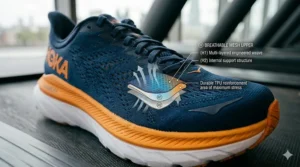
6. New Balance 1080v15
New Balance made a genuinely bold move with the 1080v15, released in early 2026: they retired the famous Fresh Foam compound entirely and replaced it with a brand-new Infinion foam. For a shoe that’s been a cornerstone of the cushioned trainer category for years, that’s a significant gamble. It paid off.
Infinion foam solves the most frustrating problem with traditional max-cushion trainers: midsole compaction. Standard foams pack down — you feel the difference between a new pair and a 300-mile-used pair quite acutely. Infinion foam is engineered to retain its bounce and plush properties considerably longer, which over the course of a year’s treadmill training represents genuine long-term value. The stack height remains roughly 40mm at the heel with a 6mm drop — very similar to the outgoing model — but the feel underfoot is slightly firmer and more resilient than the previous generation’s pillowy ride. Some runners will miss that pure plush sensation; many will prefer the added energy return.
The upgraded upper is a clear step forward: double-layer mesh with a gusseted tongue that doesn’t shift mid-session. At around 280g for men’s, it strikes an excellent balance between protection and weight. The 1080v15 is arguably the most versatile max-cushion shoe in this guide — capable of easy recovery jogs, moderate-paced steady runs, and even the occasional tempo session without feeling completely out of its depth.
For UK runners who do a mix of treadmill and outdoor running (and want one shoe for both), the 1080v15 is the standout recommendation.
✅ Infinion foam retains cushioning longer than competitors
✅ Most versatile pace range of any shoe in this guide
✅ Excellent upper construction with gusseted tongue
❌ Slightly firmer feel than previous 1080 versions — not everyone’s cup of tea
❌ Premium pricing at top of range
Price range: £155–£185. The intelligent long-term investment in your running.
7. Saucony Triumph 23
The Triumph series is Saucony’s flagship cushioned trainer, and the 23rd edition remains one of the most enjoyable max-cushion running experiences available at any price point. At just 263g for men’s, it’s the lightest shoe in this roundup — and for a max-cushion trainer, that’s genuinely remarkable. For context: that’s 57g lighter than the Brooks Glycerin Max 2. Over the course of a 10K treadmill run, you feel that difference.
The PWRRUN PB midsole is Saucony’s take on super-critical foam — it delivers a combination of softness and energy return that gives the Triumph 23 a springy, almost playful quality that heavier max-cushion shoes can’t match. The 10mm drop, like the ASICS, suits heel strikers and traditional gait patterns. The rocker geometry keeps transitions smooth and reduces the muscular effort required to push off, which on the treadmill translates to less fatigue in your calves over longer sessions.
Where the Triumph 23 distinguishes itself most clearly from the HOKA options is character. It feels alive in a way the Bondi 9 doesn’t — there’s a responsiveness and spring to the ride that makes easy-paced runs feel less like a slog and more like something you might actually enjoy. For UK runners who’ve avoided max-cushion shoes because they felt “dead” or “like running through treacle,” the Triumph 23 is the shoe that challenges that assumption.
UK Amazon.co.uk reviews consistently praise comfort for long-distance running and note the shoe holds up well to repeated use.
✅ Lightest max-cushion shoe in this guide — truly exceptional for the stack
✅ PWRRUN PB foam is bouncy and energetic underfoot
✅ Best option for runners who want both cushion and a lively ride
❌ 10mm drop not ideal for all gait types
❌ Upper durability slightly below Brooks and ASICS standards
Price range: £140–£165. The max-cushion shoe that somehow refuses to feel heavy.
How Maximum Cushion Treadmill Shoes Actually Work in British Conditions
There’s a peculiarly British dimension to treadmill shoe choice that the American running press almost never covers: we train indoors because of the weather, not despite it. From October through March, the combination of dark evenings, persistent drizzle, and pavements that vary from “slippery” to “genuinely hazardous” pushes a significant proportion of UK runners onto the treadmill belt. This changes how we should think about shoe performance.
Indoor humidity matters. UK gyms, particularly leisure centres and budget chains, often run warmer and more humid than their US or continental European counterparts. Breathability in the upper isn’t just a comfort consideration — it’s a hygiene one. Shoes with tightly woven synthetic uppers trap heat; the HOKA Clifton 10’s jacquard upper and the New Balance 1080v15’s double-layer mesh perform noticeably better in these conditions.
Repetitive motion is king. Outdoor running involves variable surfaces, camber, and terrain that naturally distribute load across different muscles. Treadmill running is relentlessly repetitive — the same motion, the same surface, mile after mile. This makes cushioning even more important indoors than out. Research published by Loughborough University on biomechanics of repetitive motion suggests that impact forces accumulate differently on constant-speed surfaces, reinforcing the case for maximum cushioning in indoor training.
Recovery-focused training. Many UK runners use their treadmill sessions specifically for recovery — deliberately keeping effort low while maintaining mileage during bad-weather weeks. For these sessions, a pure max-cushion shoe like the HOKA Bondi 9 or Brooks Glycerin Max 2 is arguably more appropriate than a versatile trainer like the New Balance 1080v15.
Size matters differently on the belt. Treadmill running generates more heat in the foot than outdoor running, causing feet to swell slightly. UK buyers should consider going half a size up, particularly for longer sessions over 45 minutes. Nearly every shoe in this guide is available through Amazon.co.uk in half sizes with free returns for Prime members — take full advantage.
Real-World UK Runner Profiles: Which Shoe Is Right for You?
The London Commuter-Turned-Home-Treadmill Convert
Profile: Works long hours in finance, bought a treadmill during lockdown, now does 20–30km per week at home in a two-bed flat in Clapham.
Best pick: HOKA Clifton 10. Lightweight enough that late-evening sessions don’t feel like a chore, cushioned enough to protect joints after a long day at a standing desk. The improved fit means no mid-run fiddling with the tongue. Stores tidily in the hallway cupboard thanks to its relatively slim profile for a max-cushion shoe.
The Weekend Warrior Targeting First Marathon
Profile: Mid-40s, runs 4–5 times per week, using the treadmill for Tuesday/Thursday training sessions and saving long runs for Sunday mornings.
Best pick: New Balance 1080v15 or ASICS Gel-Nimbus 27. The 1080v15’s durability and versatility suits high-mileage mixed training without needing a separate pair for different sessions. If joint protection is the priority — especially for runners who’ve noticed the knees becoming a concern around mile 16 — the Gel-Nimbus 27’s PureGEL technology offers a level of impact absorption that justifies the investment.
The Healthcare Worker / Teacher Using Treadmill for Low-Impact Exercise
Profile: On their feet all day, using treadmill sessions as “active recovery” rather than performance training.
Best pick: Brooks Ghost Max 2. Its PDAC A5500 diabetic certification and APMA Seal of Acceptance signal that it’s been designed for exactly this use case — sustained comfort under prolonged load. The GlideRoll rocker reduces active effort. At the lower end of the price range, it’s a sensible first investment before committing to a more premium option.
The Committed Senior Runner
Profile: 60+, perhaps dealing with arthritis, joint replacements, or general wear-and-tear from decades of running.
Best pick: HOKA Bondi 9. The supercritical foam and 43mm stack represent the maximum protection available from any shoe in this guide. The wide toe box accommodates feet that have spread over the years, and the meta-rocker reduces the active ankle flexion required per stride — invaluable for runners with limited dorsiflexion or ankle stiffness.
How to Choose Maximum Cushion Treadmill Shoes in the UK: 6 Key Criteria
Choosing the right pair isn’t complicated — but there are a handful of factors that most buyers overlook. Here’s what actually matters:
1. Stack height versus foam quality. A 43mm stack of cheap EVA feels worse than a 38mm stack of nitrogen-infused or supercritical foam. Look at the foam technology, not just the numbers. In 2026, supercritical and nitrogen-infused foams (HOKA Bondi 9, Brooks Ghost Max 2, Saucony Triumph 23) represent the state of the art.
2. Heel-to-toe drop. If you’ve always worn traditional running shoes (8–12mm drop), the 10mm options (Gel-Nimbus 27, Triumph 23) will feel immediately natural. If you’ve been training in lower-drop shoes or are prone to Achilles issues, the 5–6mm options (Bondi 9, 1080v15, Ghost Max 2) distribute load more evenly.
3. Width and fit. Feet genuinely differ in width, and max-cushion shoes in particular should feel stable — not sloppy — across the midfoot. Brooks and New Balance offer the most generous range of widths on Amazon.co.uk. HOKA’s sizing has improved considerably but remains slightly narrower in the midfoot.
4. Session duration and intensity. For sessions under 30 minutes or interval work, a lighter shoe like the Clifton 10 or Triumph 23 serves better. For long, easy sessions over 60 minutes, the pure plush of the Bondi 9 or Glycerin Max 2 comes into its own.
5. Durability versus initial feel. The softest shoes (Bondi 9’s supercritical foam) can compress faster under heavy use. The New Balance 1080v15’s Infinion foam is specifically engineered for longevity — worth considering if you’re running 50km+ per week.
6. Budget in context. Prices range from around £115 to £200 in the UK market. Rather than simply buying the cheapest option, calculate cost per km. A £115 shoe lasting 400 miles (640km) works out to roughly £0.18/km. A £185 shoe lasting 600 miles (960km) costs roughly £0.19/km — almost identical. Durability deserves a seat at the table.
Common Mistakes When Buying Maximum Cushion Treadmill Shoes in the UK
Buying the “wrong” Amazon version. Amazon.co.uk is good, but not all listings are identical. Some third-party sellers ship US-spec shoes in US sizing. UK shoe sizes run approximately one size larger than US men’s sizes — a UK 9 is a US 10. Always verify the size guide in the product listing before purchasing. The major brands (HOKA, Brooks, ASICS, New Balance, Saucony) all sell through their own Amazon.co.uk storefronts, which use UK sizing correctly.
Ignoring return policies for footwear. Under the Consumer Contracts Regulations 2013, UK buyers have 14 days to return online purchases — stronger protection than almost anywhere else in the world. Amazon.co.uk typically extends this for Prime members. Don’t be afraid to order two sizes and return one. With max-cushion shoes in particular, fit matters enormously, and sizing varies between brands.
Expecting cushion to compensate for poor form. Maximum cushion shoes reduce impact forces — they don’t eliminate them. Research from organisations such as the NHS consistently emphasises that running form, cadence, and progressive mileage increases are the primary tools for injury prevention. Shoes are one element of the equation, not the whole answer.
Choosing style over substance. Some of the best max-cushion shoes on Amazon.co.uk come in colour combinations that can generously be described as “acquired taste.” The Bondi 9, in particular, prioritises function over fashion. A remarkable number of UK buyers choose a different, less effective shoe because it looks better on Instagram. Your knees don’t care what colour your shoes are.
Neglecting to replace worn pairs. UK runners typically underestimate how quickly max-cushion foam degrades. Most midsoles compress significantly by 400–500 miles (650–800km). The external sole may look fine while the cushioning has lost 30–40% of its protective ability. If your sessions have been feeling harder without obvious reason, check how many kilometres are on your shoes.
Maximum Cushion Shoes vs Traditional Running Shoes: Is the Upgrade Worth It?
| Feature | Traditional Running Shoes | Maximum Cushion Treadmill Shoes |
|---|---|---|
| Stack height | 20–30mm | 35–43mm |
| Impact absorption | Moderate | Superior |
| Joint stress reduction | Some | Significant |
| Weight | Lighter (220–260g) | Heavier (260–320g) |
| Versatility | High | Moderate |
| Durability | 500–600 miles | 300–500 miles |
| Price range (UK) | £60–£120 | £115–£200 |
The numbers tell part of the story, but the real argument for maximum cushion shoes is harder to quantify: cumulative fatigue. Traditional running shoes feel fine for 5K. By 12K on a treadmill, the joints start registering complaints. A max-cushion shoe reduces that accumulation meaningfully — the kind of difference you notice not during the run, but the next morning when you’re walking to the kitchen and your knees aren’t grumbling.
For the casual treadmill runner doing 20km a week or less, a quality traditional running shoe in the £80–£120 range remains entirely viable. Once you cross 30km a week, or if you’re dealing with any existing joint issues, the investment in maximum cushioning becomes straightforwardly sensible. The £50–£80 price premium over a mid-range trainer is genuinely nothing compared to a physio bill, a cortisone injection, or — worse — the prospect of having to stop running altogether for three months.
✨ Don’t Miss These Exclusive Deals!
🔍 Your perfect maximum cushion treadmill shoe is just a click away. Check current pricing and availability for every shoe in this guide on Amazon.co.uk — with free next-day delivery for Prime members.
Long-Term Cost & Maintenance for UK Treadmill Runners
There’s a topic the running shoe industry doesn’t discuss enough: what happens after you buy the shoe. In the UK context — where value for money is a deeply held consumer virtue — understanding total cost of ownership matters.
Mileage tracking. Every shoe in this guide has a different durability profile. The New Balance 1080v15’s Infinion foam leads the category for longevity, typically maintaining performance for 600+ miles. The HOKA Bondi 9’s supercritical foam is exceptional initially but compresses faster under heavy use — expect closer to 350–400 miles before the cushioning feels noticeably reduced. Free running apps like Strava automatically track mileage per shoe pair, making rotation management painless.
Rotation strategy. The most effective approach for serious UK treadmill runners is a two-shoe rotation — alternating between pairs gives the foam 24–48 hours to decompress between sessions. Studies have shown this extends midsole life by up to 30%. At UK prices, rotating two pairs of mid-range shoes often works out cheaper long-term than repeatedly replacing a single premium pair.
UK-specific storage note. The damp atmosphere of British garages and garden sheds accelerates foam degradation. Store your running shoes indoors, ideally at room temperature. Don’t leave them in a gym bag in the boot of the car overnight — moisture is the silent killer of running shoe midsoles.
Cleaning. All seven shoes in this guide have engineered mesh uppers that shouldn’t be machine-washed (heat degrades the foam adhesives). A soft brush, cold water, and mild soap is the correct approach — relevant advice for a market where the temptation to throw everything in the wash is strong.
FAQ: Maximum Cushion Treadmill Shoes UK
❓ Are maximum cushion running shoes better for treadmill running than outdoor use?
❓ What stack height is considered 'maximum cushion' in running shoes?
❓ Can I use maximum cushion treadmill shoes for outdoor running in the UK?
❓ Do maximum cushion running shoes arrive quickly from Amazon.co.uk?
❓ How often should I replace maximum cushion treadmill shoes in the UK?
Conclusion
The case for maximum cushion treadmill shoes in the UK has never been stronger. We live in a country where winter running outdoors requires the temperament of a Himalayan sherpa and the waterproofing of a North Sea trawlerman — and our indoor training sessions deserve footwear that makes those grey-sky belt miles feel substantially less grim.
The HOKA Bondi 9 remains the benchmark for pure plush cushioning and is the obvious first choice for runners who prioritise comfort above everything. The New Balance 1080v15 earns the versatility crown with its new Infinion foam. The Brooks Ghost Max 2 represents the best value in the category — nobody will believe what that shoe costs when they feel the quality of the ride. And the Saucony Triumph 23 is the option for runners who refuse to believe that “maximum cushion” and “lightweight” have to be mutually exclusive.
Whatever your pace, your mileage, your budget, or the particular character of your aching knees, there’s a shoe in this list that’ll transform your treadmill sessions. Stop treating your footwear as an afterthought. Your joints are trying to tell you something.
✨ Don’t Miss These Exclusive Deals!
🔍 Ready to upgrade your treadmill training? Click on any highlighted shoe name to check current pricing and real customer reviews on Amazon.co.uk. Free returns available on all footwear for Prime members — so there’s no reason not to try.
Recommended for You
- Best Carbon Plate Shoes for Treadmill 2026: 7 Expert UK Picks
- Best Cushioned Running Shoes for Treadmill UK 2026
- Best Stability Shoes for Treadmill Running UK 2026: Top 7 Picks
Disclaimer: This article contains affiliate links. As an Amazon Associate, I earn from qualifying purchases. If you purchase products through these links, we may earn a small commission at no additional cost to you.
✨ Found this helpful? Share it with your mates! 💬🤗
