

In This Article
Every runner has met the lie. You felt quick, the numbers said otherwise, and somewhere between the lamppost and the postbox your confidence left the building. A good fitness tracker for running ends that argument. It records what your legs did rather than what your ego remembers: pace, distance, heart rate, cadence and recovery. Then it hands you the evidence.
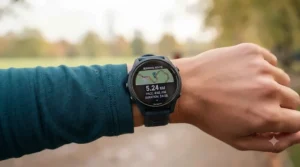
The trouble is that the market is a jungle. Slim bands, budget GPS watches, AMOLED flagships and phone-only apps all claim to be the best fitness tracker for running, and the spec sheets read like alphabet soup. This guide cuts through it for UK runners. It compares seven real devices, from around £110 to around £480, with honest analysis of what each one means on the pavement, park or towpath.
What Is a Fitness Tracker for Running?
A fitness tracker for running is a wrist-worn device that records your runs using satellite positioning, an optical heart-rate sensor and motion sensors. It then turns that raw data into pace, distance, heart-rate zones, estimated calories and training trends. Some are slim bands; others are full running watches with deeper coaching tools.
A note on method: this guide is built from manufacturer specifications, published independent reviews and peer-reviewed research, not from my own lab testing. Where I couldn’t verify review data for a product, I say so. Prices are ranges at the time of research and they move constantly, so check the current price before you buy.
Along the way we’ll dig into the running fitness tracker features that matter, fitness tracker accuracy for running, GPS tracking, calorie estimation, running data apps, and the eternal fitness tracker vs running watch debate.
Quick Comparison: 7 Fitness Tracker for Running Options at a Glance
| Product | Type | Best For | Price range |
|---|---|---|---|
| Fitbit Charge 6 | Slim band | Gym-goers, casual joggers, sleep tracking | Around £110-£150 |
| Garmin Forerunner 55 | Entry running watch | Simple, no-frills tracking | Around £120-£160 |
| Amazfit Cheetah | Running watch | Dual-band GPS on a budget | Around £160-£200 |
| Coros Pace 3 | Lightweight running watch | Value and long battery life | Around £200-£230 |
| Garmin Forerunner 165 | AMOLED running watch | Beginners who want Garmin coaching | Around £230-£280 |
| Garmin Forerunner 265 | Advanced running watch | Serious all-rounders | Around £330-£430 |
| Garmin Forerunner 570 | Premium running watch | Data-hungry runners | Around £430-£480 |
Read the table top to bottom and you’ll notice the price ladder is really a GPS-and-coaching ladder. The Fitbit Charge 6 and Garmin Forerunner 55 sit at the bottom with the simplest positioning. The Amazfit Cheetah and Coros Pace 3 make dual-band GPS surprisingly cheap, and the Garmin trio adds coaching depth as the money climbs. If you run mostly on open roads, the middle of the table offers the best value. If you weave between tall buildings or tree cover, the multi-band options earn their keep. Budget buyers should note that the Coros Pace 3 sacrifices smartwatch polish, not tracking quality, for its lower price.
💬 Just one click — help others make better buying decisions too!😊
Top 7 Fitness Tracker for Running Picks: Expert Analysis
Here are seven real, currently sold devices across budget, mid-range and premium tiers. Each entry says what the specs mean in practice, who the device suits, and what reviewers keep saying about it.
1. Fitbit Charge 6 — slimmest option for casual runners
Where running watches shout, the Fitbit Charge 6 whispers. It’s a slim band you’ll happily wear around the clock. It has built-in GPS with GLONASS, an upgraded heart-rate sensor, ECG, stress and skin-temperature sensing, 40-plus exercise modes and a rated battery of about seven days. In practice, that means excellent sleep and daily-activity data but modest running-specific insight. There’s no altimeter, so hilly routes won’t get barometric elevation data.
Here’s what the spec sheet won’t tell you. The GPS antenna reportedly struggles when the band is worn snugly, and both DC Rainmaker and TechRadar found the strap had to be loosened for a decent signal, which then hurts heart-rate accuracy. The band can borrow your phone’s GPS instead, so it suits runners who carry a phone anyway: the park jogger, not the race-day planner. Reviewer sentiment across Android Authority, Coach and TechRadar is consistent. It’s great for everyday health, but disappointing for heart rate during hard efforts and for GPS reliability. Some features also sit behind the Fitbit Premium subscription.
Pros:
- ✅ Comfortable enough to wear 24/7
- ✅ Strong sleep and wellness tracking
- ✅ Phone GPS fallback keeps runs recorded
Cons:
- ❌ Built-in GPS can drop out
- ❌ Heart rate lags during hard efforts
Price: around £110-£150. It’s a fine wellness band and a compromise for serious running.
2. Garmin Forerunner 55 — no-frills entry into Garmin’s ecosystem
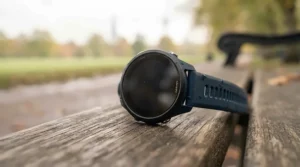
Think of the Garmin Forerunner 55 as the reliable hatchback of running tech: unglamorous, sensible and happy doing the basics. Comparison data shows it uses GPS only (a single satellite system), with up to 14 days in smartwatch mode and up to 20 hours of GPS. That’s roughly a fortnight of daily wear between charges, and enough tracking time for a marathon with hours to spare.
The catch is age. It launched in early 2021, lacks Training Effect and HRV status, and, according to Garmin Rumors, won’t receive software updates far into the future. It doesn’t have an AMOLED screen either, though plenty of runners like a screen that stays readable in bright sun and rain. It suits someone who wants pace, distance, heart rate and simple daily suggested workouts without paying for extras. Because it relies on one constellation, expect more drift near tall buildings than on multi-band rivals.
I couldn’t verify a large body of recent independent review data for this model, so treat sentiment as limited. Comparison guides consistently frame it as the basics option rather than a training tool.
Pros:
- ✅ Simple, dependable run tracking
- ✅ Long battery life for daily wear
- ✅ Garmin’s mature app ecosystem
Cons:
- ❌ Single-constellation GPS drifts near buildings
- ❌ Older platform with limited future updates
Price: around £120-£160. Treat it as a cheap starting point, not a long-term investment if you’ll soon want analytics.
3. Amazfit Cheetah — dual-band GPS on a budget
The Amazfit Cheetah is the cheeky challenger. One UK roundup lists it at around £180 with a bright AMOLED display, about 14 days of battery and dual-band GPS. Why should you care? A second frequency helps the watch correct signal errors caused by reflections, which is why pace can wobble between tall buildings. At this price, that’s a headline feature.
A practical warning: the Cheetah name covers several variants (round, square and Pro editions), and their features differ, so check the exact model on the listing. Data lives in Amazfit’s Zepp app, which reportedly shares runs with third-party platforms, though you should confirm compatibility before buying. My analytical take is that it suits runners who put GPS tracking first and coaching second. It doesn’t match Garmin’s depth of recovery metrics.
On review sentiment, I could only verify roundup-level coverage, without a strong body of independent lab-style testing. Read the claims as promising rather than proven.
Pros:
- ✅ Dual-band GPS at a low price
- ✅ Bright AMOLED display
- ✅ Battery lasts roughly two weeks
Cons:
- ❌ Thinner training analytics than Garmin
- ❌ Several confusingly similar model variants
Price: around £160-£200. It offers strong GPS per pound if you’re happy with lighter coaching.
4. Coros Pace 3 — featherweight with multi-band GPS
At roughly 30-40g depending on the strap, the Coros Pace 3 is so light you’d have to glance down to check it’s there. It offers dual-frequency GPS, a rated 38 hours of GPS battery and a dedicated track-run mode. In everyday terms, that’s multi-band positioning that’s rare at this price and a battery that shrugs off heavy training. Tom’s Guide, though, saw five to six days with heavy use.
The analytical take is that this is the one for runners who value GPS and battery basics over polish. One UK comparison found its distance landed within 0.4% of a Garmin over a 10 km loop, but that’s a single test, not gospel. Coros doesn’t push daily workouts the way Garmin does. Instead, you download structured plans for events such as 5Ks and marathons. Reviewers flag no music streaming (MP3 transfer only), an all-plastic build and no ANT+ support. The consensus is accurate, light and cheap, but less stylish and lighter on smart features.
Pros:
- ✅ Multi-band GPS at a mid-budget price
- ✅ Featherweight, comfortable on long runs
- ✅ Battery stretches across days of training
Cons:
- ❌ No music streaming, MP3 transfer only
- ❌ Plastic build and no ANT+ support
Price: around £200-£230. It’s arguably the best value on this list.
5. Garmin Forerunner 165 — friendliest Garmin for beginners
The Garmin Forerunner 165 hands you an AMOLED screen and Garmin’s coaching tools at a kinder price. It tracks GPS, GLONASS and Galileo, though on a single band. Battery is up to 11 days in smartwatch mode and up to 19 hours of GPS. Training Effect, HRV status, adaptive training plans and daily suggested workouts are included. In practice, you get a virtual coach that nudges you towards a race without drowning you in graphs.
What’s missing is Training Readiness and Training Status, the two features that justify paying more for the Forerunner 265. The music version also costs extra. Analysts comparing the two conclude the multi-GNSS setup is perfectly adequate for roads, parks and standard trails, and TechRadar names it its pick for beginners. Reviewer sentiment leans towards “approachable and not overcomplicated”, with the recurring criticism that it lacks multi-band GPS at its price.
Pros:
- ✅ Bright AMOLED display at an entry price
- ✅ Garmin coaching plans and daily workouts
- ✅ Around 11 days of smartwatch battery
Cons:
- ❌ No multi-band GPS
- ❌ No Training Readiness; music costs extra
Price: around £230-£280. It’s a sensible first serious watch.
6. Garmin Forerunner 265 — best all-round training tool
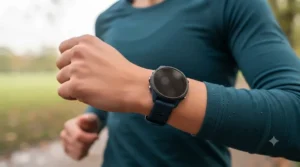
The Garmin Forerunner 265 is the watch most UK roundups land on for most runners. It combines multi-band GPS, an AMOLED display, Training Readiness and Training Status in two sizes (42mm and 46mm), with music storage built in. Battery is up to 13 days in smartwatch mode and up to 20 hours of GPS, falling to around 14 hours with all-systems multi-band. One UK test recorded a measured 10 km within 1.2%.
Training Readiness is the real reason to pay extra. It’s a daily score out of 100 blending sleep, HRV, recovery and recent training load, and it works as a gut-check against overtraining. You don’t need to obey it slavishly. It suits half-marathon and marathon trainees who enjoy their data. Reviewer consensus is that it’s the top all-rounder, and the recurring complaint is price, with Tom’s Guide calling it pricey.
Pros:
- ✅ Multi-band GPS for city routes
- ✅ Deep training and recovery insight
- ✅ Two case sizes suit different wrists
Cons:
- ❌ Priced well above budget rivals
- ❌ Multi-band mode shortens battery life
Price: around £330-£430, depending on variant and retailer. It’s worth it if you’ll use the training metrics.
7. Garmin Forerunner 570 — premium tracking without the flagship bill
The Garmin Forerunner 570 shares its Elevate Gen 5 heart-rate sensor and multi-band-capable GPS chipset with the pricier Forerunner 970, according to Wareable, and adds a barometric altimeter, AMOLED screen, and a microphone and speaker for calls. Battery is up to 10 days (42mm) or 11 days (47mm) in smartwatch mode, and up to 18 hours of standard GPS, dropping to roughly 13-14 hours in all-systems multi-band mode. Translation: brilliant for a marathon block, but you’ll charge it more often than the budget options.
The analytical take: it’s for runners who want the latest sensor and a very bright display, and don’t need the 970’s ECG, flashlight or full offline maps. Reviewers praise the tracking and user experience, and Trusted Reviews calls the price its biggest issue, especially against the Forerunner 265.
Pros:
- ✅ Flagship-grade heart-rate sensor and GPS
- ✅ Bright AMOLED with five-button control
- ✅ Barometric altimeter for hill data
Cons:
- ❌ Price sits far above budget rivals
- ❌ Breadcrumb navigation only, no full maps
Price: around £430-£480. Only pay it if you’ll use what the Forerunner 265 lacks.
Top 7 at a Glance: Spec Comparison
| Product | GPS | Display | Battery (rated) | Best For |
|---|---|---|---|---|
| Fitbit Charge 6 | GPS + GLONASS, phone fallback | Small colour band screen | Up to 7 days everyday use | Wellness-first casual runners |
| Garmin Forerunner 55 | GPS only | Non-AMOLED | Up to 14 days; about 20h GPS | Simple, cheap tracking |
| Amazfit Cheetah | Dual-band | AMOLED | About 14 days (per roundup) | Budget GPS accuracy |
| Coros Pace 3 | Dual-frequency | Bright, lightweight | 38h GPS | Value and battery |
| Garmin Forerunner 165 | Multi-GNSS, single-band | AMOLED | Up to 11 days; 19h GPS | Beginners |
| Garmin Forerunner 265 | Multi-band | AMOLED | Up to 13 days; 20h GPS | Training-focused runners |
| Garmin Forerunner 570 | Multi-band | AMOLED | 10-11 days; 18h GPS | Premium data lovers |
I’ve deliberately left out star ratings, because I won’t invent scores I can’t verify. The table shows the real pattern: dual-band GPS tracking arrives at around £160-£200 with the Amazfit Cheetah, while Garmin’s premium prices buy coaching software, not necessarily better satellite reception. If your routes are open, the Garmin Forerunner 165 may be all you need. If you’re racing on a plan, the Garmin Forerunner 265 is the sensible step up.
Running Fitness Tracker Features That Actually Matter (And Those That Don’t)
Spec sheets love quantity. Runners need quality in a handful of places. These are the running fitness tracker features worth paying for:
- GPS reliability. This decides whether your pace and distance are trustworthy.
- Heart-rate behaviour at speed. A sensor that’s fine on a walk can lag on intervals.
- Battery versus your longest run. Add a safety margin, since real-world figures usually undershoot claims.
- Physical buttons. They beat touchscreens in rain and with sweaty fingers.
- A sync-friendly app. You’ll be living in it after every run.
Now the features that rarely matter for pure running: contactless payments, on-wrist calls, voice assistants and, unless you have a medical reason, ECG. They’re pleasant extras, not reasons to spend £150 more. Even a big feature like Training Readiness is helpful only if you actually adjust your training around it. Here’s a rule of thumb: pay for the two or three running fitness tracker features you’ll use weekly and ignore the rest. That’s why the Coros Pace 3 can beat pricier gadgets on value while the Garmin Forerunner 570 is a luxury for many runners. And if a shop assistant leads with sleep coaching or smartwatch apps, remind them you asked about running.
Fitness Tracker Accuracy for Running: What the Research Actually Says
The reassuring news is that wrist sensors are better than their reputation for heart rate. A systematic review of 158 publications covering nine consumer brands, including Apple, Fitbit, Garmin and Polar, concluded that devices measured heart rate within acceptable limits. In controlled settings, just over half of the heart-rate comparisons landed within ±3%. The less reassuring news is that free-living data (real running, real arm swing, real sweat) is thin. Older research also suggests wrist devices tend to underestimate heart rate at higher intensities and with more arm movement, which is exactly what interval running involves.
What does that mean for fitness tracker accuracy for running in your daily life? Treat steady runs as reliable and hard intervals as approximate. If you follow heart-rate-based sessions, pair your watch with a chest strap. It’s a sensible upgrade for tracker owners of every budget.
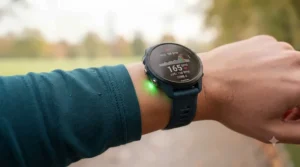
You can also test distance accuracy yourself. Run a measured route, or a standard 400m athletics track lap in lane one, and compare. A watch within about 1-2% is behaving normally. Large, consistent errors usually trace back to poor GPS tracking conditions or a wrongly fitted strap, not a faulty device. Wear it snug, just above the wrist bone, and give your fitness tracker for running a moment outdoors to find satellites before you set off.
GPS Tracking Explained: Single-Band, Multi-Band and Real-World Drift
GPS tracking sounds simple: satellites send signals, your watch listens. The catch is that the signal bounces. Between tall buildings, or under dense tree cover, reflections can trick a single-band receiver into placing you a few metres off. Your route then looks like a drunken spider’s, and your pace jumps around. Dual-band or multi-band receivers listen on two frequencies, which lets them cancel some of those errors. According to GPS.gov, that dual-frequency approach corrects ionospheric delay and can improve reliability under trees.
Here’s how the seven devices sort out. The Fitbit Charge 6, Garmin Forerunner 55 and Garmin Forerunner 165 use single-band GPS tracking, which is perfectly fine on open roads, tracks and parks. The Amazfit Cheetah, Coros Pace 3, Garmin Forerunner 265 and Garmin Forerunner 570 offer multi-band, which matters most for city centres and woodland trails.
Multi-band GPS tracking has a price in battery. The Garmin Forerunner 265, for instance, drops from about 20 hours of GPS to about 14 in its all-systems multi-band mode. For a 10K, nobody will care. For an ultra, you will. Rule of thumb: buy multi-band only if your regular routes are messy, and switch it on for those runs.
Calorie Estimation: How Far Can You Trust the Number?
Bluntly: don’t treat calorie estimation as a measurement. A Stanford-led validation study of seven wrist-worn devices compared them with indirect calorimetry in 60 volunteers. Heart-rate errors were modest, but no device achieved energy-expenditure error below 20%. Across devices, the median error during running was around 31%. The study’s own conclusion urged caution about using energy expenditure in health programmes. It’s a few years old and the hardware has improved, but nothing in newer wrist sensors suggests the problem has been solved.
Why so wobbly? Your watch multiplies heart rate, movement and profile data through an algorithm. It can’t see your running economy, your fitness or your metabolism. Two people of identical weight can burn different amounts over the same 10 km.
Here’s a saner approach. A commonly quoted rule of thumb is about 1 kcal per kilogram of body weight per kilometre run, so a 70kg runner covering 10 km lands somewhere near 700 kcal. Use that as a sanity check against your tracker. If your device says 1,100, it’s optimistic. Use calorie estimation for trends across weeks, not as a licence to “eat back” every number after a run. If weight or nutrition matters to your goals, speak to a GP or registered dietitian. A wrist gadget isn’t a substitute.
Fitness Tracker vs Running Watch: Which One Do You Actually Need?
The fitness tracker vs running watch question comes down to one word: purpose. A band-style fitness tracker for running is designed around all-day wellness (sleep, steps, stress) with running as one activity among many. A running watch flips the priority: GPS, heart rate and training analysis come first, and everything else is a bonus.
| Option | GPS tracking | Training tools | Comfort | Best For |
|---|---|---|---|---|
| Slim band | Often phone-assisted, less consistent | Basic | Excellent, 24/7 | Casual joggers: Fitbit Charge 6 |
| Budget running watch | Dedicated GPS, some multi-band | Pacing basics, plans | Good | Regular runners: Garmin Forerunner 55, Amazfit Cheetah, Coros Pace 3 |
| Mid/premium running watch | Dedicated, multi-band on higher tiers | Training load, readiness, coaching | Good, larger case | Race training: Garmin Forerunner 165, Garmin Forerunner 265, Garmin Forerunner 570 |
| Phone app only | Phone GPS, no wrist heart rate | Whatever the app offers | Bulky in a pocket | Trying running for free |
Looking at the comparison above, the real dividing line isn’t price but reliability. The Fitbit Charge 6 is the outlier because its GPS reportedly needs a loose fit, which fights its own heart-rate sensor. If you run more than twice a week, or you’re training for a race, a dedicated running watch will serve you better. If running is one habit among many (gym, cycling, sleep tracking), a band can be enough.
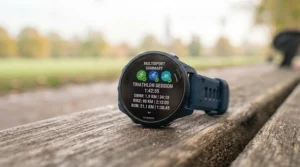
In short, choose a band if comfort and wellness lead your life, and a running watch if pace, plans and progress do. Most people reading a guide about a fitness tracker for running end up wanting the latter.
Running Data Apps: Where Your Numbers Actually Live
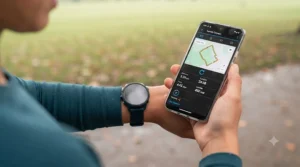
The watch collects. The app is where the meaning gets made. Running data apps are where you’ll review pace splits, heart-rate zones, weekly load and recovery, and they’re worth as much consideration as the hardware.
Each brand pairs with its own app. Garmin Forerunner 55, Garmin Forerunner 165, Garmin Forerunner 265 and Garmin Forerunner 570 feed Garmin’s Connect app, the Coros Pace 3 uses the Coros app, the Amazfit Cheetah uses Zepp, and the Fitbit Charge 6 uses the Fitbit app. Reviewers note that Fitbit locks some features behind a Premium subscription, so check what’s included. Most mainstream trackers can also share runs to third-party platforms such as Strava, but compatibility changes, so confirm it before buying.
Three tips make running data apps far more useful:
- Pick one home for your history. Scattering runs across apps means you’ll never see a proper trend.
- Set privacy zones. If you upload to a social platform, hide your home and workplace start points.
- Review weekly, not daily. One bad run is noise. Four weeks of easier pace at the same heart rate is signal.
Choosing between similar watches? Let the app be the tiebreaker. If you enjoy the interface, you’ll actually look at your data.
How to Choose a Fitness Tracker for Running: 6 Steps
The quickest route to the right fitness tracker for running is to answer six questions in order.
- Set your budget. Decide a ceiling first, because the price ladder above shifts what you get from basics to coaching.
- Match GPS to your routes. Open roads and parks work with single-band; tall buildings and woodland justify multi-band.
- Match battery to your longest run. Check the rated GPS hours, then leave a margin, because real use rarely matches the claim.
- Decide how much coaching you want. Daily suggested workouts suit beginners; Training Readiness suits data-driven racers.
- Check the app ecosystem. Confirm subscriptions, sync options and whether you like the interface.
- Try for comfort. Size, weight and strap matter on long runs; the Coros Pace 3 is light, while larger cases can feel bulky on small wrists.
Follow those six steps and you’ll likely narrow seven options to two.
✨ Ready to Find Your Running Partner?
🔍 Take your training to the next level with these carefully researched trackers. Click any bold product name to check current price and availability. Whether you’re chasing a first 5K or a spring marathon, the right data makes every run smarter! 🏃♂️⚡
Setting Up Your Fitness Tracker for Running: The First 30 Days
Buying is the easy bit. The first month decides whether your fitness tracker for running becomes a training partner or a drawer ornament.
Days 1-3: get the basics right. Update the firmware, enter your correct height, weight and age, and check your heart-rate zones. Take the device outside and let it find satellites before your first run, not while you’re already moving. Wear it snug, just above the wrist bone.
Week 1: capture a baseline. Run easily and don’t chase numbers. You’re teaching the device, and yourself, what normal looks like.
Week 2: verify distance. Run a route you know is measured and compare. Consider borrowing or buying a chest strap for a few sessions to see how your wrist heart rate compares.
Weeks 3-4: look at weekly load. The NHS physical activity guidelines suggest adults do at least 150 minutes of moderate or 75 minutes of vigorous activity weekly, plus strength work on two or more days. Running usually counts as vigorous, so use your tracker to check you’re hitting your target without ramping up too fast. Speak to your GP first if you’ve been inactive for a while or have medical concerns.
Common first-month mistakes include changing heart-rate zones weekly, chasing calorie totals, wearing the band loosely and ignoring rest days. For maintenance, rinse and dry the strap after sweaty runs, clean the sensor with a soft cloth, and charge before long runs rather than after the battery dies.
Which Fitness Tracker for Running Suits Which Runner? Three Scenarios
Specs only make sense against real lives. These three profiles show how the seven options map to typical UK runners.
Scenario 1: The new parkrun regular. Three runs a week on park loops, a £120-£160 budget, phone usually in a pocket. The Garmin Forerunner 55 covers pace, distance and heart rate simply. If dual-band GPS matters, because your route is lined with trees, the Amazfit Cheetah is worth a look. Both are cheaper than a first pair of decent trainers.
Scenario 2: The city half-marathon trainee. Twenty-five to thirty miles a week, tall-building routes, a spring race and a £200-£430 budget. Multi-band GPS is worth having, so the Coros Pace 3 offers value, and the Garmin Forerunner 265 adds structured training insight for a full plan. If you’re still deciding, the Garmin Forerunner 165 is the calmer step in.
Scenario 3: The wellness-first mixed trainer. Two short runs a week alongside gym sessions and cycling, with sleep data as a priority. The Fitbit Charge 6 fits better than a running watch, provided you accept its GPS limits and carry a phone. For a data-loving marathoner with a bigger budget, the Garmin Forerunner 570 is the indulgence.
FAQ
❓ Can a fitness tracker for running replace a chest strap?
❓ How long does the battery last with GPS switched on?
❓ Do I need my phone with me when running with a tracker?
❓ Is a budget fitness tracker for running accurate enough for a first 5K?
❓ Do running data apps need a paid subscription?
Conclusion: Which Fitness Tracker for Running Should You Buy?
The best fitness tracker for running isn’t the one with the most sensors. It’s the one that matches your routes, your budget and how seriously you train. If you’re starting out, the Garmin Forerunner 165 and Garmin Forerunner 55 deliver the fundamentals with friendly software. If value is your priority, the Coros Pace 3 and Amazfit Cheetah put multi-band GPS tracking within reach. If you’re training for a race, the Garmin Forerunner 265 is the best all-rounder, while the Garmin Forerunner 570 suits runners who want the newest sensor and can afford it. If running is a side hobby to a wellness routine, the Fitbit Charge 6 is comfortable, provided you accept its GPS limits.
Whatever you choose, remember the research: wrist heart rate is usually decent, calorie estimation is a rough guide at best, and your training consistency matters more than any gadget. Pair your device with a good app, learn its quirks, and let the data serve your running, not the other way around.
✨ Ready to Start Tracking Smarter?
🔍 Pick the fitness tracker for running that fits your routes and budget, then click any bold product name above to check current price and availability. Your next personal best is just a few well-tracked miles away! 🏃♀️🚀
Recommended for You
- Fitbit vs Garmin Fitness Tracker For Running: 7 Best Picks (2026)
- Fitness Band Under £50: 7 Best Budget Picks For the UK (2026)
- Budget GPS Running Watch: 7 Brilliant Picks For UK Runners (2026)
Disclaimer: This article contains affiliate links. As an Amazon Associate, I earn from qualifying purchases. If you purchase products through these links, we may earn a small commission at no additional cost to you.
✨ Found this helpful? Share it with your friends! 💬🤗
