

In This Article
A budget GPS running watch is a wrist-worn sports tracker with built-in satellite positioning, optical heart rate and run-specific metrics, priced well below premium models (typically under £250, and often under £150). It logs pace, distance and route without your phone, giving beginners and improvers the core data serious runners rely on.
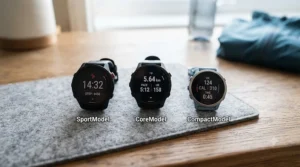
2026 is a great year to shop, because the gap between a budget GPS running watch and a flagship has never been narrower. The Global Positioning System is operated by the US Space Force with more than 30 operational satellites. It works the same way whether your watch costs a modest sum or a small fortune, and Europe’s Galileo and other constellations add to it. What the extra money buys is polish: sharper screens, deeper analytics, longer battery. So the real question isn’t “can I afford accurate tracking?” It’s “which compromises can I live with?”
This guide compares seven real models. They run from a cheap GPS running watch that barely dents the wallet to entry-level running watch features you once needed a Garmin-sized budget to enjoy. It also takes value for money seriously, weighs budget smartwatch alternatives, and shows where a running watch under £150 is plenty.
One honest note: everything below is built from published specifications and aggregated reviewer findings, not personal wear-testing. Prices are ranges seen at the time of research, so always check the current price.
Quick Comparison: 7 Budget GPS Running Watch Picks at a Glance
| Watch | Price range | GPS type | Battery (watch mode) | Best for |
|---|---|---|---|---|
| CMF Watch 3 Pro | roughly £80-£100 | Dual-band | up to 13 days | Tightest budgets |
| Amazfit Active 2 | around £95-£130 | Multi-system | up to 10 days | Maps on a budget |
| Garmin Forerunner 55 | around £100-£130 | Single-band, multi-system | up to 14 days | Simple, proven training |
| Amazfit Cheetah Round | roughly £110-£145 | Dual-band | around two weeks (claimed) | Accuracy under £150 |
| Coros Pace 3 | around £190-£220 | Dual-frequency (optional) | up to 24 days | Battery and lightness |
| Garmin Forerunner 165 | around £200-£250 | Single-band, multi-system | up to 11 days | Beginners wanting AMOLED |
| Coros Pace 4 | low-to-mid £200s | Multi-band | up to 19 days | Best all-rounder |
Read the table top to bottom and a pattern emerges. The cheapest options lean on modern hardware such as dual-band GPS and bright AMOLED screens, while the £200-plus group buys coaching depth and refinement. If you’re set on a running watch under £150, the Amazfit Cheetah Round is the most interesting sweet spot for satellite accuracy. The Coros Pace 4 is the most complete package if you can stretch. Battery figures are manufacturer or reviewer claims, and they shrink with always-on screens and multi-band GPS.
💬 Just one click — help others make better buying decisions too!😊
Top 7 Budget GPS Running Watch Picks: Expert Analysis
Each verdict below covers what the specification means on the road, who the watch suits, what reviewers consistently say, and whether the price earns its keep.
1. CMF Watch 3 Pro — cheapest dual-band GPS around
The headline is dual-band GPS at a price that once bought little more than a step counter. The 1.43-inch AMOLED screen pairs with dual-band GPS (plus GLONASS, Galileo, QZSS and BeiDou) and up to 13 days of battery. Dual-band means the watch listens on two satellite frequencies, so reflections off tall buildings trip it up less. One reviewer clocked a lock in about eight seconds, against 35 on its predecessor.
Based on the spec comparison, this answers “what’s the least I can spend and still get a proper run trace?” It suits casual runners who want a stylish everyday watch, and it’s the strongest of the budget smartwatch alternatives here for pure tracking. The compromises are real: no altimeter, thin sleep insights, a chunky 47g body and no swimming. One treadmill comparison found distance trailing slightly, so basic GPS accuracy is good rather than gospel.
Reviewers consistently praise the display, battery and GPS for the money, and flag the unfinished running coach. I couldn’t verify a dependable pool of Amazon UK ratings, so that reflects published reviews only.
Pros:
- ✅ Dual-band GPS at a very low price
- ✅ Bright 1.43-inch AMOLED screen
- ✅ Up to 13 days’ battery in normal use
Cons:
- ❌ Not suitable for swimming
- ❌ No altimeter or contactless payments
Expect roughly £80-£100. As a budget GPS running watch, it sets the value-for-money bar the others must clear.

2. Amazfit Active 2 — offline maps at pocket-money prices
Free offline maps and turn-by-turn directions on a watch that often costs less than decent trainers. Trusted Reviews singled out full mapping at a sub-£100 review price as the surprise. The 1.32-inch AMOLED screen, five satellite systems and 164 workout profiles come with support for external heart-rate straps and power meters, plus Strava and TrainingPeaks sharing. In practice, you can pair a chest strap for trustworthy interval data and let the watch handle navigation. Battery lasts roughly 10 days typically and about five under heavy use.
The catch is precision. Wareable judged the GPS acceptable but not in step with a Garmin, with busier-looking tracks, and found wrist heart rate unconvincing. Treat basic GPS accuracy here as fine for steady runs and slightly optimistic for race-pace analysis. It suits hybrid runners and hikers, and it’s among the most capable budget smartwatch alternatives around.
On the Amazon UK listing, the sport version averaged about 4.3 out of 5 across nearly 3,000 ratings at the time of research. Professional reviewers echo the praise for value but mention occasional software lag.
Pros:
- ✅ Free offline maps and turn-by-turn navigation
- ✅ Pairs with external heart-rate and power sensors
- ✅ Bright AMOLED and week-plus battery
Cons:
- ❌ Software lag reported by reviewers
- ❌ Wrist heart rate less dependable than rivals
Around £95-£130 by version. Few rivals in the running watch under £150 bracket pack in as many features, so value for money is superb.
3. Garmin Forerunner 55 — boring in the best way
Garmin’s veteran entry-level runner is still supported and far cheaper than its launch price of around £180. It tracks with GPS, GLONASS and Galileo and lasts up to 14 days as a watch or about 20 hours in GPS mode, which should mean roughly a week of training between charges. Among entry-level running watch features, its 37g body and simple five-button control are joined by VO2 max, a race predictor, cadence alerts and Body Battery recovery scoring. Earlier budget watches lacked those extras.
It’s aimed squarely at first-timers who want Garmin’s polished app without paying for AMOLED. Reviewers cite the trade-offs: a low-quality screen, no barometric altimeter, no touchscreen and no strength-workout mode. It won’t wow anyone on the wrist, but it rarely lets anyone down mid-run.
Professional reviewers consistently rate its heart-rate tracking, GPS and battery as strong for the money. A retailer comparison site lists only a modest pool of user reviews, too small for me to quote an average.
Pros:
- ✅ Polished Garmin app and Body Battery insights
- ✅ Up to 14 days’ battery as a watch
- ✅ Race predictor and cadence alerts included
Cons:
- ❌ Dated, low-resolution screen
- ❌ No barometric altimeter or touchscreen
Around £100-£130 depending on retailer and colour. If you want Garmin’s ecosystem, it’s one of the best-value options in this cheap GPS running watch bracket.
4. Amazfit Cheetah Round — dual-band accuracy under £150
Dual-band GPS, a big round AMOLED screen and route navigation now fit comfortably inside a running watch under £150 budget. Amazfit’s MaxTrack antenna listens to two satellite bands (L1 and L5), which helps between tall buildings and under trees. The 1.39-inch screen is generous, and 3GB of storage leaves room for music and routes. The manufacturer claims roughly two weeks of typical battery.
It launched at about £229, which is why today’s discounting makes it a rare bargain. Wareable, reviewing the near-identical Cheetah Square, found GPS effective for the money but prone to wandering on twisty paths. Its heart-rate averages landed close to a Garmin chest strap over two runs. Expect city-friendly tracking, some drift under trees, and the usual Zepp software quirks.
On the Amazon UK listing, this model averaged about 4.4 out of 5 from over 600 ratings at the time of research. Professional reviewers praise the design and hardware-for-the-money, while noting software rough edges.
Pros:
- ✅ Dual-band GPS under £150
- ✅ Large, sharp 1.39-inch AMOLED display
- ✅ Route navigation and music storage
Cons:
- ❌ Zepp software quirks
- ❌ GPS drift on twisty wooded paths
Roughly £110-£145. For a cheap GPS running watch with dual-band hardware, this is arguably the strongest value for money under £150.
5. Coros Pace 3 — lightest, longest-lasting value benchmark
At 30g with the nylon strap (39g with silicone) and 11.7mm thick, you’ll forget it’s on your wrist. The 1.2-inch touchscreen uses a memory-in-pixel display that stays readable in sunshine and sips power. Coros claims up to 24 days as a watch and 38 hours of standard GPS, with less if you enable optional dual-frequency tracking. That’s enough for several marathons before a charge.
Coros repriced it when the Pace 4 launched, which makes it a smart choice for runners who prioritise endurance over screen glamour. Reviewers note its training analysis is solid but less hand-holding than Garmin’s, and navigation is breadcrumb-only with no maps. Basic GPS accuracy is strong, especially in dual-frequency mode, though battery falls accordingly.
The Amazon UK listing carried about 4.6 out of 5 from roughly 110 ratings, with an Amazon’s Choice badge. That’s a small but glowing pool. Professional reviewers praise value and battery and criticise the plasticky feel and paler screen.
Pros:
- ✅ Around 30g with the nylon strap
- ✅ Battery measured in weeks
- ✅ Optional dual-frequency GPS
Cons:
- ❌ Plastic build feels less premium
- ❌ Paler screen, no full maps
Around £190-£220. Excellent value for money if longevity matters more than looks.
6. Garmin Forerunner 165 — AMOLED polish, Garmin ecosystem
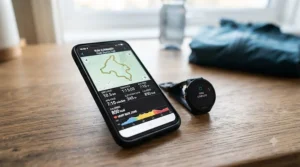
This is vivid AMOLED and Garmin’s coaching tools at entry-level prices. The 1.2-inch screen (about 800 nits) stays readable in sunlight, the case weighs 39g, and battery runs to roughly 11 days as a watch or 19 hours of GPS. The entry-level running watch features here include HRV status, Body Battery, adaptive daily suggested workouts and Garmin Pay. In practice, it tells you what to run tomorrow rather than just recording what you ran today.
Tom’s Guide notes it lacks multi-band GPS and a multisport mode, and battery is middling. Even so, CleverHiker found its tracking stayed within a few hundredths of a mile over a known loop, wobbling only in dense tree cover. It suits beginners who want the smoothest “buy, run, understand” experience. Reviewers flag a scratch-prone screen, so budget for a protector.
220 Triathlon awarded it four out of five, and TechRadar names it best for beginners. I couldn’t verify an Amazon UK ratings pool, so this reflects published reviews.
Pros:
- ✅ Vivid, sun-readable AMOLED screen
- ✅ Garmin Connect, Body Battery and HRV insights
- ✅ Light 39g case
Cons:
- ❌ Single-band GPS only
- ❌ Screen reported as scratch-prone
It launched at £249.99 and now sits around £200-£250 depending on retailer. It’s fair value for money, best justified if you want Garmin polish.
7. Coros Pace 4 — freshest all-rounder, now with offline maps
A September 2026 update adds offline maps to the newest budget GPS running watch here. The 1.2-inch AMOLED screen sits on a 32g body (nylon band). Battery runs up to 19 days as a watch and 31 hours in multi-band GPS mode (24 with the screen always on). The 4GB of storage is modest, but Tom’s Guide found London and the south-east took about 151MB, so local maps fit easily. Music competes for the same space.
Tom’s Guide gave it an Editor’s Choice, praising GPS with no worrying deviations and heart rate usually close to a chest strap. Smart features are limited: no streaming, and no phone music controls at launch. GearJunkie noted the plastic case is less durable and that always-on mode dents battery. It’s for runners who want AMOLED and multi-band GPS without Garmin’s price.
Professional reviewers consistently praise accuracy, weight and battery for the size. I couldn’t verify a robust Amazon UK ratings pool at the time of research.
Pros:
- ✅ Multi-band GPS with an AMOLED screen
- ✅ Up to 19 days’ battery, long for AMOLED
- ✅ Offline maps via the September 2026 update
Cons:
- ❌ Plastic case feels less premium
- ❌ Limited smart features and music support
It launched at around £229 and should sit in the low-to-mid £200s. It’s the most complete package here, and the free map update makes the value for money stronger still.
Here is how the seven compare on the features that shape daily use.
| Watch | Display | Maps | Amazon UK rating snapshot | Best for |
|---|---|---|---|---|
| CMF Watch 3 Pro | 1.43″ AMOLED | None | Not verified | Everyday wear plus runs |
| Amazfit Active 2 | 1.32″ AMOLED | Offline maps, turn-by-turn | About 4.3-4.4 (thousands of ratings) | Hybrid runners and hikers |
| Garmin Forerunner 55 | 1.04″ memory-in-pixel | Basic breadcrumb only | Not verified | First-time runners |
| Amazfit Cheetah Round | 1.39″ AMOLED | Route navigation (per listing) | About 4.4 (600+ ratings) | City runners under £150 |
| Coros Pace 3 | 1.2″ memory-in-pixel touchscreen | Breadcrumb only | About 4.6 (100+ ratings) | Marathon-plan battery |
| Garmin Forerunner 165 | 1.2″ AMOLED | Breadcrumb only | Not verified | Guided beginners |
| Coros Pace 4 | 1.2″ AMOLED | Full offline maps (Sept 2026 update) | Not verified | Best all-rounder |
Two patterns jump out. Maps are no longer a premium-only perk: the Amazfit Active 2 and, since September, the Coros Pace 4 both offer them. Screens have split into two camps, AMOLED for beauty and memory-in-pixel for battery and sunlight. Treat star ratings as a sanity check rather than a verdict, because a small sample like the Coros Pace 3‘s is less robust than the thousands behind the Amazfit Active 2.
✨ Ready to Compare Current Prices?
🔍 Pick the watch that matches your routes, budget and battery needs, then click any highlighted product name to check current pricing and availability. Your next personal best starts with the right wrist companion! 🏃♂️⚡
Your First 30 Days: Setup, Settings and Mistakes to Avoid
The first month decides whether your watch becomes a training partner or an expensive wristband. This routine works across every model above.
Before your first run: charge fully, update the firmware and pair the watch with its app at home over Wi-Fi rather than mid-warm-up. Enter your real age, height and weight, because heart-rate zones and calorie estimates lean on them.
Every run: step outside, wait for the GPS lock, then press start. In reviews, lock times in open sky ranged from about eight to 20 seconds, and longer under trees. Skipping this wait is the classic cause of odd first-kilometre splits.
Battery habits: turn off always-on display unless you love it. One reviewer got the Coros Pace 4 draining at roughly 10% a day by using raise-to-wake and sampling heart rate only every ten minutes off-duty.
Beginners: pair your watch with the free NHS Couch to 5K plan, which spreads three runs a week across nine weeks. Ignore pace for the first month and watch time on feet.
Common first-month mistakes:
- Comparing distances with a friend’s watch. Two devices means two slightly different tracks.
- Treating calorie totals as gospel.
- Wearing the strap too loose. Optical sensors lose contact and heart-rate spikes follow.
- Ignoring entry-level running watch features such as auto-lap and cadence alerts that would improve pacing for free.
Real-World Scenarios: Which Watch Fits Which Runner?
Specs are abstract. Runners are not. Here are three profiles matched to budget, environment and frequency.
The suburban starter. Budget around £100, three runs a week in a local park. A CMF Watch 3 Pro delivers dual-band GPS, a running coach and daily-wear looks. A Garmin Forerunner 55 suits you better if you’d rather have Garmin’s simpler, proven app and long battery. With open sky, basic GPS accuracy is more than enough for either.
The city commuter-runner. Budget capped at £150, running between office blocks four times a week. Reflections off buildings are the enemy, so the Amazfit Cheetah Round‘s dual-band hardware is the logical running watch under £150. Expect strong city tracking and be tolerant of software quirks.
The half-marathon improver. Budget around £220, 25-30 miles a week with weekend long runs. The Coros Pace 3 offers weeks of battery and minimal weight, while the Coros Pace 4 adds AMOLED and maps. If you crave guidance rather than raw data, the Garmin Forerunner 165‘s suggested workouts make planning effortless.
The trail-curious hybrid. Budget under £130, mixing runs, hikes and cycling. The Amazfit Active 2‘s free offline maps are hard to beat at this price.
How to Choose a Budget GPS Running Watch
Start with your budget ceiling, then match GPS type, screen and battery to where and how you run. Here’s the order that saves money:
- Set a ceiling. A running watch under £150 covers GPS, wrist heart rate and core metrics. Between £200 and £250 you add AMOLED, dual-band GPS or deeper coaching.
- Match GPS to your routes. Watches use several satellite networks, and TechRadar’s buying guide explains that a receiver needs four satellites to fix your position within a few metres. City and woodland runners benefit from dual-band, while park runners rarely need it.
- Check the ecosystem. Garmin Connect, Coros and Zepp all sync to Strava, but their coaching depth differs.
- Pick a screen philosophy. AMOLED is vivid and battery-hungry, while memory-in-pixel is frugal and sunlight-friendly.
- Size battery to your longest run. Choose GPS hours at least double your longest session to allow for always-on screens.
- Try the fit. Weights here range from about 30g to 47g, so comfort on your wrist matters more than any spec.
Basic GPS Accuracy: What to Expect from a Budget GPS Running Watch
Every modern budget GPS running watch uses satellite positioning good enough for training. The differences show up in awkward places. Tall buildings bounce signals (reviewers call these “urban canyons”), heavy tree cover weakens them, and tight twisty paths make any watch cut corners.
Basic GPS accuracy on open roads is usually excellent. CleverHiker’s known-distance loop test with the Garmin Forerunner 165 landed within a few hundredths of a mile, tens of metres at most. Dual-band models such as the CMF Watch 3 Pro, Amazfit Cheetah Round and Coros Pace 4 should hold tracks better between buildings, though reviewers still report occasional drift on wooded paths. Single-band watches like the Garmin Forerunner 55 cope well in the open and simply wobble more in awkward spots.
One reasoning tip: official courses are measured on the shortest possible line, and nobody runs that perfectly. If your watch reads slightly long at a 5K event, that’s normal, not a fault. To get the best from any model, wait for the lock, avoid starting under cover, and compare against a known route before trusting a new device.
Entry-Level Running Watch Features That Actually Matter (And Those That Don’t)
Marketing sheets shout numbers. Here’s how to filter them.
Features that earn their keep:
- Reliable GPS plus wrist heart rate, the two pillars of any training log.
- Structured workouts and alerts for intervals, cadence and pace.
- Customisable data screens, so you see pace and heart rate, not clutter.
- Trend metrics such as VO2 max and race predictors, useful as direction of travel rather than absolute truth.
- Battery that outlasts your longest run, plus a comfortable strap.
Features that mostly don’t:
- 160-plus sport modes. Most runners use three.
- AI voice assistants. Fun, rarely essential.
- Sleep scores. Reviewers found sleep tracking thin on the CMF Watch 3 Pro and inconsistent on the Coros Pace 4.
- Offline maps. Wonderful if you explore new routes, wasted if you run the same loop.
The best entry-level running watch features are boring ones done well. That’s why the Garmin Forerunner 55, with its modest screen but reliable basics, still earns a place. Meanwhile the Amazfit Active 2 shows how a feature-rich watch can trade polish for breadth.
Cheap GPS Running Watch Mistakes to Avoid
A cheap GPS running watch isn’t a bad one, but a few pitfalls catch buyers repeatedly:
- Buying by sport-mode count. More modes rarely means better running data.
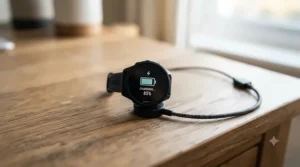
- Trusting headline battery claims. Figures depend on mode. The Coros Pace 3 claims 38 hours of standard GPS but fewer with dual-frequency on, and the Amazfit Active 2 drops from about ten days to five under heavy use.
- Confusing connected GPS with built-in GPS. Some cheap bands borrow your phone’s GPS, so check the listing says built-in.
- Chasing discounts on abandoned models. Confirm software support first. The Garmin Forerunner 55 is older but remains actively supported.
- Ignoring comfort. A watch that irritates you stays in the drawer.
- Skipping consumer rights. Under the Consumer Rights Act 2015, you generally have 30 days to reject a faulty item for a refund, so test your watch properly early.
Where cheap really is fine: pace, distance, route and heart-rate trends. Where it isn’t: elite-level interval analysis, precise elevation and heavy trail navigation. For most people, a budget GPS running watch covers everything they’ll use.
Running Watch Under £150: How Far Does the Money Stretch?
A running watch under £150 is more capable than ever. Four contenders sit here: the CMF Watch 3 Pro, Amazfit Active 2, Garmin Forerunner 55 and Amazfit Cheetah Round. Each has a distinct niche:
- Lowest outlay with dual-band GPS: the CMF Watch 3 Pro.
- Maps and sensors: the Amazfit Active 2.
- Garmin app and proven basics: the Garmin Forerunner 55.
- Best satellite hardware under the line: the Amazfit Cheetah Round.
What you give up compared with £200-plus watches is mostly polish: deeper training analysis, more refined software, better build and, in the Coros Pace 3 and Coros Pace 4, longer battery. If you run three times a week, follow a simple plan and don’t chase race-pace analytics, a running watch under £150 may be all you ever need. Prices move often, so check the current price and use the “value for money” table below to test whether stepping up makes sense.
Value for Money: Cost Per Run and Long-Term Ownership
Value isn’t the sticker price, it’s cost per use. Assume three runs a week, which is 156 a year or about 468 over three years. The table shows illustrative maths, not Amazon prices.
| Budget tier | Illustrative spend | Approx. cost per run (3 years) | Best for |
|---|---|---|---|
| Ultra-budget | £100 | About 21p | CMF Watch 3 Pro, Amazfit Active 2 |
| Sub-£150 | £150 | About 32p | Amazfit Cheetah Round, Garmin Forerunner 55 |
| Mid-budget | £220 | About 47p | Coros Pace 3, Coros Pace 4 |
| Upper-budget | £250 | About 53p | Garmin Forerunner 165 |
The gap between the cheapest and dearest tier is barely 30p per run. That reframes the decision: if a nicer screen or longer battery makes you run more often, the upgrade pays for itself in motivation. Ownership costs stay low, since Garmin and Coros analytics have no subscription requirement and both brands use easy-swap straps. Coros uses 22mm bands on its Coros Pace 4. Budget a little for a screen protector on the Garmin Forerunner 165, and remember battery health fades over years.
Budget Smartwatch Alternatives: Do They Beat a Dedicated Running Watch?
Sometimes the answer is yes, sometimes it’s a firm no. The line between smartwatch and running watch is blurrier than ever.
| Option | Where it shines | Where it falls short | Best for |
|---|---|---|---|
| Phone running app | Free, big screen | Phone in hand, no wrist heart rate | Testing whether you enjoy running |
| Basic fitness band | Light, cheap, long battery | Many rely on phone GPS, few run metrics | Casual step-counters |
| Budget smartwatch alternatives (CMF Watch 3 Pro, Amazfit Active 2) | Bright screens, notifications, built-in GPS | Lighter training analytics, shakier heart rate | Everyday wear plus occasional runs |
| Dedicated budget GPS running watch (Coros Pace 3, Garmin Forerunner 165) | Training load, race predictors, battery | Fewer smart extras | Runners following a plan |
Notice that two of our seven picks are essentially budget smartwatch alternatives with genuine running chops. That’s the sweet spot for people who want one device for meetings, sleep and Saturday runs. Choose a dedicated model when you follow structured training, care about recovery data or want a battery that ignores the charger for weeks. Pricier smartwatches, such as an Apple Watch SE, typically need charging roughly daily, which is a real difference for long runs.
FAQ
❓ What is the best budget GPS running watch for a complete beginner?
❓ Is basic GPS accuracy good enough for parkrun and race pacing?
❓ Can I get a cheap GPS running watch that works with an iPhone?
❓ Are budget smartwatch alternatives worth it for running?
❓ How long does a budget GPS running watch battery last per charge?
Conclusion
The best budget GPS running watch is the one that fits your routes, wrist and wallet, and 2026 offers more genuine choice than ever. To recap: the CMF Watch 3 Pro is the cheapest way into dual-band GPS. The Amazfit Active 2 brings maps and sensors on a budget. The Garmin Forerunner 55 is the simple, proven Garmin. The Amazfit Cheetah Round is the best-value running watch under £150 for accuracy. The Coros Pace 3 wins on battery and lightness. The Garmin Forerunner 165 offers the friendliest AMOLED-plus-ecosystem experience, and the Coros Pace 4 is the most complete all-rounder, now with offline maps.
Whichever you choose, remember the calculus. Basic GPS accuracy is strong across the board, entry-level running watch features matter more than spec-sheet fireworks, and a modest cheap GPS running watch often delivers the same core data as a flagship. Judge value for money by cost per run, not sticker price, and weigh budget smartwatch alternatives honestly against a dedicated runner.
✨ Ready to Find Your Perfect Running Partner?
🔍 Review the seven picks, decide which compromises suit you, then click any highlighted product name to check current pricing and availability. Lace up, press start and let the kilometres do the talking! 🏃♀️🔋
Recommended for You
- Running Watch For Marathon Training: 7 Proven Picks (2026)
- Garmin Running Watch for Beginners: 7 Best Picks (2026)
- Polar vs Garmin Running Watch: 7 Best Picks Compared (2026)
Disclaimer: This article contains affiliate links. As an Amazon Associate, I earn from qualifying purchases. If you purchase products through these links, we may earn a small commission at no additional cost to you.
✨ Found this helpful? Share it with your friends! 💬🤗
