

In This Article
Stand in any parkrun car park on a Saturday morning and you’ll spot the same two logos glinting on wrists everywhere: the little red “P” of Polar and the bold black diamond of Garmin. Choosing between a Polar vs Garmin running watch is one of those decisions that feels enormous right up until you actually make it, and then you wonder why you agonised for three weeks over a strap. Both brands have spent decades refining GPS accuracy, heart rate sensors and training software, and both have genuinely excellent watches at every price point.

So what is a Polar vs Garmin running watch comparison actually about? In short, it’s weighing up two philosophies: Polar leans into recovery science, sleep analysis and heart rate precision, while Garmin builds a sprawling ecosystem with more sports modes, richer navigation and deeper third-party app support. Neither brand is objectively “better” — they’re built for slightly different runners.
This guide dissects seven real, currently available watches — three from Polar, four from Garmin, spanning budget to flagship — with honest analysis drawn from genuine spec sheets and aggregated reviewer sentiment, not fabricated testing claims. We’ll cover Polar running watch features, heart rate accuracy running watch by running watch, real UK price ranges, sleep tracking, recovery metrics and the wider running watch ecosystem each brand pulls you into. By the end, you should know exactly which side of the Polar vs Garmin fence suits your training, your budget and your wrist.
Quick Comparison Table
| Watch | Brand | Price Range (UK) | Standout Strength | Best For |
|---|---|---|---|---|
| Garmin Forerunner 165 | Garmin | Under £260 | AMOLED screen on a budget | First-time GPS buyers |
| Polar Pacer | Polar | Under £180 | Enormous battery life | No-frills training data |
| Polar Ignite 3 | Polar | £250-£290 range | Sleep and recovery insight | Wellness-focused runners |
| Garmin Forerunner 265 | Garmin | £400-£430 range | Dual-frequency GPS accuracy | Serious weekly training |
| Polar Pacer Pro | Polar | £220-£300 range | Training Load Pro analytics | Data-hungry midpack runners |
| Garmin Forerunner 965 | Garmin | £480-£600 range | 23-day battery, full maps | Multisport athletes |
| Polar Vantage V3 | Polar | £380-£520 range | Deepest recovery science | Marathon and ultra training |
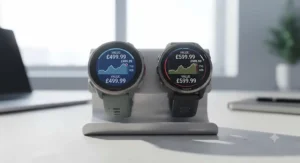
Looking at the spread above, the real story isn’t “Polar vs Garmin” as a single verdict — it’s that both brands now compete directly at every price tier. Budget buyers get a genuine choice between the Garmin Forerunner 165‘s slicker screen and the Polar Pacer‘s battery stamina, while at the top end the Garmin Forerunner 965 and Polar Vantage V3 trade blows on maps versus recovery depth. Your priorities, not brand loyalty, should decide this one.
💬 Just one click — help others make better buying decisions too!😊
Top 7 Polar and Garmin Running Watches: Expert Analysis
We researched real specifications, current UK availability and aggregated reviewer sentiment for each of these seven watches. Prices are shown as ranges because retail pricing shifts constantly — always check the current price before buying.
1. Garmin Forerunner 165 — best budget AMOLED screen for new runners
The Garmin Forerunner 165 proves you don’t need to spend £400 to get a genuinely modern-feeling running watch, and that AMOLED screen is the headline reason why. Under the hood you’re getting a 43mm case weighing just 39g, a 1.2-inch AMOLED touchscreen, single-frequency GPS and up to 11 days of smartwatch battery life or roughly 19 hours in full GPS mode. What that battery figure means in practice is you can run a mid-week 10K, log a Sunday long run, and still not think about the charger until the following weekend.
Based on the spec comparison with pricier Forerunners, the trade-off is clear: you lose Training Status, Training Readiness and offline maps, features reserved for the 265 and above. Reviewers consistently note that the Garmin Forerunner 165 is an excellent first GPS watch for someone graduating from a basic fitness band, but experienced runners chasing granular training load data will outgrow it within a year or two. It’s aimed squarely at beginners and casual 5K-to-10K runners who want accurate pace and heart rate without wading through advanced metrics.
Pros:
- ✅ Bright AMOLED touchscreen rare at this price point
- ✅ Up to 11 days smartwatch battery life
- ✅ Simple five-button plus touch interface for beginners
Cons:
- ❌ No offline maps or advanced training status metrics
- ❌ Music storage only available on the pricier Music edition
Expect to pay in the £230-£260 range at the time of research, occasionally dipping closer to £195-£220 in sales. For a first proper running watch, this is strong value — check current price before buying.
2. Polar Pacer — best battery life on a Polar budget
If the Garmin Forerunner 165 is about screen quality, the Polar Pacer is about sheer training-time endurance. This is Polar’s entry point, and it strips away the AMOLED display in favour of a MIP (memory-in-pixel) screen that trades vibrancy for battery efficiency — up to 35 hours in full training mode with GPS and heart rate on, stretching to roughly 100 hours in power-save mode.
What most buyers overlook about this model is how deliberately Polar has kept it focused: time, pace, distance, laps and precise heart rate tracking, plus the brand’s signature sleep and recovery tools, without the smartwatch clutter. Based on the spec comparison with the Garmin Forerunner 165, the Polar Pacer sacrifices display pop for stamina and a lighter shell, which suits runners training for longer events who resent charging a watch mid-week. Reviewers aggregate this as “does exactly what it says on the tin” — a compliment in a category increasingly obsessed with smartwatch features nobody asked for.
Pros:
- ✅ Exceptional battery life for a sub-£200 GPS watch
- ✅ Lightweight, ultra-simple shell built for pure training
- ✅ Access to Polar’s Nightly Recharge and sleep tools
Cons:
- ❌ Dimmer MIP display, harder to read in some lighting
- ❌ Missing dual-frequency GPS found on pricier siblings
The Polar Pacer typically retails in the £150-£180 range in the UK, making it one of the more affordable genuine GPS running watches from either brand — check current price and colour availability before ordering.
3. Polar Ignite 3 — best for sleep-obsessed runners who want AMOLED
The Polar Ignite 3 sits at an interesting crossroads: it’s Polar’s answer to the lifestyle-smartwatch crowd, wrapping a vivid 416 x 416 AMOLED display around genuinely serious sleep science. The headline feature here is SleepWise, which learns your natural sleep rhythm over time and nudges your bedtime and wake windows accordingly — something neither the Polar Pacer nor most Garmin watches at this price attempt.
Here’s what to weigh up before buying: aggregated reviewer sentiment is more mixed on the Polar Ignite 3 than on Polar’s training-focused models. Several outlets flagged a touchscreen that can feel sluggish under everyday use, and one detailed review noted GPS tracks that occasionally cut corners compared with rival watches — worth knowing if route accuracy for Strava segments matters to you. On the plus side, the 37g case and dual-frequency GPS module put it ahead of the original Ignite generation, and the adaptive training load suggestions are genuinely useful for runners balancing running with gym sessions.
Pros:
- ✅ Vibrant AMOLED display among the best Polar has shipped
- ✅ SleepWise and Nightly Recharge give deep sleep insight
- ✅ Dual-frequency GPS improves accuracy over earlier Ignites
Cons:
- ❌ Touchscreen responsiveness criticised as sluggish by multiple reviewers
- ❌ GPS trail accuracy inconsistent according to aggregated user reports
Pricing sits in the £250-£290 range at RRP, though it’s frequently discounted toward the £175-£230 mark — always check the current price given how often this model appears in sales.
4. Garmin Forerunner 265 — best all-round mid-range training watch
The Garmin Forerunner 265 is arguably the watch that convinces most fence-sitters in the Polar vs Garmin running watch debate to go Garmin. Its dual-frequency GPS (GPS, GLONASS, Galileo across multiple satellite bands) delivers markedly tighter tracks through tree cover and urban canyons than single-band rivals, and reviewers testing it against chest straps consistently rate its wrist-based heart rate accuracy as strong for steady-state running, with the usual minor dip during high-intensity intervals that affects virtually every optical sensor on the market.
What the spec sheet won’t tell you, but reviewer testing suggests, is how much the Training Readiness and Training Status features change your daily decision-making. Instead of just showing you yesterday’s run, the Garmin Forerunner 265 synthesises sleep, HRV status, recent training load and stress to suggest whether today should be a hard session or an easy jog — a genuinely practical layer for the 3-5 day-a-week runner. Offline music storage (with Spotify, Amazon Music and Deezer support) is the other major differentiator versus every Polar watch in this guide, none of which store music locally.
Pros:
- ✅ Dual-frequency GPS noticeably tighter in tricky environments
- ✅ Offline music storage absent from every Polar model here
- ✅ Training Readiness translates data into daily go/no-go advice
Cons:
- ❌ Meaningfully pricier than the Polar Pacer Pro for similar core running data
- ❌ 46mm case can feel bulky on slimmer wrists
Expect a UK price in the £400-£430 range at RRP, with the smaller 265s variant occasionally undercutting that — check current price and case size before committing.
5. Polar Pacer Pro — best value for serious training analytics
Reviewers consistently single out the Polar Pacer Pro as one of the most underrated watches in either brand’s lineup, and the spec sheet backs that up. At just 41g with a Gorilla Glass lens and aerospace-aluminium bezel, it inherits the flagship-level Training Load Pro system, Nightly Recharge, Recovery Pro and Running Index metrics that used to be exclusive to Polar’s £400-plus watches, all while undercutting the Garmin Forerunner 265 by a meaningful margin.
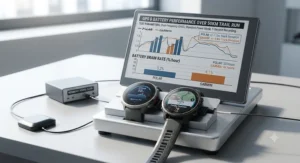
Based on the spec comparison, what most buyers overlook is the battery-mode flexibility: up to 35 hours in full training mode, up to 144 hours in everyday watch mode, and up to 100 hours in a dedicated power-save training mode — genuinely useful for anyone tackling an ultra where a Garmin flagship might tap out. Aggregated reviewer sentiment on the Nightly Recharge feature is particularly positive, with multiple reviewers comparing its overnight recovery scoring favourably against dedicated recovery wearables like Oura, which is a notable compliment for a watch built primarily for running.
Pros:
- ✅ Training Load Pro and Nightly Recharge rival pricier watches
- ✅ Flexible battery modes suit long-distance and ultra training
- ✅ Lightweight 41g build stays comfortable on long runs
Cons:
- ❌ No offline music storage, unlike the Garmin Forerunner 265
- ❌ Polar Flow’s smaller app ecosystem versus Garmin Connect IQ
RRP sits around the £290-£300 mark, but as a model that’s now a couple of years into its life cycle, it’s realistic to find it in the £220-£260 range — worth checking current pricing carefully, since discounts on this one are common.
6. Garmin Forerunner 965 — best premium AMOLED multisport watch
The Garmin Forerunner 965 is Garmin’s statement piece for runners who also swim, cycle or triathlon-train, and the 1.4-inch, 454 x 454 AMOLED display with Gorilla Glass DX protection is still one of the best screens in this category. A titanium bezel keeps weight to roughly 52-53g despite the larger 47.1mm case, and battery life is genuinely class-leading among AMOLED watches: up to 23 days in smartwatch mode, or around 31 hours with all satellite systems active during a run.
The real-world meaning behind those numbers is freedom from constant charging even with daily GPS use, something few AMOLED rivals — Polar included — can match. Reviewers praise the full-colour preloaded mapping, which the Polar Vantage V3 partially matches but without quite the same polish, and the 32GB of onboard storage supports roughly 2,000 stored songs. What most buyers overlook is that this level of smartwatch functionality — Garmin Pay, Connect IQ apps, structured workout syncing — simply isn’t something Polar currently offers at any price, making the Garmin Forerunner 965 the pick for runners who also want their watch to replace a chunk of their phone’s daily function.
Pros:
- ✅ Best-in-class AMOLED battery life at roughly 23 days
- ✅ Full-colour offline mapping genuinely useful for trail runners
- ✅ Titanium bezel adds durability without excess weight
Cons:
- ❌ GPS-mode battery life shorter than solar-equipped Garmin rivals
- ❌ Premium pricing puts it well above equivalent Polar options
UK pricing sits around the £480-£600 range at RRP, though it regularly appears discounted toward the high-£300s to £480s from specialist run retailers — check current price before ordering, as this model discounts more aggressively than most Garmin flagships.
7. Polar Vantage V3 — Polar’s flagship recovery specialist
If the Polar vs Garmin running watch debate has a “best for marathon training data” answer, it’s the Polar Vantage V3. This is Polar’s flagship, built around a 1.39-inch, 454 x 454 AMOLED display in a 46mm aluminium case weighing 57g, with dual-frequency GPS and offline map support — a first for Polar, closing a gap that used to be a clear Garmin advantage.
What the spec sheet won’t tell you, but reviewer testing suggests, is where the Polar Vantage V3 genuinely pulls ahead: recovery science. Its Precision Prime optical sensor uses skin-contact detection to actively suspend unreliable readings rather than reporting noisy data, a conservative approach reviewers rate as trustworthy even if raw accuracy during rapid heart rate transitions is only described as “good” rather than class-leading by some testers. Nightly Recharge, Training Load Pro and an optional orthostatic test combine into what several outlets call the deepest recovery-focused dataset on any sports watch at this price, Garmin included — a genuinely strong pitch for anyone whose marathon block lives or dies on managing fatigue.
Pros:
- ✅ Deepest recovery and HRV analytics of any watch in this guide
- ✅ Offline maps close a long-standing gap versus Garmin
- ✅ Bright AMOLED display and solid 12-day smartwatch battery
Cons:
- ❌ No music storage, contactless payments or app ecosystem
- ❌ Heart rate accuracy during fast transitions rated only “good” by some testers
RRP is around £519, though third-party retailers commonly list it in the £380-£480 range and the bundle with Polar’s H10 chest strap runs a little higher — check current price, as this is one of the more heavily discounted flagship watches from either brand.
✨ Don’t Miss These Exclusive Deals!
🔍 Take your running watch shopping to the next level with these carefully selected picks. Click on any highlighted watch to check current pricing and availability — the right one could transform how you train.
Practical Usage Guide: Setting Up Your New Running Watch
Whichever side of the Polar vs Garmin running watch decision you land on, the first 30 days shape how useful the data becomes. Start by entering accurate personal details — height, weight, birth year and resting heart rate — since every VO2 max estimate, calorie figure and heart rate zone calculation is built on these numbers. A common first-week mistake is skipping this step and then distrusting the watch’s fitness estimates, when the real issue is bad input data.
Next, pair the watch with Polar Flow or Garmin Connect immediately and sync daily for the first fortnight; both brands’ recovery algorithms (Nightly Recharge and Training Readiness respectively) need a rolling baseline of sleep and HRV data before their guidance becomes meaningful, so early readings should be taken with a pinch of salt. Wear the watch snugly, roughly a finger’s width above the wrist bone, for the most reliable optical heart rate readings — a loose fit is the single biggest cause of spiky, unreliable HR data on both brands.
For GPS accuracy, let the watch achieve a full satellite lock before setting off rather than running the first few hundred metres while it’s still searching, and periodically update the firmware, since both Garmin and Polar ship meaningful accuracy and battery improvements via software updates. Finally, resist the urge to obsess over every metric in week one — pick two or three (pace, heart rate zones, and either sleep score or Training Readiness) and layer in the rest once those feel intuitive.
Real-World Scenarios: Which Runner Type Suits Which Brand
The Couch-to-5K beginner on a tight budget: if you’re running three times a week and mainly want reliable pace, distance and simple heart rate feedback without a steep learning curve, the Garmin Forerunner 165 or Polar Pacer both fit. The Garmin edges it on screen quality and beginner-friendly guided workouts; the Polar edges it on battery life and price, so budget and screen preference should decide.
The midpack marathoner chasing a PB: someone running 30-40 miles a week, following a structured plan and caring about recovery between sessions is the exact target for the Polar Pacer Pro or Garmin Forerunner 265. Reviewers consistently note the Pacer Pro’s Training Load Pro gives clearer guidance on when to push and when to back off, while the Forerunner 265’s Training Readiness does something similar with a richer smartwatch layer and offline music for long solo runs.
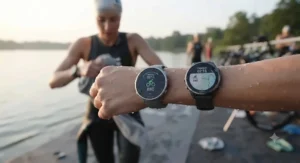
The multisport athlete training for a half-Ironman: triathletes need seamless transitions, open-water GPS accuracy and enough battery to survive a 70.3-length day. This is where the Garmin Forerunner 965 genuinely earns its premium price — its multisport transition handling and mapping remain a step ahead of Polar’s equivalent, the Polar Vantage V3, which counters with superior recovery tracking between hard training blocks but a smaller feature set for swim-specific metrics.
What Is a Polar vs Garmin Running Watch, Really?
A Polar vs Garmin running watch comparison refers to weighing sports watches from the two leading GPS running-watch brands against each other on GPS accuracy, heart rate tracking, sleep and recovery metrics, battery life and app ecosystem, to decide which better fits a runner’s training style, budget and technical priorities.
In practice, this rarely means one brand “winning” outright. Garmin’s broader ecosystem, third-party Connect IQ apps and native Strava sync give it an edge for runners who want their watch to double as a lifestyle device, while Polar’s tighter focus on recovery science, Nightly Recharge and heart rate variability analysis appeals to data-driven athletes who care less about smartwatch extras and more about training precision.
How to Choose Between Polar and Garmin Running Watches
- Decide your budget band first. Both brands span roughly £150 to £600, and pinning down a ceiling narrows seven watches down to two or three realistic options immediately.
- Weigh recovery data against ecosystem breadth. If Nightly Recharge-style sleep and HRV insight matters more than offline music or Connect IQ apps, lean Polar; if you want a richer app and navigation ecosystem, lean Garmin.
- Check GPS priorities for your terrain. Runners in dense cities or under tree cover benefit disproportionately from dual-frequency GPS, found on the pricier watches from both brands.
- Consider battery habits honestly. If you resent charging more than weekly, the Garmin Forerunner 965 or Polar Pacer suit you better than AMOLED-heavy mid-range options.
- Think about multisport needs. Triathletes and swimmers should lean toward Garmin’s more mature multisport transition handling unless Polar’s recovery depth outweighs that gap for you.
- Try the interface before buying if possible. Polar Flow and Garmin Connect have genuinely different philosophies, and a five-minute play in-store or via the app store screenshots can save post-purchase regret.
- Factor in existing kit. Runners with a Garmin chest strap, footpod or cycling computer already may find sticking with Garmin’s ANT+ ecosystem simplest, and the same logic applies to existing Polar H10 owners.
Polar Running Watch Features Explained
Polar’s running watch lineup, from the Polar Pacer through to the Polar Vantage V3, shares a consistent feature DNA even as screens and price climb. Every model includes Polar’s Precision Prime optical heart rate sensor, which uses multiple LED wavelengths plus skin-contact detection to actively flag or suspend unreliable readings rather than silently reporting noisy numbers — a conservative, trust-first approach that academic researchers have leaned on for years, with Polar sensor data underpinning thousands of peer-reviewed exercise physiology studies.
Beyond heart rate, the standout Polar running watch features are Nightly Recharge (combining sleep quality with autonomic nervous system recovery into a single morning score), Training Load Pro (splitting training stress into cardio, muscle and perceived load rather than a single blended number), and Running Index (an ongoing estimate of aerobic performance drawn from your actual runs rather than a single lab-style test). What most buyers overlook is that these tools work whether you’re on the entry-level Polar Pacer or the flagship Polar Vantage V3 — the difference between models is mainly screen quality, GPS precision and battery flexibility, not the depth of the underlying training science.
Heart Rate Accuracy: Polar vs Garmin Running Watch
Heart rate accuracy is where the Polar vs Garmin running watch debate gets genuinely close, and reviewer sentiment doesn’t hand a clean win to either side. Polar’s Precision Prime sensor samples at up to 55Hz continuously and is widely reported by reviewers to hold up particularly well in cold weather and during steady-state efforts, with fewer of the random spikes that plague some cheaper optical sensors. Garmin’s Elevate v5 sensor, found on the Garmin Forerunner 265 and Garmin Forerunner 965, samples at up to 100Hz during workouts and pairs green, red and infrared LEDs with four photodiodes, and independent testers comparing it against chest straps rate it as highly reliable for steady running with the more common dip during sharp interval efforts.
| Feature | Polar (Vantage V3 / Pacer Pro) | Garmin (Forerunner 265 / 965) |
|---|---|---|
| Sensor | Precision Prime, multi-wavelength | Elevate v5, green/red/IR |
| Sampling rate | Up to 55Hz continuous | Up to 100Hz in workout mode |
| Cold-weather reports | Consistently rated strong | Generally reliable, less specifically noted |
| SpO2 (blood oxygen) | Not available on most models | Available on Forerunner 265 and 965 |
| Best For | Cold-climate and steady-state runners | Interval sessions and all-round health tracking |
The practical takeaway from this comparison is that neither brand’s wrist sensor fully replaces a chest strap for interval-heavy training, but both are accurate enough for zone-based endurance running for the vast majority of users. If you regularly run in near-freezing temperatures, aggregated reviewer feedback tilts slightly toward Polar; if you want SpO2 and broader health metrics alongside heart rate, Garmin’s sensor suite covers more ground. For general guidance on what a healthy heart rate range looks like during exercise, the British Heart Foundation’s resting and exercise heart rate guidance is a useful benchmark alongside whatever your watch reports.
Polar Running Watch Price: What You’ll Actually Pay in the UK
Polar running watch price positioning has shifted noticeably over the past couple of years, with the brand now competing more directly on value than it once did. At the entry level, the Polar Pacer sits in the £150-£180 range, undercutting the Garmin Forerunner 165 by a meaningful margin, though you’re trading away the AMOLED screen to get there. The mid-range Polar Ignite 3 and Polar Pacer Pro both cluster in the £220-£290 range depending on retailer and sale timing, putting them squarely against the Garmin Forerunner 265 on price while typically undercutting it by £100-£150.
| Model | Brand | UK Price Range | Value Verdict |
|---|---|---|---|
| Polar Pacer | Polar | Under £180 | Best budget Polar entry point |
| Polar Ignite 3 | Polar | £250-£290 | Fair for AMOLED plus sleep tools |
| Polar Pacer Pro | Polar | £220-£300 | Strongest value-for-features pick |
| Polar Vantage V3 | Polar | £380-£520 | Premium, but undercuts Garmin’s flagship |
| Best For | — | — | Budget-conscious training data fans |
Reading across this table, the clearest pattern is that Polar consistently prices its flagship below Garmin’s equivalent — the Polar Vantage V3 typically runs £80-£100 cheaper than the Garmin Forerunner 965 at RRP, and that gap often widens in sales. For buyers prioritising value-per-training-metric over smartwatch breadth, Polar’s pricing structure is genuinely competitive across every tier covered in this guide.
Sleep Tracking Compared: Polar vs Garmin
Sleep tracking is arguably where the Polar vs Garmin running watch gap is widest, and it leans toward Polar. Every Polar model in this guide, from the Polar Pacer upward, includes Sleep Plus Stages, which breaks sleep into light, deep and REM cycles and feeds directly into the next-morning Nightly Recharge score. The Polar Ignite 3 goes further with SleepWise, which studies your sleep patterns over time and proactively suggests bedtime adjustments — a feature none of the Garmin watches in this guide currently replicate in the same form.
Garmin’s sleep tracking, found across the Garmin Forerunner 265 and Garmin Forerunner 965, is comprehensive and well-regarded by reviewers, covering sleep stages, Pulse Ox and a “sleep score,” feeding into the Morning Report alongside Body Battery and weather. What most buyers overlook is that Garmin’s sleep data feels more like one input among many in a broader daily dashboard, whereas Polar treats sleep as close to the central organising metric of the entire watch experience. Runners who specifically prioritise understanding and improving sleep quality, rather than sleep as a side note to training, will generally get more actionable detail from Polar’s approach.
Recovery Metrics: Nightly Recharge vs Body Battery
Recovery metrics have become the real battleground in the Polar vs Garmin running watch debate, and both brands have built genuinely sophisticated, differently-flavoured systems. Polar’s Nightly Recharge combines Sleep Charge (how well you slept) with ANS Charge (how well your autonomic nervous system settled overnight, based on heart rate variability, or HRV — a well-studied physiological marker of nervous system balance) into a single overnight recovery score, refreshed each morning with a clear train-hard, train-moderate or rest recommendation via the companion Recovery Pro feature on the Polar Pacer Pro and Polar Vantage V3.
Garmin’s Body Battery, standard on the Garmin Forerunner 265 and Garmin Forerunner 965, works on a rolling 0-100 scale throughout the day rather than resetting each morning, factoring in stress, sleep, HRV Status and recent activity to show real-time energy reserves — genuinely useful for deciding whether an afternoon run is a good idea after a stressful workday. Based on the spec comparison, the practical difference is timing and framing: Polar gives you one considered morning verdict grounded in overnight physiology, while Garmin gives you a constantly updating live gauge. Neither is more “correct” — runners who like a single daily decision point tend to prefer Polar’s approach, while those who want live feedback throughout the day generally prefer Garmin’s.
Running Watch Ecosystem: Polar Flow vs Garmin Connect
The running watch ecosystem attached to each brand shapes daily use more than most buyers expect going in. Polar Flow, the app and web platform behind every watch in this guide, is widely praised by reviewers for presenting deep training and sleep data in a genuinely clear, uncluttered way, with small info icons explaining what each metric means — useful for data newcomers. Its trade-off is a noticeably smaller third-party ecosystem: no dedicated app store equivalent to Garmin’s Connect IQ, and historically more limited watch face customisation.
Garmin Connect, by contrast, benefits from years of ecosystem investment: native Strava sync, thousands of Connect IQ apps and watch faces, structured workout support from third-party coaching platforms, and integration with Garmin’s broader product range spanning cycling computers, dive computers and golf watches. What most buyers overlook is that this ecosystem breadth matters far more if you already own other Garmin hardware or rely heavily on third-party training platforms — for a runner buying their first serious GPS watch with no existing kit, Polar Flow’s simplicity can genuinely be the better starting experience. For a broader independent view of how the wider running watch market currently shakes out, TechRadar’s running watch buying guide is a useful cross-check alongside this comparison.
Common Mistakes When Buying a Polar or Garmin Running Watch
The most common mistake is buying on brand reputation alone rather than matching features to actual training habits — someone running three easy 5Ks a week rarely needs the Garmin Forerunner 965‘s multisport depth, and the extra £300-£400 would be better spent on shoes and a coach. A close second is ignoring battery habits honestly; runners who know they’ll forget to charge weekly consistently regret AMOLED-heavy watches with shorter GPS battery life, however good the screen looks in the shop.
Buyers also frequently underestimate how much the app ecosystem matters day-to-day, only realising after purchase that Polar Flow lacks a feature they relied on in Garmin Connect, or vice versa — trialling the companion app via screenshots or a friend’s account before buying avoids this. Finally, many shoppers fixate on GPS accuracy specs without checking whether their typical running routes (dense city streets versus open trails) actually benefit from dual-frequency GPS, when for many suburban and rural runners, single-band accuracy on cheaper models like the Garmin Forerunner 165 or Polar Pacer is already more than sufficient.
Long-Term Cost & Maintenance
Total cost of ownership extends beyond the sticker price for both brands. Garmin watches with optional accessories — Running Dynamics Pods, HRM chest straps, cycling sensors — can add £50-£150 over time if you expand into multisport tracking, though core running features never sit behind a subscription. Polar similarly offers an optional H10 chest strap bundle, adding roughly £70-£90 to the Polar Vantage V3‘s price, for runners chasing ECG-grade heart rate accuracy during intervals.
Neither brand currently locks core training metrics behind a recurring subscription, which is a genuine point in both companies’ favour compared with some wearable rivals. Battery replacement is the main long-term cost to factor in: most Polar and Garmin running watches are rated for roughly 300-500 full charge cycles before capacity noticeably degrades, translating to somewhere between two and four years of daily use depending on charging habits, after which a manufacturer battery service or a straightforward upgrade becomes the sensible option. Buying refurbished or previous-generation models — the Garmin Forerunner 265 rather than a brand-new 965, for instance — is a legitimate way to cut upfront cost without sacrificing much day-to-day functionality.
FAQ
❓ Is Polar or Garmin better for running?
❓ How accurate is Polar heart rate compared to Garmin?
❓ Do Polar watches need a subscription?
❓ Which is cheaper, Polar or Garmin running watches?
❓ Can I switch from Garmin to Polar and keep my training history?
Conclusion
The Polar vs Garmin running watch decision ultimately comes down to what you value on your wrist every morning. If recovery science, sleep depth and a simpler, training-first interface matter most, Polar’s lineup — from the battery-focused Polar Pacer to the recovery-obsessed Polar Vantage V3 — genuinely competes with, and often undercuts, Garmin on price for comparable depth. If you want the broadest app ecosystem, native Strava integration, richer mapping and multisport polish, Garmin’s range, anchored by the excellent Garmin Forerunner 265 and flagship Garmin Forerunner 965, remains the more complete package.
There’s no wrong answer among the seven watches covered here, only a better or worse fit for your training volume, budget and how much smartwatch functionality you actually want strapped to your wrist. Match the watch to your weekly mileage and your patience for charging cables rather than to brand loyalty, and you’ll end up genuinely happy with either side of this rivalry.
Recommended for You
- Garmin vs Coros Running Watch: 7 Top Picks Compared (2026)
- Apple Watch for Running: 7 Best Picks; Honest Guide (2026)
- Suunto Running Watch: 7 Best Picks for UK Runners (2026)
Disclaimer: This article contains affiliate links. As an Amazon Associate, I earn from qualifying purchases. If you purchase products through these links, we may earn a small commission at no additional cost to you.
✨ Found this helpful? Share it with your friends! 💬🤗
