
In This Article
Somewhere between “I should probably move more” and actually doing something about it sits a small, unglamorous decision: which fitness band under £50 is worth strapping to your wrist. It’s not a dramatic purchase. Nobody’s ever bragged at a dinner party about their £35 wearable. But that’s rather the point — these things work quietly in the background, nudging you off the sofa, logging the walk you nearly talked yourself out of, and telling you, gently but insistently, that you slept for five hours and forty minutes again.
A cheap fitness band won’t out-map a Garmin or out-sleep-score an Oura Ring, and it shouldn’t pretend to. What it will do, if you pick a good one, is track steps, distance and heart rate reliably enough to actually change your habits — without the £200+ price tag or the monthly subscription nag screen. In this guide we’ve dug into seven real, currently available bands that sit comfortably under that £50 line, covering entry-level wearables for total beginners right through to near-£50 options that punch well above their price. We’ll cover battery life, accuracy, comfort, and — because a band is only as useful as the person willing to wear it — which one actually suits your life.
What Is a Fitness Band Under £50?
A fitness band under £50 is a slim wrist-worn tracker — not a full smartwatch — that measures steps, distance, heart rate, sleep and basic workouts via a companion phone app. Compared with pricier smartwatches, these budget trackers usually skip GPS, calling, and app stores, trading them for smaller screens and dramatically longer battery life.
Quick Comparison Table
| Fitness Band | Battery Life | Display | Price Range | Best For |
|---|---|---|---|---|
| Xiaomi Smart Band 9 | Up to 21 days | 1.62in AMOLED | £30-£35 range | Best overall value |
| Amazfit Band 7 | Up to 18-28 days | 1.47in AMOLED | £40-£49 range | Best sports modes |
| Redmi Smart Band 2 | Up to 14 days | 1.47in TFT | Under £30 range | Best ultra-budget pick |
| Xiaomi Smart Band 8 Active | Up to 14 days | LCD | £20-£30 range | Best for beginners |
| Huawei Band 9 | Up to 14 days | 1.47in AMOLED | £40-£49 range | Best for sleep tracking |
| Honor Band 9 | Up to 14 days | 1.57in AMOLED | Around £49 | Best big-screen display |
| Xiaomi Smart Band 9 Active | Up to 18 days | 1.47in TFT | Under £30 range | Best lightweight daily wear |
Looking at the table, the pattern that jumps out is how little you actually sacrifice at the bottom of this price bracket. The Xiaomi Smart Band 9 delivers AMOLED brightness and three-week battery life for barely more than half the £50 ceiling, while the Redmi Smart Band 2 and Xiaomi Smart Band 9 Active prove that dropping to a simpler TFT screen doesn’t mean dropping core tracking accuracy. If big, bright screens matter more to you than battery longevity, Honor Band 9 and Huawei Band 9 are the two worth lingering on.
💬 Just one click — help others make better buying decisions too!😊
Top 7 Fitness Bands Under £50: Expert Analysis
Picking a fitness band under £50 isn’t about finding the “best” one in the abstract — it’s about matching battery habits, screen preferences and workout style to a device that costs less than a week’s food shop. Here’s how each of these seven stacks up once you look past the marketing copy.
1. Xiaomi Smart Band 9 — best all-round value under £50
The Xiaomi Smart Band 9 is the one most people should start with, and the standout reason is battery life that borders on unreasonable for the price. Xiaomi’s official figures put typical use at up to 21 days, or around 9 days with the always-on display enabled — a genuinely rare feat at this price point, since most rivals top out nearer two weeks.
Specs-wise, you’re getting a 1.62-inch AMOLED display with a 60Hz refresh rate and 1,200-nit peak brightness, 5ATM water resistance (rated to 50 metres), and continuous SpO2 monitoring. In practice, that AMOLED panel is the difference between squinting at a mid-run heart rate reading and actually seeing it clearly in direct sunlight — a problem cheaper LCD screens still struggle with. Based on the spec comparison against its own stablemates, the Smart Band 9 sits in the sweet spot: better screen than the Active models, better battery than the pricier Pro version, and a genuinely modern heart-rate sensor that Xiaomi claims is 16% more accurate than the previous generation’s.
Reviewers consistently note the sleek, lightweight build (under 15g) as one of its strongest points for all-day wear, with the trade-off being a limited four-colour range and no built-in GPS — you’ll rely on your phone for route mapping during outdoor runs.
Pros:
- ✅ Exceptional 21-day battery life for an AMOLED band
- ✅ Bright, sharp 1.62-inch AMOLED display
- ✅ 5ATM water resistance for swimming and showers
Cons:
- ❌ No built-in GPS for standalone route tracking
- ❌ Limited to four colour options
In the £30-£35 range, this is hard to beat on value — it’s the clearest “best overall” pick in this list for anyone who wants AMOLED quality without paying AMOLED prices.

2. Amazfit Band 7 — best for sports variety and heavy use
Where the Amazfit Band 7 pulls ahead is sheer sports-mode breadth: Amazfit’s own count sits at 120 activity types, spanning everything from rowing machines to dance and martial arts, tracked via the brand’s ExerSense motion-recognition system and PeakBeats performance algorithm (which estimates VO2 Max).
The 1.47-inch AMOLED display runs at 282ppi with always-on support, and the 232mAh battery is rated for up to 18 days under typical use, stretching to 28 days in battery-saver mode — though independent testers found heavier daily use (frequent heart-rate checks, notifications, AOD on) brings that closer to a week. What most buyers overlook about this model is the built-in Amazon Alexa support: you can ask it questions via a mic, though there’s no speaker, so you read the response rather than hear it — a sensible trade-off that keeps battery drain down.
Aggregated reviewer sentiment consistently praises the Band 7’s accuracy and battery performance “for this price,” with Tom’s Guide naming it one of the best trackers under $50 in independent testing. The main recurring complaint is the lack of built-in GPS, and a paid membership tier is needed to unlock some deeper analytics reports.
Pros:
- ✅ 120 sport modes, the widest range on this list
- ✅ Up to 28 days battery life in saver mode
- ✅ Built-in Amazon Alexa voice assistant
Cons:
- ❌ No built-in GPS, relies on phone connection
- ❌ Some analytics reports sit behind a paid membership
At around £40-£49, the Amazfit Band 7 is best suited to people who actually vary their workouts, since that huge sports-mode library goes to waste if you only ever walk the dog.
3. Redmi Smart Band 2 — best ultra-budget entry point
If £50 still feels like a stretch, the Redmi Smart Band 2 undercuts almost everything else here while keeping the core tracking honest. Which? lists it available through Amazon Marketplace UK well under £30, making it one of the cheapest genuinely branded options on the market.
The spec sheet is modest but sensible for the price: a 1.47-inch TFT display, 210mAh battery rated for up to 14 days of typical use (six days under heavy use), over 30 sport modes, and continuous heart-rate and SpO2 monitoring. Here’s what to weigh: a TFT screen means less contrast and vibrancy than the AMOLED panels above, but it also means a genuinely tiny, unobtrusive 14.9g body that disappears on the wrist — useful if you find chunkier trackers annoying during sleep tracking.
Reviewers note mixed prior experience with budget Xiaomi sub-brand trackers generally, so Which?’s own lab testing is worth checking before buying if step and heart-rate precision is your top priority; on paper, the Redmi Smart Band 2 covers the fundamentals (steps, distance, sleep, heart rate) without pretending to be more than it is.
Pros:
- ✅ One of the cheapest branded trackers available
- ✅ Genuinely light and unobtrusive 14.9g design
- ✅ 14-day battery life on a small 210mAh cell
Cons:
- ❌ TFT display less vibrant than AMOLED rivals
- ❌ Fewer premium health features than Xiaomi’s flagship band
For anyone testing the waters before committing to habit change, this is the low-risk, low-cost way in — often available for under £30.
4. Xiaomi Smart Band 8 Active — best for first-time buyers
The Xiaomi Smart Band 8 Active was built specifically to answer the question “can a fitness tracker be genuinely cheap and still useful?” — and the answer, based on the spec sheet, is largely yes. You get over 50 sports modes, all-day sleep, heart rate and SpO2 monitoring, and 5ATM water resistance rated for swimming.
Battery life is quoted at up to 14 days per charge, which comfortably outlasts most smartwatches several times its price, and the LCD display (rather than AMOLED) is the main way Xiaomi keeps costs down. What most buyers overlook here is that dropping to LCD isn’t purely a downgrade — LCD panels typically sip less power under constant display use, which partly explains why the Active line matches or beats its AMOLED siblings on battery life despite a smaller cell.
Reviewers frame this specifically as an entry-level pick: a natural first tracker for someone who’s never worn a wearable and doesn’t want to gamble £150+ on discovering they don’t like the habit. Pricing has fluctuated between roughly £20 at launch and the high £30s depending on retailer and promotions, so it’s worth checking current listings before assuming the lowest figure.
Pros:
- ✅ Genuinely beginner-friendly price point
- ✅ 14-day battery life despite the smaller LCD panel
- ✅ 50+ sports modes and full health-metric suite
Cons:
- ❌ LCD screen lacks the punch of AMOLED rivals
- ❌ No built-in GPS or NFC payments
If this is your very first fitness band, this is the safest, cheapest way to find out whether the habit sticks.
5. Huawei Band 9 — best for sleep tracking
Huawei’s fitness trackers have built a reputation for sleep insight, and the Huawei Band 9 continues that trend with detailed weather integration, an automatic brightness sensor, and Huawei’s TruSeen 5.5 heart-rate sensor. The 1.47-inch AMOLED display carries over the design and dimensions of its predecessor almost unchanged, which reviewers treat as a minor criticism given how little has visually evolved.
On paper this means: battery life rated up to 14 days in optimal conditions, with a realistic floor of around a week under regular use, and a sub-hour full recharge. Aggregated reviewer sentiment highlights the reliable heart-rate sensor and easy strap-swapping as strengths, while noting a recurring complaint about delayed wake-up gesture detection — the screen occasionally lags a beat behind a wrist flick.
Pricing sits close to the £50 ceiling at recommended retail, but is commonly found discounted into the £40-£49 range at UK retailers, which is where it becomes genuinely competitive against the Xiaomi Smart Band 9 above.
Pros:
- ✅ Strong sleep-tracking detail and weather integration
- ✅ Reliable TruSeen 5.5 heart-rate sensor
- ✅ Wide colour range including breathable nylon straps
Cons:
- ❌ Slightly shorter battery life than its own predecessor
- ❌ Wake-up screen gesture can feel delayed
Best suited to anyone who cares more about understanding their sleep quality than chasing sports-mode variety.
6. Honor Band 9 — best big-screen display near £50
The Honor Band 9 sits right at the top of this budget bracket, priced around £49.99, and it spends that extra headroom on screen real estate: a 1.57-inch AMOLED display at 500 nits peak brightness, noticeably larger than most rivals here, with always-on support and a quick-release strap system.
Reviewers describe it as sitting halfway between a fitness band and a full smartwatch in feel, thanks to that taller display. Health tracking covers heart rate, SpO2, sleep and stress, plus menstrual cycle logging, and Honor’s own Fitness Age assessment tool gives a slightly more motivational spin on your data than a plain number ever could. The 180mAh battery delivers up to 14 days, respectable but not class-leading given the larger, brighter panel it has to power.
What the spec sheet won’t tell you, but reviewer commentary suggests, is that the bigger screen genuinely changes day-to-day usability — notifications and workout stats are easier to read at a glance without unlocking your phone. The trade-off, as with most bands here, is no built-in GPS.
Pros:
- ✅ Largest, brightest AMOLED display on this list
- ✅ Quick-release strap for easy customisation
- ✅ Fitness Age assessment and 96 workout modes
Cons:
- ❌ No built-in GPS, unlike some £10-more rivals
- ❌ Battery life shorter than smaller-screened alternatives
If screen size and everyday readability matter more to you than squeezing every last day out of a charge, this is the pick to check current pricing on.
7. Xiaomi Smart Band 9 Active — best lightweight daily wear
Rounding out the list, the Xiaomi Smart Band 9 Active is Xiaomi’s stripped-back sibling to the standard Smart Band 9, and it undercuts nearly everything else here on price while still covering the essentials properly. It’s commonly available from around £20-£26, positioning it as one of the most affordable Xiaomi-branded options on Amazon UK.
The 1.47-inch TFT display runs at a smooth 60Hz refresh rate despite being a simpler panel type, and the band covers over 50 sports modes including running, walking, cycling and swimming, alongside heart-rate, SpO2, sleep, stress and menstrual-cycle tracking. Based on the spec comparison with the standard Smart Band 9, this is clearly the “same DNA, fewer frills” option — you lose the AMOLED glow and a chunk of battery longevity, but keep essentially all the daily tracking substance.
Reviewers have flagged occasional stock shortages given its popularity, and note the lightweight design as genuinely comfortable for all-day, every-day wear — the kind of band you forget you’re wearing, which for a habit-forming device is arguably the highest compliment available.
Pros:
- ✅ One of the most affordable Xiaomi bands available
- ✅ 50+ sports modes despite the low price
- ✅ Lightweight design suited to constant daily wear
Cons:
- ❌ No built-in GPS or NFC support
- ❌ TFT screen lacks AMOLED vibrancy in bright light
For anyone who wants a genuinely cheap fitness band that still covers daily activity tracking properly, this is the leanest option on the list.
Practical Usage Guide: Getting the Most From Your Fitness Band
Unboxing a new fitness band under £50 is the easy part — the first 30 days are where most people either build a habit or let the thing gather dust in a drawer. Start by charging it fully before first use (most of these bands take under two hours), then pair it properly with the manufacturer’s app rather than a generic Bluetooth connection, since step, sleep and heart-rate data all sync through that companion app specifically.
Set your wrist-wear position correctly: too loose and the optical heart-rate sensor loses contact during movement, producing wildly inaccurate readings; too tight and it’s uncomfortable enough that you’ll stop wearing it at night, which kills sleep tracking entirely. A common early mistake is wearing the band a full finger-width below the wrist bone rather than snug against it — most manufacturers recommend roughly one finger’s width above the bone for the best sensor contact.
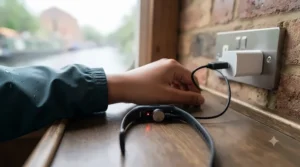
For maintenance, keep the charging pins clean with a dry cloth weekly (sweat and skin oils build up quickly and can cause charging failures), and update the firmware as soon as prompts appear — early firmware often fixes sleep-detection bugs and battery drain issues discovered after launch. Most of these bands last several years with basic care, so it’s worth the five minutes of setup effort to actually get that lifespan.
Real-World Scenarios: Who Should Buy Which Band
The gym beginner, budget £25, wants simple daily motivation: someone starting from scratch, with no prior wearable experience and a tight budget, is best served by the Xiaomi Smart Band 8 Active or Redmi Smart Band 2. Both cover steps, sleep and heart rate without overwhelming a first-timer with sports modes they’ll never open.
The varied-workout enthusiast, budget £45, trains 4-5 times weekly across different activities: here the Amazfit Band 7‘s 120 sports modes genuinely earn their keep, since rowing one day and cycling the next both get properly categorised rather than lumped into a generic “exercise” bucket.
The office worker who travels light, budget £35, prioritises battery over bells and whistles: the Xiaomi Smart Band 9 is the obvious fit — three weeks between charges means it’s one less charger to pack, and the AMOLED screen stays legible glancing down mid-meeting without drawing attention.
How to Choose a Fitness Band Under £50
- Decide how much you care about screen quality. AMOLED (Xiaomi Smart Band 9, Amazfit Band 7, Huawei Band 9, Honor Band 9) looks sharper and reads better in daylight; TFT/LCD (Redmi Smart Band 2, Xiaomi Smart Band 8/9 Active) saves money and often battery.
- Check battery life against your travel habits. If you regularly forget chargers, the 18-21 day options (Xiaomi Smart Band 9, Amazfit Band 7, Xiaomi Smart Band 9 Active) reduce anxiety considerably.
- Count the sports modes you’d actually use. More isn’t automatically better — a runner and swimmer benefits from Amazfit’s 120 modes, but a walker gets no extra value from modes they’ll never open.
- Confirm phone compatibility before buying. Most bands here support both Android and iOS, but always check the minimum OS version against your own phone.
- Think about sleep tracking specifically if that’s your priority. Huawei Band 9 and the Xiaomi AMOLED models generally offer more detailed sleep-stage breakdowns.
- Factor in strap comfort for 24/7 wear. Lighter bands (Redmi Smart Band 2, Xiaomi Smart Band 9 Active) tend to be more forgiving for sleep tracking than bulkier options.
- Accept that none of these have built-in GPS. If standalone route mapping without your phone matters, you’re looking at a different, pricier category entirely.
Cheap Fitness Band vs Premium Smartwatch: What You Actually Lose
The honest answer, according to consumer group Which?, is: less than most marketing suggests. Which?’s own testing found that cheap fitness trackers under £50 frequently offer over 150 trackable activities and useful extras like sleep quality estimates, stress tracking and menstrual cycle monitoring — features once reserved for £200+ devices.
What you genuinely lose stepping down from a £300 smartwatch is built-in GPS (most bands here rely on your phone’s location instead), cellular connectivity, app installation, and typically a chunkier build with more premium materials. For someone whose main goal is daily step counts, better sleep habits and basic workout logging, that trade is often invisible in practice — the core accuracy for steps and heart rate holds up reasonably well at this price, though Which? notes results vary by model, so checking individual test scores before buying is worthwhile if precision genuinely matters to you.
Where premium devices do meaningfully pull ahead is standalone GPS accuracy for route mapping and advanced training load metrics aimed at competitive athletes — features a casual walker or gym-goer is unlikely to miss.
Fitness Band Battery Life: What the Numbers Actually Mean
Every manufacturer quotes a headline battery figure, and every one of those figures assumes “typical use” — a definition that varies wildly between brands. Amazfit’s own testing methodology for the Band 7, for instance, factors in heart-rate checks every minute, all-day stress monitoring, hundreds of notifications, and 90 minutes of daily exercise tracking to reach its 18-day estimate; turn on the always-on display and that same device drops closer to a week.
Here’s what to weigh in practice: AMOLED always-on displays are by far the biggest battery drain across every band on this list, typically cutting quoted battery life by more than half. If genuinely long battery life matters more to you than a permanently visible screen, leaving AOD off and relying on wrist-raise-to-wake is the single biggest lever you control. Charging speed is the other overlooked factor — most of these bands recharge fully in one to two hours via magnetic pins, so even a “short” battery life of a week rarely means real inconvenience, since a lunch-break charge covers it.
Cold weather also quietly shortens battery life across the board — lithium-based cells lose efficiency below around 0°C — so UK winter runners may see numbers dip below manufacturer estimates regardless of which band they choose.
Fitness Band Step and Distance Tracking: How Accurate Is It Really?
Step counting on budget bands relies on a 3-axis accelerometer detecting wrist motion patterns consistent with walking — which is generally reliable for actual steps, but can be thrown off by activities involving lots of arm movement without leg movement, like pushing a supermarket trolley or vigorous typing.
Distance tracking is the weaker link, since none of the seven bands here include built-in GPS. Instead, distance is either estimated from your stride length (calculated from step count and your entered height) or pulled from your phone’s GPS when the two are connected during a workout. Academic research into wearable accuracy, including a study from the University of Leeds, found that even established fitness trackers can show meaningful measurement spread against gold-standard equipment, with individual readings sometimes off by a wide margin depending on activity type and skin contact.
In practice, that means treating the distance figure on any sub-£50 band as a useful trend indicator rather than a precise measurement — fine for noticing you’ve walked more this week than last, less fine for pacing a half-marathon. If pinpoint route distance genuinely matters, carrying your phone alongside the band for GPS backup remains the most reliable low-cost fix.
Entry-Level Wearables for Every Kind of Beginner
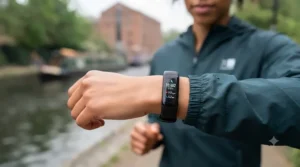
Not every beginner has the same starting point, and entry-level wearables in this price bracket cover a surprisingly wide range of needs. The nervous first-timer who’s never tracked anything before genuinely benefits from simplicity — the Xiaomi Smart Band 8 Active‘s smaller feature set is less overwhelming than a band bristling with 120 sports modes they’ll never touch.
The lapsed gym-goer restarting after a break tends to do better with something that actively nudges them, and stress or readiness-style metrics (present on most of these bands) can provide useful, non-judgemental feedback on overtraining days. Older beginners prioritising general health monitoring over sports performance often get the most value from continuous heart-rate alerts and sleep tracking specifically — areas where the Huawei Band 9 and Xiaomi Smart Band 9 both perform strongly.
Parents buying for a teenager new to fitness tracking should note that battery life and comfort for constant wear matter more than sports-mode count at that stage — the lighter, simpler Redmi Smart Band 2 or Xiaomi Smart Band 9 Active tend to survive daily teenage life better than pricier, more delicate alternatives.
Daily Activity Tracking: What to Actually Expect
Day to day, a fitness band under £50 quietly logs steps, active minutes, resting heart rate, and (on most models here) sleep stages, syncing that data to an app each time you open it. What most first-time buyers don’t expect is how much of the value comes from trend data rather than any single day’s number — a single low-step day tells you little, but a rolling weekly average revealing you’ve been sitting more than usual is genuinely actionable.
According to government guidance from the UK’s four Chief Medical Officers, adults aged 19 to 64 should aim for at least 150 minutes of moderate aerobic activity a week, alongside muscle-strengthening activity on two or more days. None of these bands will tell you to lift weights specifically, but the step and active-minute totals they surface are a reasonable proxy for tracking progress toward that broader target — reviewers across this list consistently note that seeing the number tick up in real time is what actually sustains motivation, more than any single feature.
Expect occasional inaccuracies around specific edge cases — cycling (low wrist movement relative to effort), pushing a pram, or carrying shopping bags — since accelerometer-based tracking fundamentally reads wrist motion rather than true physical exertion.
Budget Running Gear: Building a Cheap Kit Around Your Band
A fitness band under £50 pairs naturally with a wider budget running gear setup, and the good news is that none of the essentials need to break the bank either. If your band lacks GPS (which, on this list, is all of them), a basic phone armband or running belt solves the route-tracking gap cheaply, letting your phone’s GPS do the heavy lifting while the band handles heart rate and steps.
A common problem new runners hit is inconsistent step or distance readings during their first few outdoor sessions — the fix is usually recalibrating stride length in the app after a few GPS-tracked runs, which most of these apps use to refine future accelerometer-based estimates. Another frequent issue is heart-rate spikes or dropouts during cold-weather runs, caused by reduced blood flow to extremities; wearing the band slightly higher up the wrist and keeping hands warm under gloves typically resolves it.
For the band itself, a simple silicone strap swap (widely available and inexpensive for most models here) extends comfortable wear life once the stock strap starts to perish — a small, cheap fix that’s easy to overlook.
Safety and Water Resistance: What the Ratings Mean
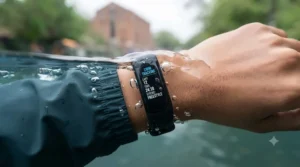
Most bands on this list carry a 5ATM water-resistance rating, which in practical terms means they can handle rain, sweat, hand-washing, and swimming in shallow water, but aren’t rated for high-pressure water activities like diving or water skiing. The rating refers to static pressure equivalent to 50 metres depth, not an active-use depth limit, so treat “swim-proof” claims as covering leisurely pool laps rather than serious open-water swimming.
For UK buyers, genuine electronic goods sold here should carry UKCA or CE marking confirming compliance with relevant safety standards — worth a quick check on the product listing or packaging, particularly with budget wearables sold through third-party marketplace sellers rather than official brand stores.
Frequently Asked Questions
❓ What is the best fitness band under £50 in the UK?
❓ Do cheap fitness bands track steps accurately?
❓ How long does a fitness band battery actually last?
❓ Can a fitness band under £50 track sleep properly?
❓ Is it worth buying a fitness band without built-in GPS?
Conclusion
Choosing a fitness band under £50 ultimately comes down to which trade-off bothers you least, because at this price every model makes one. The Xiaomi Smart Band 9 trades a slightly limited colour range for genuinely excellent battery life and screen quality. The Amazfit Band 7 trades some polish for an unmatched sports-mode library. The Redmi Smart Band 2 and Xiaomi Smart Band 9 Active trade AMOLED shine for rock-bottom pricing, while Huawei Band 9 and Honor Band 9 lean into display size and sleep insight, sitting closer to the £50 ceiling as a result.
None of these will replace a proper GPS running watch or a premium health-focused smartwatch, and none of them are trying to. What they offer instead is a genuinely low-risk way to build a daily activity habit, backed by real step, heart-rate and sleep data, for less than the cost of a few takeaways. Check current prices and availability before buying, since stock and promotions shift regularly across UK retailers — but on the evidence here, you don’t need to spend anywhere close to £200 to get a wearable that actually does its job.
Recommended for You
- Budget GPS Running Watch: 7 Brilliant Picks For UK Runners (2026)
- Running Watch For Marathon Training: 7 Proven Picks (2026)
- Garmin Running Watch for Beginners: 7 Best Picks (2026)
Disclaimer: This article contains affiliate links. As an Amazon Associate, I earn from qualifying purchases. If you purchase products through these links, we may earn a small commission at no additional cost to you.
✨ Found this helpful? Share it with your friends! 💬🤗
