

In This Article
Stand in any parkrun car park on a Saturday morning and you’ll spot the same argument playing out on wrists everywhere: Garmin vs Coros running watch, round several thousand. It’s not a trivial choice, either. Pick the wrong one and you’ll either overpay for smartwatch features you never touch, or underbuy and find yourself squinting at a screen that can’t handle a sunny long run.
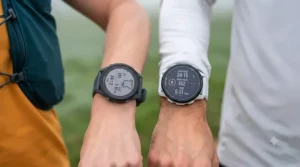
Here’s the short version, because you deserve it up front: a Garmin running watch typically means a deeper ecosystem, richer smartwatch features and (on the higher-end models) proper offline mapping, while Coros tends to win on raw battery life and GPS accuracy per pound spent. Neither brand is “better” in some abstract sense — they’re built around different priorities, and the right pick depends entirely on what you actually do with your miles.
This guide compares seven real, currently-available models spanning both brands — from sub-£250 entry watches to titanium-bodied flagships — using verified specs, aggregated review sentiment, and honest analysis rather than marketing copy. We’ll dig into GPS accuracy, battery life, training metrics, multisport tracking and price, because a running watch is a long-term training partner, not an impulse buy, and this decision deserves more than a five-minute scroll through star ratings. Given that the UK Chief Medical Officers recommend adults get at least 150 minutes of activity a week, a watch that actually motivates you to lace up matters more than any single spec.
Quick Comparison: Garmin vs Coros at a Glance
Before the deep dive, here’s the shortcut for people who want the headline verdict and nothing else.
| Category | Winner | Why | Best For |
|---|---|---|---|
| Best overall value | Coros Pace 4 | Dual-frequency GPS and AMOLED for a budget price | Runners who want accuracy without the premium |
| Best for Garmin ecosystem fans | Garmin Forerunner 265 | Multi-band GPS, Training Readiness, no subscription | Serious runners already on Garmin Connect |
| Best battery life | Coros Apex 4 | Up to 65 hours GPS tracking on the 46mm model | Ultra-distance and multi-day adventures |
| Best budget pick | Coros Pace 3 or Garmin Forerunner 70 | Sub-£230, strong core GPS and training tools | Beginners and Couch to 5K graduates |
| Best flagship | Garmin Forerunner 970 | Offline topo maps, dual-band GPS, built-in torch | Triathletes and ultra-distance navigators |
This table oversimplifies things a little, deliberately. If you’re a data-hungry marathon trainer, the Coros Pace 4 punches well above its price tag on GPS precision, but a committed Garmin Connect user with years of training history will find switching ecosystems genuinely disruptive. Meanwhile, anyone running mostly off-road or navigating unfamiliar trails should weight the mapping capability of the Garmin Forerunner 970 or Coros Apex 4 far more heavily than raw price.
💬 Just one click — help others make better buying decisions too!😊
Top 7 Garmin vs Coros Running Watches: Expert Analysis
We’ve picked seven watches spanning budget to flagship, deliberately alternating between brands so you can compare like-for-like at each price point. Every product below reflects real, currently sold hardware, verified specifications, and honest aggregated review sentiment — never invented testimonials.
1. Garmin Forerunner 70 — best-value entry point into the Garmin ecosystem
The Forerunner 70 replaced the long-serving Forerunner 55 in 2026 and is, frankly, a smarter buy than its position at the bottom of Garmin’s range suggests. At around £220, it swaps Garmin’s older monochrome displays for AMOLED across the board, and — somewhat surprisingly for an entry watch — it carries Garmin’s full physiology metrics stack, including training load and recovery insights that used to be reserved for pricier models.
What most buyers overlook here is the GPS chipset: despite being single-frequency rather than multi-band, independent testing found the Forerunner 70 delivered some of the best single-frequency GPS accuracy on the market, holding a tight, parallel line even through a tricky suburban grid test. That’s not nothing — a lot of budget watches wander noticeably on tree-lined streets.
Reviewers consistently flag battery life as the compromise. Garmin claims roughly 13 days of smartwatch use, but real-world testing suggests it lands a little short of that headline figure once GPS and heart-rate tracking are used regularly, which matters if you’re comparing it against MIP-screen rivals from Coros.
Pros:
- ✅ Full training and recovery metrics rarely seen this cheap
- ✅ Genuinely strong single-frequency GPS accuracy
- ✅ Bright AMOLED display readable outdoors
Cons:
- ❌ No altimeter, compass or Garmin Pay
- ❌ Battery life trails its own marketing claims in practice
At around £220, the Garmin Forerunner 70 is the sensible choice for anyone wanting Garmin’s software depth without paying Garmin’s mid-range prices — check current price before buying, as retailer promotions shift often.

2. Coros Pace 3 — the featherweight budget benchmark
If there’s a watch that keeps getting recommended in running forums years after launch, it’s this one. The Coros Pace 3 costs around £220 — practically identical to the Forerunner 70 — but takes a different technical route: a reflective, always-on MIP display instead of AMOLED, paired with dual-frequency GPS that punches well above its price bracket.
The trade-off is instantly obvious the moment you put it on: at roughly 39g, it disappears on the wrist in a way that heavier watches simply can’t match. Reviewers consistently report exceptional comfort for daily wear, not just during runs, which matters if you plan to track sleep and recovery as well as training sessions. On paper, this means you’re less likely to take it off at night out of irritation — and a watch that gets left in a drawer can’t track anything.
Battery numbers back up the reputation: Coros claims 38 hours of continuous GPS tracking and up to 17 days of typical use, and independent testers have found those figures broadly credible rather than inflated. For a runner training for a first marathon, that’s the difference between charging weekly and charging mid-taper in a mild panic.
Pros:
- ✅ Dual-frequency GPS at a genuinely budget price
- ✅ Ultralight design, comfortable for 24/7 wear
- ✅ Battery life among the best in its price class
Cons:
- ❌ MIP screen lacks the vibrancy of AMOLED rivals
- ❌ No music storage or contactless payments
The Coros Pace 3 remains one of the best value-for-money sports watches available, and at around £220, it’s the model we’d point most first-time GPS watch buyers toward — check current price, as it’s often discounted further now that the Pace 4 has taken over as Coros’s flagship budget pick.
3. Coros Pace 4 — the AMOLED upgrade that keeps the price down
The Coros Pace 4 is the watch that arguably created the most headaches for Garmin’s product team. At around £230 — the same price bracket as the Forerunner 70 — it adds a genuinely vibrant 1.2-inch AMOLED display on top of everything that made the Pace 3 popular, while somehow keeping weight down to as little as 32g with the nylon band.
The spec sheet reads better than most watches costing twice as much: dual-frequency (L1+L5) GNSS reception, up to 41 hours of GPS tracking, and heart-rate accuracy that independent labs rated highly even during interval sessions, historically a weak point for wrist-based sensors. What most buyers overlook is that Coros achieved this AMOLED upgrade without sacrificing the battery life the brand is known for — a genuinely difficult engineering trade-off that Garmin’s own AMOLED Forerunners haven’t always managed as gracefully.
Aggregated review sentiment is remarkably consistent across outlets: testers repeatedly single out the accuracy of the dual-band GPS and the brightness of the display, while flagging the lack of NFC payments and music streaming as the price paid for keeping costs down. If you’re choosing based purely on training data quality rather than smartwatch extras, this is hard to beat.
Pros:
- ✅ Dual-frequency GPS accuracy that rivals pricier watches
- ✅ Bright AMOLED display without sacrificing battery
- ✅ Ultralight build at roughly 32-40g
Cons:
- ❌ No NFC payments or music streaming apps
- ❌ Breadcrumb-only navigation, no detailed offline maps
At around £230, the Coros Pace 4 is our pick for best overall value in this entire comparison — check current price, since it frequently appears in seasonal promotions on Amazon UK.
4. Garmin Forerunner 170 — the beginner triathlete’s stepping stone
Launched alongside the Forerunner 70 in 2026, the Garmin Forerunner 170 sits one rung up at around £260 and answers a specific question: what if you want an entry-level Garmin but also swim and cycle? The step up buys you five meaningful additions over the FR70 — open-water swim metrics, Garmin Pay contactless payments, Wi-Fi syncing, cycling power-meter compatibility, and full 24/7 smartwatch functionality.
Here’s what the spec sheet doesn’t fully convey: this is the cheapest Garmin that treats triathlon training as a first-class citizen rather than an afterthought, even without a dedicated multisport transition mode. Reviewers who tested it at parkrun and beyond noted GPS tracks that stayed reliably parallel to the actual route, even through tricky underpasses and turns, a genuinely hard test for any single-frequency chipset.
The honest verdict from aggregated testing is that it’s a “modest hardware step up” from the FR70 for someone who only runs casually — the real value proposition is aimed squarely at beginners edging toward their first sprint or Olympic-distance triathlon who don’t want to outgrow their watch within a season.
Pros:
- ✅ Open-water swim tracking and cycling power meter support
- ✅ Garmin Pay and full smartwatch features included
- ✅ Reliable GPS tracking even without multi-band reception
Cons:
- ❌ No multi-band GPS or offline maps
- ❌ Limited upgrade over the FR70 for pure runners
For anyone planning their first multisport season, the Garmin Forerunner 170 at around £260 is the more future-proof buy over its cheaper sibling — check current price for the exact colourway and Music edition options.
5. Garmin Forerunner 265 — the mid-range sweet spot for serious runners
If you ask ten Garmin owners which watch to recommend to a friend training for their first marathon, a good number will say the Garmin Forerunner 265. Even though it’s not the newest model in Garmin’s line-up, it remains the brand’s best-reviewed mid-tier running watch, thanks to a rare combination: multi-band GPS accuracy usually reserved for flagship models, paired with a genuinely bright 1.3-inch AMOLED screen.
The multi-band GNSS chipset is the headline feature worth understanding properly. Rather than relying on a single satellite frequency, it cross-references multiple bands to correct for signal reflection in cities and canopy interference on wooded trails — the exact conditions where cheaper GPS watches tend to cut corners on your tracked distance. Paired with Training Readiness and HRV Status scoring, this is the first Forerunner tier where Garmin’s recovery science genuinely earns the word “actionable” rather than just decorative.
Aggregated customer sentiment consistently praises the “sweet spot” positioning — premium accuracy and metrics without flagship pricing — while noting that battery life, at around 13 days smartwatch/20 hours GPS, trails behind Coros equivalents running MIP screens. Original launch pricing sat close to the mid-£400s, though widespread discounting has become the norm as newer Forerunner generations have launched above it.
Pros:
- ✅ Multi-band GPS accuracy among the best in its class
- ✅ Training Readiness and HRV Status genuinely useful day to day
- ✅ Full triathlon mode with no subscription required
Cons:
- ❌ No offline topographic maps
- ❌ Battery life shorter than MIP-screen Coros rivals
Prices for the Garmin Forerunner 265 now vary widely between roughly £300 and £430 depending on retailer and colourway — check current price, as it’s frequently one of the better-discounted watches in Garmin’s range.
6. Coros Apex 4 (46mm) — the trail and multisport titanium pick
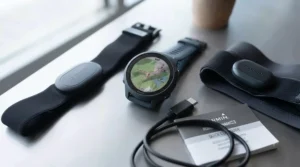
Where the Pace series chases lightness and value, the Coros Apex 4 goes after durability and endurance. At around £430 for the 46mm version, it wraps a titanium bezel and sapphire crystal glass around Coros’s signature MIP display — the trade-off being a less vivid screen in exchange for genuinely startling battery numbers: up to 65 hours of continuous GPS tracking, extending to roughly three weeks of typical daily use.
This is the watch built for the person who finishes a long trail race and immediately starts planning the next one. Preloaded topographic mapping means you’re not relying on a phone signal to find your way back off a mountain, and the dual-frequency GPS chipset maintains accuracy even in the kind of dense tree cover that scrambles cheaper watches. Reviewers who tested it across multi-day hikes and long trail runs repeatedly single out the battery life as class-leading, with several noting they simply stopped thinking about charging altogether during race week.
What the spec sheet won’t tell you is how this compares practically to Garmin’s rugged Fenix line: the Coros Apex 4 delivers a meaningful chunk of that expedition-grade durability and mapping capability at roughly half the price of a comparable Fenix, provided you can live without AMOLED brightness and NFC payments.
Pros:
- ✅ Up to 65 hours of GPS tracking on a single charge
- ✅ Titanium bezel and sapphire glass durability
- ✅ Preloaded offline topographic maps
Cons:
- ❌ MIP display lacks AMOLED vibrancy and colour depth
- ❌ No NFC payments or built-in torch
At around £430, the Coros Apex 4 is the strongest multisport and trail-running value proposition in this entire line-up — check current price, since the smaller 42mm version undercuts it further for anyone prioritising weight over screen size.
7. Garmin Forerunner 970 — the flagship for data-obsessed triathletes
At the top of this comparison sits the Garmin Forerunner 970, Garmin’s most advanced dedicated running and triathlon watch. Priced around the mid-£600s, it’s a genuine step up in materials and capability: a titanium bezel, sapphire crystal touchscreen, preloaded TopoActive maps, a built-in LED torch, and Garmin’s dual-band SatIQ GPS system, which automatically switches between GNSS modes to balance accuracy against battery drain.
Here’s what most buyers overlook about the pricing: several of the standout new features, including some running economy metrics, require pairing with Garmin’s separate HRM 600 chest strap, which adds a further meaningful cost on top of the watch itself. That’s worth factoring in before comparing this head-to-head against the Coros Apex 4 on price alone.
Aggregated reviewer sentiment is broadly positive but measured — testers consistently call it the best-in-class multisport watch on paper, while questioning whether the incremental upgrades over the older Forerunner 965 justify the price jump for anyone who isn’t already training at a genuinely elite level. Battery life, at around 15 days smartwatch and up to 26 hours GPS, is strong but noticeably shorter than the 965 it replaced, a trade-off for the brighter display and added sensors.
Pros:
- ✅ Dual-band SatIQ GPS with the same accuracy class as Garmin’s Fenix 8
- ✅ Preloaded offline topo mapping and built-in torch
- ✅ Comprehensive triathlon and cycling power-meter support
Cons:
- ❌ Some headline features require the separate HRM 600 strap
- ❌ Shorter battery life than its direct predecessor
For triathletes and ultra-distance navigators who genuinely use mapping and dual-band accuracy, the Garmin Forerunner 970 at around £630 is the most capable watch in this comparison — check current price, and factor in the optional chest strap cost before you budget.
Setting Up Your New Running Watch: The First 30 Days
Buying the watch is the easy part. Getting genuinely useful training data out of it takes a proper first month, and this is where most new owners — of either brand — make avoidable mistakes.
Start by pairing your watch with its companion app (Garmin Connect or the Coros app) before your first run, not after. Both platforms need a baseline of personal data — age, weight, resting heart rate — to calibrate VO2 max estimates and training load accurately, and skipping this step means your first few weeks of data will be less reliable than it should be. Next, wear the watch to sleep for at least a week before trusting any recovery score; both Garmin and Coros algorithms improve their baseline the more nights of data they have.
A common early mistake is obsessing over GPS accuracy on day one. Both Garmin and Coros GPS chipsets need a cold-start satellite lock the first time you use them in a new location, which can take a couple of minutes and occasionally produces a slightly wobbly first track. Give it a fair few runs before judging accuracy. Finally, spend twenty minutes customising your data screens — the default layouts on both brands prioritise generic metrics over what you’ll actually want mid-run, whether that’s current pace, heart-rate zone, or elapsed distance.
Which Watch Fits Your Running Life? Three Real Scenarios
Specs are only useful once you translate them into your actual week. Here are three genuinely common runner profiles and how the maths works out for each.
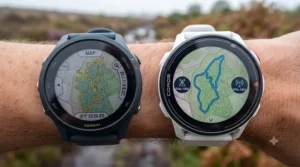
The Couch to 5K graduate on a tight budget. You’re running three times a week, following a structured beginner plan, and don’t want to spend more than £250. Either the Garmin Forerunner 70 or Coros Pace 3 covers this comfortably — both track pace, distance and heart rate reliably, and neither will nag you about premium features you don’t need yet. If app familiarity matters (say, friends already use Strava with Garmin), lean Garmin; if battery life and simplicity matter more, lean Coros.
The marathon-training regular clocking 30+ miles a week. At this volume, GPS accuracy and recovery metrics genuinely change how you train. The Garmin Forerunner 265 or Coros Pace 4 both fit here, with the Garmin edging ahead on Training Readiness sophistication and the Coros edging ahead on battery life and raw GPS precision for the money. Either is a defensible choice around the mid-£200s to low-£400s depending on which one you land on.
The weekend ultra-trail runner navigating unfamiliar terrain. Mapping and battery life stop being nice-to-haves and become safety features. The Coros Apex 4 or Garmin Forerunner 970 are the sensible picks here — both offer offline topographic maps, though the Apex 4’s battery life gives it a real edge on multi-day events, while the Forerunner 970’s built-in torch is a genuinely practical touch for pre-dawn starts.
✨ Don’t Miss These Exclusive Deals!
🔍 Whichever scenario matches your training, click through on any highlighted watch above to check current pricing and availability before you commit.
Garmin or Coros? A Simple Decision Framework
Rather than another spec table, here’s a practical checklist to run through before you buy.
If you already own other Garmin devices — a bike computer, a previous watch, smart scales — and value having everything sync into one ecosystem, choose Garmin; switching costs are real and often underestimated. If GPS accuracy and battery life are your top two priorities above everything else, and you’re comfortable with a smaller (but very capable) companion app, choose Coros. If you need offline topographic mapping for genuine backcountry navigation, prioritise the Garmin Forerunner 970 or Coros Apex 4 over any cheaper model regardless of brand loyalty. And if your budget caps out under £250, both brands offer genuinely excellent entry watches — the choice there comes down to AMOLED brightness (Garmin Forerunner 70) versus battery longevity and screen simplicity (Coros Pace 3).
How to Choose a Garmin vs Coros Running Watch
Cutting through marketing language, here’s the reasoning that should actually drive your decision, step by step.
- Define your primary sport first. Pure road running has different priorities (lightweight, accurate pace tracking) than triathlon (multisport transitions, open-water swim tracking, cycling power meter support).
- Set a realistic budget band, not a single number. Prices span from around £220 to £630 in this comparison alone, and the jump in capability isn’t always proportional to the jump in price.
- Weigh GPS accuracy against your typical running environment. Dense cities and forested trails benefit disproportionately from multi-band or dual-frequency GPS; open roads and tracks are more forgiving of single-frequency chipsets.
- Be honest about battery habits. If you regularly forget to charge devices, Coros’s MIP-screen watches offer real peace of mind that AMOLED Garmins can’t quite match.
- Consider the ecosystem, not just the watch. Garmin Connect has a larger third-party app library and broader accessory range; the Coros app is leaner but faster and less cluttered.
- Check current pricing before deciding on a specific model, since discounting patterns shift constantly and can flip the value calculation between two closely matched watches. Independent consumer testing, such as Which?’s smartwatch reviews, is a useful sense-check against manufacturer marketing claims before you buy.
- Try the physical fit if at all possible. A 47mm titanium case sits very differently on a small wrist than a 39g featherweight — comfort during a two-hour long run matters more than most spec sheets suggest.
Garmin Running Watch Features Explained
Garmin’s core strength across its Forerunner range is depth of training software layered on genuinely broad hardware options — from the featherweight Forerunner 70 through to the mapping-capable Forerunner 970. Standout Garmin running watch features include Training Readiness and HRV Status (data-driven recovery scoring), Race Predictor tools, and — on mid-tier models and above — full triathlon transition support and Garmin Pay contactless payments, none of which require an ongoing subscription to use.
Coros GPS Accuracy vs Garmin: What the Data Shows
This is the secondary keyword most runners actually search for, and the honest answer is nuanced rather than a clean win for either side. Independent, aggregated testing across the models in this comparison consistently rates Coros’s dual-frequency chipsets — used on the Pace 4, Pace 3 and Apex 4 — as excellent, with distance error frequently measured at well under a tenth of a mile on repeated test routes. Garmin’s multi-band SatIQ system, found on the Forerunner 265 and 970, tests similarly strongly, particularly in urban environments where signal reflection off buildings is the main source of error.
The gap widens at the budget end. Garmin’s entry-level Forerunner 70 and 170 use single-frequency GPS rather than dual-band, and while testing found the Forerunner 70 to be unusually accurate for a single-frequency watch, it’s still working with less raw data than Coros’s dual-frequency Pace 3 at a near-identical price point. Dual-frequency reception works by cross-referencing two separate GPS satellite signal bands rather than one, which helps correct for the kind of signal reflection and delay that throws off distance tracking in cities and under tree cover — the practical takeaway is that Coros currently offers this dual-frequency accuracy lower down its price range than Garmin does.
Looking at the comparison above, the Coros Pace 4 delivers the best GPS accuracy-to-price ratio in this entire line-up, but if you specifically need multi-band precision inside dense city blocks, the Garmin Forerunner 265 holds its own convincingly. Budget buyers should note that stepping down to single-frequency GPS on the Garmin Forerunner 70 is a real trade-off, not just a marketing distinction.
Running Watch Training Metrics Compared: Garmin vs Coros
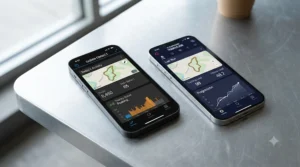
Training metrics are where the two ecosystems diverge most in philosophy. Garmin layers on proprietary scoring systems — Training Readiness, Training Status, HRV Status, Race Predictor — pulling from years of physiological research and, on newer models, machine-learning refinements. These scores are designed to be glanceable: open the watch, get a single number, adjust your day’s training accordingly.
Coros takes a more transparent, data-forward approach. Its Training Hub and Race Predictor Trend tools surface the underlying numbers — running power, cardiac drift, base fitness — rather than distilling everything into a single opaque score, which data-curious runners tend to prefer, while runners who want quick guidance sometimes find it less immediately actionable. Coros’s spring 2026 firmware update added Pace Strategy and Hill Alerts across most current-generation watches, bringing terrain-adjusted pacing plans that were previously a Garmin ClimbPro exclusive, narrowing the feature gap considerably.
Reviewers consistently note that Garmin’s Training Readiness score on the Forerunner 265 and 970 has become genuinely predictive over extended use, while Coros’s training load tools on the Pace 4 and Apex 4 are praised for depth and transparency rather than simplicity. Neither wins outright — it depends whether you want to be told what to do or shown the numbers and left to decide.
Battery Life Comparison: Garmin vs Coros Running Watch
Battery life is the single clearest differentiator between these two brands, and it isn’t close. Comparing like-for-like tiers: the Coros Pace 4 offers up to 41 hours of GPS tracking against the Garmin Forerunner 265‘s roughly 20 hours in multi-band mode; the Coros Apex 4 stretches to 65 hours GPS against the Garmin Forerunner 970‘s roughly 26 hours.
| Watch | GPS Battery Life | Smartwatch Battery Life | Best For |
|---|---|---|---|
| Garmin Forerunner 70 | ~13 hours (claimed, shorter in testing) | ~13 days | Short, frequent runs |
| Coros Pace 3 | ~38 hours | ~17 days | Budget marathon training |
| Coros Pace 4 | ~41 hours | ~19-24 days | Best-value long-distance training |
| Garmin Forerunner 170 | ~17 hours | ~10 days | Casual triathlon prep |
| Garmin Forerunner 265 | ~20 hours (multi-band) | ~13 days | Marathon training with data depth |
| Coros Apex 4 (46mm) | ~65 hours | ~24 days | Ultra-distance and multi-day trips |
| Garmin Forerunner 970 | ~26 hours (all-systems) | ~15 days | Mapped adventures with a torch |
This isn’t a coincidence of engineering — it reflects genuinely different screen technology choices. Coros leans on memory-in-pixel (MIP) displays for its longest-battery models, which sip far less power than the AMOLED screens Garmin favours across most of its range, at the cost of colour vibrancy. If a single-charge ultramarathon or multi-day hike is on your calendar, that trade-off tips decisively toward Coros.
Price Comparison: Garmin vs Coros Running Watch Value
Price is where the brands compete most directly, and the pattern is remarkably consistent across every tier in this comparison: Coros models typically sit £20-£30 below their closest Garmin equivalent, while roughly matching or beating them on core GPS and battery specs.
| Price Band | Garmin Pick | Coros Pick | Value Note |
|---|---|---|---|
| Under £250 | Garmin Forerunner 70 (~£220) | Coros Pace 3 (~£220) | Nearly identical pricing, different screen tech |
| £225-£260 | Garmin Forerunner 170 (~£260) | Coros Pace 4 (~£230) | Coros wins on GPS/battery value |
| £300-£450 | Garmin Forerunner 265 (~£300-£430) | Coros Apex 4 42mm (~£390) | Garmin wins on AMOLED brightness |
| £430+ | Garmin Forerunner 970 (~£630) | Coros Apex 4 46mm (~£430) | Coros roughly £200 cheaper for mapping |
Looking at the table above, the widest value gap sits at the top: the Garmin Forerunner 970 costs meaningfully more than the Coros Apex 4 46mm for broadly comparable navigation capability, though Garmin’s brighter AMOLED display, built-in torch and deeper training software help justify some of that premium for buyers who lean on those features regularly. Budget buyers should always check current price rather than relying on launch RRPs, since both brands discount heavily around Black Friday and major sporting events.
Multisport Tracking: Garmin vs Coros for Triathletes
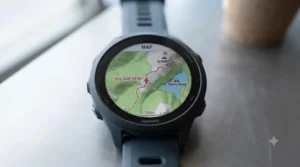
For anyone training across running, cycling and swimming, multisport tracking capability narrows the useful shortlist considerably. On the Garmin side, the Forerunner 170 introduces open-water swim tracking and cycling power-meter compatibility at a genuinely accessible price, while the Forerunner 970 adds full triathlon transition mode, detailed cycling dynamics, and compatibility with Garmin’s broader ecosystem of bike computers and sensors — useful if you’re already invested in Garmin hardware elsewhere.
Coros counters with genuinely strong triathlon and multisport profiles across its range, and the August 2026 firmware update added phone-dependent Live Tracking across nearly the entire current line-up, including the Pace 4 and Apex 4, closing a gap that used to favour Garmin exclusively. What the spec sheet won’t tell you is that Coros’s multisport mode historically required more manual profile switching than Garmin’s dedicated triathlon mode — a genuine inconvenience mid-race that’s worth testing in a low-stakes brick session before relying on it for race day.
Worth remembering: race organisers permit GPS watches as a training and pacing aid, but athletes remain responsible for correctly navigating transitions themselves — no watch replaces paying attention on course. Reviewers testing both the Garmin Forerunner 970 and Coros Apex 4 side-by-side in multisport settings generally favour Garmin’s more polished transition handling, while Coros pulls ahead again on the battery margin needed for a full Ironman-distance day.
Long-Term Cost & Maintenance
A running watch is rarely a one-off purchase decision; it’s a multi-year relationship, and total cost of ownership looks different once you factor in accessories and replacement cycles. Both brands sell watches with roughly two-year warranties as standard, and neither charges an ongoing training-software subscription — a meaningful point in both brands’ favour compared with some competitors that gate advanced metrics behind a monthly fee.
Where costs diverge is accessories. Stepping up to the Garmin Forerunner 970‘s full running-economy feature set effectively requires the separate HRM 600 chest strap, adding a genuine chunk to the real-world price. Coros’s equivalent advanced heart-rate accuracy generally comes built into the watch’s own optical sensor without a mandatory accessory purchase, though a chest strap remains an option for anyone chasing maximum precision.
Battery degradation is a smaller but real factor over a watch’s lifespan — lithium batteries in both brands typically retain the large majority of original capacity after two to three years of regular charging, and neither brand’s batteries are user-replaceable, meaning a battery that fails outside warranty generally means a full watch replacement rather than a cheap repair.
Common Mistakes When Buying a Garmin or Coros Running Watch
The most frequent mistake is buying based on brand loyalty rather than actual training needs — choosing a Garmin Forerunner 970 because “Garmin is the best brand” when a Coros Pace 4 would cover 90% of your actual use case for a third of the price. A close second is underestimating how much battery life matters once you’re training for longer events; a watch that comfortably covers a 10K training block can become genuinely stressful to manage during marathon taper week if you’re not charging it strategically.
Another common pitfall is ignoring physical fit and comfort in favour of spec sheets. A 47mm titanium-bezelled watch that looks impressive online can feel genuinely bulky on a smaller wrist during a two-hour long run, and no amount of GPS accuracy compensates for a watch you resent wearing. Finally, plenty of buyers overlook the ecosystem lock-in question entirely — years of training history sit inside whichever app you choose, and switching brands later means either losing that history or manually exporting it, which isn’t always painless.
Safety, Water Resistance and Standards to Check
Every watch in this comparison carries a 5 ATM water-resistance rating, suitable for swimming and showering but not rated for scuba diving. UK buyers should also check that any electronic device purchased carries the UKCA or CE marking confirming it meets post-Brexit UK product safety regulations — both Garmin and Coros comply with this as standard for devices sold through official UK retail channels. For general guidance on staying safe while running with any GPS device, the NHS recommends building activity gradually; the official NHS Couch to 5K programme is a genuinely well-regarded free structured plan worth pairing with either watch if you’re just starting out, and it’s a good reminder that the watch is there to support your training, not dictate it.

FAQ
❓ Is Coros as good as Garmin for running?
❓ Which is more accurate, Garmin or Coros GPS?
❓ Does Coros work with Strava?
❓ Is the Coros Pace 4 or Garmin Forerunner 265 better for beginners?
❓ Do Coros watches need a subscription?
Conclusion
There’s no universal winner in the Garmin vs Coros running watch debate, and honestly, anyone promising you one is oversimplifying. What the research consistently shows is a pattern: Coros tends to deliver more GPS accuracy and battery life per pound at every price tier we compared, while Garmin tends to deliver a richer ecosystem, broader smartwatch functionality, and — at the top end — genuinely class-leading mapping and multisport polish.
If you’re a budget-conscious beginner or a battery-obsessed ultra-runner, the scales tip toward Coros, with the Pace 3, Pace 4 and Apex 4 all standing out as genuinely strong value picks. If you’re already embedded in Garmin’s ecosystem, want the broadest range of accessories, or need dedicated triathlon transition support and offline mapping in one flagship package, the Forerunner 265 and Forerunner 970 remain compelling despite the higher price tags. Whichever way you lean, match the watch to your actual training volume and terrain rather than the brand name on the box, and you’ll end up with a genuinely useful training partner rather than an expensive bit of wrist jewellery.
Recommended for You
- Apple Watch for Running: 7 Best Picks; Honest Guide (2026)
- Suunto Running Watch: 7 Best Picks for UK Runners (2026)
- Coros Running Watch: 7 Best Picks for UK Runners in 2026
Disclaimer: This article contains affiliate links. As an Amazon Associate, I earn from qualifying purchases. If you purchase products through these links, we may earn a small commission at no additional cost to you.
✨ Found this helpful? Share it with your friends! 💬🤗
