

In This Article
There’s a specific kind of dread that hits at 6:15am in November, standing in the hallway in three layers, staring at the door like it owes you money. It’s dark. It’s been dark for hours and it’ll stay dark for another two. And somewhere in the back of your head, a small, sensible voice is saying: you cannot see the pavement, the potholes, or the dog mess, and neither can the driver who’s about to pull out of that junction without looking. This is precisely the gap a running headtorch under £30 exists to fill, and thankfully it’s a gap the market has gotten genuinely good at closing.
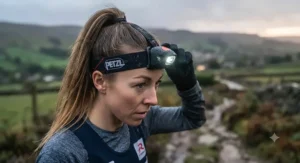
Here’s what a running headtorch actually is, in plain terms: a lightweight, battery-or-USB-powered light strapped to your forehead that throws a beam ahead of you while leaving both hands free, typically weighing somewhere between 35g and 150g, running on AAA batteries or an internal rechargeable cell, and rated for splash or rain resistance rather than full submersion.
You don’t need to spend £70 on a mountaineering-grade unit with reactive lighting and a five-hour runtime at full blast to solve a jog around the block problem. What you need is enough beam distance to spot uneven kerbs, a rear or flashing element so traffic clocks you, and battery life that outlasts your longest weekly run. This guide walks through seven real, currently available options, from bare-bones AAA classics to the more feature-packed rechargeable units that sit right at the edge of that £30 ceiling, so you can pick based on what your dark mornings actually demand rather than which box has the biggest number printed on the front.
Quick Comparison Table
| Headtorch | Type | Approx. Price | Best For |
|---|---|---|---|
| Petzl Tikkina | AAA, single button | £20-£25 range | Simplicity and Petzl reliability |
| Black Diamond Astro 300 | Dual-fuel (AAA/optional rechargeable) | £25-£30 range | Dimmable beam and strobe safety |
| Vitchelo V800 | AAA, separate red/white buttons | Under £25 | No-fuss dark morning commutes |
| Ledlenser NEO5R | Rechargeable, rear battery pack | £29-£35 range (upper edge) | Serious weekly mileage |
| Foxelli USB-C Headlamp | Rechargeable, ultra-light | Under £20 | Lightest option on this list |
| Blukar Rechargeable Head Torch | Rechargeable, sensor control | Under £20 | Tightest budget, hands-free control |
| AONIJIE Sensor Headlamp | AAA or built-in battery | Under £20 | Trail running at night |
Looking at the spread here, the split really comes down to power source and control style rather than brightness alone — every torch on this list will get you through a dark run safely, but they earn their place in very different ways. If you want zero fuss and don’t mind carrying spare AAAs, Petzl Tikkina, Vitchelo V800 and Black Diamond Astro 300 all sit comfortably at the budget end. If you’d rather never buy a battery again, Ledlenser NEO5R, Foxelli USB-C Headlamp, Blukar Rechargeable Head Torch and AONIJIE Sensor Headlamp cover you, with the NEO5R nudging right up against the £30 mark in exchange for running-specific extras like a rear safety light and chest strap.
💬 Just one click — help others make better buying decisions too!😊
Top 7 Running Headtorches Under £30: Expert Analysis
1. Petzl Tikkina — best simple, no-nonsense budget pick
The Petzl Tikkina is the headtorch equivalent of a reliable hatchback: nothing flashy, everything works. It’s built around a single button and a wide, uniform flood beam rather than a focused spot, which in practice means you get consistent lighting across your whole field of view instead of a narrow tunnel.
At around 300 lumens on its highest of three settings, the Tikkina throws light roughly 55 metres on max power, dropping to about 10 metres on its lowest setting — plenty for spotting a kerb edge or a stray branch on a familiar route, though it starts to feel thin if you’re navigating genuinely unlit trails at pace. It runs on three AAA batteries rather than an internal cell, which some runners will see as a hassle and others will see as the whole point: no charging cable to forget, no battery degrading over years of use, just pop in fresh AAAs and go.
Based on the spec comparison with the rest of this list, the Tikkina is best suited to runners who value dependability over features — beginners easing into dark-morning training, or anyone who’s been burned by a flashy rechargeable torch dying mid-run and would rather trust chemistry they can buy at any petrol station. Reviewers consistently note that the single-button interface is refreshingly foolproof, even with cold or gloved fingers, though several mention the beam has a slightly warm, yellow-tinted cast rather than a crisp white light, and that it lacks a red night-vision mode or a rear safety light entirely.
Pros:
- ✅ Dead simple single-button operation, even with gloves on
- ✅ No battery degradation worries — AAAs are cheap and everywhere
- ✅ Trusted five-year warranty from a respected outdoor brand
Cons:
- ❌ No red light mode or rear safety light included
- ❌ Beam has a noticeably warm tint compared with rivals
Sitting in the £20-£25 range, the Tikkina is genuinely hard to beat as a first headtorch — you’re paying for Petzl’s reputation and a beam that simply does the job, without a single extra you don’t need.
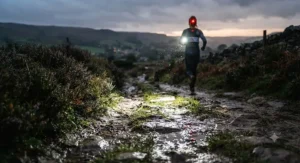
2. Black Diamond Astro 300 — best for dimmable, weatherproof reliability
The Black Diamond Astro 300 takes a similar “keep it simple” philosophy to the Tikkina but adds two features that matter more than they sound: proper dimming control and a strobe mode. What that means in practice is you’re not stuck choosing between “too bright for a quiet street” and “not bright enough for a dark park path” — you can dial the output to exactly what the moment calls for.
Its 300-lumen maximum output is comparable to the Tikkina’s, with a claimed beam distance around 55 metres on high, but the standout here is the Dual-Fuel design: it ships running on three AAA batteries, but is also compatible with Black Diamond’s own rechargeable Li-ion pack if you decide down the line that you’d rather not keep buying disposables. The housing carries an IPX4 rating, meaning it shrugs off rain and sleet hitting it from any angle, which matters more than most spec sheets let on for anyone training through a proper British winter.
What most buyers overlook about this model is the brightness memory function — it remembers your last-used setting rather than defaulting back to max power every time you switch it on, a small thing that saves a genuinely annoying fumble in the dark. Reviewers consistently describe it as comfortable and stable during runs, with the elastic headband holding position well even at pace, though the lack of a spotlight mode means it’s better suited to well-trodden routes than picking out distant obstacles on unfamiliar trail.
Pros:
- ✅ True dimming plus strobe mode for visibility on roads
- ✅ Dual-Fuel flexibility — AAAs now, rechargeable later if you want
- ✅ IPX4 stormproof housing handles rain from any angle
Cons:
- ❌ No spotlight/focused beam mode for distance viewing
- ❌ Rechargeable battery pack sold separately, adding to cost
At roughly £25-£30, the Astro 300 sits right at the top of this budget bracket, and it earns that price with genuinely useful control features the cheaper options in this list simply don’t offer.
3. Vitchelo V800 — best for straightforward dark-morning commutes
The Vitchelo V800 solves one small but persistent headtorch annoyance: having to cycle through four modes just to reach the red light. It gives white and red LEDs their own dedicated buttons, so you can jump straight to whichever you need without holding your run pace hostage to a menu system.
It’s rated to shine up to 110 metres on its brightest white setting, with a claimed IPX rating that handles rain and sweat without issue — reviewers who’ve been caught out in genuinely wet conditions report it kept working, though it’s worth noting this is splash resistance rather than full waterproofing. Power comes from three AAA batteries, keeping the running costs low and predictable, and the padded strap is designed specifically to stop the plastic housing pressing an uncomfortable ridge into your forehead over a long run, a complaint that plagues cheaper unpadded torches.
Here’s what to weigh with the V800: it’s not the most powerful light on this list, and the housing has been reported to be a little fragile if it takes a hard knock — several buyers mention the hinge cracking after being dropped or squashed in luggage, rather than through normal running use. A common theme in aggregated review feedback is praise for the company’s no-questions-asked replacement policy when this happens, which takes some of the sting out of the concern. For the price, it remains one of the most straightforward “just works” options for someone who runs the same lit or semi-lit route most mornings and wants zero learning curve.
Pros:
- ✅ Separate red/white buttons — no mode-cycling required
- ✅ Padded strap reduces forehead pressure on long runs
- ✅ Simple one-push off, no accidental battery drain
Cons:
- ❌ Housing hinge reported fragile if dropped or knocked
- ❌ Not the brightest option here for unlit trail sections
Typically found under £25, the V800 rewards runners who want the fewest possible decisions to make at 6am — point, press, go.
4. Ledlenser NEO5R — best for serious weekly mileage
The Ledlenser NEO5R is the one torch on this list that was designed specifically around running biomechanics rather than adapted from a general camping headlamp, and it shows the moment you put it on. The light unit sits at the front while the rechargeable battery pack rides at the back of your head, balancing the weight so it doesn’t nod forward with every stride the way front-heavy torches can.
With a claimed 600-lumen output and up to 35 hours of runtime on lower settings, the NEO5R is built to comfortably outlast even a long trail session, and the 100-metre beam distance gives genuine confidence on routes without street lighting. The rear-mounted pack doubles as a flashing red safety light, which is arguably the single most useful feature for road-adjacent running in the dark — cars clock a blinking red light from far further away than a static one, and it means you’re covered front and back without buying a second product.
Based on the spec comparison with cheaper options here, this is the headtorch to reach for if you’re training for a specific event, running most weekdays, or covering genuinely unlit rural roads rather than lamplit streets — the extra runtime and rear visibility earn their keep at that frequency. Reviewers consistently rate the build quality and comfort highly, noting the IP54 splash resistance holds up well through sweaty, rainy sessions, though a handful mention that without manual focus control, you’re stuck with whatever beam spread the unit ships with rather than being able to narrow it for distance viewing.
Pros:
- ✅ Rear-mounted battery balances weight for a bounce-free fit
- ✅ Built-in flashing red rear light — visible from both directions
- ✅ Genuinely long runtime for regular, high-mileage training
Cons:
- ❌ Sits at the very top of the £30 budget, sometimes over it
- ❌ No manual beam focus adjustment
Priced typically in the £29-£35 range depending on retailer and colour, the NEO5R is the one pick here that occasionally nudges past strict £30 territory — but for anyone running most days of the week, the running-specific design more than justifies stretching the budget slightly.
5. Foxelli USB-C Rechargeable Headlamp — best for featherweight comfort
The Foxelli USB-C Rechargeable Headlamp is built around a single priority: forgetting it’s even there. At roughly 2.4 ounces, it’s noticeably lighter than most of the torches on this list, and that weight difference becomes very apparent around the 40-minute mark of a run, when a heavier unit starts to feel like it’s slowly working its way loose.
Its 180-lumen output is modest next to the NEO5R’s 600, throwing light around 90 metres on its highest setting — enough for pavements and lit parks, but you’ll notice the ceiling on genuinely dark, unlit stretches. The trade-off is USB-C charging with a claimed 40-hour runtime on lower settings, an IPX5 rating that copes with driving rain, and a 45-degree tilt adjustment that lets you angle the beam down towards your feet on technical ground rather than lighting up the treetops.
The spec sheet won’t tell you this, but user reports suggest the strap’s stretch-fit design is what makes the light feel disappear on your head, rather than the weight alone — a snug, non-slip band matters just as much as grams saved. Reviewers frequently mention the five light modes (including a red SOS strobe) as genuinely useful rather than gimmicky, though the flip side of that low weight is a smaller battery, so if you’re planning back-to-back long sessions without a charging window, this isn’t the pick.
Pros:
- ✅ One of the lightest options here — barely noticeable on a run
- ✅ USB-C fast charging, no proprietary cable to lose
- ✅ Five modes including red SOS strobe for emergencies
Cons:
- ❌ 180 lumens is on the lower end for unlit trail use
- ❌ Smaller battery capacity than heavier rivals
Usually available under £20, the Foxelli earns its spot here purely on comfort — if the main reason you skip dark runs is that headtorches feel clunky and annoying, this is the antidote.
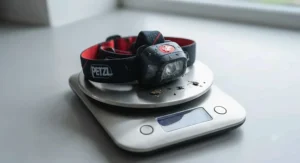
6. Blukar Rechargeable Head Torch — best for tightest budgets
The Blukar Rechargeable Head Torch is the wildcard pick on this list: a generic-brand, sensor-controlled rechargeable unit that undercuts every other product here on price while still covering the essentials most dark-morning runners actually need.
Marketing copy on listings for this type of torch often quotes eye-catching lumen figures that outstrip what the LED and battery combination can realistically sustain — a common pattern across budget Amazon headtorches generally, so it’s worth treating any four-figure lumen claim with a healthy pinch of salt rather than taking it at face value. What’s more reliably verified is the IPX5 water resistance rating and the roughly 30-hour runtime on its lower settings, alongside a motion-sensor control that lets you wave a hand in front of the unit to switch modes without fumbling for a button mid-stride.
Honestly assessing this one: it isn’t going to match a Petzl or Ledlenser on optical quality or long-term build durability, and the sensor control — while a nice idea — has been reported by some users as occasionally over-sensitive, triggering mode changes from sweat or a stray hand movement. Aggregated feedback tends to praise the value for money and rechargeable convenience strongly, while flagging that the plastic housing feels noticeably less premium than branded alternatives. For genuinely occasional dark-morning use where budget is the overriding concern, it does the core job at a price that’s hard to argue with.
Pros:
- ✅ Lowest price point of any rechargeable option on this list
- ✅ Motion-sensor mode switching — no fumbling for buttons
- ✅ Roughly 30-hour runtime keeps recharging infrequent
Cons:
- ❌ Advertised lumen figures likely overstated versus real output
- ❌ Motion sensor occasionally over-triggers from sweat or movement
Usually priced under £20, the Blukar is the pick for runners who want rechargeable convenience without spending much beyond the cost of a decent coffee round.
7. AONIJIE Sensor Headlamp — best for trail running at night
The AONIJIE Sensor Headlamp comes from a brand built specifically around trail and ultra-running gear rather than general camping kit, and that focus shows in small but meaningful design choices — a low-profile housing, dual-LED setup, and a webbing strap designed to wick sweat rather than soak it up and slide.
Rated IPX7 — a notably higher water-resistance tier than most torches on this list, meaning it’s built to handle genuine downpours rather than just splashes — it runs on either three AAA batteries or a built-in rechargeable cell depending on the exact model variant, giving you flexibility that’s rare at this price point. The dual-LED source keeps power draw modest for longer use, and a touch-sensitive control lets you adjust the light angle up to 60 degrees to match technical, uneven trail terrain rather than fixed street-lit pavement.
Reviewers consistently note it as a favourite among ultramarathon and trail communities specifically because it’s light enough to forget about over multi-hour sessions while still holding up to genuinely wet, muddy conditions that would trouble less water-resistant units. What most buyers overlook about this model is that its output, while adequate for technical trail navigation at a careful pace, isn’t in the same brightness league as the NEO5R — if you’re running fast on unlit single-track rather than picking your way carefully, you may find yourself wanting more raw lumens.
Pros:
- ✅ IPX7 rating — genuine downpour resistance, not just splashes
- ✅ Dual battery compatibility (AAA or built-in rechargeable)
- ✅ Adjustable beam angle for technical, uneven trail terrain
Cons:
- ❌ Brightness trails behind the more powerful rechargeable picks
- ❌ Sensor/touch controls can be fiddly with wet or gloved hands
Typically priced under £20, the AONIJIE is the strongest pick specifically for trail runners who value weatherproofing and fit over maximum brightness.
✨ Don’t Miss These Exclusive Deals!
🔦 Check current pricing on any of these seven headtorches before your next dark-morning session — availability and colours shift often, so it’s worth a quick look before you commit to one.
Practical Usage Guide: Getting the Most From Your Headtorch
Getting a new headtorch out of the box and straight onto your head for a run is tempting, but a five-minute setup pass first saves you fumbling in the dark later. Start by fitting the headband while stationary, adjusting it snug enough that a light jog doesn’t shift it, but not so tight it leaves a mark — most straps have both a horizontal and a top strap, and skipping the top strap is the single most common reason torches bounce.
Before your first proper run, test all the light modes somewhere dim but safe, like your garden or a quiet street, so you’re not hunting for the red light setting for the first time on an actual dark road. If your torch uses AAA batteries, keep a spare set in your running belt or car — batteries have an unhelpful habit of dying exactly when you need them most, usually about ten minutes into the darkest stretch of your route. For rechargeable models, build a habit of topping up after every run rather than waiting until the indicator flashes low, the same way you’d charge a phone overnight rather than let it hit 2%.
A few common first-30-days mistakes are worth flagging directly. Wearing the torch too high on the forehead throws light up into trees rather than down onto the pavement — angle it so the beam hits the ground roughly three to four metres ahead of you. And storing a rechargeable torch fully drained for weeks between uses can shorten battery lifespan over time, so give it a top-up charge even during a break from running.
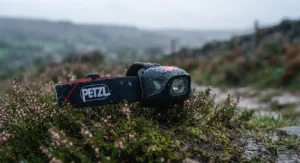
Real-World Scenarios: Which Headtorch Fits Your Situation
Picture three different runners heading out on a Tuesday morning in January. The first is a beginner, three months into a Couch to 5K style routine, running a familiar, well-lit loop around their local park before work. For this profile, something like the Petzl Tikkina or Vitchelo V800 makes complete sense — the routes are known, the lighting is already decent, and the priority is simply feeling safe and visible without overthinking the purchase.
The second runner trains for an evening 10k most weekdays, covering a mix of pavement and one genuinely unlit stretch along a canal path, and does this in most weather. Here, the case for the Ledlenser NEO5R or Black Diamond Astro 300 gets much stronger — the rear safety light on the NEO5R specifically earns its price on that canal stretch, where being seen by a passing cyclist matters as much as seeing the path yourself.
The third is a weekend trail runner heading onto muddy, root-crossed woodland tracks before sunrise on a long run. Here, the AONIJIE Sensor Headlamp‘s higher water resistance and adjustable beam angle for uneven ground make more sense than a torch optimised for flat pavement — and the Foxelli USB-C Headlamp‘s low weight is a genuine asset over two or three hours on foot.
How to Choose a Running Headtorch
- Match beam distance to your route, not the biggest number available. A 55-metre beam is plenty for a lit street; unlit trail sections benefit from something closer to 90-100 metres.
- Prioritise a rear safety light if you run near traffic. A flashing red element visible from behind does more for road safety than raw front brightness ever will.
- Decide on power source before brand or brightness. AAA batteries mean no charging routine but ongoing cost; rechargeable means one less thing to buy but one more thing to remember to plug in.
- Check the water resistance rating against your actual weather, not the season’s ideal. IPX4 handles rain; IPX7 handles genuine downpours and puddle splashback.
- Weigh it up literally, if you can. Anything over roughly 100g becomes noticeable on longer runs, especially without a top strap.
- Look for dimming or multiple brightness levels, not just on/off. Being able to drop the output on a lit street saves battery and avoids dazzling oncoming pedestrians.
- Read aggregated reviews for durability complaints specifically, since brightness claims are easy to verify but a hinge that cracks after three months of use only shows up in real owner feedback.
Common Mistakes When Buying a Running Headtorch
The most frequent mistake is chasing the highest lumen figure without checking beam distance or runtime at that setting — a torch that claims 2000 lumens but drains in 45 minutes at that brightness is far less useful for a genuine long run than a modest, honestly-rated 300-lumen unit that lasts the full session. A close second is ignoring weight and fit entirely, buying based on spec sheet alone, then discovering the unit bounces or slides after twenty minutes of actual running — something a spec table simply can’t tell you.
Buyers also frequently overlook rear visibility, focusing entirely on how well they can see rather than how well drivers and cyclists can see them, which matters enormously for anyone running on or near roads. Finally, it’s worth checking the light modes before assuming red-light or strobe functions are included as standard — some budget torches skip them entirely, and they’re genuinely useful for preserving night vision or signalling in an emergency.
What to Expect: Real-World Performance in the Dark
Specs on a box rarely translate directly to how a torch feels on an actual run. A “300-lumen, 55-metre beam” figure sounds abstract until you’re jogging down a residential street and realise it comfortably lights the pavement two full strides ahead, giving enough reaction time to spot a raised paving slab before your foot lands on it. Runners moving at a genuine training pace — rather than a gentle stroll — generally want beam distance biased more towards the “medium range, wide flood” end than a narrow, far-reaching spotlight, since a tight beam that lights up something 100 metres away is much less useful than one that evenly covers the next 10 metres where your feet actually are.
Cold weather changes performance too, something spec sheets rarely mention. Alkaline AAA batteries lose a noticeable chunk of capacity in near-freezing temperatures, so a torch rated for four hours in a lab at room temperature might realistically deliver closer to three on a genuinely frosty morning — worth bearing in mind for anyone in the habit of running through a proper cold snap.
Running Headtorch for Trail Running at Night
Trail running after dark asks more of a headtorch than road running does, because the ground itself is the main hazard rather than traffic. Roots, loose stones, and sudden changes in gradient are far harder to spot with a headtorch alone than with a static light, since your beam moves with your head rather than staying fixed on the ground ahead — this is why experienced trail runners often recommend pairing a headtorch with a smaller waist or wrist light, so one source lights where you’re looking and the other lights where you’re stepping.
For this specific use case, water resistance and beam angle adjustability matter more than raw brightness. The AONIJIE Sensor Headlamp‘s IPX7 rating and adjustable tilt make it a stronger fit for muddy, exposed trail conditions than a torch optimised purely for lit pavement, and its lighter dual-LED design reduces fatigue over longer off-road sessions where you’re on your feet for two or three hours rather than thirty minutes.
Running Headtorch for Dark Mornings
Dark-morning running has a slightly different profile to evening sessions: routes tend to be more familiar since they’re often the same commute-adjacent loop repeated daily, but reaction time matters more because you’re often still waking up. For this scenario, ease of use trumps almost everything else — a single-button torch like the Petzl Tikkina or a sensor-controlled option like the Blukar Rechargeable Head Torch means you’re not squinting at tiny mode buttons while your brain is still catching up with your body.
Battery reliability also carries more weight here than in evening running, since a torch that dies on a 6am run leaves you stranded in the darkest part of the day with no natural light coming to rescue you, unlike a dusk run where daylight is fading gently rather than absent entirely.
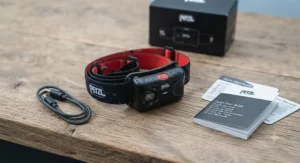
Lightweight Running Headtorch Considerations
Weight matters disproportionately more than most buyers expect, because a headtorch isn’t static gear like a jacket — it moves with every footstrike, and anything with poor weight distribution creates a small but constant bounce that becomes genuinely irritating over distance. The Foxelli USB-C Headlamp‘s sub-70g build is a clear standout here, while the Ledlenser NEO5R‘s rear-mounted battery pack solves the same problem through balance rather than raw lightness — both approaches work, but they suit slightly different runners.
If you’re prone to headaches from tight straps or run in warm conditions where sweat makes any headband uncomfortable, prioritise the lightest option even if it means trading off some brightness or runtime, since a torch that feels genuinely comfortable is one you’ll actually reach for on the mornings motivation is already running low.
Beam Distance Explained
Beam distance figures on packaging describe how far a torch’s light remains usable before dropping below roughly 0.25 lux — the point at which most people can still make out shapes but not fine detail. For road running on lit or semi-lit streets, 50-60 metres is comfortably sufficient, since street lighting is already doing much of the work and your headtorch is mainly filling gaps. For genuinely unlit rural roads or trail sections, aim closer to 90-100 metres, giving you meaningfully more reaction time to spot uneven ground or wildlife crossing your path.
It’s worth noting that beam distance and total brightness (lumens) aren’t the same measurement, and a narrower-beam torch can sometimes out-throw a wider-flood torch with a higher lumen rating, because all that light is concentrated into a tighter spot rather than spread across your full field of view.
Battery Life and Charging: Long-Term Cost & Maintenance
Over a typical year of three runs a week, an AAA-powered torch like the Petzl Tikkina or Vitchelo V800 will likely need a fresh set of batteries every four to six weeks of regular use, which adds up to a modest but real ongoing cost worth factoring into your total spend rather than just the upfront price tag. A rechargeable unit avoids that recurring cost entirely, but represents a slightly higher upfront investment and, eventually, a battery that degrades with charge cycles the way any lithium-ion cell does — usually only becoming noticeable after a couple of years of regular use.
For maintenance, wiping down the housing and strap after wet or muddy runs prevents grit building up in the button mechanism, and for rechargeable models, avoiding letting the battery sit fully drained for extended periods helps preserve its long-term capacity — the same basic principle that applies to phone and laptop batteries.
Water Resistance: What the Ratings Actually Mean
IPX ratings, commonly printed on headtorch packaging, describe protection against water ingress on a standardised scale. As explained in the IP Code standard, an IPX4 rating means resistance to splashing water from any direction — enough for light rain or sweat during a workout — while IPX7 indicates the unit can withstand full immersion in up to a metre of water for around 30 minutes. For most road and park running in typical UK weather, IPX4 is genuinely sufficient; it’s really only trail runners crossing streams or running through consistently heavy downpours who benefit meaningfully from stepping up to an IPX5 or IPX7-rated unit like the AONIJIE Sensor Headlamp.
Safety and Visibility on Roads
A headtorch alone solves half the visibility problem — seeing where you’re going — but being seen by drivers matters just as much, and it’s worth treating the two as separate priorities rather than assuming one covers the other. The Highway Code’s guidance for pedestrians specifically recommends wearing reflective clothing and carrying a light after dark, on the basis that a driver’s ability to spot a pedestrian drops sharply once visibility falls, particularly on unlit roads. This is exactly why a torch with a genuine rear-facing red light, like the Ledlenser NEO5R, adds real safety value beyond simply lighting your own path — it means you’re visible from both directions rather than only the front. Pairing any headtorch with a reflective running vest or armband, rather than relying on the torch alone, is the more complete approach most safety guidance converges on.
Features That Actually Matter (And Those That Don’t)
Beam distance, rear visibility, and comfort of fit consistently make the biggest real-world difference, while headline lumen figures and the sheer number of light modes tend to matter far less than marketing copy suggests. A torch with six light modes sounds impressively versatile, but in practice most runners settle into using just two — a main running mode and, occasionally, a red night-vision setting — making the other four largely decorative.
Genuinely useful extras worth paying a little more for include brightness memory (so the torch doesn’t reset to blinding max every time you switch it on), a rear safety light, and a proper top strap for stability. Features that sound good on a listing but rarely change the actual running experience include multi-colour housing options, extreme high-lumen “boost” modes that drain the battery in minutes, and elaborate strobe patterns beyond a simple flash.
Frequently Asked Questions
❓ How many lumens do I need for running with a headtorch?
❓ Is a rechargeable or battery-powered headtorch better for running?
❓ What water resistance rating do I need for running in the rain?
❓ How long does a running headtorch battery last?
❓ Do I need a red light mode on a running headtorch?
Conclusion
There’s no single “best” running headtorch under £30 — there’s only the one that matches the running you actually do. If your route is a familiar, mostly-lit loop, the simplicity of the Petzl Tikkina or Vitchelo V800 will serve you well for years without a single fumbled button press. If you’re covering genuinely unlit roads or clocking up serious weekly mileage, the rear safety light and runtime of the Ledlenser NEO5R justifies stretching right up to the £30 ceiling. And if muddy trail sections are your thing, the weatherproofing on the AONIJIE Sensor Headlamp earns its keep in a way raw brightness alone never could.
Whichever you land on, the real win here isn’t the torch itself — it’s what it unlocks. One less excuse to skip the run because it’s dark outside, one more session banked before the year gets away from you. Check current pricing on whichever option fits your routine, and get back out there.
✨ Ready to Light Up Your Next Run?
🏃♂️ Compare current prices on any of these seven picks and find the one that matches your route, your budget, and how many mornings a week you’re actually planning to lace up.
Recommended for You
- 7 Best Reflective Vest Under £15 in 2026 (UK Night Running Guide)
- Running Sunglasses for Prescription Wearers: 7 Best Picks 2026
- Polarised Running Sunglasses: 7 Best Picks for 2026 (Buyer’s Guide)
Disclaimer: This article contains affiliate links. As an Amazon Associate, I earn from qualifying purchases. If you purchase products through these links, we may earn a small commission at no additional cost to you.
✨ Found this helpful? Share it with your friends! 💬🤗
