

In This Article
Somewhere around mile four of a bright, low-angle winter run, most people discover the exact moment their sunglasses stop being optional. The glare bouncing off wet tarmac, a parked car’s windscreen, or a puddle you didn’t see coming can genuinely mess with your footing, and that’s precisely the problem polarised running sunglasses are built to solve.

Polarised lenses work by filtering out the specific horizontal light waves that cause glare when sunlight reflects off flat, shiny surfaces — road, water, glass, even sweat on your own skin. Standard tinted lenses just dim everything evenly; polarised ones selectively cut the reflected glare while leaving genuine detail intact, which is exactly why runners who log serious road miles tend to swear by them.
This guide compares seven real pairs of polarised running sunglasses currently sold in the UK, from a £20 goodr pair to a genuine triathlon-grade Rudy Project frame, with honest analysis of lens tints, weight, fit, and who each pair actually suits. We’ll also cover the polarised-versus-non-polarised debate properly, when non-polarised or photochromic lenses actually work better (hint: after dark), and how road running and trail running have genuinely different visibility needs. No invented reviews, no fabricated hands-on testing — just real specifications and honestly summarised customer feedback you can actually use.
What Are Polarised Running Sunglasses?
Polarised running sunglasses are sports eyewear fitted with a special filter layer that blocks horizontally reflected light, cutting glare from flat, shiny surfaces like wet roads, pavements and water while sharpening genuine detail underfoot. The filter sits within or beneath the lens tint itself, so a polarised lens still needs a separate UV coating to block harmful rays — polarisation and UV protection are two different jobs, done by two different parts of the same lens. Good running-specific frames add a wraparound shape, non-slip nose pads and lightweight materials on top of that core polarising filter.
Quick Comparison Table
| Sunglasses | Weight | Price Range | Best For |
|---|---|---|---|
| goodr OG Polarised | Around 26g | around £20-£27 | Absolute budget entry point |
| ROCKBROS 5-Lens Interchangeable | Around 29-30g | around £15-£25 | Buyers who want lens tint variety |
| ICECUBE Verano TAC Polarised | Lightweight PC frame | around £18-£25 | Everyday daylight glare reduction |
| Tifosi Swank Polarized | 23g | around £45-£55 | Small-medium faces, all-day comfort |
| ROCKBROS Photochromic Sports | Lightweight TR90 | around £20-£30 | Variable light, dawn and dusk runs |
| Oakley Radar EV Path (Prizm Road) | Standard sport frame | around £140-£160 | Serious road runners wanting contrast |
| Rudy Project Rydon | Standard sport frame | around £150-£220 | Triathletes and multi-sport athletes |
Looking at the spread above, budget options under £30 cluster around basic TAC polarised lenses with straightforward frames, while the step up to a Tifosi or ROCKBROS photochromic pair adds either a genuinely lighter build or lenses that adapt automatically as light changes through a run. The jump to Oakley’s Radar EV Path or the Rudy Project Rydon buys sport-specific lens tuning and interchangeable lens systems rather than just a nicer logo, which matters most if you’re training or racing seriously rather than running casually a few times a week.
💬 Just one click — help others make better buying decisions too! 😊
Top 7 Polarised Running Sunglasses: Expert Analysis
The seven pairs below cover budget, mid-range and premium price points, plus real variation in lens tint, weight and sport focus, so there’s a genuine match whether you’re running your first 5K or training for an Ironman.
1. goodr OG Polarised — best budget entry point for new runners
The goodr OG Polarised is one of the most recognisable names in budget running eyewear, and Amazon UK listings show it typically priced around £19.99-£26.99, undercutting most sport-specific brands by a wide margin. The frame is built from a single lightweight polymer piece with no-slip nose grips and no-bounce temple design, specifically engineered so the glasses stay put during a running gait rather than sliding down a sweaty nose.
Based on the spec comparison with pricier options later in this list, what most buyers overlook about the goodr OG Polarised is that “budget” here doesn’t mean unpolarised or UV-unprotected — it’s a genuine polarised lens with full UV coverage, just without the interchangeable lens systems or premium frame materials found on triathlon-grade eyewear. Reviewers consistently note the lack of adjustable nose pads is a deliberate design choice rather than an oversight, since the one-piece frame is what gives the no-bounce fit its stability.
Pros:
- ✅ Genuinely low price for full polarisation and UV protection
- ✅ No-slip, no-bounce design purpose-built for running gait
- ✅ Wide range of frame colours and lens tint options
Cons:
- ❌ Fixed nose fit, less adjustable than premium frames
- ❌ Single lens tint per pair, no interchangeable options
At the time of research, prices sit around £20-£27; check current price, as this range frequently appears in seasonal promotions and multi-buy discounts.
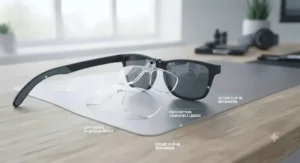
2. ROCKBROS 5-Lens Interchangeable — best for genuine lens tint flexibility
The ROCKBROS 5-Lens Interchangeable pack ships with one polarised lens plus four additional interchangeable lenses in different tints, and the manufacturer’s own guidance is refreshingly specific about what each is for: grey polarised for strong sunlight, yellow for low-light or early evening activity, clear anti-fog for overcast or rainy conditions, dark brown for driving-style contrast, and a blue-mirror HD option for general leisure use. Total frame weight comes in around 29-30g depending on the exact listing.
What most buyers overlook about a multi-lens system like this is that it effectively replaces buying three or four separate pairs of sunglasses for different conditions, provided you’re willing to swap lenses between runs rather than leaving one tint permanently fitted. On paper this means the ROCKBROS 5-Lens Interchangeable offers more genuine versatility per pound than almost anything else in this guide, though the trade-off is a slightly fiddlier changeover process compared with a fixed single-lens pair.
Pros:
- ✅ Five lens tints covering sunlight through to low-light conditions
- ✅ Genuinely useful yellow lens for dawn or dusk running
- ✅ Strong value against buying multiple single-tint pairs
Cons:
- ❌ Swapping lenses takes practice and adds a few seconds of fuss
- ❌ Case and accessories add bulk versus a simple single pair
Typical pricing sits around £15-£25 depending on colourway; prices may vary, and this listing has previously appeared with seasonal voucher discounts stacked on top.
3. ICECUBE Verano TAC Polarised — best everyday glare-reduction pick
The ICECUBE Verano TAC Polarised uses TAC (tri-acetate cellulose) polarised lenses, a lens material the brand states reduces glare from roads, water and bright surfaces while improving contrast and clarity. It ships with a protective hard case and the brand states its eyewear meets or exceeds UK safety standards, with adjustable rubber nose pads and anti-slip temple tips for a customisable fit.
Aggregated real customer feedback on this ICECUBE range is genuinely mixed rather than uniformly glowing, which is worth being upfront about: several reviewers report strong glare reduction and comfortable all-day wear, particularly for driving and general outdoor use, while a meaningful number of reviews flag that the nose pieces or frame arms can snap or break with heavier use over time. Based on the spec comparison, this makes the ICECUBE Verano TAC Polarised a reasonable everyday glare-reduction pick for lighter training runs, but buyers doing serious weekly mileage may want to weigh that durability feedback against the low price before committing.
Pros:
- ✅ TAC polarised lenses with genuinely reported glare reduction
- ✅ Adjustable nose pads and anti-slip temple tips
- ✅ Comes with a protective hard case included
Cons:
- ❌ Some verified reviews report frame or nose-piece breakage
- ❌ Durability feedback is mixed rather than consistently strong
Expect a price around £18-£25; check current price and read the most recent reviews on the specific listing before buying, since manufacturing batches can vary.
4. Tifosi Swank Polarized — best lightweight comfort pick for smaller faces
The Tifosi Swank Polarized is built on a Grilamid TR-90 frame weighing just 23 grams, with an integrated tangle-free hinge and hydrophilic rubber nose pads that the manufacturer states grip more securely as they absorb sweat, rather than becoming slippery. Tifosi markets the lens coating as Glare Guard, designed specifically to cut bright reflections and reduce eye fatigue over longer distances, and the fit is stated as suiting small to medium faces rather than being a universal one-size design.
Reviewers consistently point to the retro-inspired frame shape as a style differentiator against more overtly “sporty” wraparound designs, meaning the Tifosi Swank Polarized doubles reasonably well as an everyday pair rather than looking purely athletic. What the spec sheet won’t tell you outright is that the smaller lens coverage compared with full wraparound sport frames means slightly less peripheral wind and glare protection on very bright, low-sun days — a fair trade for many runners who prioritise all-day comfort and a less bulky look.
Pros:
- ✅ Genuinely lightweight 23g Grilamid TR-90 frame
- ✅ Hydrophilic nose pads grip better with sweat, not less
- ✅ Retro styling doubles as everyday, non-sporty eyewear
Cons:
- ❌ Best suited to small-medium faces, less so larger heads
- ❌ Less peripheral coverage than full wraparound sport frames
Typical UK pricing runs around £45-£55; prices may vary by colourway, and darker or limited-edition finishes have historically carried a small premium.
5. ROCKBROS Photochromic Sports — best for variable light and dawn or dusk runs
Rather than fixed polarisation, the ROCKBROS Photochromic Sports range uses lenses that automatically darken in brighter light and lighten again as conditions dim, built on a lightweight TR90 frame marketed for cycling, running and general outdoor sport. This is a genuinely different technology from the polarised picks elsewhere in this guide — photochromic lenses adjust tint density with UV exposure, rather than filtering reflected glare the way polarisation does.
Here’s what to weigh honestly: photochromic lenses are the better choice for runs that start in daylight and finish as the sun sets, or for overcast British days where light changes unpredictably mid-run, since you’re not stuck with one fixed tint. They generally don’t cut reflected road or water glare as effectively as a true polarised lens on a bright, sunny run, so if your priority is glare specifically rather than adapting to changing brightness, one of the polarised picks above is the more direct solution.
Pros:
- ✅ Automatically adapts tint as light conditions change
- ✅ Genuinely useful for dawn, dusk and unpredictable UK weather
- ✅ Lightweight TR90 frame suited to long training runs
Cons:
- ❌ Less effective glare cutting than true polarised lenses in bright sun
- ❌ Transition speed between light and dark can lag slightly
Pricing typically falls around £20-£30 depending on frame colour; check current price, as ROCKBROS frequently runs bundle discounts alongside its polarised ranges.
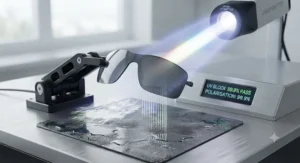
6. Oakley Radar EV Path (Prizm Road) — best for serious road runners wanting maximum contrast
The Oakley Radar EV Path with Prizm Road lenses is a genuine step up in engineering: Oakley states its Prizm Road tint is specifically tuned to help runners and cyclists see subtle changes in road texture and spot hazards like potholes more quickly in bright light, with a published light transmission of around 11% for the polarised Prizm Road option. The taller “Path” lens shape extends the upper field of view compared with Oakley’s original Radar design, and the frame uses Oakley’s Unobtanium nose and ear grips, designed to increase hold as you sweat rather than lose it.
Based on the spec comparison, this is the pick that most directly answers a road-versus-trail visibility question in this guide: Prizm Road lenses are tuned for asphalt contrast specifically, while Oakley’s separate Prizm Trail tint (available on the same frame) is built for medium, dappled light on uneven trail surfaces instead. Reviewers who use the Radar EV Path for serious road training consistently highlight the wraparound coverage and secure fit through hard efforts as the standout feature, though UK pricing around £140-£160 puts this firmly in premium territory.
Pros:
- ✅ Prizm Road tint specifically tuned for asphalt contrast and hazard-spotting
- ✅ Taller Path lens shape extends upper peripheral field of view
- ✅ Interchangeable lens system, including a separate trail-specific tint
Cons:
- ❌ Significantly higher price than any other pick in this guide bar one
- ❌ Replacement lenses add further cost if you want multiple tints
Expect a price around £140-£160 for the polarised Prizm Road version; check current price and retailer, since Oakley’s UK pricing varies more than most sports brands between authorised sellers.
7. Rudy Project Rydon — best for triathletes and multi-sport training
The Rudy Project Rydon is built specifically around versatility across disciplines, using an interchangeable lens system with adjustable nose pads and temple tips designed to lock in a secure fit through cycling, running and triathlon transitions alike. Rudy Project’s Polar 3FX polarised coating is paired with hydrophobic and oleophobic treatment, meaning water and oils are designed to slide off the lens surface rather than smearing, which matters specifically in triathlon when you’re moving straight from an open-water swim into the bike and run legs without time to clean lenses properly.
For anyone training across disciplines rather than running exclusively, the Rudy Project Rydon is the most honest fit in this guide: British Triathlon’s competition rules list glasses among the standard permitted equipment that can be racked with your bike in transition, underlining that eyewear genuinely carries across every leg of a triathlon rather than being a run-only accessory. Reviewers consistently praise the adjustable fit system for staying secure through the bike-to-run transition specifically, a detail that generic running sunglasses without adjustable nose pads and temples often can’t match.
Pros:
- ✅ Adjustable nose pads and temples for a secure multi-sport fit
- ✅ Hydrophobic, oleophobic lens coating sheds sweat and water
- ✅ Genuinely built to carry across swim-to-bike-to-run transitions
Cons:
- ❌ Among the highest prices covered in this entire guide
- ❌ Interchangeable lens system has a learning curve for new users
At the time of research, pricing typically ranges around £150-£220 depending on lens configuration; check current price, as Rudy Project’s photochromic and mirrored lens variants command different premiums than the standard polarised option.
Polarised vs Non-Polarised Running Sunglasses
The core difference between polarised and non-polarised running sunglasses comes down to what the lens actually filters, not just how dark it looks. Non-polarised lenses simply reduce overall brightness evenly across the lens; polarised lenses selectively block the horizontally-oriented light waves that cause glare when sunlight bounces off flat, reflective surfaces like wet tarmac, standing water or car windscreens.
For road running specifically, this matters enormously on bright days with any wet or reflective surface underfoot — polarisation genuinely improves your ability to read the road surface for cracks, kerbs and hazards that glare would otherwise wash out. However, honest analysis cuts both ways here: polarisation can occasionally make it slightly harder to read digital displays, such as certain GPS watch screens or phone screens, because the polarising filter can interact oddly with LCD polarisation of its own. It’s a minor trade-off for most runners, but worth testing with your own devices before committing to a polarised pair for every run.
Running Sunglasses for Night Running
Polarised sunglasses are, with rare exception, the wrong choice for night running, and it’s worth being direct about that rather than glossing over it. Polarisation exists to cut glare from reflected sunlight; in low light or darkness, there’s no meaningful glare to cut, and a dark polarised lens will simply reduce the already-limited light reaching your eyes, which is the opposite of what you want on unlit roads or paths.
If you run early mornings or evenings where light is genuinely marginal rather than fully dark, a clear or lightly-tinted lens — or a photochromic option like the ROCKBROS Photochromic Sports covered above, which lightens automatically as ambient light drops — is a far safer choice than any dark polarised tint. For genuinely dark conditions, sunglasses of any kind become secondary to visibility gear entirely: the Highway Code’s rules for pedestrians are explicit that anyone out after dark should prioritise reflective or fluorescent clothing and a visible light source over any other consideration, since being seen by drivers matters more at that point than any lens technology. If you do want eye protection after dark — for wind, dust or insects rather than sun — choose the clearest, least tinted lens available, and treat hi-vis clothing and a running light as the actual priority.
Polarised Sunglasses for Triathlon
Triathlon places specific, unusual demands on eyewear that pure road or trail running doesn’t: your glasses need to survive an open-water swim exit, a rapid transition, and then perform through both the bike and run legs without being readjusted or cleaned along the way. This is precisely the gap a frame like the Rudy Project Rydon is built to fill, with hydrophobic lens coatings and an adjustable fit designed to stay secure through exactly that kind of multi-discipline stress.
British Triathlon’s own competition rules confirm that glasses are treated as standard permitted kit that can be racked alongside your bike equipment in transition, which is a useful reminder that eyewear choice for triathlon needs to work across every discipline rather than being optimised purely for the run leg. Polarisation itself remains valuable throughout a triathlon — glare off open water during the swim exit, off wet transition mats, and off the road during the bike leg are all genuine scenarios where a polarised lens earns its place — but the fit and coating matter just as much as the tint for this specific sport.
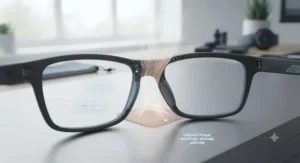
Glare Reduction: How Polarised Lenses Actually Work
Glare happens when light reflects off a flat, non-metallic surface — wet road, water, glass, even a sweaty forehead — and becomes polarised in the process, travelling predominantly in one horizontal plane rather than scattering in all directions the way direct sunlight does. A polarised lens contains a laminated filter, typically oriented vertically, that blocks that horizontal glare component specifically while letting normally-scattered light through largely unaffected.
This is why polarised lenses feel qualitatively different from simply darker sunglasses: a very dark non-polarised lens dims everything evenly, glare included, whereas a moderately-tinted polarised lens can cut glare dramatically while keeping genuine detail and contrast intact underfoot. The College of Optometrists’ public health advice on eye protection stresses that high-quality sunglasses with proper UV protection are essential outdoor eyewear, and it’s worth remembering that glare reduction and UV protection are separate features that happen to often be bundled into the same lens, rather than one guaranteeing the other.
Lens Tint Options Explained
Lens tint and polarisation are two separate variables, and understanding both makes choosing far easier than just picking whatever looks fastest on the shelf.
- Grey/smoke tints reduce brightness evenly with minimal colour distortion, making them a safe all-purpose choice for bright, sunny road running.
- Brown/amber tints boost contrast against green and blue backgrounds, which is why they’re a popular trail-running choice against foliage and uneven ground.
- Yellow/orange tints brighten perceived contrast in low light or overcast conditions, making them the tint of choice on the ROCKBROS 5-Lens Interchangeable for dawn or dusk sessions.
- Rose/red-tinted lenses, like Oakley’s Prizm Road, are engineered specifically to boost contrast against grey asphalt, sharpening your read of road texture and surface hazards.
- Clear or very light lenses offer no meaningful tint at all, useful purely for wind and dust protection in low light or after dark.
- Mirrored coatings add a reflective outer layer that further cuts brightness without changing the underlying tint’s colour rendering, popular on premium frames like Oakley’s Prizm Sapphire option.
Road vs Trail Visibility: Choosing the Right Setup
Road and trail running present genuinely different visual challenges, and the lens tint that helps most on one can actively work against you on the other. Road running is dominated by flat, reflective, artificial surfaces — tarmac, wet paint markings, car glass — where polarisation earns its keep by cutting that specific reflected glare, and a grey or rose-toned tint like Oakley’s Prizm Road keeps road texture and hazards sharply defined.
Trail running instead throws constantly shifting natural light at you — dappled shade under trees, sudden bright clearings, uneven ground with roots and rocks that don’t reflect light the same way tarmac does. Here, contrast-boosting tints such as brown or amber generally outperform pure grey polarised lenses, since the priority shifts from cutting glare to picking out subtle changes in ground texture under variable canopy light. Oakley’s own Prizm Trail lens exists specifically to serve this need, with a stated 35% light transmission designed for medium, changeable light rather than the harsher, more uniform brightness of open road.
For runners who genuinely split time between both, a system with swappable lenses — the ROCKBROS 5-Lens Interchangeable, the Oakley Radar EV Path, or the Rudy Project Rydon — is a more honest long-term solution than trying to make one fixed tint do both jobs adequately.
How to Choose Polarised Running Sunglasses
Picking the right pair comes down to a handful of practical decisions rather than chasing the most expensive option on the shelf.
- Decide whether you actually need polarisation for your typical run. If most of your running happens on bright roads with wet or reflective surfaces, polarisation earns its place; for consistently overcast or shaded trail running, it matters less.
- Match the lens tint to your usual terrain. Grey or rose tints for road, brown or amber for trail, as covered in the tint section above.
- Check the frame weight against your longest regular run. A few grams matters little on a 5K but becomes noticeable on a two-hour long run.
- Confirm UV protection separately from polarisation. Look for stated UV400 or 100% UVA/UVB protection on the listing, since polarisation alone doesn’t guarantee it.
- Test the nose and temple grip if you’re a heavy sweater. Hydrophilic nose pads, like those on the Tifosi Swank Polarized, genuinely grip better with sweat rather than becoming slippery.
- Consider an interchangeable system if you run across conditions. Multi-lens kits cost more upfront but replace buying several single-tint pairs over time.
- Factor in a separate clear or photochromic pair for early or late runs. No polarised lens is the right choice once natural light drops low enough that glare stops being the problem.
Caring for Your Polarised Lenses: Cleaning, Storage and First 30 Days
A new pair of polarised running sunglasses needs a small amount of care to keep the polarising filter and any coatings performing as intended. In the first 30 days, avoid wiping lenses with a dry cloth or your running top — sweat carries salt and grit that can micro-scratch coatings, so rinse with clean water first, then dry with the microfiber pouch most pairs, including the Tifosi Swank Polarized, ship with as standard.
A simple maintenance routine works well for most runners: after every sweaty run, a quick rinse and pat-dry prevents salt build-up on the lens and nose pads; weekly, check nose pads and hinges on frames like the ROCKBROS 5-Lens Interchangeable for grit trapped in the moving parts; and every few months, inspect the lens surface for coating wear, particularly on hydrophobic-coated premium lenses like those on the Rudy Project Rydon, where reduced water-shedding is usually the first sign the coating is thinning.
Store sunglasses in a hard case rather than loose in a running bag or pocket whenever possible — several budget pairs in this guide, including the ICECUBE Verano TAC Polarised, ship with one specifically because frame arms and nose pads are common failure points under repeated crushing pressure. A £20 pair treated well will usually outlast a £150 pair treated carelessly.
Common Mistakes When Buying Polarised Running Sunglasses
The single most common mistake is assuming any dark lens equals both glare reduction and UV protection — as covered above, these are genuinely separate features, and a cheap dark lens with no polarising filter or UV coating can actually be more dangerous than wearing no sunglasses at all, since pupils dilate behind a dark lens and let in more unfiltered UV.
A second frequent error is buying a fixed polarised tint intending to use it for both daytime road runs and dawn or dusk sessions, then finding the lens is simply too dark once light drops. A third is overlooking frame weight and fit entirely in favour of lens technology — a technically excellent lens in a frame that slides down a sweaty nose or bounces during a run gait becomes a distraction rather than a help, which is precisely the problem purpose-built running frames like the goodr OG Polarised are designed to solve.
Frequently Asked Questions
❓ Are polarised sunglasses good for running?
❓ What is the difference between polarised and non-polarised running sunglasses?
❓ Can I wear polarised sunglasses for night running?
❓ Are polarised sunglasses suitable for triathlon?
❓ Do polarised lenses offer more UV protection than regular tinted lenses?
Conclusion
Choosing polarised running sunglasses ultimately comes down to matching lens technology to how and when you actually run. Budget picks like the goodr OG Polarised or the ROCKBROS 5-Lens Interchangeable cover genuine glare reduction and lens tint flexibility without a big outlay, while premium options like the Oakley Radar EV Path or the Rudy Project Rydon buy sport-specific lens tuning and a fit engineered to survive serious training loads or triathlon transitions.
Whatever you choose, remember the two things covered throughout this guide that matter most in practice: polarisation solves glare, not darkness, so it’s the wrong tool after sunset; and road and trail running genuinely benefit from different lens tints, so don’t assume one grey pair covers every surface you run on. Check current pricing before ordering, since several picks here move in and out of promotions regularly, and consider a second, lighter-tint pair for dawn or dusk sessions if that’s a regular part of your training week.
✨ Don’t Miss These Exclusive Deals!
🔍 Take your running kit to the next level with these carefully selected polarised sunglasses. Click on any highlighted item to check current pricing and availability. The right lens tint genuinely changes how confident you feel reading the road or trail ahead!
Recommended for You
- Running sunglasses under £50: 7 Best Budget Picks (2026)
- Running Headband for Long Hair: 7 Picks That Actually Stay Put (2026)
- Best Buff for Running in Winter 2026: 7 Picks That Actually Work
Disclaimer: This article contains affiliate links. As an Amazon Associate, I earn from qualifying purchases. If you purchase products through these links, we may earn a small commission at no additional cost to you.
✨ Found this helpful? Share it with your friends! 💬🤗
