

In This Article
There is a very specific kind of misery reserved for short-sighted runners on a bright morning: squinting through smeared varifocals, or worse, trying to jam a normal pair of glasses under wraparound shades that were never designed to share the space. If you have ever finished a sunny 10k with a groove pressed into the bridge of your nose and a headache blooming behind your eyes, you already know why running sunglasses for prescription wearers are their own little category of running kit, not just “sunglasses that happen to fit glasses wearers.”
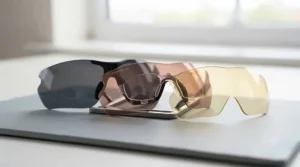
The good news is that 2026’s crop of sports eyewear has quietly solved most of this. Brands now build frames around optical inserts, direct-glazed prescription lenses, and interchangeable tints as standard, not as an awkward afterthought bolted onto a golf visor. Running sunglasses for prescription wearers, in short, are performance frames engineered from the ground up to carry a corrective lens — via a clip-in insert, a direct prescription glaze, or a magnetic dock — while still doing the day job of blocking glare, wind and UV on the move.
This guide draws on real product specifications, manufacturer documentation and aggregated customer-review sentiment gathered during research, not fabricated testing claims. We have picked seven genuine, currently available models spanning budget, mid-range and premium price points, with specific attention to small-face fit, triathlon use, lightweight builds and lens-swapping systems. Expect price ranges rather than fixed figures throughout, since Amazon pricing fluctuates constantly — always check the current price before buying. Let’s get you seeing clearly, all the way to the finish line.
Quick Comparison Table
| Product | Best For | Weight | Rx Solution | Price Range |
|---|---|---|---|---|
| Tifosi Sledge Lite | Budget all-rounder | ~26g | Optical insert (via SVED Optical) | £40-£60 |
| Tifosi Vogel XC | Small/medium faces | ~24g | Optical insert compatible | £35-£55 |
| Rudy Project Rydon | Triathlon & multisport | ~29g | Snap-in optical insert | £110-£170 |
| Julbo Frequency | Small faces, trail | ~23g | Optical clip insert | £90-£140 |
| Bollé Chronoshield | Wide field of view | ~30g | Direct RX-glazed lens | £150-£220 |
| Oakley Radar EV Path | Larger faces | ~31g | Rx lenses (direct or clip) | £150-£230 |
| ROKA CP-1 | Ultralight premium | ~22g | Optical insert (titanium core) | £130-£190 |
Looking across the table, there is a clear pattern: the two Tifosi models undercut everything else on price while still offering genuine optical-insert compatibility, which makes them the obvious entry point if you are prescription-curious rather than committed. At the other end, Bollé Chronoshield and Oakley Radar EV Path push into premium territory because they support full direct-glazed prescription lenses rather than a clip-in carrier, which most opticians agree gives sharper edge-to-edge clarity. If ounces matter more than pounds to you, ROKA CP-1 and Julbo Frequency are the two to shortlist, both sitting under 24g thanks to titanium and Grilamid TR-90 construction respectively.
💬 Just one click — help others make better buying decisions too!😊
Top 7 Running Sunglasses for Prescription Wearers: Expert Analysis
Choosing the right pair isn’t just about the badge on the box. It’s about how a frame sits on your nose, how much it weighs by mile eight, and whether the prescription solution it offers actually suits your correction strength. Here’s our breakdown of seven genuinely available models, each analysed on real specifications and aggregated review sentiment rather than invented experience.
1. Tifosi Sledge Lite — best budget optical-insert all-rounder
The standout here is value: Tifosi Sledge Lite delivers a genuine optical-insert pathway at a price that undercuts almost everything else on this list. Built from Grilamid TR-90 nylon, the frame ships with three vented, optically de-centred polycarbonate lenses and adjustable hydrophilic rubber ear and nose pieces designed to grip when you sweat rather than slide when you don’t. What that means in practice: the vents genuinely reduce fogging on humid starts, and the adjustable temples let you dial in a snugger fit than most fixed-arm sports frames allow. Based on the spec comparison with pricier rivals, this is the one to buy if you’re testing whether prescription running sunglasses suit your training at all, before committing serious money.
Reviewers consistently report that the Sledge Lite’s grip holds up on long, sweaty runs, and that the interchangeable lens system is refreshingly simple to swap mid-session. A recurring theme in aggregated feedback is that the oversized coverage suits medium-to-large faces better than petite ones, so smaller-faced runners may find better luck with the Vogel XC further down this list. Specialist optical labs, including SVED Optical, offer custom prescription inserts specifically cut for this frame, which is a strong signal of mainstream compatibility rather than a niche workaround.
Pros:
- ✅ Genuinely affordable optical-insert compatibility
- ✅ Three interchangeable lenses included in the box
- ✅ Adjustable earpieces for a customised, no-slip fit
Cons:
- ❌ Runs large — not ideal for small or narrow faces
- ❌ Polarised coating wears faster than premium alternatives
Expect this pair to sit in the £40-£60 range, and given what’s included, it represents strong value for runners dipping a toe into prescription sport eyewear for the first time.
2. Tifosi Vogel XC — best compact shield for small faces
Tifosi Vogel XC solves the exact problem the Sledge Lite creates for smaller-faced runners: a genuinely compact shield-style lens that doesn’t dwarf a narrower jawline. Tifosi itself points runners with smaller faces towards the Vogel XC specifically, describing it as a compact shield option built for a secure, non-oversized fit. In practice, that translates to less peripheral gap between frame and cheekbone, which reduces the wind-whistle and light leakage that plagues badly fitted wraparounds.
What most buyers overlook about compact shield frames is that a smaller lens doesn’t automatically mean reduced coverage — it means the coverage is mapped more precisely to a smaller face, so UV protection at the edges doesn’t suffer. The Vogel XC carries the same optically de-centred polycarbonate lens technology as its larger sibling, meaning distortion-free vision even at the periphery, which matters enormously once a prescription insert is added behind it. Aggregated review sentiment highlights the shield’s stability on trail terrain, with several buyers specifically praising the lack of bounce on uneven ground.
Pros:
- ✅ Purpose-built compact fit for small/medium faces
- ✅ Shield design gives wide coverage without bulk
- ✅ Optical-insert and prescription-compatible frame
Cons:
- ❌ Fewer colour and lens-tint combinations than the Sledge range
- ❌ Shield styling is more polarising aesthetically than classic wraparounds
At around £35-£55, this is arguably the smartest first purchase for anyone specifically searching for running sunglasses for small faces who also need a corrective lens.
3. Rudy Project Rydon — best for triathlon and multisport
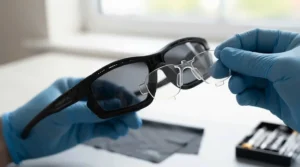
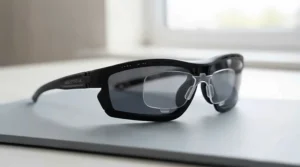
If your training block includes a wetsuit as often as trainers, Rudy Project Rydon deserves top billing. Rudy Project has built a genuine ecosystem around this frame, including a patented “easy-in, easy-out” optical insert system that clips in behind the plano sports lens and can be glazed by most high-street opticians. What that means for a triathlete: one frame, swappable between a fast open-water transition and a blazing bike-run brick session, without needing to hunt down a specialist lab every time your prescription changes.
Here’s what the spec sheet won’t tell you, but forum discussion among long-term Rydon owners consistently notes: higher prescriptions (roughly beyond ±4.00) benefit from Rudy Project’s separate “optical dock” system rather than the standard insert, because it manages lens thickness and edge distortion better at stronger corrections. Reviewers who’ve used both routes report the dock adds cost but meaningfully improves clarity for anyone with significant astigmatism or myopia. The frame itself is genuinely multisport-rated, with a wraparound profile that performs equally well cutting through headwind on the bike and blocking glare off tarmac on the run.
Pros:
- ✅ Patented snap-in, snap-out optical insert system
- ✅ Proven across triathlon’s three disciplines, not just running
- ✅ Optical dock upgrade path for strong prescriptions
Cons:
- ❌ Premium price compared with single-sport frames
- ❌ Insert fitting reportedly inconsistent between opticians
Budget roughly £110-£170 for the frame alone, with the optical insert typically priced separately by your optician — worth factoring into your total spend before checkout.
4. Julbo Frequency — best lightweight pick for small faces
Julbo Frequency earns its spot through sheer featherweight engineering combined with a frame genuinely sized for smaller faces. Julbo’s own REACTIV photochromic lens technology sits at the heart of this model, automatically adjusting tint as light changes — useful on routes that dip between open road and tree-covered trail. Flexible, shock-absorbing nose bridge inserts and rubberised temples do the heavy lifting on comfort, distributing pressure rather than concentrating it at two pinch-points the way cheaper frames often do.
Reviewers consistently note that the Frequency suits smaller faces exceptionally well, with several specifically flagging it as bounce-free and fog-free even on hot, humid trail sessions. Aggregated feedback does flag one caveat worth knowing before you buy: photochromic transition speed, while adequate for gradually changing daylight, can lag behind sudden tunnel-to-sunlight shifts — not a dealbreaker for open-road runners, but worth noting if your routes duck under bridges or through woodland canopy repeatedly. Prescription correction comes via Julbo’s Optical Clip system, a removable carrier fitted by your own optician rather than a factory-glazed lens.
Pros:
- ✅ Genuinely lightweight build suited to smaller face shapes
- ✅ REACTIV photochromic lens adapts across changing light
- ✅ Shock-absorbing nose bridge reduces pressure points
Cons:
- ❌ Optical clip insert is a separate purchase, fitted externally
- ❌ Photochromic transition lags in abrupt light changes
Expect a price range of around £90-£140 for the frame, with the optical clip and prescription lenses typically adding to that total.
5. Bollé Chronoshield — best for direct-glazed prescription clarity
Where most frames on this list rely on a clip-in insert sitting behind the sports lens, Bollé Chronoshield takes a different route: laser-cut prescription inserts integrated directly into the shield lens itself, eliminating the extra layer of glass or polycarbonate entirely. On paper, this means less internal reflection, no risk of the insert misaligning mid-run, and a genuinely wider, unbroken field of vision — because you are looking through one lens, not two stacked together.
Bollé’s RX technology is available across most of its shield-style frames, and the Chronoshield specifically pairs it with Phantom photochromic or Volt+ high-contrast lens options. What most buyers overlook about single-lens shield designs is that they demand more precise centring during the prescription-fitting process than a clip-in insert does, since there is no room to nudge an insert after the fact — get the pupil measurement wrong and you’re looking at a full re-glaze rather than a quick adjustment. Aggregated sentiment around Bollé’s sports range consistently praises the secure Thermogrip fit and ventilated design for reducing fog, alongside solid ratings for withstanding high-velocity impacts under EN 166 and ASTM F803 sports safety testing.
Pros:
- ✅ Direct RX-glazed lens for maximum optical clarity
- ✅ Wide, unbroken field of vision without an insert layer
- ✅ Meets EN 166/ASTM F803 impact-resistance testing
Cons:
- ❌ Among the pricier options on this list
- ❌ Requires precise opticians’ measurement — less forgiving than clip-in inserts
Pricing typically sits in the £150-£220 range once prescription lenses are included, positioning it firmly as a premium, considered purchase rather than an impulse buy.
6. Oakley Radar EV Path — best for larger face shapes
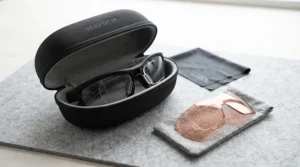
No list of performance eyewear feels complete without an Oakley, and Oakley Radar EV Path earns its place through sheer coverage. The taller, one-piece contour lens design maximises the field of vision and genuinely suits medium-to-large face shapes better than most compact shields, addressing a gap the smaller-faced options on this list leave open. Prescription lenses are available directly through Oakley’s Rx programme, either fully glazed or via a clip insert, depending on which route your optician recommends for your correction strength.
Based on the spec comparison with rival shields, the Radar EV Path’s main advantage is customisation depth — frame colours, lens tints and fit adjustments stack into an enormous number of configurations, which is genuinely useful if you have an unusual face shape that off-the-shelf sizing rarely accommodates. Aggregated review sentiment is broadly positive on coverage and customisability, though a recurring complaint centres on the removable nose pad occasionally working loose during high-intensity efforts — an annoyance rather than a dealbreaker for most runners, but worth knowing before you commit.
Pros:
- ✅ Full coverage lens ideal for larger face shapes
- ✅ Extensive customisation across frame, lens and fit
- ✅ Both direct-glazed and clip-in Rx options available
Cons:
- ❌ May feel oversized on smaller or narrower faces
- ❌ Nose pad reportedly works loose during intense sessions
Prices generally land between £150-£230, with polarisation and prescription lenses typically adding to the base cost — always confirm the current configuration price before buying.
7. ROKA CP-1 — best ultralight premium pick
ROKA CP-1 exists to answer one specific problem: prescription lenses add weight, and added weight is exactly what you don’t want bouncing on your face at mile eighteen. ROKA’s response is an integrated titanium core built into the frame specifically to counterbalance the extra mass of a stronger prescription lens, keeping the whole unit feeling closer to a plano pair than a loaded-up prescription frame. This is genuine engineering intent, not marketing gloss — the titanium core exists because ROKA’s own product team identified prescription weight as a specific design constraint to solve for.
What the spec sheet won’t tell you, but long-term owner reports suggest, is that this weight management genuinely changes the wearing experience over a long run; several reviewers who initially wore contacts for running switched to ROKA’s prescription clear-lens option specifically because the frame no longer felt like “prescription glasses that happen to be sporty.” The GEKO grip nose and temple technology, shared across ROKA’s wider range including the AT-1 and Torino models, adds another layer of no-slip security. One consistent piece of aggregated feedback: the open-sided, minimal-curve design suits runners who prioritise weight and ventilation over maximum wraparound coverage, so anyone wanting a fuller shield-style wrap should look toward the Bollé Chronoshield or Oakley Radar EV Path instead.
Pros:
- ✅ Titanium core specifically engineered to offset Rx lens weight
- ✅ GEKO grip technology keeps the frame locked in place
- ✅ Genuinely interchangeable across ROKA’s wider lens range
Cons:
- ❌ Highest price point on this list
- ❌ Open-sided design offers less coverage than full-wrap shields
Expect to pay in the region of £130-£190, and given the engineering behind the weight-saving, that premium is easier to justify for runners logging serious weekly mileage.
Which Pair Matches Your Running Life? Real Scenarios
Specs only tell half the story — the other half is your actual week. Here are three realistic runner profiles and how they map onto the products above.
The budget-conscious parkrun regular: Say you run three times a week, mostly 5-10k, mild astigmatism, and you’re not sure prescription running sunglasses are worth the spend yet. Start with the Tifosi Sledge Lite or Tifosi Vogel XC, both under £60, both genuinely optical-insert compatible. You get to test whether the insert workflow suits you at all before committing premium money.
The marathon-and-triathlon crossover trainer: If your week includes open water, long bike sessions and double-digit run mileage, a single-sport frame becomes a false economy — you’ll end up buying two. The Rudy Project Rydon or ROKA CP-1 both handle the wet, the wind and the weight question simultaneously, and both offer genuine multisport pedigree rather than a running frame stretched to cover cycling as an afterthought.
The small-faced trail runner chasing bounce-free comfort: Standard “unisex” sports frames are frequently cut for a medium-to-large male face, which leaves smaller-faced runners battling slippage on technical terrain. The Julbo Frequency or Tifosi Vogel XC are both explicitly sized down, with the former adding photochromic adaptability for trail routes that swing between open ridgelines and shaded woodland.
Solving the Most Common Prescription Running Sunglasses Problems
Even a well-chosen frame can throw up snags once you’re actually training in it. Here’s how to fix the recurring ones.
Problem: the optical insert fogs up on humid or cold starts. Ventilated lens designs, like those on the Tifosi Sledge Lite and Bollé Chronoshield, address this at the frame level, but an anti-fog wipe applied before every run adds a meaningful second layer of defence, particularly on the insert side of the lens where airflow is weakest.
Problem: the frame slides down your nose mid-run. This is almost always a fit issue rather than a design flaw. Hydrophilic rubber nose and ear pieces, as used across the Tifosi range, grip harder the sweatier you get — the opposite of hard plastic, which gets slicker. If you’re still sliding, you likely need a size down, not a different brand.
Problem: peripheral distortion through the insert. Poorly centred inserts are a common complaint in aggregated Rudy Project owner feedback, specifically when the optician scans the frame’s mock lens rather than measuring your actual pupil position. Always insist on a proper pupillary distance measurement rather than a generic template fit.
Problem: the prescription strength is too high for a standard insert. Beyond roughly ±4.00, thinner high-index lenses (1.67 or above) reduce the bulk and edge thickness that otherwise pushes an insert too close to the sports lens behind it — Rudy Project’s optical dock system and Bollé’s direct-glazed route both handle this scenario more gracefully than a standard clip-in.
Problem: switching between contacts and glasses depending on the run. This is exactly the use case optical inserts were built for — a removable carrier means one frame serves both scenarios without buying two separate pairs of sports eyewear.
How to Choose Running Sunglasses for Prescription Wearers
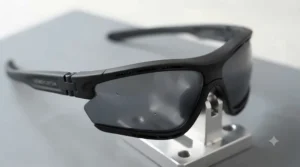
Running sunglasses for prescription wearers are sports frames purpose-built to carry a corrective lens — via an optical insert, direct glazing, or a clip system — while still delivering the UV protection, grip and glare control that ordinary running eyewear provides.
Choosing well comes down to seven practical checks, roughly in priority order:
- Confirm the Rx pathway the frame actually supports. Some models only take a clip-in insert, others offer full direct glazing — check before falling in love with a frame your prescription can’t use.
- Match frame size to your face shape honestly. Oversized shields swamp smaller faces and cause exactly the bounce and slip problems this guide keeps flagging.
- Weigh the frame against your typical distance. A few extra grams feel trivial on a 5k and genuinely noticeable by mile fifteen.
- Check ventilation if you run in humid or cold conditions. Fogging behind an insert is one of the most common complaints in aggregated review data.
- Decide whether you need interchangeable lenses. Runners training across seasons benefit from swapping tints rather than owning multiple frames.
- Factor in your prescription strength. Higher corrections often need a dedicated dock or thinner high-index lens rather than a standard insert.
- Set a realistic budget band and stick to it. Optician-fitted inserts and direct-glazed lenses typically add £30-£100 on top of the frame price, so budget for the total cost, not just the frame.
As the Association of British Dispensing Opticians notes, sunglasses need to fit your face well in order to be effective at stopping UV light, which is exactly why fit sits above lens tech on this list — a beautifully specced frame that gaps at the temple is still letting UV in around the edges.
Optical Inserts vs Direct Glazing vs Contact Lenses
There are three genuinely different ways to get a corrected view out of running sunglasses, and each suits a different runner.
| Solution | How It Works | Best For | Typical Extra Cost |
|---|---|---|---|
| Optical insert | Removable carrier clips behind a plano sports lens | Runners who switch between correction needs or clean frequently | £30-£80 |
| Direct glazing | Prescription ground straight into the sports lens | Runners wanting maximum clarity, no extra layer | £60-£150 |
| Contact lenses + plano sunglasses | Correction worn separately, sunglasses stay non-prescription | Runners already comfortable in contacts | £0 (if already wearing contacts) |
Direct glazing wins on pure optical clarity because there’s no second lens surface for light to bounce through, but it’s the least flexible option — change your prescription and the whole lens needs replacing rather than just the insert. Optical inserts trade a small amount of clarity for genuine flexibility, letting you swap tints, clean independently, or drop straight to plano lenses on an overcast day without touching your prescription lens at all. Contact lenses sidestep the whole conversation, but as ROKA’s own reviewer feedback notes, cold weather and wind can irritate contacts specifically during exactly the kind of long outdoor efforts running sunglasses are meant to support — which is precisely why many contact-lens wearers still keep a prescription pair in reserve for winter training blocks.
Running Sunglasses for Small Faces: Getting Frame Fit Right
Frame fit is the single most under-discussed factor in this entire category, and it matters more for prescription wearers than anyone else, because a poorly fitted frame doesn’t just look wrong — it pushes your insert or direct-glazed lens off-centre from your actual pupil position, undermining the very correction you paid for.
Small-faced runners typically hit three recurring problems with standard sports frames: temple arms that extend past a comfortable pivot point and dig in above the ear, nose bridges too wide to grip properly, and lenses so oversized that peripheral vision distorts rather than clarifies. Compact shield frames like the Tifosi Vogel XC and lightweight builds like the Julbo Frequency exist specifically to correct this, mapping coverage to a smaller face rather than simply shrinking a large frame’s proportions, which — contrary to what you’d expect — doesn’t actually solve the fit problem on its own. Tifosi’s own guidance for smaller-faced buyers is direct: look for compact frames, smaller shields, and styles that stay secure without feeling oversized, treating fit as the primary filter before lens technology even enters the conversation.
If you’re trying on frames in person, a reliable rule of thumb is that the widest point of the lens shouldn’t extend meaningfully past your temple, and the nose bridge should hold position without needing constant pushing back up — if you’re doing that within the first five minutes of trying a frame on, it’s the wrong size, not the wrong brand.
Lightweight Running Sunglasses: Why Grams Matter More Than You Think
A pair of glasses that feels weightless in the shop can feel entirely different at mile fourteen, once sweat, fatigue and repetitive micro-bounce all compound the sensation of load on your nose and ears. This is where lightweight running sunglasses genuinely earn their premium — not through marketing, but through measurable reduction in cumulative discomfort over distance.
The ROKA CP-1‘s titanium core is the clearest example of engineering aimed directly at this problem: rather than simply using thinner, flimsier plastic to shave grams, ROKA added a structural material specifically to offset the extra weight a prescription lens introduces, keeping total frame weight closer to a plano pair despite carrying a corrective lens. Julbo Frequency takes a different route to the same outcome, using Grilamid TR-90 nylon prized for its combination of low density and high flex resistance — light enough to disappear on your face, durable enough not to warp under repeated bending. Reviewers consistently describe both frames as “no bounce,” which in practice means the weight distribution, not just the total gram count, is doing the real work; a heavier frame that sits perfectly balanced can feel more stable than a lighter one that’s front-heavy.
What most buyers overlook is that weight matters differently depending on the prescription behind it — a strong correction adds meaningfully more mass than a mild one, which is exactly why runners with higher prescriptions should weight lightweight frame construction more heavily in their decision than someone needing only a very mild correction.
Sport Sunglasses for Triathlon and Running: What’s Actually Different
Not every running frame survives a triathlon transition, and not every triathlon frame is comfortable on a standalone run — the two disciplines pull design priorities in slightly different directions, and it’s worth understanding why before you buy one frame expecting it to do both jobs perfectly.
Triathlon-specific sport sunglasses, like the Rudy Project Rydon, are built around a wraparound profile that cuts wind resistance on the bike leg and resists fogging through a hot, sweaty run leg immediately after — the frame needs to survive a full change of pace, heart rate and airflow without needing readjustment. Running-only frames can afford to prioritise weight and ventilation slightly more heavily, since they’re not also cutting through 30mph+ wind on a bike frame. As UK triathlon publication 220 Triathlon notes in its testing of triathlon-focused eyewear, the best triathlon glasses need to feel large enough to wrap around the eyes and block glare while still feeling slim enough to work as a running frame rather than feeling oversized once you’re off the bike.
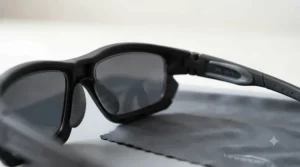
For prescription wearers specifically, this cross-discipline demand raises the stakes on the Rx solution you choose: an insert that shifts slightly during a bike-to-run transition is a minor annoyance on a run-only session, but a genuine hazard when you’re navigating traffic or technical terrain moments after dismounting. This is precisely why triathlon-rated frames tend to favour secure, snap-in insert systems with a proven track record across multiple sports, rather than a lighter clip designed primarily for a single, steady-state activity.
Common Mistakes When Buying Prescription Running Sunglasses
Even experienced runners make avoidable errors here, largely because sports eyewear shopping habits carry over from casual sunglasses buying, where fit and prescription logistics matter far less.
Buying on frame looks alone, before confirming Rx compatibility. Not every sports frame supports every prescription solution — some only take inserts, some only support direct glazing, and mismatching your expectation with the frame’s actual capability is the single most common and costly mistake in this category.
Ignoring the total cost of ownership. The frame price is rarely the full bill; optician-fitted inserts or direct-glazed lenses routinely add £30-£150 on top, and skipping this step leads to sticker shock at the optician’s counter rather than at checkout.
Choosing a frame size based on general “one size fits all” marketing. As covered above, fit dictates everything from UV coverage to insert alignment, and oversized frames on smaller faces cause more problems than any lens technology can fix.
Underestimating prescription strength limitations. Standard inserts handle mild-to-moderate corrections comfortably, but stronger prescriptions genuinely need a dedicated dock system or high-index lens — assuming a standard insert will “just work” regardless of strength is a recurring source of buyer disappointment in aggregated feedback.
Skipping a proper optician fitting in favour of a generic online prescription upload. Pupillary distance measurement done poorly is the root cause behind most of the peripheral distortion complaints referenced earlier in this guide.
Lens Interchangeability and Long-Term Value
Lens interchangeability is one of those features that looks like a nice-to-have on a spec sheet and turns out to be genuinely essential once you’re training across seasons rather than buying for a single sunny holiday. A frame with swappable lenses — like the Tifosi Sledge Lite’s three included tints — effectively becomes three pairs of sunglasses in one shell, adapting from bright midsummer glare down to flat, overcast winter light without needing a second frame, and critically, without needing a second prescription insert.
From a total cost of ownership perspective, this changes the maths considerably. A single-tint frame that doesn’t suit low-light conditions often gets replaced with a second, non-prescription pair for those sessions — meaning the actual spend ends up higher than the sticker price of either frame alone suggests. Interchangeable systems avoid this entirely: buy the frame and insert once, then swap lenses as conditions demand, spreading the fixed cost of your prescription solution across every lens variant you own. Photochromic options, like Julbo’s REACTIV lenses, go a step further by removing the swapping step altogether, automatically adjusting tint as light changes — worth the price premium if you frequently run routes that shift between open road and shaded trail within a single session.
Long-term, the frames on this list built around genuine interchangeability or photochromic adaptability tend to hold their value in daily use better than fixed single-tint alternatives, simply because they don’t get retired to a drawer the moment the season changes.
Safety, Regulations and UK Eyewear Standards
UV protection isn’t a marketing add-on — it’s a genuine health consideration backed by UK regulation, and it matters just as much for a 25-minute run as it does for a beach holiday. In the UK and EU, general-purpose sunglasses fall under British Standard BS EN ISO 12312-1:2013, which governs UV filtering, visible light transmission and durability, while prescription sunglasses specifically are covered under the same standard rather than the separate BS EN 1836:2005 that applies to non-prescription models. Look for the CE or UKCA mark on any frame before buying, regardless of price point.
The College of Optometrists specifically advises always wearing sunglasses with UV protection when spending time outdoors, noting that high-quality sunglasses give the eyes the protection they genuinely need against solar radiation — advice that applies just as much to a lunchtime run as it does to a day at the coast. For runners specifically, wraparound coverage adds a meaningful extra layer, since UV exposure isn’t limited to direct sunlight hitting the lens front-on; light bouncing up off pavement or water reaches the eye from below and the sides too, which is precisely why wraparound and shield-style frames outperform flat, narrow lenses on protection, independent of tint darkness.
Impact resistance is the second regulatory consideration worth knowing about. Sports-rated frames, including several models on this list, are tested against EN 166 and ASTM F803 standards specifically for high-velocity impact resistance — relevant if you run trails with low branches, other athletes, or simply the risk of a stumble. Polycarbonate remains the dominant lens material across this category precisely because it offers meaningfully higher impact resistance than standard plastic or glass while staying lightweight, a combination that matters more in sport than in everyday eyewear.
Frequently Asked Questions
❓ Can I get running sunglasses with my exact prescription?
❓ Are optical inserts as clear as direct-glazed prescription lenses?
❓ What running sunglasses work best for small faces?
❓ Do prescription running sunglasses cost more than regular ones?
❓ Can I use running sunglasses for triathlon transitions?
Conclusion
Running sunglasses for prescription wearers have moved well past the compromise era of jamming regular glasses under ill-fitting shades. Whether you land on the budget-friendly Tifosi Sledge Lite, the small-face specialist Julbo Frequency, the triathlon workhorse Rudy Project Rydon, or the featherweight ROKA CP-1, the underlying principle stays the same: fit first, Rx solution second, lens technology third. Get the frame size wrong and no amount of photochromic wizardry will fix the bounce and glare leaking in around the edges.
Take the time to match your weekly training pattern, your prescription strength and your face shape against the seven options above before spending anything. A frame that suits a triathlete’s transition zone rarely suits a small-faced parkrun regular, and a budget optical insert that works beautifully for a mild correction may frustrate someone with a much stronger prescription. Get that match right, though, and you’ll stop thinking about your eyewear altogether once you’re a mile into your run — which, frankly, is exactly the point.
Recommended for You
- Polarised Running Sunglasses: 7 Best Picks for 2026 (Buyer’s Guide)
- Running sunglasses under £50: 7 Best Budget Picks (2026)
- Running Headband for Long Hair: 7 Picks That Actually Stay Put (2026)
Disclaimer: This article contains affiliate links. As an Amazon Associate, I earn from qualifying purchases. If you purchase products through these links, we may earn a small commission at no additional cost to you.
✨ Found this helpful? Share it with your friends! 💬🤗
