

In This Article
There’s a particular kind of dread that sets in around late October, when your alarm goes off and the world outside is still pitch black, and you realise your only pre-run decision isn’t “which route” but “will anyone see me before I see them.” That’s the problem LED running lights solve, and it’s a bigger problem than most runners give it credit for. A car headlamp’s field of vision is narrower than you’d think, wet tarmac swallows contrast, and a driver glancing at a phone screen for two seconds covers roughly fifty metres before looking back up. Good lighting buys you the seconds that matter.
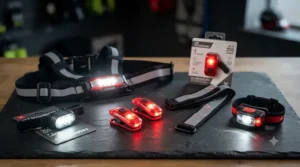
This guide cuts through the noise of identical-looking “2000 lumen super bright” listings and focuses on genuine, verifiable products — the kind with real specification sheets, real owner feedback, and real trade-offs worth knowing about before you spend a penny. Whether you’re after clip-on LED lights for running that attach to a jacket in seconds, an LED armband for running that you can forget you’re wearing, or something more serious for trail miles, we’ve dug into battery type, flash modes, and attachment points across seven genuinely different products so you don’t have to guess. As the Highway Code advises for all vulnerable road users, being seen is every bit as important as seeing — and that’s the whole philosophy behind this list.
Quick Comparison Table
Before the full breakdown, here’s the fast version — a snapshot of how the seven products stack up on the things that matter most when you’re deciding in a hurry.
| Product | Type | Brightness | Best For |
|---|---|---|---|
| GOANDO 2 Pack Safety Jogging LED Light | Clip-on | Up to 130 lumens | Absolute beginners on a budget |
| Ronhill Light Armband (Glow) | Armband | Low-output glow LED | Simplicity and long shelf life |
| Ronhill Recharge Light Armband | Armband | Bright single LED | Eco-conscious daily commuters |
| Night Runner 270° Shoe Lights | Shoe-clip | 150 lumens | Ground-level illumination and hands-free running |
| Petzl Bindi | Headlamp | 200 lumens | Ultra-light everyday head torch |
| Silva Smini Fly | Headlamp | 250 lumens | Ultralight racers and minimalists |
| Silva Discover Hybrid | Headlamp | 500 lumens | Trail runners who want backup power |
Looking across the table, the clearest pattern is that brightness alone doesn’t determine “best” — a 130-lumen clip-on is plenty for a well-lit pavement, while 500 lumens genuinely earns its keep on unlit trails. The Ronhill armbands sit at the budget-to-mid end and prioritise being seen rather than seeing, whereas the Silva and Petzl headlamps let you do both. Your ideal pick depends less on raw lumens and more on where and how you actually run, which is exactly what the sections below unpack.
💬 Just one click — help others make better buying decisions too!😊
Top 7 LED Running Lights: Expert Analysis
Below is our full rundown of seven real, currently available products, spanning budget clip-ons through to premium rechargeable headlamps. Every entry blends genuine specifications with honest analysis of who each product actually suits — not generic praise.
1. GOANDO 2 Pack Safety Jogging LED Light — best budget clip-on for total beginners
If you’ve never owned a running light before, this is about as low-risk an entry point as exists. The standout here is simplicity: two lights, a magnetic clip, and nothing to learn.
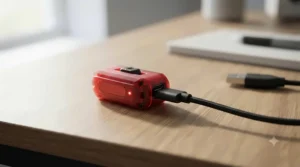
Each unit runs on a rechargeable battery topped up via USB, offering four lighting modes including a steady beam and a red strobe setting, and the water-resistant casing means a surprise shower won’t end its life early. In practice, that means you can clip one to a jacket zip and one to a rucksack strap and cover both “seeing where you’re going on a badly lit pavement” and “being seen by the car turning out of a side street” without spending much thought on it. Based on the spec comparison with pricier clip-ons in this list, the trade-off is beam distance — this isn’t designed to light up a dark trail, it’s designed to make you a visible dot in traffic. Reviewers consistently report that the magnetic clip holds firmly on typical running jacket fabric, though a few note it can slip on thicker, stiffer material like a rucksack strap edge. That’s a fair trade for the price point, and it’s honestly the more common failure mode across budget clip-ons generally, not something unique to this pack.
Priced under £15 for a two-pack, it’s genuinely hard to argue with the value here for anyone testing the waters before committing to pricier gear.
Pros:
- ✅ Comes as a two-pack, covering front and back visibility
- ✅ USB rechargeable, so no coin-cell replacement costs
- ✅ Four modes including a genuinely useful red strobe
Cons:
- ❌ Magnetic clip can loosen on thicker fabrics
- ❌ Limited beam distance for genuinely unlit routes

2. Ronhill Light Armband (Glow) — best for ultra-simple, low-maintenance visibility
The standout feature on this one is refreshingly old-school: no charging, no menus, just a bright red LED loop that goes around your arm and stays there.
The armband uses a replaceable coin-cell battery rated for around 70 hours in continuous mode and roughly 100 hours in flash mode, which for most runners translates to months of regular use before a battery swap is needed. What most buyers overlook about this style of light is that its simplicity is the actual selling point — there’s no risk of forgetting to charge it the night before a 6am run, which is precisely the failure mode that catches out owners of more sophisticated rechargeable gear. It’s aimed squarely at runners who want a “set it and forget it” solution rather than another gadget to manage, and on that specific brief it delivers. Aggregated customer sentiment around Ronhill’s armband range is consistently positive on comfort and fit, with the adjustable strap frequently singled out as accommodating a wide range of arm sizes without pinching.
Sitting comfortably under £10, this is the cheapest genuinely branded option on this list, and it’s a smart secondary light to pair with a brighter primary source.
Pros:
- ✅ No charging required, ever
- ✅ Adjustable strap fits most arm sizes comfortably
- ✅ Long battery life measured in months, not hours
Cons:
- ❌ Lower brightness than USB-rechargeable alternatives
- ❌ Coin-cell battery isn’t rechargeable or eco-friendly
3. Ronhill Recharge Light Armband — best rechargeable armband for daily commuters
This is the rechargeable running lights answer to the Glow model above, and its standout feature is trading a touch of convenience for a genuinely more sustainable long-term setup.
Charged via USB and built around a bright single LED, the Recharge Light Armband is designed for the runner who’s out most evenings and doesn’t want to keep buying coin cells. Here’s what to weigh: rechargeable lights ask a little more of you in terms of remembering to plug them in, but they repay that small discipline with a lower running cost over a year of regular use and less waste going into general rubbish. The armband’s flash and steady modes cycle via a single button, which reviewers repeatedly describe as intuitive enough to operate with gloves on — a small detail that matters more than it sounds once November mornings turn properly cold. Ronhill’s own product literature notes the light is also available as a magnetic clip-on variant, so if the armband style doesn’t suit your kit, the same core light unit is available in a different attachment format.
In the mid-£15s, it undercuts most premium rechargeable armbands on the market while still carrying a recognisable running-specific brand behind it.
Pros:
- ✅ USB rechargeable — cheaper to run long-term than coin cells
- ✅ Single-button mode switching works well with gloves
- ✅ Also available as a magnetic clip variant
Cons:
- ❌ Requires remembering to charge before early starts
- ❌ Single LED means less spread than multi-LED designs
4. Night Runner 270° Shoe Lights — best for hands-free ground-level lighting
The standout feature is right there in the name: these clip directly onto your shoelaces rather than your body, throwing a 270-degree arc of light exactly where your feet are about to land.
Each unit produces 150 lumens from forward-facing LEDs, rated to illuminate roughly 30 feet ahead, and pairs that with a rear-facing red light for visibility from behind — effectively giving you front and rear coverage from a single product worn in pairs. The Li-ion batteries charge via a micro-USB “Y” cable that juices both shoes simultaneously, and a full charge is good for around four hours of continuous use, which comfortably covers most training runs. Based on the spec comparison with headlamp options, the practical advantage here is that light moves with your stride rather than your head, catching potholes, kerbs and uneven pavement slabs that a chest-height beam can miss. Reviewers are split on ride comfort during trail use specifically — several report the lights bouncing noticeably on rougher, more technical terrain, while road runners describe them settling in and becoming unnoticeable within a run or two.
Expect to pay in the £30-£40 range for the pair, positioning this as a genuine mid-range pick rather than a budget impulse buy.
Pros:
- ✅ 270-degree beam plus a rear red light in one product
- ✅ Frees your hands completely — no headband or armband
- ✅ Dual charging cable juices both shoes at once
Cons:
- ❌ Can bounce noticeably on technical, uneven trails
- ❌ Fiddly to reposition once your laces are tied
5. Petzl Bindi — best ultra-compact headlamp from a trusted mountaineering brand
At just 35 grams, the standout feature is how genuinely unnoticeable this headlamp is once it’s on — Petzl’s mountaineering pedigree shows in the build quality here.
Delivering 200 lumens from a 680mAh rechargeable Li-ion battery, the Bindi offers three modes — proximity, movement and distance — plus a red-light option that preserves night vision, which is a small but genuinely useful touch on group runs where you don’t want to dazzle a training partner. What the spec sheet won’t tell you, but owner reports suggest, is that the thin, minimal headband is a big part of why this model gets repeat praise: it doesn’t leave the tell-tale forehead pressure mark that bulkier head torches are known for after an hour-plus session. IPX4 water resistance means light rain and sweat are a non-issue, though this isn’t the torch to reach for during a genuine downpour on an exposed trail. The two-stage lock function is a small but thoughtful detail that stops the light accidentally switching on and draining the battery inside a running bag or pocket.
Priced in the £30-£40 range, it sits at the intersection of trusted-brand reliability and genuine day-to-day usability rather than being aimed at ultra-distance specialists.
Pros:
- ✅ Extremely lightweight at just 35 grams
- ✅ Red-light mode preserves night vision for group runs
- ✅ Reflective headband thread adds passive visibility too
Cons:
- ❌ IPX4 rating isn’t built for heavy, sustained rain
- ❌ 200 lumens is modest for genuinely unlit trail sections
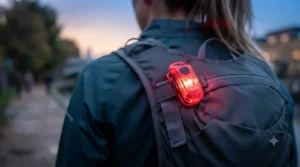
6. Silva Smini Fly — best ultralight headlamp for minimalist racers
The standout feature is the weight: at roughly 38-39 grams with a barely-there 3mm headband, this is built for runners who notice every gram they’re carrying.
Its 700mAh Li-ion battery, charged via USB-C, powers three white brightness levels — 10, 100 and 250 lumens — plus a red night-vision mode, and Silva’s Intelligent Light system blends a focused spot beam with a wider flood pattern to reduce the tunnel-vision feeling some single-beam torches produce. On paper this means roughly 80 metres of throw at maximum output and up to 20 hours of runtime on the lowest setting, a genuinely useful range for anyone who wants one torch to cover both a fast tempo session and a slower long run where battery conservation matters more. Reviewers who’ve tested it against bulkier headlamps consistently highlight how little they notice it’s there, with several specifically praising the IPX5 water resistance holding up through wet, gritty UK winters. The 90-degree tilt function is a genuinely practical touch, letting you angle the beam down for close-range visibility without repositioning the whole headband.
At around £30-£40, it’s a premium ultralight pick that justifies its price primarily through comfort over an hour-plus run rather than raw brightness.
Pros:
- ✅ Among the lightest rechargeable headlamps on the market
- ✅ Dual spot-and-flood beam reduces tunnel vision
- ✅ IPX5 rated for genuinely wet UK conditions
Cons:
- ❌ 250-lumen max is modest for unlit, technical trails
- ❌ Minimal headband offers less grip for very active head movement
7. Silva Discover Hybrid — best hybrid-power headlamp for longer or more unpredictable runs
The standout feature is flexibility: this headlamp runs on either its rechargeable Li-ion pack or three standard AAA batteries, meaning a dead battery mid-trip doesn’t have to mean a dark run home.
At 500 lumens on its top setting with a genuine 80-metre beam distance, it comfortably out-throws every other headlamp on this list, and the three-mode system — white for general use, red for night vision, and orange for easier map or watch reading — covers more use cases than a typical single-purpose running light. Here’s what to weigh: on the medium 100-lumen setting you get around five hours of runtime, dropping to roughly two hours at full 500-lumen output, so serious ultra-distance runners will want to plan mode-switching around their expected finish time. Reviewers consistently rate the wide, even beam spread as a genuine strength, particularly for spotting loose stones and root systems on unlit trail sections where a narrower beam creates awkward shadow gaps. The AAA-battery backup option is the detail that pushes this from “nice headlamp” to “sensible choice for anyone training through unpredictable UK winter mornings” — if you forget to charge it, a pack of spare batteries from any corner shop keeps you moving.
Positioned in the £35-£45 range, it’s the most expensive pick here, but the hybrid power system genuinely earns that premium for anyone running longer or less predictable distances.
Pros:
- ✅ Hybrid power — rechargeable pack or AAA battery backup
- ✅ 500-lumen output with genuine 80-metre beam distance
- ✅ Wide, even spread reduces shadow gaps on trails
Cons:
- ❌ Heaviest option on this list at 72 grams
- ❌ Full-brightness runtime is limited to around two hours
Full Spec Comparison: All 7 LED Running Lights
| Product | Battery Type | Modes | Price Range | Best For |
|---|---|---|---|---|
| GOANDO 2 Pack Safety Jogging LED Light | USB rechargeable | 4 modes incl. red strobe | Under £15 (2-pack) | First-time buyers |
| Ronhill Light Armband (Glow) | Replaceable coin cell | Steady / flash | Under £10 | Low-maintenance secondary light |
| Ronhill Recharge Light Armband | USB rechargeable | Steady / flash | Mid-£15s | Regular evening commuters |
| Night Runner 270° Shoe Lights | Li-ion, micro-USB | Low / high / strobe | £30-£40 (pair) | Ground-level, hands-free lighting |
| Petzl Bindi | Li-ion, micro-USB | Proximity / movement / distance / red | £30-£40 | Everyday lightweight head torch |
| Silva Smini Fly | Li-ion, USB-C | 3 brightness levels + red | £30-£40 | Minimalist racers |
| Silva Discover Hybrid | Li-ion or 3x AAA | White / red / orange | £35-£45 | Longer, unpredictable trail runs |
Read together, this table makes the budget-to-premium logic obvious: you’re paying primarily for battery flexibility and beam sophistication, not just extra lumens. The Silva Discover Hybrid justifies its position at the top of the price range through its AAA backup option alone, while the GOANDO and Ronhill Light Armband (Glow) prove that genuinely useful visibility doesn’t require a big spend. Runners training through unpredictable UK winters should weight battery type heavily in their decision — a hybrid or easily swappable option removes an entire category of “my light died on me” risk.
Setting Up and Maintaining Your LED Running Lights
Getting a new light out of the box and onto a run properly takes more thought than most people give it, and skipping the basics is the single biggest reason lights disappoint their new owners.
Start by giving every rechargeable unit a full charge cycle before its first run, even if it arrives showing partial charge — lithium-ion cells settle into their true capacity after that first complete top-up, and running on a partial charge from day one can make early battery life estimates misleading. Once charged, test every mode in daylight at home rather than fumbling with buttons for the first time in the dark; most units cycle through modes with repeated presses, and it’s far less stressful to learn that sequence on your kitchen table. For clip-on and armband styles, position the light where it won’t rub against a zip or bag strap during motion, since repeated friction is the most common cause of premature wear on magnetic clips specifically. A simple monthly habit worth adopting: wipe down the charging port with a dry cloth before connecting the cable, since grit and sweat residue are the leading causes of intermittent charging faults reported by owners of USB-rechargeable running lights. Store rechargeable units at roughly 40-60% charge if you won’t use them for several weeks, as leaving lithium-ion batteries fully drained or fully charged in long-term storage accelerates capacity loss. Finally, check your light’s mode order before every dark-season run — some torches default to their brightest, most battery-draining setting on power-up, and starting there unintentionally can leave you short on a longer route home.
Which Runner Are You? Three Real-World Scenarios
Rather than a generic buyer’s guide, it helps to picture yourself in one of these situations, since the right light genuinely does depend on your specific routine.
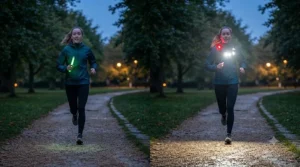
Consider the commuter runner: someone squeezing in three or four evening runs a week straight after work, mostly on well-lit urban pavements with the occasional unlit stretch through a park. For this profile, a rechargeable armband like the Ronhill Recharge Light Armband paired with a clip-on unit like the GOANDO 2 Pack Safety Jogging LED Light on a rucksack strap covers both “being seen” priorities without adding noticeable weight or bulk to an already tight evening routine. Now picture the weekend trail runner heading onto unlit bridleways or forest tracks where actual ground visibility matters more than urban conspicuity — here, a proper headlamp like the Silva Discover Hybrid earns its higher price tag through genuine beam distance and the reassurance of AAA backup power on routes where a dead battery means a genuinely long, dark walk back. Finally, there’s the minimalist racer training for a specific event, weight-conscious and running fast tempo sessions on familiar, part-lit routes — for this runner, the Silva Smini Fly or Petzl Bindi deliver enough brightness without the extra grams of a heavier trail-focused unit, and both disappear on the head in a way that matters over a genuinely fast session.
How to Choose LED Running Lights: 6 Expert Criteria
Picking the right light comes down to matching a handful of practical factors to your actual running habits, not chasing the highest lumen figure on the box.
- Assess your route lighting first. A well-lit high street needs conspicuity, not beam throw — prioritise a visible, flashing rear light over raw brightness if you rarely leave streetlit areas.
- Match battery type to your routine. Rechargeable units cost less over time and reduce waste, but demand discipline; replaceable coin-cell or AAA options suit runners who forget to charge things or want a genuinely maintenance-free backup.
- Check flash modes for your priority. A dedicated red strobe mode is proven more attention-grabbing to drivers than a steady beam in peripheral vision, so confirm any light you buy includes one.
- Confirm attachment points suit your kit. A magnetic clip is fast but can slip on thick fabric; an armband or shoe-clip stays put through vigorous motion but takes slightly longer to fit.
- Weigh water resistance against your climate. An IPX4 rating handles typical UK drizzle fine, but anyone running through genuinely heavy rain regularly should look toward IPX5 or above.
- Factor in runtime versus your longest run. Check the manufacturer’s runtime at your intended brightness setting, not just the headline maximum — most units run considerably shorter at full brightness than at medium.
As the Royal Society for the Prevention of Accidents notes in its research on street lighting and road safety, poor visibility remains a consistent factor in nighttime pedestrian incidents, which is exactly why getting these fundamentals right matters more than chasing the flashiest spec sheet.
Clip-On Lights vs LED Armbands vs Headlamps
Each attachment style solves a slightly different problem, and understanding the trade-offs helps explain why this list includes all three rather than crowning one universal winner.
Clip-on LED lights for running, like the GOANDO 2 Pack Safety Jogging LED Light, win on flexibility — a single unit can move from a running jacket to a rucksack to a dog lead in seconds, and the magnetic attachment means no fiddly straps to adjust in the dark. Their weakness is exactly that flexibility: a magnetic clip can work loose on thick or slippery fabric during a longer run, which is why reviewers occasionally report losing one mid-route. An LED armband for running, such as the Ronhill Recharge Light Armband or Ronhill Light Armband (Glow), trades some of that flexibility for security — once strapped on, it isn’t going anywhere, and the position on the upper arm puts it at a height drivers naturally scan. The downside is a slightly longer put-on process and a fixed position that doesn’t suit runners who prefer their arms completely unencumbered. Headlamps, represented here by the Petzl Bindi, Silva Smini Fly and Silva Discover Hybrid, are the only category genuinely built to illuminate your path rather than just make you visible, which makes them close to essential for unlit trails but arguably overkill for a well-lit commuter loop.
| Attachment Type | Primary Job | Setup Speed | Best Scenario |
|---|---|---|---|
| Clip-on | Conspicuity | Fastest | Urban, well-lit routes |
| Armband | Conspicuity | Moderate | Regular evening commuters |
| Shoe-clip | Ground visibility | Moderate | Uneven pavements, kerbs |
| Headlamp | Path illumination | Slower | Unlit trails and parks |
The clearest takeaway from this comparison is that these categories aren’t really competing products — they’re complementary tools, and many experienced dark-hours runners end up owning at least two types rather than treating the purchase as an either-or decision.
Rechargeable Running Lights vs Battery-Powered: Long-Term Cost & Maintenance
The rechargeable-versus-disposable question comes up constantly, and the honest answer is that it depends on how consistently you’re willing to remember a charging cable.
Over a year of regular three-to-four-run-a-week use, a rechargeable light like the Silva Discover Hybrid or Ronhill Recharge Light Armband costs essentially nothing beyond the initial purchase and a few pence of electricity, while a coin-cell unit like the Ronhill Light Armband (Glow) will typically need a battery replacement every few months of regular use, adding a small but real ongoing cost. What most buyers overlook is the maintenance side of that equation: rechargeable lithium-ion batteries degrade gradually with each charge cycle, losing perhaps 10-20% of their original capacity after a couple of years of consistent use, whereas a fresh coin cell always delivers full rated output on day one. Reviewers of hybrid units like the Discover Hybrid consistently flag the AAA backup option as the best of both worlds — rechargeable for daily convenience, with disposable batteries as an emergency fallback rather than a routine.
| Factor | Rechargeable | Battery-Powered (Coin Cell/AAA) |
|---|---|---|
| Ongoing cost | Very low | Moderate, adds up over time |
| Convenience | Requires charging discipline | Grab-and-go, no charging needed |
| Capacity over time | Gradual degradation | Full output every fresh battery |
| Environmental impact | Lower long-term waste | More disposable waste |
Taken together, the data suggests rechargeable is the better long-term default for anyone running consistently, while replaceable-battery lights earn their place as a genuinely useful backup or gift-purchase option where charging discipline can’t be guaranteed.
Flash Modes Explained: What to Expect in Real-World Performance
Every light in this list offers more than one setting, and understanding what each mode actually does changes how you’ll use it on an actual run.
A steady beam is what most runners default to, and it works well in genuinely dark, unlit environments where consistent path illumination matters more than grabbing attention. A slow flash or pulse mode, offered on most of the armbands and clip-ons here, is generally considered more attention-catching in peripheral vision than a steady light — the human eye is drawn to movement and change, which is part of why cyclists and runners alike are increasingly advised to run a flashing rear light alongside a steady front one. A fast strobe mode, available on the GOANDO 2 Pack Safety Jogging LED Light and the Night Runner 270° Shoe Lights, is the highest-visibility option and works particularly well at busy junctions or roundabouts where you need to cut through headlight glare and streetlighting clutter. Red-light modes, a headlamp-specific feature found on the Petzl Bindi, Silva Smini Fly and Silva Discover Hybrid, aren’t about visibility to traffic at all — they preserve your own night vision and avoid dazzling other runners during group sessions, which matters more than it sounds once you’ve been on the receiving end of a full-beam headlamp at close range.
Attachment Points That Actually Work
Where you position a light matters almost as much as which light you buy, and a handful of attachment points consistently outperform the rest for real-world reliability.
The upper arm is the classic spot for an LED armband for running, and it earns that popularity because it sits at roughly driver eye-line height when approaching from a side road, making it genuinely effective without needing to be especially bright. A rucksack strap or the chest area of a running vest is the next best option, particularly for clip-on LED lights for running, since the swinging motion of arms during a run actually helps a flashing light catch attention rather than hindering it. Shoelaces, as used by the Night Runner 270° Shoe Lights, are an underused attachment point that specifically helps with ground-level hazards like potholes and kerb edges that a head- or chest-height light can miss entirely. The forehead position used by headlamps offers the widest field of adjustment, since simply turning your head redirects the beam, but it comes with the trade-off of slight bounce on uneven terrain unless the headband is properly tightened. As a general rule, combining two attachment points — one at height for conspicuity, one lower down for either ground visibility or backup — consistently outperforms relying on a single light, however bright that single unit might be.
Common Mistakes When Buying LED Running Lights
A handful of avoidable errors account for most of the disappointed reviews you’ll find across this category, and knowing them in advance saves both money and frustration.
The most common mistake is buying on lumen count alone without considering runtime at that brightness — a torch that claims 500 lumens but only holds that output for 90 minutes isn’t necessarily better than a steadier 200-lumen unit for a two-hour long run. A close second is skipping the water resistance rating entirely, then being disappointed when a budget clip-on struggles through a genuinely wet UK winter; checking for at least an IPX4 rating before purchase avoids this entirely. Buyers also frequently underestimate how much attachment security matters, opting for the flashiest-looking clip-on light without checking real owner feedback on whether it actually stays put during a run — a light that falls off after two miles provides zero protection for the remaining six. Another frequent misstep is assuming a single light is sufficient; combining a front-facing and rear-facing light, or a headlamp and armband, consistently outperforms any single product regardless of price. Finally, plenty of buyers overlook charging habits entirely, buying a premium rechargeable headlamp and then leaving it uncharged in a drawer for weeks at a time — a mid-range light that’s actually charged and worn beats a premium light left flat every time.
Safety, Visibility and UK Regulations Guide
Understanding the regulatory backdrop helps explain why lighting matters so much for UK runners specifically, beyond simple common sense.
While the Highway Code’s specific lighting requirements are written primarily for cyclists — official GB road casualty statistics continue to show pedestrians and other vulnerable road users are disproportionately represented in nighttime incidents, underlining why lighting up voluntarily is worthwhile even without a legal mandate to do so. Runners aren’t legally required to carry lights or wear reflective gear on pavements or in parks, but any time a route crosses or runs alongside a road without a proper footpath, visibility becomes a practical safety issue rather than an optional extra. Reflective elements and active LED lighting work differently and are genuinely complementary: reflective strips only work when illuminated by another light source, such as headlamps, while an LED running light generates its own visibility regardless of ambient lighting conditions, which is precisely why combining both — a reflective running vest plus an active clip-on or armband light — offers meaningfully better protection than either alone. For anyone training through parks or unlit greenways specifically, check local park opening hours too, since some UK parks close and lock gates after dark regardless of how well-lit your gear is.
FAQ
❓ How bright should LED running lights be?
❓ Are rechargeable running lights better than battery-powered ones?
❓ Do I need a clip-on light or an armband for running?
❓ What flash mode is best for running in traffic?
❓ How long do LED running lights last on a single charge?
Conclusion
Choosing the right LED running lights ultimately comes down to being honest about your own routine rather than chasing the biggest number on a spec sheet. If you’re mostly running well-lit streets a few evenings a week, a budget clip-on or armband genuinely does the job — there’s no need to overspend on beam distance you’ll never use. If your routes cross unlit parks, canal paths or trails, a proper headlamp like the Silva Discover Hybrid or Petzl Bindi earns its higher price through actual path illumination rather than just conspicuity. And for most runners training through a full UK winter, the smartest approach isn’t picking one product from this list at all — it’s combining two attachment points, one for being seen and one for seeing, and building a habit of charging or checking batteries the night before rather than the morning of. Whichever combination you land on, the goal stays the same: turning that pre-dawn dread into just another normal part of the routine, because you know you’ll be seen.
Recommended for You
- Hi-Vis Running Gear: 7 Best Picks to Stay Seen in 2026
- Running Headtorch Under £30: 7 Best Picks for 2026 (UK)
- 7 Best Reflective Vest Under £15 in 2026 (UK Night Running Guide)
Disclaimer: This article contains affiliate links. As an Amazon Associate, I earn from qualifying purchases. If you purchase products through these links, we may earn a small commission at no additional cost to you.
✨ Found this helpful? Share it with your friends! 💬🤗
