

In This Article
Spring is the great pretender of the British running calendar. The forecast says 12°C and sunny, so you head out in a t-shirt, and by mile two your fingers have gone that horrible mottled white-purple colour that makes you wonder if you’ve left something switched on in the freezer. Lightweight running gloves for spring exist precisely for this window — that maddening few weeks (or months, if you live somewhere north of Sheffield) when the air’s warm enough to fool you but the wind chill absolutely is not.
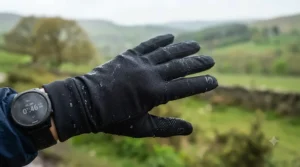
So what actually counts as a lightweight running glove for spring? In short: a thin, breathable hand covering — usually under 50g per pair — designed to cut wind and hold a whisper of warmth without trapping sweat or bulking out your stride, and ideally packable enough to stuff in a waistband once your hands warm up around mile three…
That last part matters more than most buying guides admit. A proper winter glove will roast you the moment the sun breaks through, whereas the right spring pair adapts. Below, we’ve pulled together seven genuinely available options — from budget liners to slightly more technical picks — based on real specs, real aggregated review sentiment, and honest analysis of who each one actually suits. According to the Met Office’s own spring 2026 data, UK mean temperatures are trending warmer year on year — but mornings and headwinds haven’t caught up with that memo, which is exactly why this category of gear still earns its place in your kit drawer.
We’ll cover breathable running gloves for marathon training blocks, what “mild weather” actually means for your hands, and how packability changes the whole calculation once the clocks go forward. No fluff, no fictional products — just seven real gloves, honestly compared.
Quick Comparison Table
| Product | Best For | Price Range | Weight (approx) |
|---|---|---|---|
| Inov-8 Train Elite Glove | Absolute beginners on a tight budget | Under £20 | ~25g |
| Ultimate Performance Reflective Running Gloves | Value seekers who still want reflectivity | Under £30 | ~25g |
| Nike Miler Running Gloves | Everyday commuting runners | £15-£25 range | ~30g |
| Ronhill Wind-Block Flip Glove | Unpredictable, windy spring mornings | £20-£30 range | ~47g |
| Montane Trail Lite Gloves | Packable protection on longer runs | £25-£35 range | ~42g |
| GripGrab Running Expert Hi-Vis Winter Gloves | Dawn or dusk marathon training | £25-£40 range | ~45g |
| Salomon Cross Warm | Trail and touchscreen dependency | £25-£35 range | ~35g |
Looking across the table, there’s a clean split between the “just get me through a chilly 5K” tier — Inov-8 Train Elite Glove and Ultimate Performance Reflective Running Gloves — and the more technical, windproof-panel gloves like Montane Trail Lite Gloves and GripGrab Running Expert Hi-Vis Winter Gloves that justify a slightly higher price with genuine weather-blocking fabric. If your spring runs are mostly gentle jogs on quiet streets, don’t overspend; if you’re training for a hilly spring marathon with 6am starts, the windproof tier earns its keep.
💬 Just one click — help others make better buying decisions too!😊
Top 7 Lightweight Running Gloves for Spring: Expert Analysis
Picking the right glove isn’t just about grabbing whatever’s cheapest on the shelf — it’s about matching fabric weight, windproofing, and fit to how cold your hands actually get and how long you’re out there. Here’s the honest breakdown of all seven, budget through to premium.
1. Inov-8 Train Elite Glove — best budget pick for short, mild runs
At this price, you’d expect corners to be cut, and in a sense they are — deliberately. This is a no-frills liner glove, and that’s exactly the point for spring running.
Made from an 84% polyester, 16% elastane stretch fabric, the Inov-8 Train Elite Glove weighs next to nothing and disappears on your hand within the first half-mile. There’s no windproof membrane and no touchscreen panel, so what you’re paying for is pure simplicity: a snug, four-way-stretch liner that traps just enough heat to get you moving without becoming a hand sauna once you’re at pace.
Based on the spec comparison with pricier options on this list, this is the glove for runners who mainly need something for the first ten minutes of a run before their hands warm up naturally — not for standing around at a cold start line. Reviewers consistently note that sizing runs a touch small, so consider going up if you’re between sizes.
Aggregated customer feedback on this glove is broadly positive, with buyers repeatedly praising the low price and simple, close fit; a recurring theme in reviews is that performance is “basic but honest” — nobody’s claiming miracles, and that transparency seems to build trust.
Pros:
- ✅ Genuinely lightweight stretch fabric that vanishes on the hand
- ✅ One of the cheapest technical options from a proper running brand
- ✅ Easy to get on and off, even with slightly damp hands
Cons:
- ❌ No windproofing for genuinely blustery mornings
- ❌ Runs small, so check the size guide before ordering
At under £20, this sits firmly in impulse-buy territory. If you just need something to take the edge off a 7°C morning jog, it’s solid value; check current price for the latest stock and colourways.
2. Ultimate Performance Reflective Running Gloves — best value with genuine reflectivity
Where the Inov-8 Train Elite Glove goes minimalist, this pair adds one meaningful extra: reflective detailing, which matters more than people think for spring training when clocks-forward mornings are still genuinely dim.
Constructed from a lightweight polyester-elastane blend at around 25g per pair, the Ultimate Performance Reflective Running Gloves sit in a similar weight class to the Inov-8 pair but bring reflective print across the back of the hand — useful given that hand movement is one of the most visible motion cues to an approaching driver. What most buyers overlook about reflective gloves specifically is that hands swing in a wide, rhythmic arc, which makes them a genuinely effective placement for reflective trim compared with, say, a jacket hem.
This is a strong pick for anyone doing structured marathon training blocks that inevitably spill into early mornings or after-work dusk runs, where visibility becomes a genuine safety consideration rather than a nice-to-have.
Aggregated review sentiment (including from independent kit-testing outlets rather than only the Amazon listing) rates this as a “best value” pick in its category, with testers noting the fit is true to size and the fabric dries quickly after a sweaty tempo session.
Pros:
- ✅ Reflective print genuinely improves low-light visibility
- ✅ True-to-size fit, unlike some liner gloves that run tight
- ✅ Fast-drying fabric copes well with sweaty efforts
Cons:
- ❌ Limited warmth once temperatures dip below 5°C
- ❌ Fewer colourways available compared with bigger brands
Priced in the mid-£20s range, this is arguably the smartest budget buy on this list if your spring schedule includes any darkness at all.
3. Nike Miler Running Gloves — best all-rounder for everyday training
This is the glove most UK runners have owned at some point, and there’s a reason it keeps reappearing on “best of” lists year after year: it’s a genuinely sensible middle-of-the-road option.
The Nike Miler Running Gloves use an 85% polyester, 15% spandex Dri-FIT blend that wicks sweat outward rather than letting it pool against the skin — a small detail, but one that matters on a tempo run where your hands work almost as hard as your legs. The innovative palm and finger construction allows a genuinely natural grip, so you’re not fighting the fabric every time you check your watch or grab a gel.
Here’s what to weigh: this isn’t a windproof glove in the technical sense, so on a proper blustery spring gale it’ll feel thinner than the Ronhill Wind-Block Flip Glove below. But for the majority of “just a bit nippy” mornings, that thinness is precisely the appeal — your hands warm up fast and stay breathable rather than clammy.
With well over 600 verified ratings on the UK Amazon listing averaging a solid 4.2 out of 5, this is one of the more thoroughly reviewed gloves on the market. A recurring theme in customer feedback is praise for the snug, non-slip fit, alongside occasional comments that the fabric feels thin in genuinely cold conditions — which, again, is rather the point for a spring-specific glove.
Pros:
- ✅ Dri-FIT fabric wicks sweat effectively during hard efforts
- ✅ Widely available with strong, verified review volume
- ✅ Natural, unrestricted grip for watches and gels
Cons:
- ❌ Not windproof, so exposed hilltops will still bite
- ❌ Price fluctuates significantly between retailers and sizes
Prices for the Nike Miler Running Gloves span a fairly wide £15-£25 range depending on colourway and retailer, so it’s worth comparing before you commit — check current price rather than assuming the first listing you see is the best one.
4. Ronhill Wind-Block Flip Glove — best for genuinely unpredictable spring weather
British spring weather doesn’t do subtlety — it does 4°C drizzle at 7am and 16°C sunshine by lunch, sometimes on the same Tuesday. This glove from a proper British running brand is built with exactly that inconsistency in mind.
The clever bit is the convertible design: a lightweight, quick-drying inner liner does the day-to-day work, while a windproof, water-resistant outer shell folds out over the top when conditions turn properly foul. The Ronhill Wind-Block Flip Glove essentially gives you two gloves in one, meaning you don’t need to own a separate “just in case it’s grim” pair for early spring long runs.
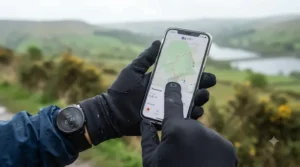
What the spec sheet won’t tell you, but user reports suggest, is that the smart-tip touchscreen panel on the inner glove genuinely works reliably enough to change a playlist mid-run without stopping — a small thing that becomes a big deal over a 90-minute long run.
Aggregated review sentiment on the standard Wind-Block version sits around 4.5 out of 5 from over 80 verified UK buyers, with reflective taping and the fold-out shell both singled out repeatedly as standout features; the convertible variant scores lower on average, with some reviewers finding the flip mechanism fiddly with cold fingers.
Pros:
- ✅ Genuine windproof shell folds out when conditions worsen
- ✅ Reflective taping adds a real margin of night-time visibility
- ✅ Palm grips and a sweat-wipe panel are thoughtful, practical touches
Cons:
- ❌ Heavier than pure liner gloves at around 47g per pair
- ❌ The convertible flip mechanism can be fiddly with numb fingers
Sitting in the £20-£30 range, this is the pick for anyone whose spring training runs regularly straddle two different weather systems in one session.
5. Montane Trail Lite Gloves — best for packable protection on longer runs
Montane is a Manchester-founded brand built on genuinely technical outdoor kit, and that pedigree shows in a glove designed to be almost forgettable in your pocket until you actually need it.
At roughly 42g, the Montane Trail Lite Gloves use a Windstopper polyester fabric with a DWR (durable water repellent) coating — the same family of technology used in far heavier winter kit, just applied here in a genuinely thin, packable format. Here’s what that means in practice: you get meaningful wind-blocking performance on the back of the hand without the bulk of a full winter glove, which is precisely the trade-off spring running demands.
Based on the spec comparison with thinner liner gloves on this list, the Trail Lite sits in a sensible middle ground — warmer and more wind-resistant than the Nike Miler Running Gloves, but noticeably lighter and more packable than a dedicated winter mitt. That packability matters enormously for marathon training long runs, where you might start in near-freezing dawn air and finish in genuine spring sunshine three hours later.
Independent kit reviewers rate this pair highly, praising the fit and the fact it does exactly one job — thin, packable warmth — extremely well; the honest criticism raised repeatedly is that touchscreen compatibility is fairly basic and there’s no recycled content in the current fabric blend.
Pros:
- ✅ Genuine Windstopper wind-blocking in a genuinely thin package
- ✅ True to size across the S-XL range, unlike some liner gloves
- ✅ Packs down small enough to stuff in a waistband once you warm up
Cons:
- ❌ Touchscreen response is basic compared with dedicated smart-tip designs
- ❌ No recycled materials used in the current fabric, unlike some rivals
At around £30, this is a strong mid-range pick, particularly for anyone doing longer marathon training runs where conditions genuinely shift over the course of a session.
6. GripGrab Running Expert Hi-Vis Winter Gloves — best for dawn and dusk marathon training
If your training plan has you out before sunrise more mornings than not, visibility stops being optional — and this Danish brand has built an entire reputation around exactly that use case.
The GripGrab Running Expert Hi-Vis Winter Gloves use an 85% polyamide, 15% elastane blend that manages to combine genuine insulation with what the brand calls “exceptional breathability” — and based on the fabric composition, that’s a believable claim rather than marketing fluff, since polyamide-elastane blends of this ratio are common in technical base-layer gloves for exactly this reason. The EasyTouch fingertip panels are genuinely useful for handling a phone mid-run, and the silicone-enhanced palm grip means you’re not fumbling a water bottle handoff at a training group meet-up.
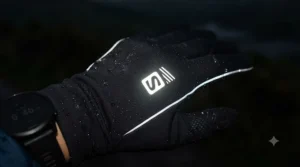
What most buyers overlook about hi-vis running kit generally is that fluorescent colour alone does very little in the dark — it’s the reflective print layered on top that actually catches headlights. This glove does both: a hi-vis base colour for daylight dusk visibility, plus reflective graphics for genuine night-time catch-light.
Aggregated Amazon UK review data shows a 4.2 out of 5 rating from over 120 verified buyers, with the sweat-wiper panel and silicone grip mentioned repeatedly as standout practical features; a recurring criticism is that pricing varies wildly between retailers, so it’s worth shopping around before assuming one listing is representative.
Pros:
- ✅ Genuine hi-vis and reflective combination for low-light safety
- ✅ Silicone-enhanced grip is genuinely useful for bottles and phones
- ✅ EasyTouch fingertips work reliably for touchscreen use
Cons:
- ❌ Pricing is inconsistent across UK retailers, so shop around
- ❌ Slightly warmer than needed on genuinely mild spring days
Prices span a fairly broad £25-£40 range depending on where you buy, making this one worth a proper price comparison before checkout.
7. Salomon Cross Warm — best premium pick for trail runners
Salomon’s trail running pedigree is well established, and this glove translates that off-road focus into a genuinely premium spring option for anyone who spends more time on muddy bridleways than tarmac pavements.
The Salomon Cross Warm is built as a lightweight option specifically designed to protect fingertips once temperatures cool enough to justify gloves, without tipping over into full winter-weight bulk. Touchscreen-compatible tips mean you’re not peeling a glove off every time your GPS watch buzzes with a training alert, which becomes genuinely tedious over a long trail session.
Here’s what to weigh if you’re deciding between this and the Montane Trail Lite Gloves: both occupy a similar “technical mid-layer” niche, but Salomon’s trail-specific fit tends to run slightly roomier through the palm, which some runners with wider hands or a habit of layering a liner underneath in truly cold snaps will genuinely appreciate. The Montane, by contrast, favours a closer, more precise fit.
Reviewer sentiment consistently frames this as a dependable, if unremarkable, glove — praised for comfort and touchscreen reliability rather than any standout single feature, which for a glove is arguably exactly what you want: nothing to think about mid-run.
Pros:
- ✅ Touchscreen-compatible fingertips work reliably on the move
- ✅ Roomier fit suits runners who layer a liner underneath
- ✅ Trusted trail-running brand with wide UK stockist availability
Cons:
- ❌ Among the pricier options in this lightweight category
- ❌ Not specifically windproof compared with the Montane or Ronhill picks
Sitting in the £25-£35 range depending on size and colourway, this is the pick for trail-focused marathon trainers who want dependable, no-drama hand coverage.
Top 7 Products: Specs, Price Range & Best For
| Product | Fabric | Touchscreen | Best For |
|---|---|---|---|
| Inov-8 Train Elite Glove | Polyester/elastane | No | Short mild runs, tight budgets |
| Ultimate Performance Reflective Running Gloves | Polyester/elastane | No | Visibility on a budget |
| Nike Miler Running Gloves | Dri-FIT polyester/spandex | No | Everyday all-round training |
| Ronhill Wind-Block Flip Glove | Windproof shell + liner | Yes | Unpredictable spring conditions |
| Montane Trail Lite Gloves | Windstopper polyester, DWR | Basic | Packable long-run protection |
| GripGrab Running Expert Hi-Vis Winter Gloves | Polyamide/elastane | Yes | Dawn and dusk marathon blocks |
| Salomon Cross Warm | Technical synthetic blend | Yes | Trail runners wanting a roomier fit |
The clearest pattern here is that touchscreen compatibility tends to arrive alongside a higher price tag, which makes sense given the extra conductive material needed at the fingertips. If you rarely touch your phone mid-run, the Nike Miler Running Gloves or Inov-8 Train Elite Glove deliver most of the comfort for considerably less outlay; if you’re glued to a GPS watch and playlist app, the touchscreen-enabled options justify the premium.
Practical Usage Guide: Getting the Most From Your Spring Running Gloves
Buying the right glove is only half the job — how you use it changes the experience almost as much as the fabric does. Setup here is refreshingly simple, but a few habits genuinely extend both comfort and lifespan.
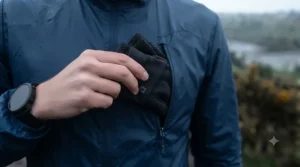
First, size down rather than up if you’re between two sizes; running gloves rely on a snug fit to trap a thin layer of warm air, and a loose glove lets that heat escape almost as fast as bare skin would. Second, get into the habit of tucking gloves into a waistband or arm sleeve rather than balling them in a pocket the moment your hands warm up — this is where packability, one of the genuinely underrated features on this list, earns its keep on longer marathon training runs.
Maintenance is minimal but not optional. Hand-washing in cool water and air-drying, rather than machine-washing on a hot cycle, preserves the elastane stretch that gives these gloves their snug fit; tumble-drying is the single most common cause of a running glove losing its shape within a season. A common mistake in the first 30 days of ownership is wearing gloves on genuinely mild days out of habit — if your hands are already warm by mile one, ditch them rather than overheating and risking a sweaty, chafing fit for the remaining miles.
One optimisation trick rarely mentioned on Amazon listings: rotate two pairs across a training week rather than relying on one. Fabric that’s fully dried between sessions retains its wicking performance far better than a pair that goes from sweaty to slightly damp to sweaty again without a full dry-out.
Real-World Scenarios: Running Gloves for Marathon Training
Different training blocks demand genuinely different glove strategies, so here’s how three common runner profiles might approach this decision.
The 6am marathon trainer. If you’re squeezing in 12-mile long runs before work through a spring marathon build-up, dawn starts are frequently colder than the daytime forecast suggests. A pairing of the GripGrab Running Expert Hi-Vis Winter Gloves for visibility with the packable warmth of the Montane Trail Lite Gloves on genuinely frosty mornings covers most scenarios without over-investing in kit you’ll only need for a handful of sessions each week.
The budget-conscious beginner. If you’re new to structured training and unsure how much spring running you’ll actually stick with, there’s little sense over-spending. The Inov-8 Train Elite Glove or Ultimate Performance Reflective Running Gloves deliver genuine warmth and, in the latter case, useful reflectivity, for a fraction of the outlay of the technical options — a sensible way to test the habit before committing further.
The trail-focused long-distance runner. Muddy bridleways and exposed hilltops demand something with a bit more structure. The Salomon Cross Warm or Ronhill Wind-Block Flip Glove both bring genuine wind resistance and a roomier, layer-friendly fit, which matters when a three-hour trail long run might swing from sheltered woodland to an exposed ridge and back within a single loop.
Problem → Solution: Common Spring Running Glove Frustrations
Even the right glove can throw up small, recurring annoyances. Here’s how to fix the five most common ones.
Problem: hands overheat by mile two, then feel clammy for the rest of the run. This usually means the glove is too warm for the actual conditions rather than genuinely faulty. Solution: switch to a genuinely thin liner like the Inov-8 Train Elite Glove rather than a windproof option, and get comfortable removing gloves mid-run once you’ve warmed up.
Problem: fingertips stay cold even though the rest of the hand feels fine. This is a circulation issue as much as an insulation one — the NHS notes that exercising regularly genuinely helps improve circulation to the extremities, alongside simply keeping the whole body warm rather than focusing on hands alone. Solution: layer a base layer or long sleeve top even on mild days, since core warmth affects how much blood flow reaches your fingers.
Problem: touchscreen gloves stop registering taps after a few months. Conductive fingertip panels wear down with repeated washing and abrasion. Solution: hand-wash rather than machine-wash, and consider the GripGrab Running Expert Hi-Vis Winter Gloves or Ronhill Wind-Block Flip Glove, both of which use dedicated smart-tip panels rather than a thin conductive thread that degrades faster.
Problem: gloves smell unpleasant after repeated sweaty sessions. Synthetic fabrics trap bacteria more readily than natural fibres. Solution: rotate between two pairs, as mentioned above, and always fully air-dry rather than leaving a damp glove balled up in a kit bag overnight.
Problem: one glove always seems to go missing. A genuinely common and mildly infuriating issue. Solution: several gloves on this list, including the Ronhill Wind-Block Flip Glove, include a small pairing clip specifically designed to keep both gloves clipped together when not worn — a small feature that solves an outsized annoyance.
How to Choose Lightweight Running Gloves for Spring
Cutting through the marketing language, here’s a practical, numbered approach to picking the right pair.
- Check the fabric weight first. Anything under 30g per pair is genuinely lightweight; anything over 50g starts drifting toward winter-weight territory, which defeats the point for spring training.
- Decide how much windproofing you actually need. If your routes are sheltered suburban streets, skip the windproof panels; if you’re on exposed coastal paths or hilltops, prioritise the Ronhill Wind-Block Flip Glove or Montane Trail Lite Gloves.
- Factor in your typical run duration. Longer marathon training runs benefit from packability, since conditions shift more over two or three hours than over a quick 20-minute loop.
- Consider touchscreen needs honestly. If you genuinely check your phone mid-run, pay the small premium; if not, save the money and buy a simpler liner.
- Prioritise visibility if you run in low light at all. Reflective and hi-vis detailing costs very little extra but meaningfully improves how visible your hands are to drivers during dawn or dusk sessions.
- Get the sizing right rather than guessing. Running gloves rely on a snug fit for both warmth and dexterity, so check the brand’s specific size chart rather than assuming your regular glove size applies.
- Budget for a spare pair if you train frequently. Rotating two pairs genuinely extends the life and hygiene of both, particularly through a demanding marathon training block.
Breathable Running Gloves vs Thermal Winter Gloves
It’s worth being explicit about why “lightweight” and “breathable” aren’t simply lesser versions of a proper winter glove — they’re a genuinely different tool for a different job.
| Feature | Breathable Spring Gloves | Thermal Winter Gloves |
|---|---|---|
| Typical weight | 20-50g | 60-120g |
| Windproofing | Partial or none | Usually full membrane |
| Breathability | High — designed to vent heat | Lower — designed to retain heat |
| Packability | Excellent, fits in a waistband | Poor, bulky when removed |
| Best temperature range | Roughly 5-15°C | Below 5°C, especially with wind chill |
The core trade-off is straightforward: thermal winter gloves prioritise heat retention above all else, using denser insulation and fuller windproof membranes, which is exactly right when you’re standing at a freezing start line in January. But that same insulation becomes a liability the moment your body generates its own heat through effort — which is precisely what happens within the first mile or two of any run in spring conditions. Breathable, lightweight gloves like the Nike Miler Running Gloves or Inov-8 Train Elite Glove are built to vent that excess heat rather than trap it, which is why swapping your winter gloves for a spring-specific pair around March or April genuinely improves comfort rather than being a purely cosmetic seasonal switch.
Common Mistakes When Buying Running Gloves for Mild Weather
Even experienced runners fall into a few predictable traps when shopping for this specific category.
The first mistake is buying based on winter reviews without checking whether the glove is actually described as lightweight or breathable — a five-star review written by someone running in January conditions tells you very little about how a glove performs at 12°C. The second is ignoring fabric composition entirely; a high elastane percentage generally signals a snugger, more flexible fit, which matters more for spring gloves worn for shorter windows than for winter gloves worn for an entire session. The third, and perhaps most common, mistake is assuming “one size fits all” claims from unbranded budget listings — established brands like Nike Miler Running Gloves or Ronhill Wind-Block Flip Glove publish proper size charts precisely because glove fit varies enormously between hand shapes.
A fourth mistake worth flagging: over-prioritising touchscreen compatibility at the expense of actual warmth or fit. It’s a genuinely nice-to-have feature, but not one worth compromising the fundamentals for if your budget forces a choice.
Packability and Seasonal Transition Gear: What Actually Matters
Packability sounds like a minor spec until you’re three miles into a long run with sweaty hands and nowhere sensible to put your gloves. This is where lightweight running gloves for spring genuinely earn their keep as seasonal transition gear — kit designed specifically to bridge the gap between full winter layers and bare-handed summer running.
The practical test is simple: can you scrunch the glove into a ball roughly the size of a golf ball and tuck it into a waistband, arm pocket, or running belt without it working itself loose within a mile? Thinner liner-style gloves like the Inov-8 Train Elite Glove or Ultimate Performance Reflective Running Gloves pass this test easily; bulkier windproof options like the Ronhill Wind-Block Flip Glove, while more protective at the start, are noticeably harder to stash once folded.
For runners training through a full spring marathon build-up, this matters across the whole season, not just a single run. Early blocks in February and March genuinely need the fuller protection of the windproof tier; by late April, as the official TCS London Marathon training guidance itself notes, kit needs shift back toward lighter layers as temperatures climb. Rather than buying one glove and hoping it covers the whole transition, many experienced runners keep two tiers — a packable windproof pair for the coldest weeks and a genuinely thin liner for the milder tail end of the block.
Long-Term Cost & Maintenance
Judged purely on upfront price, the budget tier looks like the obvious winner — but total cost of ownership tells a slightly different story over a full training year.
A £15 liner glove washed and worn twice weekly through a demanding spring marathon block may need replacing after one season if the elastane loses its stretch, while a £30 pair with genuine Windstopper or reinforced palm construction, properly hand-washed and air-dried, often lasts two to three seasons before performance noticeably degrades. Run the numbers over three years and the more expensive option frequently works out cheaper per season, not more expensive — a classic case where upfront price and long-term value point in different directions.
Maintenance itself costs nothing beyond a few extra minutes per wash, but it directly determines which side of that cost equation you land on. Hand-washing, avoiding tumble dryers, and rotating between two pairs are free habits that meaningfully extend the working life of even a budget glove — arguably the single highest-ROI piece of advice in this entire guide.
Safety and Visibility: Practical Guidance for Spring Runners
Spring’s shifting daylight hours mean many training runs still happen in genuine dusk or dawn light, even as the weather turns milder. Hi-vis and reflective detailing, present on the GripGrab Running Expert Hi-Vis Winter Gloves, Ultimate Performance Reflective Running Gloves, and Ronhill Wind-Block Flip Glove, isn’t purely cosmetic — hand movement creates a distinctive, rhythmic motion pattern that’s genuinely easier for drivers to spot at a distance than static reflective trim elsewhere on the body.
There’s also a genuine health angle worth mentioning honestly rather than glossing over. For runners who experience persistently cold, discoloured fingers even in mild conditions, this can sometimes point toward Raynaud’s phenomenon, a common condition affecting blood flow to the extremities. It’s not something a blog post can diagnose, but the self-help guidance is consistent and sensible: keep the whole body warm rather than focusing only on hands, and maintain regular exercise, which genuinely supports circulation over time. If cold-hand symptoms feel unusually severe or persistent, it’s always worth a conversation with a GP rather than assuming better gloves alone will solve it.
Frequently Asked Questions
❓ What are the best lightweight running gloves for spring?
❓ Are running gloves necessary once spring arrives?
❓ What's the difference between breathable running gloves and regular winter gloves?
❓ Should running gloves fit tight or loose?
❓ Can lightweight running gloves be machine washed?
Conclusion
Spring running gloves occupy an odd little niche — too specific for most runners to think much about, yet genuinely uncomfortable to be without on the wrong morning. Across the seven options here, the pattern holds fairly consistently: budget picks like the Inov-8 Train Elite Glove and Ultimate Performance Reflective Running Gloves deliver honest, no-frills warmth for very little outlay, mid-range options like the Nike Miler Running Gloves and Salomon Cross Warm balance comfort with everyday usability, and the more technical windproof tier — the Ronhill Wind-Block Flip Glove, Montane Trail Lite Gloves, and GripGrab Running Expert Hi-Vis Winter Gloves — earns its higher price on genuinely unpredictable or low-light training days.
There’s no single “best” answer here, and that’s honestly the right conclusion to draw. The right glove depends on your routes, your training volume, and how much British spring weather you’re willing to gamble on any given morning. What matters more than any single spec is matching the glove to the actual conditions you run in most often, rather than the conditions the marketing photography suggests.
Whichever pair you land on, the small habits — sizing down slightly, hand-washing rather than machine-washing, and rotating two pairs through a demanding training block — will do more for long-term comfort and value than any single feature on a spec sheet.
Recommended for You
- Touchscreen Running Gloves: 7 Best Picks That Actually Work (2026)
- Winter Running Gloves Under £20: 7 Best Buys for 2026
- 7 Best LED Running Lights UK 2026: Stay Seen, Stay Safe
Disclaimer: This article contains affiliate links. As an Amazon Associate, I earn from qualifying purchases. If you purchase products through these links, we may earn a small commission at no additional cost to you.
✨ Found this helpful? Share it with your friends! 💬🤗
