

In This Article
There’s a specific kind of misery reserved for runners on a January morning: numb fingers fumbling at a phone screen, trying to pause a playlist or answer a text, while the screen stubbornly refuses to register anything through a woolly mitt. It’s the reason touchscreen running gloves exist, and it’s the reason so many of us end up buying three or four pairs before finding one that actually works when it’s raining sideways and your hands have gone past “chilly” into “you can’t feel your own laces.”
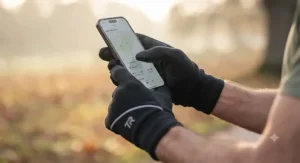
What Are Touchscreen Running Gloves?
Touchscreen running gloves are lightweight, close-fitting gloves built for cold-weather training that include conductive material — usually silver-coated thread woven into the fingertips — allowing capacitive smartphone screens to register a touch through the fabric. Unlike bulky winter gloves, they’re designed to preserve dexterity and breathability while you run.
The trouble is, “touchscreen compatible” gets slapped on packaging fairly loosely these days, and not every pair delivers once you’re three miles in with sweaty hands and a screen protector fighting against you. Below, you’ll find seven real, currently available options spanning budget liners to proper technical kit, alongside honest analysis of who each one actually suits — plus a look at how touchscreen gloves stack up against regular running gloves, what waterproofing genuinely buys you, and why grip texture matters more than most buyers realise. As the Met Office explains, wind chill can make exposed skin feel dramatically colder than the thermometer suggests, which is exactly why glove choice matters so much once fingers start losing dexterity.
Quick Comparison Table
| Glove | Price Range | Touchscreen Fingers | Waterproof | Best For |
|---|---|---|---|---|
| Asics Wind-Block | £30-£40 | Yes (thumb + index) | No (wind-blocking) | Best all-rounder |
| Salomon Fast Wing Winter | £30-£45 | Yes (thumb + index) | Water-resistant | Changeable weather |
| Smartwool Merino Sport Fleece Wind | £35-£45 | Yes (thumb + index) | No | Cold-sensitive hands |
| Rab Power Stretch Contact Grip | £25-£35 | Yes (e-tip) | No | Grip-dependent runners |
| Proviz Classic Lightweight | £20-£30 | Yes (thumb + index) | No | Night-time visibility |
| TOLEMI Thermal Anti-Slip | £10-£15 | Yes | No | Budget layering |
| Unigear Touch Screen Liner | Under £15 | Yes | No | Everyday budget pick |
Looking at the spread here, there’s a clear split between the sub-£15 liners — genuinely fine for club runs and dog walks — and the £30+ technical gloves built to survive proper winter mileage. If your run rarely exceeds 45 minutes, the budget end will serve you well; go longer, colder, or wetter, and the extra spend on wind-blocking or water-resistant fabric starts paying for itself in fingers you can actually feel at mile six.
💬 Just one click — help others make better buying decisions too!😊
Top 7 Touchscreen Running Gloves: Expert Analysis
1. Asics Wind-Block Running Gloves — best overall for genuine winter mileage
Independent testers rank the Asics Wind-Block as one of the strongest all-rounders in the winter running glove category, largely because the wind-blocking fabric across the back of the hand does noticeably more to cut chill than the basic fleece linings found on cheaper alternatives. The touchscreen panels sit on the thumb and index finger, and the moisture-wicking interior means sweat gets pulled away rather than left to go clammy on a longer effort — a detail that matters more than it sounds once you’re forty minutes into a tempo run. What most buyers overlook about this model is the mitten conversion: a fold-back panel over the fingertips adds an extra layer of wind protection for the coldest, darkest stretches of a run, then tucks away once you’ve warmed up.
Based on the spec comparison against similarly priced gloves, the Asics Wind-Block earns its reputation through versatility rather than any single standout feature — it’s not the warmest, not the cheapest, and not the most breathable, but it balances all three better than most. Independent reviewers who tested the gloves through freezing conditions reported comfortable wear for entire sessions without needing to remove them, which is a genuinely useful data point for anyone who’s abandoned a pair of gloves mid-run before. This is the pick for runners who train year-round rather than just popping out for the odd frosty jog.
Pros:
- ✅ Converts to a mitt for extra wind protection
- ✅ Reflective detailing improves low-light visibility
- ✅ Reliable touchscreen response on thumb and index
Cons:
- ❌ Not marketed as waterproof, only wind-resistant
- ❌ Sizing runs slightly generous according to test reports
Priced in the £30-£40 range depending on retailer, the Asics Wind-Block sits comfortably in the mid-tier and, based on the feature set for the money, represents solid value for anyone running through a full UK winter rather than just the occasional cold snap.
2. Salomon Fast Wing Winter Glove — removable DWR mitt for unpredictable weather
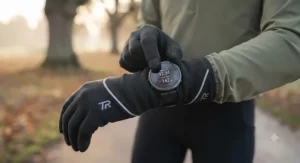
The Salomon Fast Wing Winter Glove is built around a stretch fleece base with a genuinely clever addition: a DWR-treated over-mitt that folds out from a pocket on the back of the wrist, giving you a waterproof-ish shell for showery starts that then tucks away once conditions improve. Touchscreen fabric covers the forefinger and thumb, and the palm uses a more durable material than the rest of the glove, which matters because that’s the exact spot that takes the most wear from watch buttons, gel packets and gate latches on trail routes. On paper, this means you’re effectively buying two gloves in one — a lightweight liner and a weather shell — without carrying separate kit.
Here’s what to weigh before buying: Amazon UK customer ratings for this glove sit at 4.0 out of 5 from a modest number of verified buyers, with feedback tending to praise the mitt-and-glove hybrid design specifically, alongside its usefulness for winter running and ultra-distance events where conditions shift through the day. It’s a niche feature that either clicks with your running style or doesn’t — road runners doing predictable loops may find the fold-out mitt overkill, while trail and fell runners covering exposed ground in changeable weather tend to get the most from it.
Pros:
- ✅ Fold-out DWR mitt adds weather protection on demand
- ✅ Durable palm material resists wear from kit and gates
- ✅ Touchscreen panel positioned for natural thumb-index use
Cons:
- ❌ Bulkier at the wrist than a standard liner glove
- ❌ Premium pricing compared with similar-spec competitors
Expect to pay somewhere in the £30-£45 range depending on size availability and retailer, which puts the Salomon Fast Wing Winter Glove toward the top of this list on price — justified mainly if the convertible mitt feature genuinely fits how and where you run.
3. Smartwool Merino Sport Fleece Wind — warmth without synthetic bulk
Built around a merino wool interior with a windproof recycled polyester overlay on the back of the hand, the Smartwool Merino Sport Fleece Wind takes a different approach to warmth than the synthetic fleece gloves that dominate this category. Merino’s natural temperature regulation means it insulates even when damp, which matters on a run where you’re sweating hard early and cooling fast during a walk break or a photo stop. Touchscreen e-tips sit on the thumb and index finger, and silicone grippers are woven across the palm and fingers — a combination that most budget gloves simply don’t offer together.
What the spec sheet won’t tell you, but the material science does, is that merino wool is naturally odour-resistant, so this is genuinely one of the few running gloves in this list you could wear several sessions running without it turning unpleasant in your kit bag. Reflective piping around the wrist adds a small but useful visibility boost for dawn or dusk sessions. This glove suits runners who prioritise natural fibres and all-day comfort over the driest possible wicking performance, and it’s a strong fit for anyone who already runs in merino base layers and wants their glove to match.
Pros:
- ✅ Merino fabric insulates even when damp
- ✅ Silicone grippers on palm and fingers aid dexterity
- ✅ Naturally odour-resistant for repeat wear between washes
Cons:
- ❌ Verified customer review volume is limited at the time of research
- ❌ Sits at the pricier end for a non-waterproof glove
At around £35-£45, the Smartwool Merino Sport Fleece Wind is a considered buy rather than an impulse one — the value case rests on the merino fabric doing a job synthetic linings can’t quite replicate, not on raw spec-sheet numbers.
4. Rab Power Stretch Contact Grip — silicone palm built for grabbing, not just gripping
The Rab Power Stretch Contact Grip takes Rab’s well-established Power Stretch fleece — the same fabric family used across its wider glove range — and adds e-tip fingers plus a grippy silicone palm print, aimed squarely at runners who need to actually hold onto things mid-run: gates, poles, gel wrappers, a phone case with no grip of its own. The stretch fleece itself is soft-brushed on the inside and has a light wind-resistant face fabric, which in practice means it takes the edge off a breeze without turning into a sweatbox on a harder effort.
Based on manufacturer review data for the wider Power Stretch line, ratings sit around 4.5 out of 5 across dozens of verified buyers on Rab’s own site, with feedback consistently highlighting comfort and the warmth-to-breathability balance, though dexterity is flagged as the trade-off for the added warmth. That’s a fair criticism worth weighing: this isn’t the glove for technical work like retying laces or fiddling with a zip pull, but for the core job of running and swiping a phone screen without stopping, the fit is spot on. Reviewers consistently note that the silicone grip pattern genuinely reduces slippage compared with the plain fleece version in the same range.
Pros:
- ✅ Silicone palm grip aids handling of gates, gels and kit
- ✅ Soft-brushed fleece interior stays comfortable over distance
- ✅ Backed by a well-reviewed, established glove fabric family
Cons:
- ❌ Reduced fine-motor dexterity versus thinner liner gloves
- ❌ Not wind-blocking to the same degree as harder-shell rivals
Priced around £25-£35, the Rab Power Stretch Contact Grip lands mid-pack on cost but punches above it on tactile grip — a sensible pick for trail runners and anyone who resents peeling a glove off just to open a gel.
5. Proviz Classic Lightweight — the British-brand pick for night running
Proviz built its reputation on reflective and high-visibility gear, and the Proviz Classic Lightweight carries that DNA straight into a running glove: reflective logos catch headlights and streetlamps at awkward angles, which is exactly the kind of detail a runner training before sunrise actually needs rather than just wants. The four-way stretch polyester construction keeps the glove thin and breathable, with touchscreen e-tips on the thumb and first finger for on-the-move phone use, and a clip that lets you fasten the pair together in a pocket or bag rather than losing one at the school run.
Here’s what most buyers overlook about this model: it’s not trying to be the warmest glove on this list, and that’s deliberate. Independent testers describe it as thin, low-bulk and highly breathable, which makes it better suited to brisker efforts and milder cold than deep winter standing-around conditions. As a British brand with a specific focus on visibility technology, Proviz brings genuine expertise to the reflective detailing here that generalist sportswear brands tend to bolt on as an afterthought.
Pros:
- ✅ Reflective branding genuinely improves low-light visibility
- ✅ Lightweight four-way stretch fabric stays breathable
- ✅ Clip keeps the pair together between runs
Cons:
- ❌ Less warmth than fleece-lined competitors at similar price
- ❌ Independently verified customer review data is limited so far
Sitting around £20-£30, the Proviz Classic Lightweight is well positioned for runners who train regularly in low light and want visibility features baked in rather than added as an afterthought accessory.
6. TOLEMI Thermal Anti-Slip Touch Screen Gloves — budget thermal liner that punches above its price
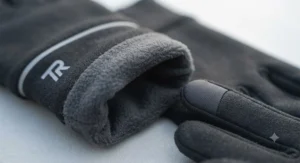
The TOLEMI Thermal Anti-Slip Touch Screen Gloves sit firmly in budget territory, but the spec sheet reads better than the price suggests: a thermal knit construction with anti-slip silicone detailing and touchscreen-compatible fingertips, aimed at runners, cyclists and dog walkers who want warmth without paying technical-fabric prices. On Amazon UK, this glove carries a strong 4.4 out of 5 rating across roughly 3,000 verified customer reviews, which is a meaningfully large sample for a budget accessory and lends real weight to the aggregated sentiment.
What most buyers overlook about this model is exactly why the review volume matters here — at this price point, quality control can be inconsistent between batches, and a large, consistently positive review pool is one of the better signals a shopper actually has to work with before buying. Reviewers consistently report good warmth for the price and reliable touchscreen response, with the anti-slip palm print getting specific praise for improving grip on cold, damp mornings. This is a sensible first pair for anyone testing whether they’ll actually stick with winter running before investing in a premium option.
Pros:
- ✅ Strong Amazon UK review volume backs the aggregated rating
- ✅ Anti-slip silicone palm improves grip in damp conditions
- ✅ Thermal knit offers solid warmth for the price point
Cons:
- ❌ Less wind resistance than technical fabric competitors
- ❌ Sizing feedback suggests trying before committing to bulk buys
At £10-£15, the TOLEMI Thermal Anti-Slip Touch Screen Gloves deliver strong value-for-money, particularly for anyone easing into cold-weather running rather than tackling ultra-distance winter events.
7. Unigear Touch Screen Anti-Slip Running Gloves — the cheapest genuinely usable touchscreen liner
Rounding out the list is the Unigear Touch Screen Anti-Slip Running Gloves, a lightweight liner glove that’s become something of an Amazon UK bestseller in this category, currently sitting at 4.4 out of 5 across more than 12,000 customer ratings, with a reported 200-plus units bought in the past month at the time of research. That’s an unusually large and consistent review base for a sub-£15 accessory, and it points to a product that’s doing the fundamentals reliably rather than relying on marketing.
Based on the spec comparison against pricier gloves on this list, the Unigear liner sacrifices wind-blocking and thermal bulk in exchange for a genuinely thin, close-fitting design that works well layered under a heavier mitt on the coldest days, or worn alone for brisk-but-not-freezing runs. Reviewers consistently note reliable touchscreen response and good anti-slip grip for the price, though several mention it’s better suited to moderate cold than deep winter standing-still conditions. For runners who want a reliable, low-risk entry point into touchscreen gloves without committing £30-plus upfront, this is the pragmatic choice — and the review volume alone makes it one of the more trustworthy budget picks on Amazon UK.
Pros:
- ✅ Exceptionally large, consistently positive review base
- ✅ Thin enough to layer under heavier gloves in deep cold
- ✅ Reliable touchscreen and anti-slip grip for the price
Cons:
- ❌ Limited wind and water resistance versus technical gloves
- ❌ Best suited to moderate cold rather than extreme conditions
Priced under £15, the Unigear Touch Screen Anti-Slip Running Gloves offer arguably the best pound-for-pound value on this entire list, particularly for anyone still working out what they actually need from a winter glove.
Getting the Most From Your Touchscreen Running Gloves
Buying the right pair is only half the job — how you set them up and treat them in the first month of use makes a real difference to both performance and lifespan. Start by checking touchscreen response before your first run, not during it: swipe and tap your actual phone screen indoors, since screen protectors and certain cases can interfere with capacitive sensing even on a genuinely conductive glove. If response feels patchy, try lightly dampening the fingertip — capacitive touchscreens respond to the skin’s natural moisture and conductivity, and a bone-dry glove in freezing air sometimes needs that extra nudge.
A common mistake in the first 30 days is over-washing thermal-lined gloves, which can break down the fleece nap and reduce warmth faster than normal wear would. Hand-wash where the label recommends it, avoid tumble drying, and let gloves air-dry fully between runs — a damp glove left balled up in a kit bag is also where odour and fabric breakdown really take hold. For the anti-slip silicone palms found on gloves like the TOLEMI Thermal Anti-Slip and Rab Power Stretch Contact Grip, avoid high heat entirely, since it can cause the silicone print to crack and peel away from the fabric base over time. Finally, rotate two pairs if you’re running most days through winter — it gives sweat-dampened gloves proper time to dry out and roughly doubles the working life of both pairs compared with hammering a single set daily.
Real-World Scenarios: Which Glove Actually Fits Your Running Life
Picture three different runners heading out on the same frosty Tuesday morning, and you’ll see why “best” is genuinely relative here. First, there’s the commuter runner — someone squeezing in five miles before work, checking a running app and maybe fielding a message mid-run. For them, the Unigear Touch Screen Anti-Slip Running Gloves or TOLEMI Thermal Anti-Slip Touch Screen Gloves make sense: low cost, reliable touchscreen response, and thin enough to shove in a coat pocket once the sun’s up and the temperature’s climbed.
Then there’s the trail and fell runner covering exposed, changeable ground — someone who might hit driving rain on a ridge and bright sun in the valley within the same hour. This is where the Salomon Fast Wing Winter Glove‘s fold-out mitt and the Rab Power Stretch Contact Grip‘s silicone palm genuinely earn their higher price tags, since both are built around adaptability rather than a single fixed condition. Finally, consider the dawn-patrol road runner, out before the streetlights switch off, prioritising visibility as much as warmth — for that profile, the Proviz Classic Lightweight‘s reflective detailing is arguably a safety feature as much as a comfort one, and worth the spend on that basis alone.
Touchscreen Gloves vs Regular Running Gloves
The core difference between touchscreen gloves and regular running gloves comes down to the fingertip material — touchscreen gloves weave a thin conductive thread (typically silver or copper-coated) into the thumb and index finger, allowing the glove to register on capacitive smartphone screens. Regular running gloves use standard fleece or synthetic fabric throughout, which insulates but won’t trigger a touchscreen at all, forcing you to strip a glove off entirely to check a notification or pause a podcast.
That sounds like a minor convenience until you’ve actually fumbled a bare hand out of a glove at minus two degrees on a windy exposed stretch. On the flip side, regular running gloves without conductive thread are occasionally slightly warmer for the same fabric weight, since the metallic fibres can, in rare cases, marginally reduce insulation at the fingertip — though in practice, on every glove featured in this list, that trade-off is negligible next to the practical benefit of not removing the glove at all. Reviewers consistently note that once you’ve used a touchscreen pair through a winter, going back to a non-touchscreen glove feels like a genuine downgrade rather than a lateral choice.
| Feature | Touchscreen Gloves | Regular Running Gloves |
|---|---|---|
| Phone/watch use | Works through fabric | Must remove glove |
| Fingertip warmth | Marginally reduced (negligible in practice) | Slightly warmer |
| Price premium | Small (£2-£10 typically) | None |
| Best For | Anyone using a phone, watch or app mid-run | Runners who never touch a device outdoors |
Looking at the comparison above, the practical case for touchscreen gloves is strong for the vast majority of runners, given how many now rely on GPS watches, running apps or music controls mid-session. Regular gloves only really win out for runners who deliberately train device-free, where the small conductive-thread premium simply isn’t buying them anything useful.
How to Choose Touchscreen Running Gloves
Picking the right pair comes down to matching a handful of specific factors to your actual running habits, rather than chasing the highest spec sheet. Here’s the reasoning behind each:
- Check where the conductive thread sits. Thumb-and-index coverage suits most people’s natural swipe-and-tap habit; three-finger coverage suits anyone who types more than they swipe.
- Match warmth to your typical run length. Shorter, brisker sessions favour thinner liners like the Unigear; longer, slower winter miles favour fleece-lined options like the Asics Wind-Block.
- Decide how much you value weatherproofing. A wind-blocking or water-resistant shell, as found on the Salomon Fast Wing Winter, costs more but earns its keep on exposed or unpredictable routes.
- Prioritise grip texture if you handle kit mid-run. Gate latches, gel wrappers and poles all benefit from a silicone-printed palm like the one on the Rab Power Stretch Contact Grip.
- Factor in visibility if you run in low light. Reflective detailing, as on the Proviz Classic Lightweight, is a genuine safety consideration, not just a styling choice.
- Read the aggregated review data, not just the star rating. A 4.4-star rating from 12,000 reviews (as with the Unigear pair) carries more weight than the same rating from a dozen.
- Buy based on your worst likely run, not your average one. If you occasionally get caught in genuinely foul weather, buy for that day rather than the mild ones.
Common Mistakes When Buying Touchscreen Running Gloves
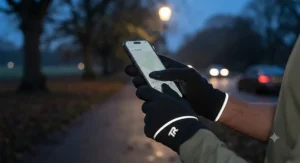
The single most common mistake is assuming “touchscreen compatible” means full-hand conductivity — in reality, most gloves only wire the thumb and index finger, so trying to type a full message one-handed with other fingers rarely works, regardless of price. A close second is buying purely on warmth without checking grip: a fleece-lined glove with a smooth palm can actually make handling a phone case, water bottle or gate latch harder than a thinner, grippier alternative, which defeats a chunk of the point of buying touchscreen gloves in the first place.
Runners also frequently underestimate sizing — a glove that’s snug in the shop can feel restrictive once hands swell slightly during exercise, and oversized gloves bunch at the fingertip exactly where the conductive thread needs contact with the screen, causing exactly the patchy touchscreen response many one-star reviews complain about. Finally, a genuinely avoidable mistake is skipping the care label: tumble-drying thermal or silicone-printed gloves, as flagged in the usage guide above, is one of the fastest ways to shorten a decent pair’s working life by a full season or more.
Waterproof Running Gloves: What They Actually Deliver
None of the seven gloves featured above are fully waterproof in the technical sense — most use wind-blocking or DWR (durable water repellent) treatments, which resist light rain and wind-driven moisture rather than surviving a genuine downpour or puddle submersion. That distinction matters: a fully waterproof glove typically needs a sealed membrane, which adds bulk, reduces breathability and usually removes touchscreen compatibility entirely, since conductive thread doesn’t play well with waterproof laminate layers.
For most UK runners, water-resistant is the more realistic and genuinely more useful target, since it handles drizzle, wind-driven spray and a light shower without turning your hands into a sweaty mess on the drier stretches of a run. The Salomon Fast Wing Winter Glove‘s fold-out DWR mitt is the closest thing on this list to proper wet-weather protection, precisely because it’s designed to be deployed only when needed rather than worn throughout. If you regularly run through genuinely heavy, sustained rain, pairing a thin touchscreen liner underneath a separate waterproof shell mitt is, honestly, a more reliable set-up than expecting any single glove to do both jobs well.
Conductive Fingertips: How They Actually Work
Conductive fingertips work because capacitive touchscreens — the type used on virtually every modern smartphone — detect touch through tiny changes in an electrostatic field, which normally requires the conductivity of bare skin to register. Manufacturers weave metallic thread, usually silver or copper-coated nylon, into the fingertip fabric, creating a conductive path from your finger through the glove to the screen, tricking the sensor into registering contact as though the fabric weren’t there at all.
The practical upshot is that not all conductive fingertips are created equal: thread quality, coverage area and how tightly the fabric fits against the fingertip all affect reliability, which is exactly why some budget gloves feel hit-and-miss on a screen while others, like the well-reviewed TOLEMI Thermal Anti-Slip and Unigear liners, register consistently despite their low price. According to research into capacitive touchscreen technology, sensitivity also depends on skin moisture and the screen’s own signal-to-noise handling, which is part of why a slightly damp fingertip inside a glove sometimes improves response in genuinely dry, cold conditions. If a pair you already own has started responding poorly, it’s worth checking whether the conductive thread has simply worn thin at the fingertip — a common failure point after heavy repeated use, and one no amount of washing will fix.
Grip Texture: The Overlooked Feature That Actually Matters
Grip texture rarely makes it into marketing copy the way “touchscreen compatible” or “thermal” does, but it arguably affects your actual running experience more directly, day to day. A smooth-palmed glove might look and feel premium in the shop, but the moment you need to grab a gate, unwrap a gel one-handed, or simply keep a phone from sliding out of your grip on a bouncing wrist strap, texture becomes the feature doing the real work.
Silicone printing, as used on the Rab Power Stretch Contact Grip and TOLEMI Thermal Anti-Slip, is currently the most common and effective solution, applied in small dots or a honeycomb pattern across the palm and sometimes the fingers. What most buyers overlook about this feature is that grip texture also indirectly improves touchscreen reliability, since a glove that doesn’t slip against a phone case stays positioned correctly on the fingertip for longer during a swipe gesture, reducing the “ghost touch” misfires that frustrate users of smoother-palmed alternatives. If you’re torn between two otherwise similar gloves, checking for a textured palm print is a genuinely underrated tiebreaker.
Device Compatibility: Will They Actually Work With Your Phone or Watch?
Device compatibility for touchscreen gloves comes down almost entirely to whether your screen uses capacitive touch technology, which covers the overwhelming majority of smartphones, GPS running watches and fitness trackers sold in the UK today, including every current iPhone and the vast majority of Android and Wear OS devices. Where compatibility genuinely breaks down is with certain rugged outdoor watches or older resistive touchscreens, which respond to pressure rather than conductivity and therefore won’t register a glove tap regardless of how good the conductive thread is.
Screen protectors add another variable worth testing before you commit to a purchase — thicker, tempered-glass protectors can occasionally dull touchscreen response through a glove, even on genuinely conductive fingertips, simply by adding extra distance between the thread and the sensor layer beneath the screen. As covered in research on capacitive touchscreen sensing, the technology relies on detecting minute changes in an electrostatic field, so anything that increases the physical gap between finger and sensor — thick gloves, thick cases, thick protectors — reduces reliability. The practical takeaway: test your specific phone-and-case combination indoors with any glove before trusting it mid-run, rather than assuming “touchscreen compatible” on the label guarantees a perfect result with your exact setup.
Long-Term Cost & Maintenance
Touchscreen running gloves aren’t a huge investment individually, but the total cost of ownership shifts depending on how you buy and care for them. A single £10-£15 liner glove like the Unigear or TOLEMI pair, replaced every season due to wear on the conductive thread, works out roughly similar over three years to buying one £30-£40 technical glove like the Asics Wind-Block and maintaining it properly — the maths genuinely does favour the pricier option if you run through several full winters, since fabric quality and stitching hold up considerably longer under repeated wash cycles.
Where cost really escalates is replacement driven by poor care rather than genuine wear: over-washing, tumble-drying, or leaving gloves damp in a kit bag between runs (covered in the usage guide above) shortens the lifespan of even premium gloves down to budget-glove territory, effectively wasting the extra spend. Rotating two pairs, hand-washing according to the label, and air-drying fully between sessions is the single cheapest thing you can do to stretch the working life of whichever pair you choose — and it costs nothing beyond the two minutes it takes to actually do it properly.
What UK Weather Actually Demands From Winter Gloves
Anyone who’s trained through a proper British winter knows the conditions rarely sit still for long — a dry, cold start can turn to driving drizzle within twenty minutes, and wind chill does far more damage to exposed hands than the air temperature alone suggests. Cold, poorly protected hands aren’t just uncomfortable either; runners prone to circulation issues in the fingers should take particular care, since conditions like Raynaud’s phenomenon are triggered specifically by cold exposure and can make properly insulated, well-fitting gloves a genuine comfort necessity rather than an optional extra. NHS guidance on staying active through the colder months consistently emphasises protecting extremities — hands, feet, head and ears — as a core part of safe winter exercise, alongside layering and checking conditions before heading out.
That’s worth bearing in mind when weighing up budget liners against technical shells on this list: if you’re someone who genuinely struggles with circulation in cold weather, the extra wind-blocking or fleece insulation in gloves like the Asics Wind-Block or Smartwool Merino Sport Fleece Wind isn’t a luxury upgrade so much as a practical necessity, and worth the higher price purely on comfort and safety grounds.
Frequently Asked Questions
❓ Do touchscreen running gloves actually work well when wet?
❓ Can I make regular running gloves touchscreen compatible?
❓ How many pairs of running gloves do I actually need for winter?
❓ Are expensive touchscreen running gloves worth it over budget options?
❓ Why does my touchscreen glove work on my phone but not my running watch?
Conclusion
Choosing the right touchscreen running gloves really does come down to matching the glove to your actual running life rather than chasing the single “best” option on paper. Casual and commuter runners will get everything they need from the sub-£15 Unigear or TOLEMI liners, both backed by genuinely strong, high-volume review data on Amazon UK. Runners tackling proper winter mileage, exposed trails or unpredictable weather will see real, tangible benefit from stepping up to the Asics Wind-Block, Salomon Fast Wing Winter, or Rab Power Stretch Contact Grip, each of which solves a slightly different problem — wind-blocking versatility, convertible weatherproofing, and grip-dependent handling respectively.
Whichever pair you land on, the fundamentals from this guide hold across all seven: check touchscreen response before you’re relying on it mid-run, look past the star rating to the review volume behind it, and treat grip texture as seriously as warmth when you’re the one fumbling a gate latch with numb fingers on a dark December morning. Get those basics right, and the specific brand matters a lot less than most marketing copy would have you believe.
Recommended for You
- Winter Running Gloves Under £20: 7 Best Buys for 2026
- 7 Best LED Running Lights UK 2026: Stay Seen, Stay Safe
- Hi-Vis Running Gear: 7 Best Picks to Stay Seen in 2026
Disclaimer: This article contains affiliate links. As an Amazon Associate, I earn from qualifying purchases. If you purchase products through these links, we may earn a small commission at no additional cost to you.
✨ Found this helpful? Share it with your friends! 💬🤗
